服从性测试

Search documents
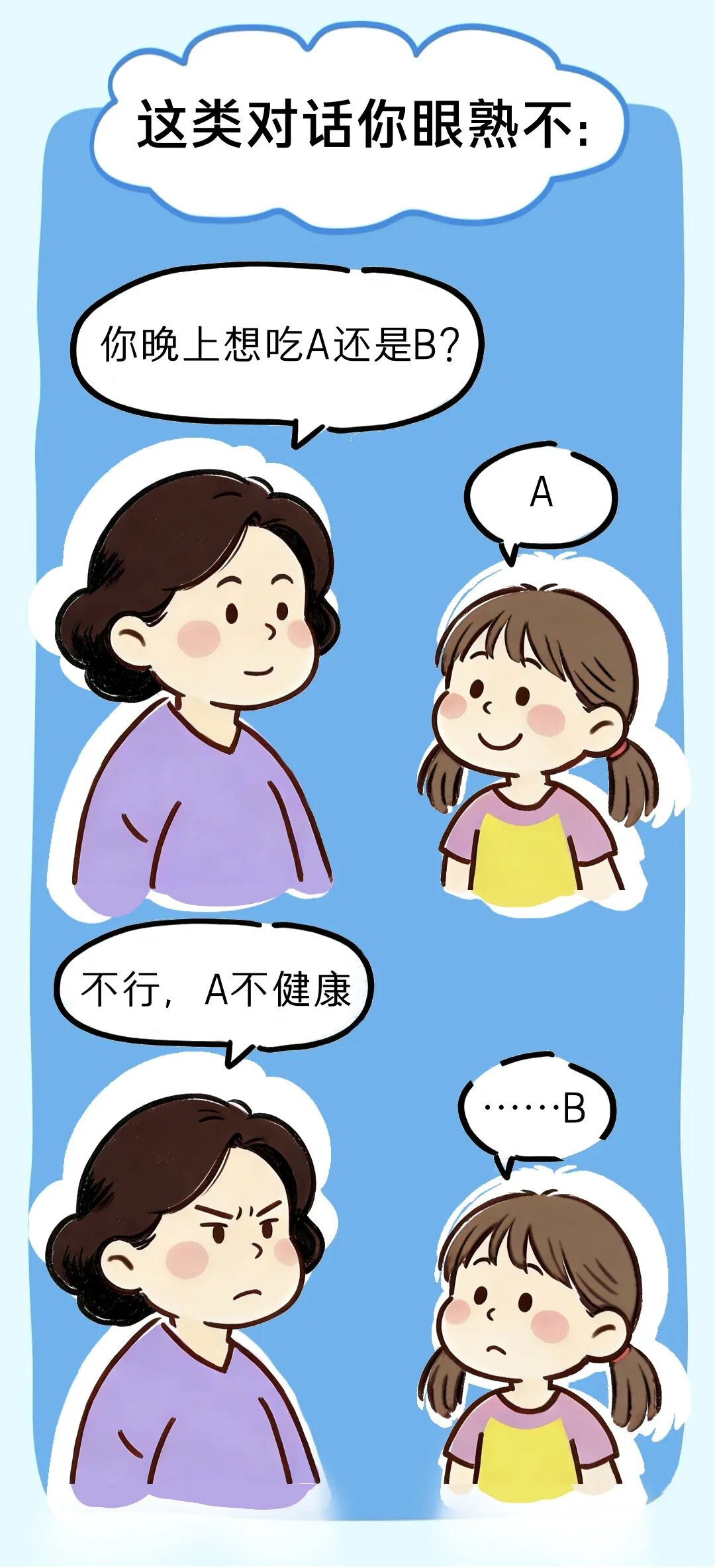
这种说话方式看似尊重,其实是在对孩子进行“服从性测试”!快改
Xin Lang Cai Jing· 2026-01-24 11:22
Group 1 - The article discusses the hidden dangers of parental communication styles that appear to respect children's choices but actually impose control, leading to a "pseudo-choice" dynamic [3][20]. - It highlights three main harms to children: learned helplessness, decision-making incapacity, and invisible rifts in parent-child relationships [7][13][19]. - Research indicates that children of authoritarian parents often exhibit compliance but suffer in self-esteem and social skills, impacting their independence and decision-making abilities [11][12]. Group 2 - Effective choices for children should involve real options, autonomy in decision-making, and acceptance of consequences, rather than pre-set "correct" answers [30][31]. - Parents should differentiate between seeking opinions and allowing joint decision-making, ensuring children understand the reasoning behind decisions [37][39]. - Listening to children's thoughts and fostering high interaction between parents and children is essential for developing their decision-making skills and self-expression [41][43].

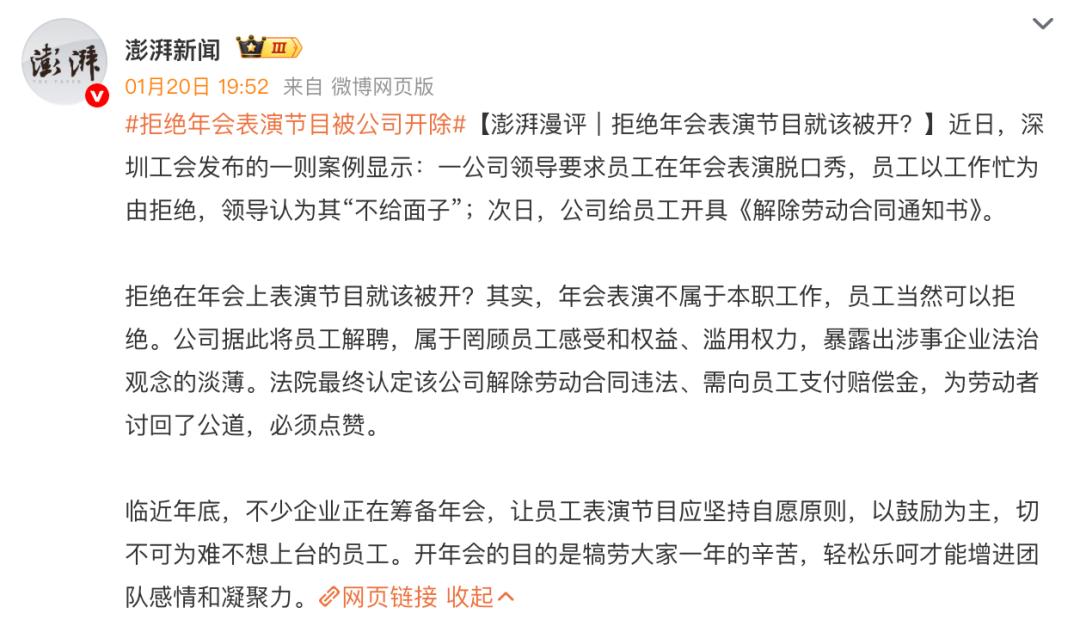
我不干了,不跳舞就开除?这届年会到底谁在爽?
3 6 Ke· 2026-01-21 10:03
Core Viewpoint - The article highlights a labor dispute case in Shenzhen, where an employee was dismissed for refusing to perform at a company annual meeting, raising questions about workplace boundaries and employee rights [1][3][5]. Group 1: Case Summary - An employee, referred to as Xiao Ming, was required to perform a stand-up comedy act at a company annual meeting despite his busy work schedule, leading to his dismissal for "not cooperating" [3][5]. - The company justified the termination by labeling the refusal as "serious misconduct," which was later deemed illegal by the court, ordering the company to pay compensation [5][6]. Group 2: Workplace Dynamics - The article discusses the shift in perception of annual meetings from a reward for employees to a platform for management to exert control and test loyalty [3][7]. - It emphasizes that annual meeting performances are not part of an employee's job description unless explicitly stated in their contract, and companies cannot impose such requirements [6][10]. Group 3: Employee Rights and Management Practices - The article outlines the legal principles that protect employees, including the right to refuse participation in non-work-related activities and the need for companies to respect personal time [6][10]. - It critiques the outdated management style that equates participation in such events with loyalty and dedication, particularly in the context of younger generations who prioritize their rights and self-respect [10][14]. Group 4: Strategies for Employees - The article provides strategies for employees to navigate forced participation in workplace events, such as using diplomatic language to decline and documenting any coercive communications [13][14]. - It advises against impulsively resigning in response to workplace pressure, emphasizing the importance of securing legal rights and compensation [13][14].
招人越来越难了:如何找到靠谱的人才?
Sou Hu Cai Jing· 2025-07-14 00:45
Core Insights - The article discusses the challenges companies face in recruiting suitable talent in today's competitive job market, emphasizing the need for a shift in mindset towards recruitment [3][6][35] - It highlights the importance of clearly defining job roles and compensation to attract candidates, as well as the necessity of utilizing multiple recruitment channels [17][19][20] - The article also stresses the significance of hiring for attitude over skills, suggesting that a positive attitude can be cultivated into the necessary skills over time [24][25][39] Group 1 - Recruitment has become increasingly difficult, with candidates having more power in the job market [10][11][12] - Companies must "sell" job positions to candidates, similar to marketing products to customers [11][12][19] - The shift in recruitment dynamics is attributed to changes in population structure and candidate expectations [9][10][39] Group 2 - Clear job descriptions and competitive compensation are crucial for attracting talent [17][19] - Companies should actively seek talent through various channels, including employee referrals and social media [19][28][30] - The article suggests a proactive approach to recruitment, including internal recommendations and even acquiring companies to secure top talent [26][29][30] Group 3 - The importance of hiring individuals with a positive attitude is emphasized, as skills can be developed later [24][25] - Companies are encouraged to personally engage in the recruitment process to demonstrate commitment and seriousness [32][33] - The article warns against the "nesting doll" phenomenon, where managers only hire less qualified individuals out of insecurity [33][34] Group 4 - The article concludes that the perception of a talent shortage is often a reflection of the company's own recruitment practices and leadership [35][36][39] - It encourages companies to elevate their vision and strategy to attract higher caliber talent [39][40][42] - The message is clear: to attract top talent, companies must continuously improve and adapt their recruitment strategies [41][42]