
木星伴月

Search documents
木星伴月来啦,天幕上演“星月对话”
Xin Lang Cai Jing· 2026-02-27 22:32
Group 1 - The article discusses a celestial event where Jupiter and the Moon appeared close together in the night sky, creating a visually stunning display [3][4]

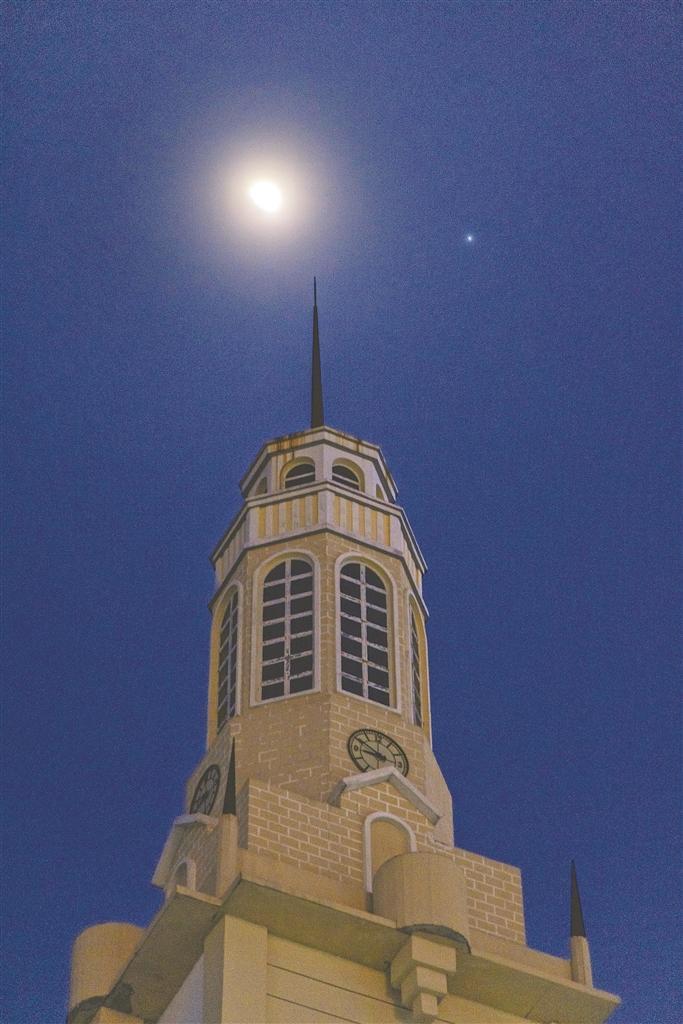
星空有约|2026年1月天象看点前瞻:超级月亮现身 木星冲日登场
Xin Hua She· 2025-12-30 07:40
Group 1 - The first astronomical event of 2026 is the "Supermoon" occurring on January 3, where the moon will appear in its most perfect round shape at 18:03 [1] - The Quadrantids meteor shower, one of the three major meteor showers in the Northern Hemisphere, will peak on January 4, characterized by medium-speed meteors and bright fireballs [1] - Observing the meteor shower may be challenging due to the bright moonlight from the full moon occurring simultaneously, making it less favorable for general public viewing [1] Group 2 - A lunar occultation of the star Xuanyuan 14 will take place on the night of January 6 to the early morning of January 7, visible in most northern regions of China [2] - Jupiter will reach opposition on January 10, becoming exceptionally bright at magnitude -2.7, making it easily visible to the naked eye [2] - Following the opposition, Jupiter will be accompanied by a nearly full moon at the end of January, creating a visually stunning "star-moon fairy tale" in the night sky [2]
今晚,记得抬头看!
Zhong Guo Ji Jin Bao· 2025-10-13 13:07
Core Points - The event of Jupiter and the Moon appearing together in the sky is referred to as "Jupiter and Moon conjunction," which is visually appealing and can be observed with the naked eye under clear weather conditions [1][2][3] Group 1: Event Description - The conjunction of Jupiter and the Moon occurred on October 14, providing a poetic addition to the early autumn sky [1] - Jupiter is the largest planet in the solar system and appears very bright from Earth due to its size, despite being far away [2] - The Moon and Jupiter will appear close together in the sky, although their actual distances from Earth are approximately 780 million kilometers for Jupiter and 384,000 kilometers for the Moon [3] Group 2: Observation Tips - To best observe this celestial event, individuals should find an open area facing east and look slightly upward if the weather is clear [4] - For those with access to binoculars or small telescopes, additional details of Jupiter, such as its cloud bands, can be observed [4]
今晚,记得抬头看!
中国基金报· 2025-10-13 12:44
Core Viewpoint - The article highlights the upcoming celestial event of Jupiter and the Moon appearing close together in the sky, referred to as the "star-moon fairy tale," which is expected to be a visually appealing experience for the public on October 14 [2][4]. Summary by Sections - **Celestial Event Description** - The event will occur in the early morning of October 14, where Jupiter and the Moon will be visible in close proximity in the eastern sky, provided the weather is clear [2]. - Jupiter is noted as the largest planet in the solar system and appears very bright from Earth due to its size, despite being far away [4]. - **Observational Conditions** - The Moon will be in its waning phase, appearing as a "D" shape, and will rise from the northeast before coming close to Jupiter, creating a "three-star accompaniment" with two bright stars in the Gemini constellation [6]. - The average distance of Jupiter from Earth is approximately 780 million kilometers, while the Moon is about 384,000 kilometers away, making their apparent closeness a visual coincidence [6]. - **Viewing Recommendations** - To best observe this event, individuals should find an open area facing east and slightly tilt their heads upward. For enhanced viewing, binoculars or small telescopes can be used to see details of Jupiter, such as its cloud bands [8].
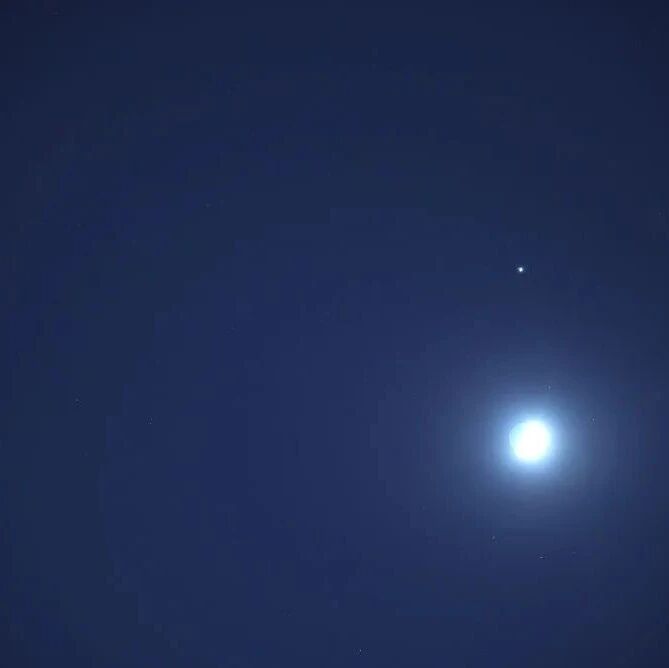
14日凌晨木星伴月“欢聚”双子座
Xin Hua She· 2025-10-12 13:14
Core Viewpoint - A celestial event known as "Jupiter and Moon conjunction" will occur on October 14, providing a unique opportunity for the public to observe this phenomenon with the naked eye, weather permitting [1][2] Group 1: Event Details - The Jupiter and Moon conjunction will take place in the early morning of October 14, with favorable viewing conditions expected [1] - The moon will be in its last quarter phase, appearing as a "D" shape, and will rise from the northeast before approaching Jupiter [1] - This event will also feature two bright stars, Beta Geminorum and Gamma Geminorum, creating a "three-star conjunction" alongside the moon [1] Group 2: Observational Information - Jupiter is approximately 780 million kilometers away from Earth, while the moon is about 384,000 kilometers away, making their apparent proximity a visual coincidence [2] - For optimal viewing, individuals should find an open area facing east and may use binoculars or small telescopes to observe details of Jupiter, such as its cloud bands [2]
木星伴弦月,这幕“星月童话”即将上演
Qi Lu Wan Bao· 2025-10-12 12:26
Core Points - A beautiful celestial event, the conjunction of Jupiter and the Moon, will occur on October 14, providing a poetic addition to the early autumn sky [1][4] - Jupiter is the largest planet in the solar system and appears very bright from Earth due to its size, despite being far away [3] - The event is characterized by the Moon and Jupiter appearing close together in the sky, although they are actually at vast distances from Earth [4] Summary by Sections - **Event Details** - The conjunction will take place in the early morning of October 14, with favorable viewing conditions [4] - The Moon will be in its last quarter phase, appearing as a "D" shape, and will rise from the northeast before meeting Jupiter in the constellation Gemini [4] - The two celestial bodies will appear very clear and bright, creating a "three-star moon" scene with two bright stars, Beidou Er and Beidou San [4] - **Distance Information** - Jupiter is approximately 780 million kilometers from Earth, while the Moon is about 384,000 kilometers away [4] - **Viewing Recommendations** - For optimal viewing, individuals should look towards the eastern sky in a location with a clear view [7] - Binoculars or small telescopes can enhance the experience, allowing observers to see details such as Jupiter's cloud bands [7]
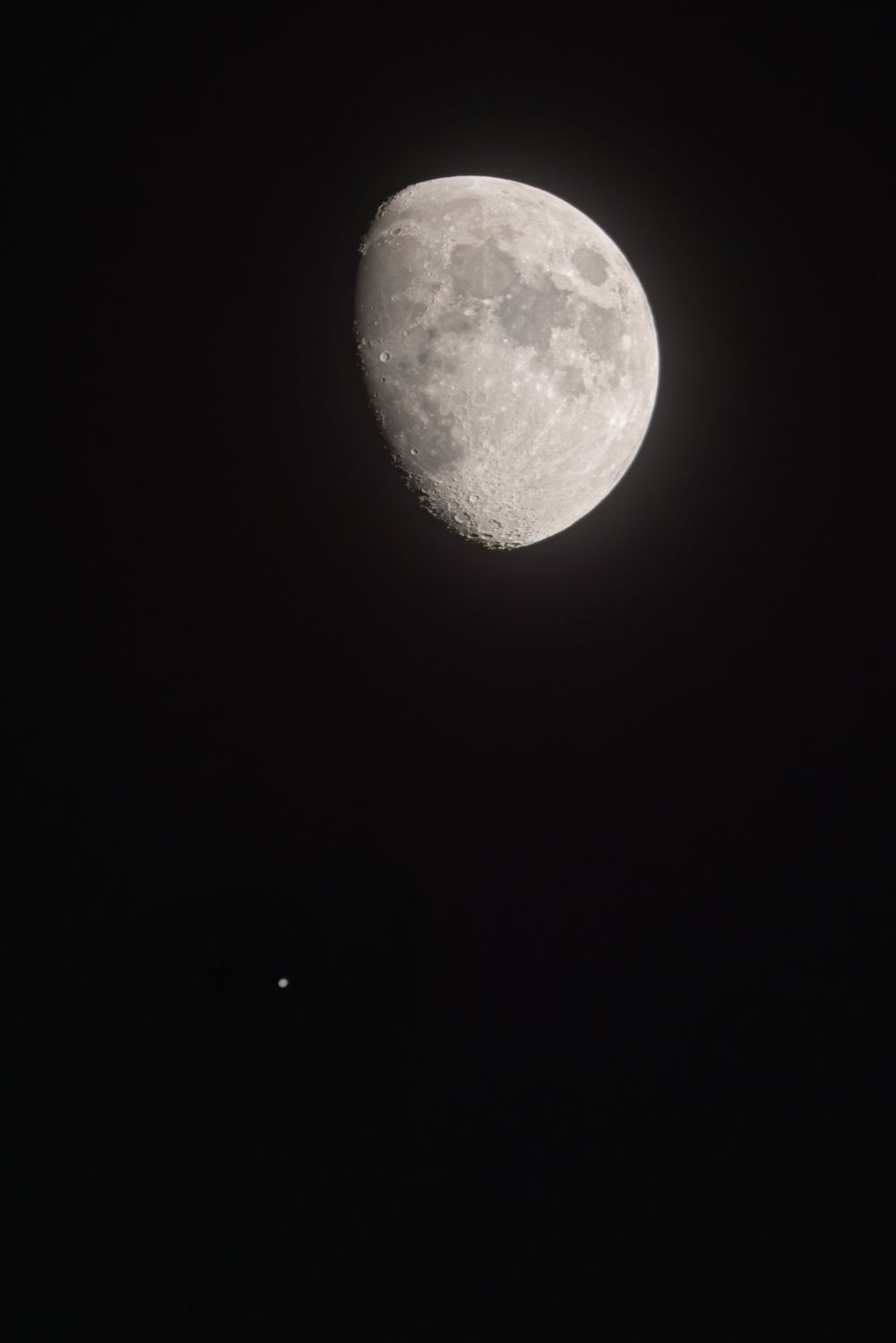
木星伴弦月,这幕“星月童话”赏心悦目
Xin Hua She· 2025-10-12 08:41
Core Points - A beautiful celestial event, the conjunction of Jupiter and the Moon, will occur on October 14, providing a poetic addition to the early autumn sky [1] - Jupiter, being the largest planet in the solar system, appears very bright from Earth despite its distance [4] - The event is characterized by the Moon and Jupiter appearing close together in the sky, which happens multiple times a year but is dependent on weather and observational conditions [4][6] Observational Details - The Moon will be in its last quarter phase, appearing as a "D" shape, and will rise from the northeast before closely approaching Jupiter [6] - The average distance from Earth to Jupiter is approximately 780 million kilometers, while the Moon is about 384,000 kilometers away, making this celestial event a visual coincidence [6] - For optimal viewing, individuals should look towards the eastern sky in a clear area, and those with telescopes can observe details such as Jupiter's cloud bands [8]
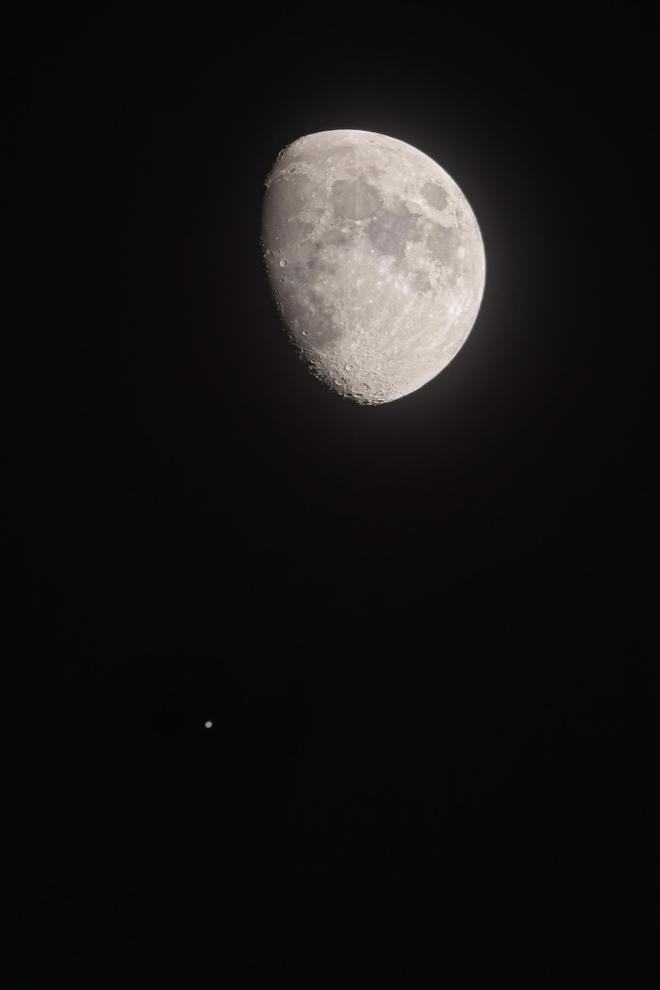
7月22日至23日凌晨天宇将先后上演金星伴月和木星伴月
Xin Hua She· 2025-07-20 07:36
Core Viewpoint - The article discusses the upcoming celestial event where Venus and Jupiter will be closely accompanied by a crescent moon, providing a unique opportunity for public observation in July 2023 [1][5][7]. Group 1 - The celestial event will occur on the night of July 22-23, 2023, allowing the public to view the "star-moon fairy tale" with the naked eye if the weather permits [1][5]. - Venus, known as "Tai Bai" in ancient China, is the brightest planet and can be seen during dawn or dusk, while Jupiter, referred to as "Sui Xing," is the second brightest and easily observable at night [3][5]. - The event will feature Venus and the crescent moon in close proximity, with a viewing time of nearly two hours, making it an excellent opportunity for skywatchers [5][7]. Group 2 - On July 23, the moon will move closer to Jupiter, creating a picturesque scene with the crescent moon, Jupiter, and the bright Venus visible together [7][9]. - In August 2023, Venus and Jupiter will appear even closer, reaching a minimum distance of 0.9 degrees on August 12, which is less than the width of two full moons [7][9]. - Observers with telescopes will have the chance to see both Venus and Jupiter in a small field of view, along with details such as Venus's phases and Jupiter's cloud bands and moons [9].
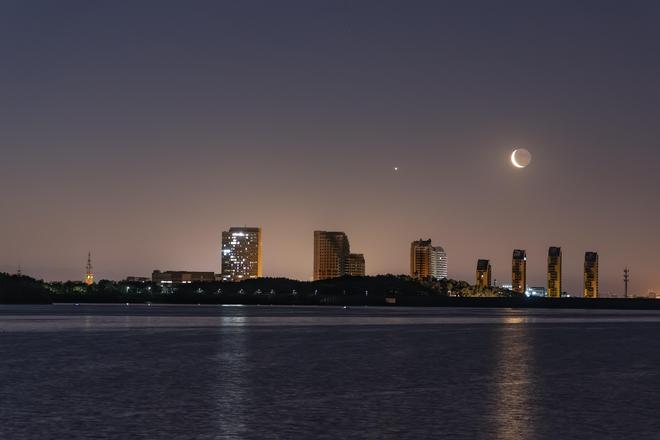
限时观测!28日傍晚木星伴月
Xin Hua She· 2025-05-26 07:04
Core Points - A celestial event featuring Jupiter and the new moon will occur on the evening of May 28, providing a visually appealing spectacle for observers [1] - Jupiter, the third brightest celestial body after the moon and Venus, will be visible in the northwest sky after sunset, with a brightness of -1.9 magnitude [1] - The observation window for this event is short, lasting less than half an hour, as Jupiter will set before the new moon [1] Observation Tips - To best view the "star-moon fairy tale," observers should find an open area facing northwest and look slightly upward if the weather is clear [2] - Using binoculars or small telescopes can enhance the viewing experience by revealing details such as Jupiter's striped cloud bands and its four Galilean moons [2] - Photography enthusiasts are encouraged to capture the moment with their phones or cameras, combining the celestial event with unique landscapes for creative photos [2]