未来成本优势

Search documents
德国企业,正在疯狂涌入中国
创业邦· 2026-01-02 10:09
Core Viewpoint - German companies are increasingly relocating to China, marking a significant industrial migration driven by various economic pressures and strategic advantages [5][10][20]. Group 1: Migration of German Companies - Over 560 German companies have established operations in Taicang, Jiangsu, with more than 60 being "hidden champions" [5][6]. - The time taken for the first 100 German companies to settle in Taicang was 14 years, while the next 100 (from 400 to 500) took only 2 years [6]. - Major investments include Volkswagen's €2.5 billion expansion in Hefei and Bayer's ¥600 million supply center in Jiangsu [8]. Group 2: Economic Pressures in Germany - In 2024, Germany faced a record 22,000 bankruptcies, the highest in a decade, with a 12% year-on-year increase in bankruptcy applications in the first half of 2025 [11][19]. - Rising energy costs, particularly due to policies from the Green Party, have significantly impacted industrial competitiveness, with electricity prices soaring by 148% [14][18]. - The closure of major factories and rising operational costs have forced many German companies to reconsider their business strategies [12][13]. Group 3: Strategic Advantages of Relocation - The migration of German companies to China is not merely a cost-driven decision but a strategic move to integrate into a more dynamic industrial ecosystem [21][34]. - Chinese advantages include lower innovation costs, a robust supply chain, and a favorable environment for technological development [23][25][27]. - Companies like BMW and Bosch are investing heavily in China to stay competitive in future technologies, such as hydrogen energy and autonomous driving [31][33]. Group 4: Future Industrial Landscape - The global industrial landscape is shifting, with developing countries, particularly China, increasing their share of global manufacturing value [28][30]. - German companies view their presence in China as essential for future competitiveness, with many planning further investments [34][35]. - The integration into China's industrial ecosystem is seen as a necessary step for survival and growth in the evolving global market [34].



德国企业,正在疯狂涌入中国
Xin Lang Cai Jing· 2025-12-13 07:49
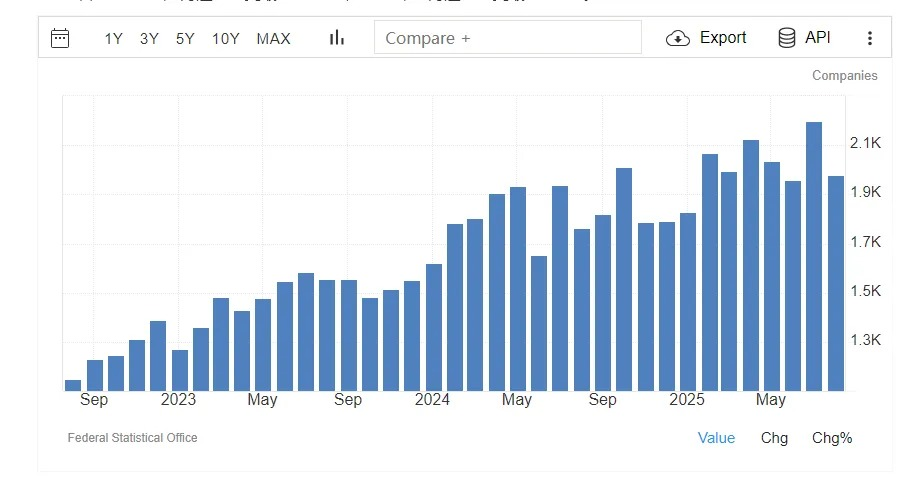
Core Viewpoint - German companies are increasingly relocating to China, marking a significant industrial migration that is accelerating over time [1][28]. Group 1: German Companies in China - Over 560 German companies have gathered in Taicang, Jiangsu, with more than 60 being renowned "hidden champions," accounting for over 10% of the total [2][29]. - The first 100 German companies took 14 years to establish in Taicang, while the next 100 (from 400 to 500) only took two years [3][30]. - German investments in Taicang exceed $6 billion, with annual industrial output surpassing 67 billion yuan [4][30]. Group 2: Major Investments and Developments - Notable investments include Volkswagen's announcement of a €2.5 billion investment to expand its production and innovation center in Hefei [5]. - Bayer plans to invest 600 million yuan in a new supply center in Jiangsu [5]. - Mercedes-Benz is investing €1 billion in a new autonomous driving research institute in Beijing [5]. - Volkswagen is investing ¥16.8 billion to establish a new smart electric vehicle R&D center in China while closing three factories in Germany [5]. Group 3: Challenges Faced by German Companies - In 2024, the number of bankruptcies in Germany reached 22,000, the highest in a decade, with a 12% year-on-year increase in the first half of 2025 [7][32]. - Major companies like Gerhard, Flabeg, and Webasto have declared bankruptcy, while others like Porsche are closing divisions to cut costs [9][34]. - The IFO Institute's survey indicates that German industrial companies' self-assessed competitiveness has hit a 31-year low, with 36.6% of respondents feeling disadvantaged compared to non-EU competitors [35]. Group 4: Factors Driving Migration - Rising energy costs, particularly due to the Green Party's policies, have led to a 148% increase in industrial electricity prices in Germany, making it 3.8 times higher than in China [37][41]. - The closure of nuclear and coal power plants has forced German industries to rely on imported electricity, resulting in soaring energy costs [41][40]. - The U.S. tariffs on EU goods have further impacted German exports, with a 6.5% decline in exports to the U.S. in the first eight months of the year [43][44]. Group 5: Strategic Advantages of Relocation - The migration of German companies to China is not merely a cost-driven relocation but a strategic choice to integrate into a more dynamic "super ecosystem" [45]. - The "innovation cost" advantage in China allows for faster technology iteration cycles, crucial for the electric vehicle market [15][48]. - The "system cost" advantage in China provides access to a complete supply chain, skilled labor, and efficient logistics, reducing overall operational costs [18][49]. - The "future cost" advantage positions China as a leader in global manufacturing, with a 31% share of global manufacturing value added [50][52]. Group 6: Future Outlook - German companies are not just relocating but are actively participating in shaping the future of industrial standards in China, as seen with BMW's investment in hydrogen fuel cell technology [52]. - The bilateral trade between Germany and China reached €185.9 billion in the first nine months of the year, with Germany accounting for 50% of EU investments in China over the past five years [24][53]. - The ongoing migration of German companies is viewed as a long-term strategic choice rather than a temporary measure, with many planning further investments in China [25][53].