未来技术

Search documents
无锡,悄悄签下14所985
投资界· 2026-03-15 07:34
Core Viewpoint - Wuxi, despite having only one "Double First Class" university, has attracted numerous prestigious universities and research institutes, establishing itself as a hub for higher education and innovation in China [2][5][9]. Group 1: University Presence in Wuxi - Wuxi hosts 14 higher education institutions, including 4 undergraduate and 10 vocational colleges, with Jiangnan University being the only "Double First Class" university [2]. - Notable universities such as Southeast University, Nanjing University of Science and Technology, and Nanjing University of Posts and Telecommunications have established campuses in Wuxi, contributing to a total of at least 14 universities and over 20 "Double First Class" institutions having a presence in the city [2][3][9]. Group 2: Economic Strength and Higher Education - Wuxi has a remarkable economic profile, with a GDP of 1.68 trillion yuan and a per capita GDP exceeding 200,000 yuan, ranking first among major cities in China for four consecutive years [5]. - The city's economic success provides a strong foundation for attracting educational resources and fostering partnerships between universities and industries [5][7]. Group 3: Industry and Innovation - Wuxi is recognized as a key player in the biopharmaceutical industry, housing 487 manufacturing and R&D enterprises, including 6 Fortune 500 companies and 17 listed firms [7]. - The city is also a national leader in the Internet of Things (IoT) and integrated circuits, with significant contributions to software and information technology services [8]. Group 4: Collaboration and Research - Universities in Wuxi are closely aligned with local industries, focusing on research areas such as advanced manufacturing, smart technology, and biomedicine [17]. - The establishment of research institutes and innovation centers by universities like Shanghai Jiao Tong University and Tsinghua University in Wuxi has facilitated technology transfer and commercialization of research outcomes [17][18]. Group 5: Talent Development - Wuxi has initiated programs to attract and train talent in high-tech fields, with nearly 1.8 million participants in training programs since 2022, fostering a skilled workforce for local industries [19]. - Collaborations with top universities have led to the establishment of practical training bases, enhancing the integration of education and industry [19].


高校加快学科专业调整,有985高校停招24个本科专业
Di Yi Cai Jing· 2025-11-04 11:19
Group 1 - The emergence of new research-oriented universities is increasingly attracting high-scoring students, with institutions like Fujian Fuyou University and Ningbo Oriental Institute of Technology achieving admission scores comparable to or exceeding those of established 985 universities [2] - Traditional universities are facing challenges due to a proliferation of diverse and sometimes misaligned programs, prompting a need for adaptation to economic and societal demands through the introduction of new programs and the discontinuation of less relevant ones [2] Group 2 - A growing number of universities are discontinuing or suspending certain programs, including notable 985 universities, as evidenced by East China Normal University's announcement of 24 programs being phased out by 2025 [3] - Shandong University has also reported a reduction in its program offerings, with 27 programs, including Financial Engineering and Civil Engineering, being suspended, while introducing new programs such as Engineering Software and Sports Training [3] Group 3 - Several "Double First-Class" universities are establishing new colleges focused on cutting-edge technologies and emerging industries, such as artificial intelligence and quantum technology, to align with national strategic needs [1] - Northwest A&F University has established the first Artificial Intelligence and Robotics College among agricultural and forestry universities in China, highlighting the trend of specialized institutions responding to technological advancements [1]
瞭望 | 加速迈向未来产业
Xin Hua She· 2025-08-25 08:24
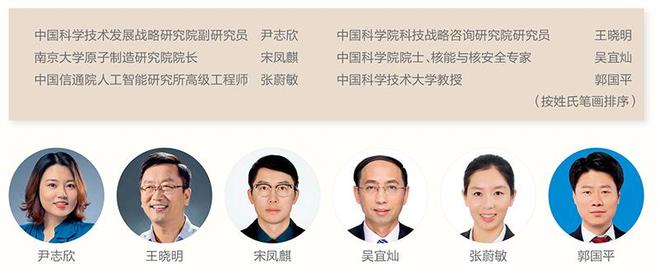
Group 1: Future Industry Development - The strategic choice to vigorously develop future industries is essential for seizing the global technological competitive high ground and forming a modern industrial system [2] - Future technologies serve as the foundation for future industries, with their generation paths filled with uncertainties [2] - Key challenges include strengthening source technology supply, breaking through conversion bottlenecks, cultivating key talents, and balancing development with safety [2] Group 2: Technology Supply System - Future industries require a multi-dimensional technology supply system, including source technologies, frontier cross-disciplinary technologies, and disruptive technologies [3][4] - Advanced nuclear energy innovation is highlighted as a key technology for future clean energy, showcasing significant progress in China's nuclear technology [4] - China has entered the global first tier in quantum computing industrialization, with a complete independent technology system established in superconducting quantum computing [4][5] Group 3: Challenges in Future Technology - Transitioning from future technology to future industry faces multiple challenges, including technology route selection, engineering implementation, and new productivity conversion mechanisms [5][6] - Advanced nuclear technology still faces challenges in commercial application and regulatory standards, impacting its multi-purpose utilization [6] - Quantum computing requires further foundational research to address issues like qubit coherence time and fault-tolerant quantum computing [7][12] Group 4: Talent Development - The breakthrough in future industries relies on deep interdisciplinary collaboration, with a significant talent gap in fields like brain-computer interfaces [11][12] - Recommendations include establishing interdisciplinary programs in key universities and promoting collaboration between academia and industry for talent cultivation [11][12] - A multi-layered talent education system is suggested to support the quantum computing field, addressing the significant talent demand [12] Group 5: Safety and Regulatory Mechanisms - Establishing an inclusive and prudent regulatory mechanism is necessary to manage the uncertainties of future industries, including exploring "regulatory sandboxes" [13] - A comprehensive safety regulatory system is essential for nuclear facilities, emphasizing the need for strict oversight throughout the lifecycle of nuclear projects [13][14] - The development of technical standards and intellectual property protection in quantum computing is crucial to ensure compatibility and safeguard innovations [14]