
本国产品标准

Search documents
两部门:保障符合本国标准 外资企业产品平等参与政府采购
Zheng Quan Shi Bao· 2025-12-19 22:45
Group 1 - The Ministry of Finance and the Ministry of Industry and Information Technology issued an opinion on implementing domestic product standards in government procurement, ensuring equal treatment for domestic and foreign enterprises [1][2] - The total scale of government procurement in 2024 is expected to exceed 3.3 trillion yuan, with contracts awarded to small and medium-sized enterprises accounting for 71.79% of the total [1] - The implementation of "domestic product standards" in government procurement will begin on January 1, 2026, as outlined in a previous notice from the State Council [1] Group 2 - The opinion requires accurate definition of products produced within China, including those produced in bonded areas and medical devices with proper registration [2] - The Ministry of Finance will collaborate with relevant industry authorities to establish cost ratio requirements for components produced in China and set reasonable transition periods for compliance [2] - Strict enforcement of equal treatment for domestic and foreign enterprises is mandated, with penalties for any discriminatory practices in government procurement activities [2]
两部门:保障符合本国标准外资企业产品平等参与政府采购
Zheng Quan Shi Bao· 2025-12-19 17:29
Core Points - The Ministry of Finance and the Ministry of Industry and Information Technology issued opinions on implementing domestic product standards in government procurement, ensuring equal treatment for domestic and foreign enterprises [1][2] - The total scale of government procurement in 2024 is expected to exceed 3.3 trillion yuan, with contracts awarded to small and medium-sized enterprises accounting for 71.79% of the total [1] - The implementation of domestic product standards will begin on January 1, 2026, as outlined in a previous notification from the State Council [1][2] Group 1 - The opinions require accurate definition of products produced within China, including those produced in bonded areas and those with medical device registration certificates [2] - The Ministry of Finance will collaborate with relevant departments to establish cost ratio requirements for components produced in China and set reasonable transition periods [2] - Strict enforcement of equal treatment for domestic and foreign enterprises in government procurement activities is mandated, with penalties for discriminatory practices [2]
徐奇渊最新的一篇文章
Sou Hu Cai Jing· 2025-10-15 15:25
Core Viewpoint - China is implementing new policies to stabilize foreign investment and enhance the business environment, particularly through clearer definitions and standards for domestic products in government procurement [2][4]. Group 1: Transparency and Clarity - The new domestic product standards are more transparent and objective, addressing previous complaints from foreign enterprises regarding the ambiguity of "domestic products" [2]. - A survey by the US-China Business Council in 2024 indicated that 38% of member companies found the definition of "domestic products" unclear, while 20% of EU Chamber members cited discrimination against foreign enterprises in government procurement as a major regulatory obstacle [2]. Group 2: Adoption of International Standards - The new regulations for recognizing domestic products borrow from practices in the US and other countries, utilizing a "domestic manufacturing + domestic component requirements" approach [3]. - Various countries have different standards for domestic content, such as the EU's requirement of at least 50% domestic content in public utilities and the US's 60% requirement for most manufactured goods, increasing to 75% by 2029 [3]. Group 3: Transition Period and Equal Treatment - A transition period allows foreign enterprises to meet the new standards, where products produced in China will initially be considered domestic products, facilitating compliance [4]. - The policy emphasizes equal treatment for all business entities, prohibiting discriminatory practices against suppliers and reinforcing fair competition principles [4]. Group 4: Alignment with International Trade Rules - The new policy allows for alignment with international agreements like GPA and CPTPP, indicating China's commitment to high-standard international trade rules [5]. - This clause reflects China's proactive stance towards foreign investment and openness to global economic integration [5].


政府采购的“本国产品标准”来了(政策解读)
Ren Min Ri Bao· 2025-10-04 02:04
Core Points - The State Council issued a notice to implement domestic product standards in government procurement, aiming to clarify the definition of "domestic products" and its implications for both domestic and foreign enterprises [1][2] - The notice allows a 20% price deduction for domestic products in competitive bidding against foreign products, promoting local production and economic stability [1][2] - The implementation of these standards is seen as a move to enhance fair competition and encourage innovation among domestic enterprises while providing a stable environment for foreign investments [2][3] Group 1 - The notice defines "domestic products" as those produced within China, with specific criteria regarding the origin of materials and components [1] - The government procurement law mandates the purchase of domestic goods, services, and projects, but there has been confusion regarding the status of products made by foreign enterprises in China [2] - The Ministry of Finance plans to establish a standard system for domestic products over the next five years, allowing a transition period for industries to adapt [2] Group 2 - Experts believe that the new policy will stimulate innovation in domestic enterprises and enhance the confidence of foreign companies in investing in China [2] - The initiative aligns with international trade standards and aims to create a transparent and predictable institutional environment [2] - The policy is not intended to create barriers but rather to foster a higher level of competition in the market [3]
增强外资企业在华投资的信心 政府采购的“本国产品标准”来了(政策解读)
Ren Min Ri Bao· 2025-10-03 21:45
Core Viewpoint - The State Council issued a notice to implement domestic product standards in government procurement, aiming to clarify the definition of "domestic products" and enhance fair competition for both domestic and foreign enterprises [1][2]. Group 1: Definition and Implementation of Domestic Products - The notice defines "domestic products" as those produced within China, requiring a transformation of attributes from raw materials to finished products, and a specified percentage of component costs to be sourced domestically [1]. - For specific products, additional requirements include that key components and processes must also be produced or completed within China [1]. Group 2: Impact on Enterprises - The notice provides a 20% price deduction for domestic products in competitive bidding against foreign products, allowing domestic products to participate in evaluations at a lower effective price [1]. - The implementation of this policy is seen as a significant step towards ensuring national treatment for foreign enterprises operating in China, aligning with international high-standard trade rules [2]. Group 3: Transition and Future Outlook - The Ministry of Finance plans to establish various domestic product standards over the next five years, with a transition period of 3-5 years to allow enterprises to adjust their production and investment strategies [2]. - Experts believe that the new policy will stimulate innovation among domestic enterprises and enhance the confidence of foreign enterprises in investing in China [2].
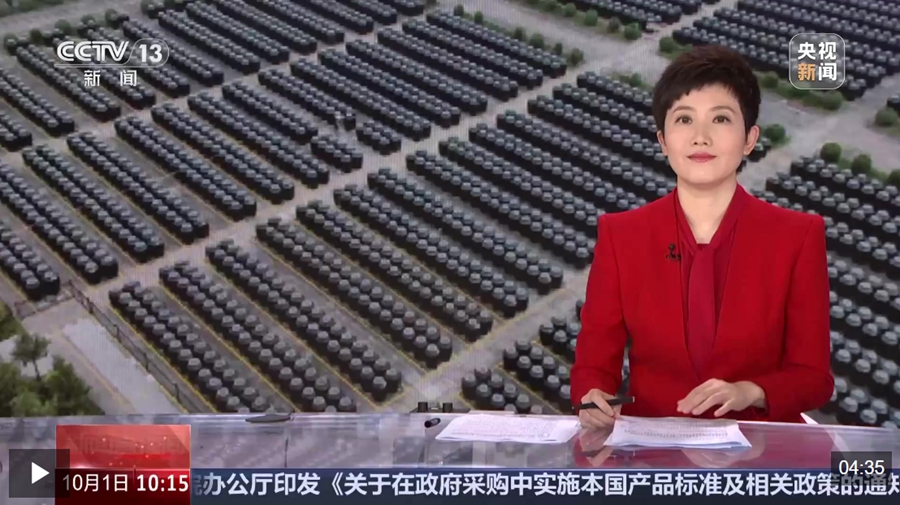
国庆中秋假期·出游 山西太原 假期看非遗 老陈醋博物馆感受传统技艺
Yang Shi Wang· 2025-10-01 11:35
Core Viewpoint - The government has issued a notice to implement domestic product standards and related policies in government procurement, aiming to promote local products and enhance domestic manufacturing capabilities [1] Group 1 - The notice emphasizes the importance of prioritizing domestic products in government procurement processes [1] - It outlines specific measures to ensure compliance with the new standards, which include evaluating suppliers based on their adherence to domestic product criteria [1] - The initiative is expected to stimulate local industries and contribute to economic growth by increasing demand for domestic goods [1]
新华解码丨完善政府采购制度 内外资企业一视同仁——聚焦政府采购领域出台本国产品标准及相关政策
Xin Hua Wang· 2025-09-30 10:59
Core Points - The State Council has issued a notice to implement domestic product standards and related policies in government procurement, effective from January 1, 2026 [1][3] - The policy aims to ensure fair competition between domestic and foreign enterprises in government procurement [6][8] Group 1: Domestic Product Standards - The domestic product standard is a fundamental and technically complex aspect of the government procurement policy system [3] - The standard specifies that products must be produced within China, with a required percentage of production components sourced domestically [4] - A 20% price evaluation preference will be granted to domestic products over non-domestic products in government procurement activities [4] Group 2: Equal Treatment of Enterprises - The policy emphasizes equal treatment for state-owned, private, and foreign enterprises, addressing concerns about potential hidden barriers for foreign companies [6] - The government aims to enhance transparency in procurement policies, which is expected to attract foreign investment [6][7] - The Ministry of Finance plans to implement the policy through clear guidelines and training for various stakeholders [6][7] Group 3: Implementation and Transition Period - The policy will be implemented gradually over a five-year period, allowing time for enterprises to adjust to the new standards [8] - The Ministry of Finance will work with relevant departments to determine the required domestic production component ratios for various products [8] - The transition period is designed to facilitate foreign enterprises in adapting their production and investment strategies in China [8]