机会均等

Search documents
美国的斩杀线为什么火起来了,一方面曾经需要移民建设,另一方面特朗普开始讨厌没钱移民,这背后是美国制度的精准筛选与淘汰机制
Sou Hu Cai Jing· 2025-12-27 15:34
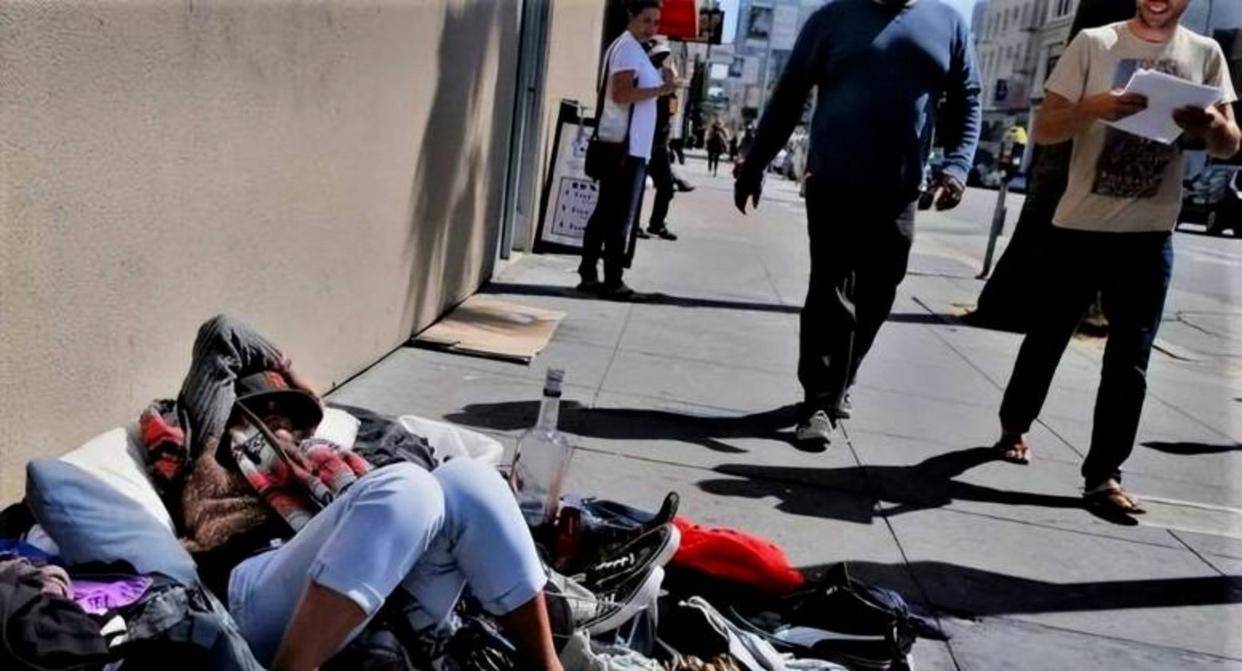
Core Viewpoint - The concept of the "kill line" has gained significant attention, representing a threshold in society where individuals are deemed disposable once they fall below a certain financial status, leading to systemic exclusion and permanent removal from societal support [1][3][10]. Group 1: Economic Conditions - According to the Federal Reserve's 2024 Economic Conditions Report, 37% of American adults cannot access $400 in emergency cash, indicating that over one-third of the population lives on the edge of financial disaster [3][7]. - A cycle of poverty is created where lack of money leads to poor credit scores, which in turn restricts access to housing and employment opportunities, further exacerbating financial instability [4][6]. Group 2: Immigration Policies - The current U.S. immigration policies reflect a shift towards valuing "wealthy contributors" over low-income labor, as seen during Trump's administration, which has led to a more stringent and calculating approach to immigration [4][6]. - The use of economic calculations in immigration enforcement, such as the cost of detaining individuals versus providing them with a one-way ticket home, highlights a shift towards viewing individuals as economic units rather than human beings [6][10]. Group 3: Homelessness and Social Issues - The phenomenon of "employed homeless" individuals, who are often well-educated and previously high-earning professionals, illustrates the growing issue of homelessness among the middle class due to systemic failures in addressing high living costs and healthcare expenses [6][9]. - California has spent approximately $24 billion over the past five years on homelessness, yet the number of homeless individuals continues to rise, indicating a failure to address the root causes of poverty [7][9]. Group 4: Societal Implications - The average life expectancy of homeless individuals in the U.S. is around 50 years, significantly lower than the general population, reflecting the severe consequences of falling below the "kill line" [9][12]. - The treatment of individuals who fall below the economic threshold mirrors corporate practices of optimizing labor costs, suggesting a broader societal trend of valuing individuals based on their economic contributions [10][12].

资本主义病了,得治
Hu Xiu· 2025-09-29 08:09
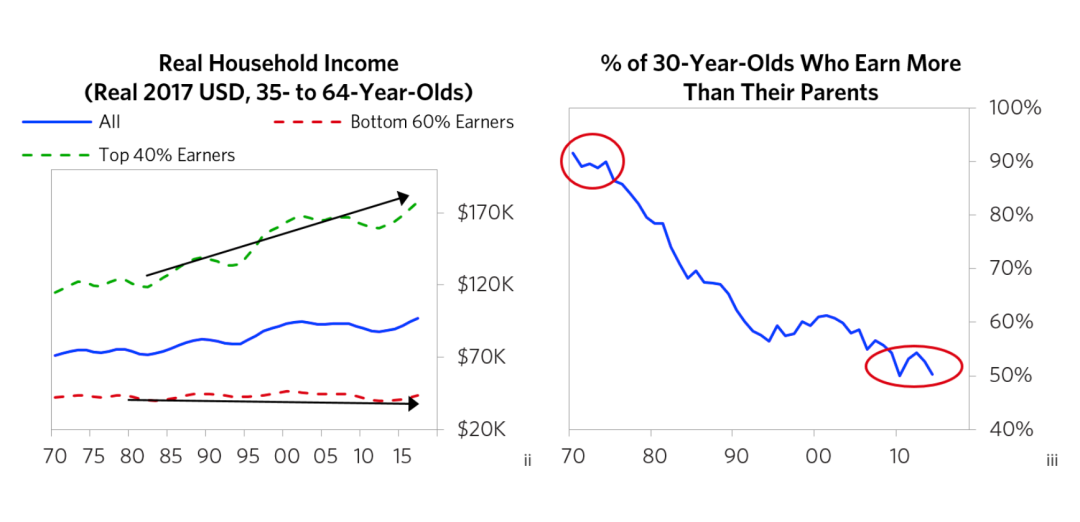
Core Insights - The article discusses the failures of capitalism in the United States, particularly highlighting the widening income and wealth gaps that have accelerated during the pandemic and post-pandemic era [1][2][5][15]. Economic Disparities - The article presents data showing that the real income of the bottom 60% of workers has stagnated since 1980, while the top 10% and 1% have seen their incomes double [19][21][28]. - The wealth gap is at its highest level since the late 1930s, with the top 1% holding more wealth than the bottom 90% combined [25][31]. - The likelihood of children earning more than their parents has dropped from 90% in 1970 to 50% today, indicating reduced economic mobility [23][38]. Education and Opportunity - The article emphasizes the importance of equal educational opportunities, noting that children from low-income families face significant disadvantages, including higher rates of poverty and food insecurity [44][45][46]. - The U.S. education system ranks poorly in standardized tests compared to other developed countries, particularly affecting students from high-poverty schools [48][49][52]. - There is a significant disparity in funding between public schools in wealthy and poor communities, exacerbating educational inequalities [68][70]. Social and Economic Consequences - The article argues that the widening income and wealth gaps lead to social unrest and political polarization, with rising populism on both the left and right [97][104][105]. - The increasing incarceration rates and their correlation with educational attainment highlight the systemic issues affecting low-income families [82][84][85]. - Health outcomes are also negatively impacted, with lower-income individuals experiencing higher rates of premature death and poorer health [88][89][91]. Recommendations for Reform - The article suggests that reforms are necessary to address the failures of capitalism, including the need for strong leadership to tackle income and wealth disparities [136][137]. - It advocates for bipartisan cooperation to redesign the economic system, focusing on equitable resource distribution and improving productivity [138][139]. - The establishment of clear metrics for success and accountability in addressing these issues is emphasized as crucial for effective reform [140][141].