
机制设计理论

Search documents
刚刚!2025年诺贝尔经济学奖揭晓!
券商中国· 2025-10-13 10:12
Core Points - The 2025 Nobel Prize in Economic Sciences was awarded to Joel Mokyr, Philippe Aghion, and Peter Howitt for their contributions to understanding innovation-driven economic growth [1] - Mokyr received half of the prize for identifying prerequisites for sustained growth through technological advancement, while Aghion and Howitt shared the other half for their theory on sustained growth through creative destruction [1] Summary by Sections Recent Nobel Prize Winners - The 2024 Nobel Prize in Economic Sciences was awarded to Daron Acemoglu, Simon Johnson, and James A. Robinson for their research on how institutions shape and influence prosperity [7] - The 2023 prize went to Claudia Goldin for her work on understanding women's labor market outcomes [7] - The 2022 prize was awarded to Ben Bernanke, Douglas W. Diamond, and Philip H. Dybvig for their research on banks and financial crises [8] History and Significance of the Nobel Prize - The Nobel Prize in Economic Sciences, officially known as the Sveriges Riksbank Prize in Economic Sciences in Memory of Alfred Nobel, has been awarded since 1969, totaling 56 awards to 96 individuals by October 12, 2025 [8] - The youngest laureate was Esther Duflo, who won in 2019 at the age of 46, while the oldest was Leonid Hurwicz, who was 90 when he received the award in 2007 [8][9] Financial Aspects of the Nobel Prize - The prize amount increased from 10 million Swedish Krona to 11 million Swedish Krona (approximately 8.36 million RMB) starting in 2023, marking a historical high [11] - The Nobel Foundation's assets have grown to over 6.1 billion Swedish Krona (approximately 4.6 billion RMB), a nearly 200-fold increase from the original endowment of 31 million Swedish Krona [12]

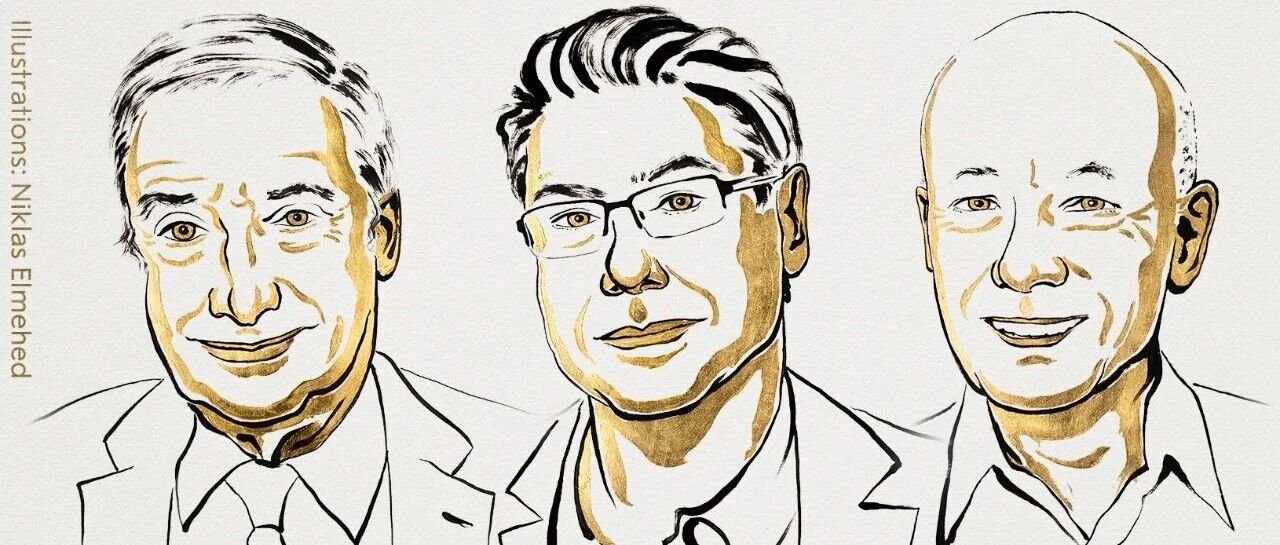
诺贝尔经济学奖即将揭晓,实证新贵和理论泰斗谁将折桂?
Xin Jing Bao· 2025-10-13 02:14
Core Viewpoint - The 2025 Nobel Prize in Economic Sciences is highly anticipated, with diverse predictions regarding potential winners, including fields such as behavioral economics, labor economics, and international trade theory [1][2]. Group 1: Nobel Prize Overview - The Nobel Prize in Economic Sciences, officially known as the "Sveriges Riksbank Prize in Economic Sciences in Memory of Alfred Nobel," has been awarded since 1969, with a total of 96 laureates as of October 12, 2025 [2]. - The prize is awarded annually on the anniversary of Nobel's death, and it can be shared among up to three individuals [2]. - The youngest laureate is Esther Duflo, who won in 2019 at the age of 46, while the oldest is Leonid Hurwicz, who was 90 when he won in 2007 [3]. Group 2: Female Laureates - Only three women have received the Nobel Prize in Economic Sciences: Esther Duflo, Elinor Ostrom, and Claudia Goldin [3]. - Elinor Ostrom was the first female laureate, awarded in 2009 for her work on public resource management, while Claudia Goldin received the prize in 2023 for her contributions to understanding women's labor market outcomes [3]. Group 3: Predictions and Trends - As the announcement date approaches, speculation about potential winners intensifies, with notable candidates including recipients of other prestigious awards like the Clark Medal and the Clarivate Citation Laureates [4]. - Recent winners of the Clarivate Citation Laureates in economics include David Autor and Lawrence F. Katz for their analysis of wage structure and income inequality, and Marianne Bertrand and Sendhil Mullainathan for their work on labor economics [4][5]. - The Nobel Prize committee emphasizes that awarded discoveries must have significant scientific merit and societal impact, leading to extensive subsequent research [5].
一财社论: 以激励约束机制规范政府采购市场
Di Yi Cai Jing· 2025-06-24 13:52
Core Viewpoint - The core strategy for improving the government procurement market is to enhance the incentive and constraint mechanisms, continuously lower market entry barriers, and gradually open the market to all legitimate market entities, allowing information to be effectively priced in the government procurement market [1][4]. Group 1: Government Procurement Market Regulation - The Ministry of Finance, Ministry of Public Security, and State Administration for Market Regulation have launched a special rectification action targeting four types of illegal activities in the government procurement sector from June to January of the following year [2]. - The government procurement market is currently a vibrant sector within the national economy, with various ownership enterprises eager to enter this market to inject new vitality into their operations [2][4]. - The special rectification action aims to standardize the development of the government procurement market and create a fair competitive environment [2][4]. Group 2: Information Asymmetry and Regulatory Challenges - The government procurement market exhibits typical characteristics of asymmetric information, leading to moral hazard and adverse selection risks due to the regulatory bodies' inability to effectively obtain observable costs and contract costs [3][4]. - The existing issues in the government procurement market, such as discriminatory clauses and other illegal activities, stem from the information structure and constraints faced by regulators and enterprises [3][4]. - The effectiveness of the special rectification action will depend on addressing the underlying issues of asymmetric information and the incompleteness of commitments within the regulatory framework [4]. Group 3: Market Structure and Mechanism Design - To effectively capture illegal activities in the government procurement market, it is essential to address the constraints arising from asymmetric information and the imperfections of regulators [4]. - The government procurement market currently accounts for about 10% of annual government fiscal expenditures, indicating that the scale effect of the market is not fully realized [4]. - There is a suggestion to include monopolistic state-owned enterprises in the government procurement market to diversify the buyer base and enhance market dynamics [4][5].