机器人泡沫

Search documents
机器人赛道泡沫何时破?
财富FORTUNE· 2026-01-05 13:02
Core Viewpoint - The article discusses the recent controversy surrounding Yushu Technology's A-share listing, emphasizing that the company has not applied for a "green channel" and that its listing process is proceeding normally [1][3]. Group 1: Listing and Market Concerns - Yushu Technology issued a strong statement denying reports of its listing being halted, clarifying that it has never applied for a "green channel" and that its listing work is progressing as planned [1][3]. - The market is more concerned about whether there is a bubble in the robotics sector, with the founder of Yushu Technology, Wang Xingxing, suggesting that current concerns about a bubble may not hold true in the long term [4][11]. - Wang argues that the perception of a bubble should be viewed as a natural phase in industry development rather than a moral judgment, as many important industries have gone through similar processes before maturing [5][6]. Group 2: Technological Challenges and Ethical Concerns - The core issue facing humanoid robots is not a wrong direction but rather the failure to cross a critical threshold, with hardware and algorithmic limitations hindering efficiency and reliability [8][10]. - Wang compares the current state of robotics to early automobiles, suggesting that while technology may be "usable but not perfect," it is approaching a critical transformation [9]. - Ethical concerns are highlighted, with Wang emphasizing the risks of robots being misused and the potential for public misunderstanding, which could lead to negative perceptions of the technology [10][11]. Group 3: Future Outlook - The article concludes that for Yushu Technology, the listing is merely a matter of time, and the real determinants of its future will be product demand, technological leadership, and cost sustainability after any market corrections [12]. - The presence of bubbles is acknowledged as part of the industry's evolution, with the expectation that only companies that focus on genuine product development will survive the inevitable market fluctuations [12].

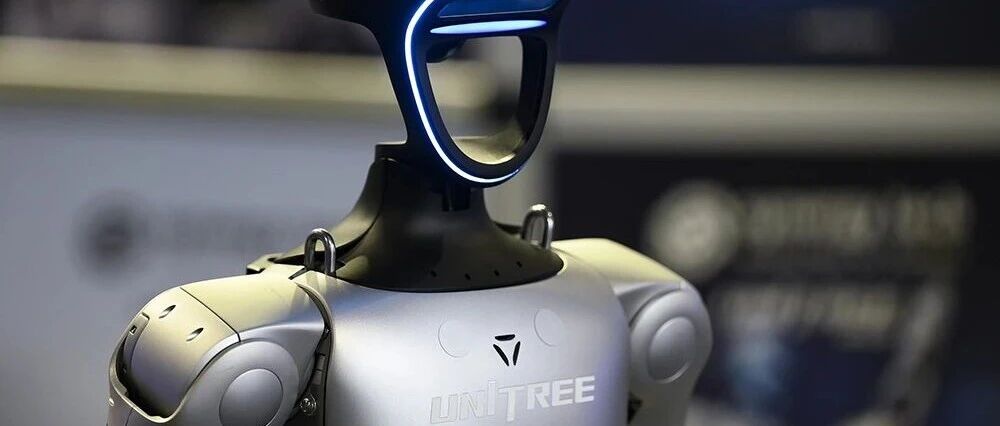
VC开始重新审视机器人泡沫了
3 6 Ke· 2025-12-23 02:34
Core Insights - The robotics sector is experiencing a significant influx of financing, with companies like Yunshenchu, Zhongqing, Yuliqi, and Luming announcing successful funding rounds [1][2][3] - The trend of adding "+" to funding rounds is becoming common, indicating a shift in how early-stage financing is structured, with many companies opting for multiple smaller rounds rather than single large ones [1][4] Financing Trends - Yuliqi Robotics completed two rounds of financing totaling 300 million RMB in angel funding, with participation from various investment firms and existing shareholders [2] - Luming Robotics secured several million RMB in Pre-A1 and Pre-A2 rounds, with investments from notable firms, aimed at enhancing their capabilities in embodied intelligence [2][3] - Zhongqing Robotics exemplifies the trend of "+" in A rounds, having recently completed A1+ and A2 rounds, building on previous funding of 1 billion RMB [3] Company Profiles - Yuliqi Robotics, founded less than a year ago by a young entrepreneur, has rapidly engaged in multiple funding rounds, indicating strong investor confidence [2] - Luming Robotics, also established in 2024, is led by a founder with extensive experience in robotics, highlighting the trend of experienced teams entering the market [2][3] - Zhongqing Robotics is led by a serial entrepreneur with a background in IoT, showcasing a diverse range of leadership experiences in the robotics field [3] Market Dynamics - The increasing complexity of projects in the robotics sector is leading to a need for more substantial funding at earlier stages, reflecting a tightening market for capital [4] - The industry is facing challenges in defining clear application scenarios for robots, raising questions about the sustainability of current funding practices [6][7] - The cycle of financing and scaling is critical for companies to reduce costs and secure orders, with a failure in this cycle potentially leading to rapid decline [7]

机器人泡沫大讨论:揭秘“虚火”下的真实逻辑
3 6 Ke· 2025-12-01 07:20
Group 1 - The humanoid robot sector is currently experiencing a debate between being in a "bubble" or on the "eve" of a technological breakthrough, highlighted by the recent release of 1X's Neo demonstration video, which has sparked both admiration and skepticism due to its reliance on teleoperation rather than autonomous intelligence [1][2] - Goldman Sachs' report indicates a significant gap between the optimistic production plans of companies (aiming for annual production of 100,000 to 1 million units) and the actual large-scale orders, predicting that global humanoid robot shipments may only reach 1.38 million units by 2035 [1][2] - Despite facing skepticism regarding "fake" capabilities and potential overcapacity, the embodied intelligence sector has attracted substantial capital investment and shows strong momentum in parallel with AI technology advancements over the past few years [1] Group 2 - The current state of the robot sector is being compared to the pre-explosion phase of technologies like ChatGPT, with discussions on whether the market is overheated or if there are still clear investment opportunities to be found [2] - The conversation highlights the importance of distinguishing between two types of companies: those focused on advanced manufacturing or smart hardware, and those pursuing true embodied intelligence, which is data-driven and likely humanoid [25][26] - The U.S. and China are seen as having different strengths in the robotics field, with the U.S. leading in foundational models and software, while China excels in hardware iteration and supply chain efficiency [13][15][19] Group 3 - The investment logic in the robotics sector is debated, with one side focusing on specialized devices that solve specific problems and the other on the broader potential of embodied intelligence that requires large-scale data training [25][26] - The future of robotics is predicted to evolve through distinct phases, with the next 2-3 years expected to bring about a "GPT-3 moment" in robotics, followed by a "ChatGPT moment" in about five years, where practical applications and user acceptance may begin to emerge [56][57] - The discussion emphasizes the need for vertical integration in robotics, combining software and hardware capabilities to achieve successful commercialization [19][56] Group 4 - The challenges of data collection and the "data cold start" problem are highlighted, particularly in the context of 1X's Neo robot, which relies on remote operation and raises questions about its ability to operate independently in consumer environments [41][43] - The current state of commercial applications for robots is still in the experimental phase, with specific use cases in structured environments like factories and logistics centers being explored, but not yet fully realized [45][51] - The future of hardware in robotics is expected to evolve towards a modular approach, similar to smartphones, but the progress will largely depend on software advancements rather than significant hardware breakthroughs [52][55]