Neo机器人

Search documents
机器人泡沫大讨论:揭秘“虚火”下的真实逻辑
3 6 Ke· 2025-12-01 07:20
Group 1 - The humanoid robot sector is currently experiencing a debate between being in a "bubble" or on the "eve" of a technological breakthrough, highlighted by the recent release of 1X's Neo demonstration video, which has sparked both admiration and skepticism due to its reliance on teleoperation rather than autonomous intelligence [1][2] - Goldman Sachs' report indicates a significant gap between the optimistic production plans of companies (aiming for annual production of 100,000 to 1 million units) and the actual large-scale orders, predicting that global humanoid robot shipments may only reach 1.38 million units by 2035 [1][2] - Despite facing skepticism regarding "fake" capabilities and potential overcapacity, the embodied intelligence sector has attracted substantial capital investment and shows strong momentum in parallel with AI technology advancements over the past few years [1] Group 2 - The current state of the robot sector is being compared to the pre-explosion phase of technologies like ChatGPT, with discussions on whether the market is overheated or if there are still clear investment opportunities to be found [2] - The conversation highlights the importance of distinguishing between two types of companies: those focused on advanced manufacturing or smart hardware, and those pursuing true embodied intelligence, which is data-driven and likely humanoid [25][26] - The U.S. and China are seen as having different strengths in the robotics field, with the U.S. leading in foundational models and software, while China excels in hardware iteration and supply chain efficiency [13][15][19] Group 3 - The investment logic in the robotics sector is debated, with one side focusing on specialized devices that solve specific problems and the other on the broader potential of embodied intelligence that requires large-scale data training [25][26] - The future of robotics is predicted to evolve through distinct phases, with the next 2-3 years expected to bring about a "GPT-3 moment" in robotics, followed by a "ChatGPT moment" in about five years, where practical applications and user acceptance may begin to emerge [56][57] - The discussion emphasizes the need for vertical integration in robotics, combining software and hardware capabilities to achieve successful commercialization [19][56] Group 4 - The challenges of data collection and the "data cold start" problem are highlighted, particularly in the context of 1X's Neo robot, which relies on remote operation and raises questions about its ability to operate independently in consumer environments [41][43] - The current state of commercial applications for robots is still in the experimental phase, with specific use cases in structured environments like factories and logistics centers being explored, but not yet fully realized [45][51] - The future of hardware in robotics is expected to evolve towards a modular approach, similar to smartphones, but the progress will largely depend on software advancements rather than significant hardware breakthroughs [52][55]



为啥机器人集体放弃“跑酷” 全去“叠衣服”了?
机器人大讲堂· 2025-11-24 15:00
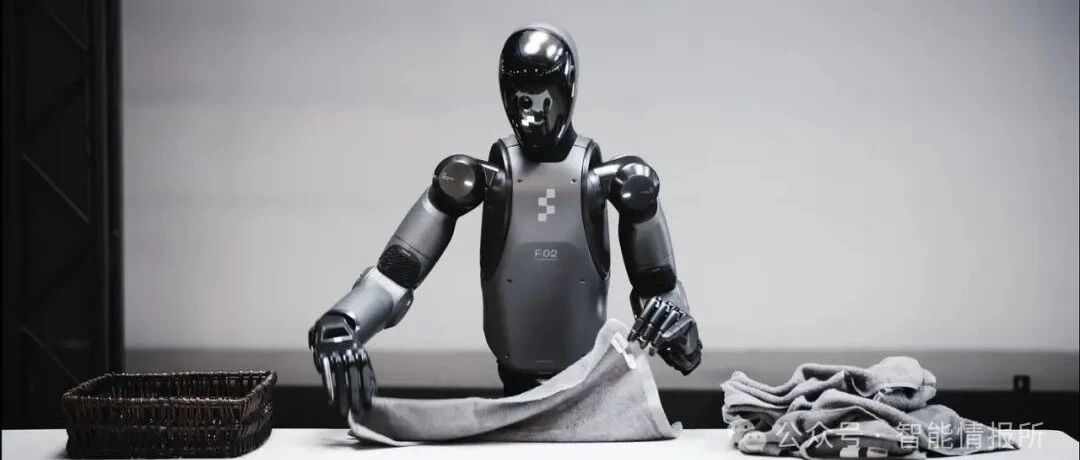
Core Viewpoint - The robotics industry has shifted focus from showcasing extreme capabilities, such as parkour and dancing, to addressing practical household tasks like folding clothes, indicating a maturation of the market and a response to real consumer needs [3][7][27]. Group 1: Industry Trends - The initial excitement around robotics was characterized by impressive demonstrations of movement and balance, which attracted capital and interest in the early stages of technology development [27]. - The current trend shows a significant pivot towards practical applications, with companies now prioritizing user needs over mere technical prowess [27][30]. - The emergence of clothing folding robots reflects a convergence of technological advancements and market demand, as the ability to fold clothes has become a more relatable and desirable function for consumers [9][15]. Group 2: Technological Advancements - Breakthroughs in robot learning technologies, such as diffusion models and zero-shot learning, have enabled robots to learn tasks like folding clothes from human demonstrations without extensive programming [13]. - The reduction in technical barriers has allowed startups to leverage pre-trained models to create functional demonstrations, making the technology more accessible [13][15]. - Despite advancements, current robotic demonstrations still reveal limitations in precision and adaptability, indicating that further improvements in algorithms and hardware are necessary [29][30]. Group 3: Market Demand and Consumer Expectations - There is a strong consumer desire for robots that can perform household tasks, with many willing to pay for solutions that alleviate mundane chores like folding clothes [15][26]. - The gap between what companies claim their robots can do and what consumers expect in terms of performance and reliability remains significant [24][26]. - Current demonstrations often fail to address the full scope of household tasks, focusing primarily on the folding action without integrating the entire process from retrieval to storage [24][30]. Group 4: Future Directions - The industry must continue to focus on practical applications and user needs to drive commercial viability, moving beyond mere technical demonstrations [30]. - As technology matures, there is potential for robots to expand their capabilities to include a wider range of household tasks, provided they remain aligned with consumer demands [29][30]. - The shift towards practical applications signifies a more rational approach to robotics, emphasizing the importance of solving real-world problems over showcasing extreme capabilities [30].