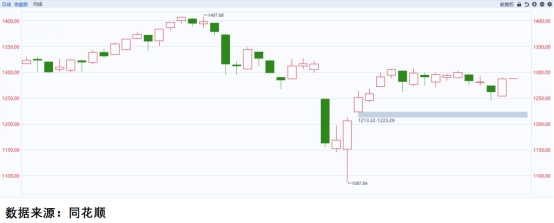
机构震仓洗盘

Search documents
融资净买超29亿的行业,藏着拿住好股的关键
Sou Hu Cai Jing· 2025-12-29 02:43
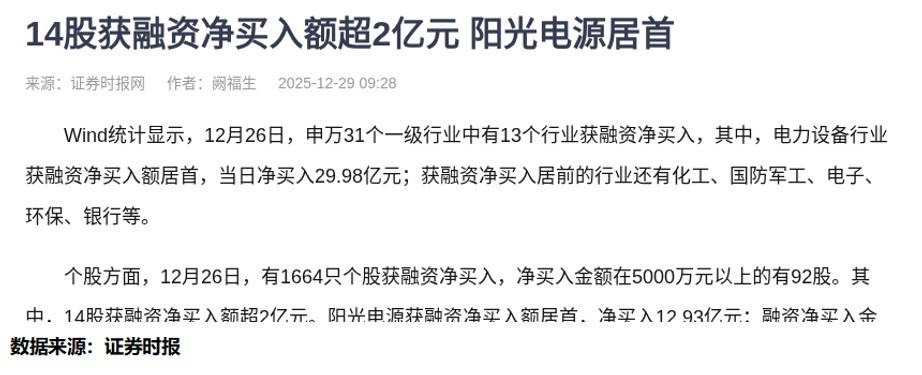
Core Insights - The article emphasizes the importance of understanding institutional actions behind stock price movements rather than just focusing on which stocks are being heavily bought. It highlights that many investors sell too early due to market volatility, missing out on potential gains [4][12]. Group 1: Financing Trends - On December 26, among 31 primary industries, 13 experienced net financing inflows, with the electric equipment sector attracting the most at 2.998 billion [1]. - The stock "Sungrow Power" led with a net inflow of 1.293 billion, indicating strong institutional interest in this sector [1]. Group 2: Institutional Behavior - The article discusses how institutions create volatility to shake off retail investors, making them sell at inopportune times. This is done through tactics like sudden sell-offs or prolonged price stagnation [4][12]. - Good stocks often exhibit larger price fluctuations as institutions aim to prevent easy profits for retail investors, thereby consolidating their own positions [4][5]. Group 3: Quantitative Analysis - The use of quantitative data is highlighted as a means for investors to understand institutional intentions. Key metrics include "dominant momentum" reflecting trading behaviors and "institutional inventory" indicating the level of institutional activity [9][13]. - A combination of blue "buyback" signals and sustained orange "institutional inventory" suggests that institutions are accumulating shares, often during periods of apparent price weakness [9][12]. Group 4: Investor Mindset - Many investors fail to hold onto winning stocks due to anxiety caused by market fluctuations. Understanding institutional strategies can help maintain a steadier investment approach [12][14]. - The article suggests that the essence of investing lies in observing institutional actions and capital flows rather than merely speculating on price movements [14].

18年量化老手揭秘:机构震仓洗盘真相
Sou Hu Cai Jing· 2025-12-01 14:01
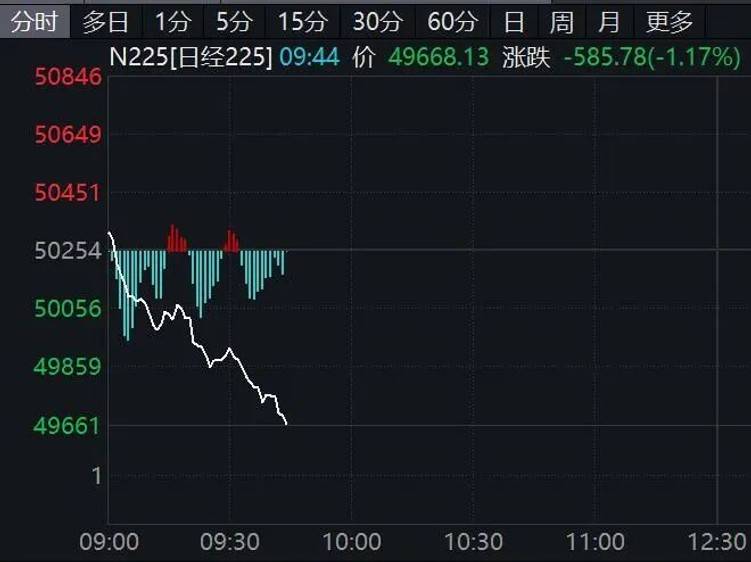
Group 1 - The global market is experiencing a stark contrast, with Japanese and Korean stock markets showing significant volatility, exemplified by the Nikkei 225 index initially rising but then dropping over 1%, and the Korean Composite Index flipping from a 1.2% gain to a loss [1][3] - Cryptocurrency markets are also showing divergence, with Bitcoin falling below $87,000 and Ethereum dropping below $2,900, while gold prices are rising, reminiscent of the 2008 financial crisis when gold served as a safe haven during risk asset declines [3][5] - Geopolitical tensions, particularly related to comments from former President Trump regarding Venezuela, are contributing to market uncertainty, highlighting the market's aversion to unpredictability [3][5] Group 2 - Many investors struggle to hold onto stocks during a bull market, often attributing their inability to external factors, but the real issue lies in not understanding the intentions of institutional investors [5][6] - Institutional investors are likened to skilled players in a card game, whose actions significantly influence stock price movements, making it crucial for retail investors to discern their strategies [5][6] - The advancement of computer technology and quantitative data analysis provides tools for retail investors to decode institutional behavior, potentially allowing them to make more informed investment decisions [6][12] Group 3 - Key quantitative data indicators include "dominant momentum," which reflects various trading behaviors, and "institutional inventory," which shows the activity level of large funds [11][12] - Recognizing signals of institutional activity, such as a combination of "recovery" behavior and active "inventory," can indicate opportunities for retail investors to capitalize on market fluctuations [12][16] - The current market movements, including the fluctuations in Japanese and Korean stocks and the contrasting trends in cryptocurrencies and gold, suggest that large funds are reallocating their asset portfolios [18]
小盘股惊现冰火两重天!机构开始暗度陈仓!
Sou Hu Cai Jing· 2025-05-04 11:27
Group 1 - The market is experiencing a significant differentiation among small-cap stocks, with high-quality micro-cap stocks seeing substantial gains while poor-performing ones face declines of 20%-50% [2] - This differentiation indicates a notable change in risk appetite among investors, who are now more inclined to actively seek out potential stocks within the small-cap sector rather than opting for cash to avoid risks [2] - The easing of market anxiety as annual reports conclude is viewed as a positive signal for the overall market, suggesting a higher probability of an upward trend in the future [2] Group 2 - Individual stocks are beginning to show signs of potential breakout, despite the general market focus on index performance [4] - Retail investors often react slowly to market changes, primarily relying on stock price movements for decision-making, which can lead to missed opportunities [4] - The analysis emphasizes the importance of understanding the true behavior of institutional funds rather than just observing stock price trends, as this can reveal underlying market dynamics [6][8] Group 3 - The presence of institutional funds in over 80% of stocks does not guarantee profitability for retail investors, highlighting the need to track institutional trading patterns [6] - Data analysis can uncover the true actions of institutional investors, which are often obscured by market sentiment and news [8][10] - The concept of "shakeout" by institutions, where they intentionally drive down stock prices to eliminate retail investors before a price increase, is a critical strategy to understand [10][12] Group 4 - Observations indicate that when institutional inventory data becomes active, stock prices are likely to rise, while a lack of such data often precedes price declines [14] - Relying on data analysis rather than traditional price charts can provide a more reliable understanding of market trends and help avoid potential pitfalls [14]