材料国产化替代

Search documents
深度|商业航天新材料全景图:新材料企业的机遇与投资逻辑(附20+报告)
材料汇· 2026-02-02 14:42
Core Viewpoint - The global commercial aerospace market is experiencing unprecedented growth, with projections indicating a market size of $75-125 billion in 2024 and expected to reach $140 billion in 2025. China's commercial aerospace market is particularly rapid, projected to reach 2.3 trillion RMB in 2024, a year-on-year growth of 22.9%, and expected to exceed 2.8 trillion RMB in 2025. Material technology is becoming a core factor determining the competitiveness of commercial aerospace companies [1]. Group 1: Material Demand Characteristics - The demand for materials in commercial aerospace differs significantly from traditional aerospace, focusing on lightweight materials to reduce launch costs, with savings of approximately 20,000-30,000 RMB per kilogram of payload. The core logic for material selection is "lightweight equals increased energy, temperature resistance equals increased efficiency, and reliability equals cost" [1]. - Breakthroughs in reusable technology require materials to withstand over 100 uses and extreme temperature ranges from -270°C to 3000°C, as well as complex space environments [1]. Group 2: Overview of Key New Materials - A total of 128 new materials have been identified as critical for commercial aerospace applications, including aluminum-lithium alloys, titanium alloys, stainless steel, high-temperature alloys, and various composite materials [3][4]. - Key materials such as carbon fiber composites are highlighted for their strength-to-weight ratio, with T700 grade carbon fiber being used in less critical components and T1100 grade for primary load-bearing structures [9][11]. Group 3: Carbon Fiber Composites - Carbon fiber composites (CFRP) are essential in commercial aerospace, accounting for 15%-20% of the manufacturing cost of medium-sized reusable rockets, with values exceeding 20 million RMB per unit. In satellite manufacturing, CFRP costs represent 12%-15% of total manufacturing costs for low Earth orbit satellites [10][11]. - The domestic market for carbon fiber is dominated by companies like Zhongjian Technology and Guangwei Composites, with a significant market share in high-strength carbon fiber applications [12][13]. Group 4: Stainless Steel as a Core Material - Stainless steel is recognized for its low cost, high temperature resistance, and strength, making it a key material for reusable rocket technology. It is used in major structural components like rocket bodies and fuel tanks, aligning with the commercial aerospace principle of "reliability equals cost" [15][16]. - The main grades of stainless steel used can withstand temperatures up to 1400°C and maintain structural stability across a wide temperature range, significantly reducing manufacturing costs compared to advanced materials like titanium alloys [15][16]. Group 5: High-Temperature Materials and Refractory Metals - High-temperature materials are critical for rocket engine technology, directly influencing thrust, efficiency, and reusability. Materials such as ceramic matrix composites and nickel-based superalloys are essential for components exposed to extreme temperatures [19][20][25]. - The domestic production of high-temperature alloys, such as GH4169, has reached over 95% localization, indicating a strong domestic supply chain for aerospace applications [26].




全球与中国4N级高纯铁市场现状及未来发展趋势
QYResearch· 2026-01-23 05:40
Core Viewpoint - The article discusses the development and market potential of high-purity iron (4N and 5N grades), highlighting advancements in production technology and the growing demand across various industries, including renewable energy, electronics, and aerospace [3][16][19]. Product Definition and Statistical Scope - High-purity iron is categorized based on purity levels: industrial pure iron (2N-3N), high-purity iron (4N, 99.99%), and ultra-pure iron (5N-6N). 4N high-purity iron is characterized by a total impurity content of no more than 0.01% and is produced through advanced refining techniques [2][5]. - 4N high-purity iron is essential for applications in soft magnetic alloys, magnetic shielding materials, and high-end electronic components, balancing electromagnetic performance and chemical stability [2][3]. Market Analysis - The global market for 4N high-purity iron is projected to reach $27.82 million in 2024, with an expected compound annual growth rate (CAGR) of 12.40% from 2025 to 2031, potentially reaching $59.64 million by 2031 [7]. - China's market for 4N high-purity iron is anticipated to be $3.64 million in 2024, accounting for approximately 13.08% of the global market, and is expected to grow to $12.74 million by 2031, increasing its global share to 21.36% [11]. Production and Consumption Insights - North America and Japan are the primary production regions for 4N high-purity iron, holding over 75% of the market share in 2024 [14]. - The Asia-Pacific region is the largest consumer market, expected to account for 37.26% of the market share in 2024, followed by North America and Europe [15]. Industry Trends and Developments - The demand for ultra-pure iron is rising due to advancements in high-end manufacturing sectors such as renewable energy, semiconductors, and aerospace, with 4N and 5N grades becoming increasingly important [16]. - Technological advancements in purification and processing, including vacuum melting and electro-refining, are enabling stable production of 5N grade iron, with Chinese companies transitioning from experimental to large-scale manufacturing [16][19]. Competitive Landscape - Major global players in the 4N high-purity iron market include Allied Metals, TOHO Zinc, and Hebei Longfengshan Group, with the top three companies holding a market share of 73.47% in 2024 [11][20]. - The industry is characterized by high market concentration, and competition is expected to intensify in the coming years as domestic manufacturers enhance their capabilities [11][16]. Future Outlook - The ultra-pure iron industry is expected to evolve towards higher purity levels and stricter impurity control, driven by emerging fields such as semiconductor manufacturing and quantum computing [18]. - Chinese enterprises are anticipated to shift from a "follower" to a "peer" position in the 5N ultra-pure iron market, supported by policy initiatives and technological advancements [19].
中国石油沥青勇担铺装重任
Jing Ji Wang· 2025-10-13 09:18
Core Viewpoint - The successful application of "Kunlun·Huanxiling" asphalt in the renovation of Chang'an Avenue demonstrates the technological strength and brand commitment of China National Petroleum Corporation (CNPC) through the use of 100% domestically produced high-end asphalt products [1][2]. Group 1: Product Performance - "Kunlun·Huanxiling" asphalt features five outstanding characteristics: non-sticky wheels, high load resistance, rutting resistance, aging resistance, and odorless properties, which enhance construction efficiency and ensure long-term stability under heavy traffic and temperature variations [2]. - The product's excellent aging resistance extends the lifespan of the pavement, while its environmentally friendly nature ensures comfort for construction sites and surrounding areas [2]. Group 2: Research and Development - The development of "Kunlun·Huanxiling" asphalt involved a multi-year, interdisciplinary collaborative research effort, addressing technical challenges related to the stable dispersion of high proportions of SBS modifiers in traditional low-grade asphalt [1][2]. - The research team proposed the "composite modification of elastomers" theory, leading to the successful development of high-viscosity and high-elasticity modified asphalt, achieving domestic substitution [1]. Group 3: Implementation and Logistics - CNPC's comprehensive approach includes efficient coordination among various units, ensuring timely completion of the project within a limited night construction window [1][3]. - The logistics support system, including dedicated pipelines for raw material transportation and a specialized logistics line for Chang'an Avenue, has been established to ensure high-quality application of the asphalt on-site [3]. Group 4: Strategic Importance - The successful implementation of "Kunlun·Huanxiling" asphalt aligns with China's innovation-driven development strategy, showcasing CNPC's commitment to tackling key core technologies and promoting material localization [2]. - The company aims to continue demonstrating its innovative achievements and responsibility in the high-end materials sector through ongoing projects using "Kunlun" brand asphalt [3].

拿下行业头部企业千万级订单,高端压电材料研发商「江瓷电子」完成数千万元pre-A轮融资 | 36氪首发
Sou Hu Cai Jing· 2025-09-04 03:01
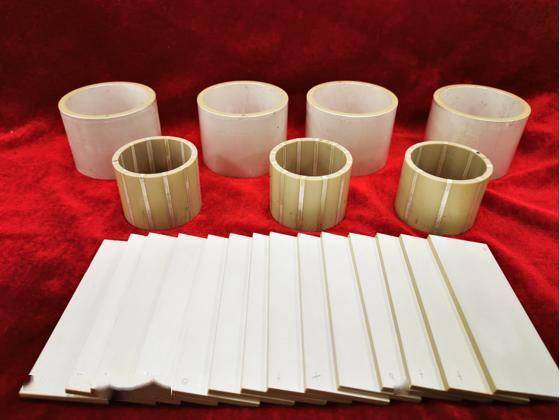
Core Insights - Jiangci Electronics has completed a multi-million pre-A round financing led by Yijing Capital and Qianrong Holdings, with funds primarily allocated for expansion and commercialization [1] - The company focuses on high-performance piezoelectric materials and components, with applications in deep well detection, non-destructive testing, and sonar radar [1][4] - Jiangci Electronics has established partnerships with leading companies in oil and IoT sectors, securing multi-million orders [1][4] Group 1: Technology and Product Development - Jiangci Electronics specializes in high-temperature and high-performance piezoelectric materials, having developed new formulations and processing techniques to enhance material performance [4][5] - The high-temperature piezoelectric materials can operate at temperatures between 260°C and 300°C, addressing a significant market need in oil well logging and refining [4][5] - The company has improved the piezoelectric performance of traditional PZT ceramics by two to three times through innovative processing techniques [5][6] Group 2: Market Demand and Application - The demand for high-performance piezoelectric materials is increasing due to applications in deep earth exploration, industrial inspection, and smart IoT [2][6] - Jiangci Electronics is actively developing non-destructive testing products for leading companies in the IoT sector, enhancing detection capabilities [6][8] - The company aims to expand its market presence by focusing on both component-level and device-level products, leveraging its material advantages [8] Group 3: Future Outlook and Strategy - Jiangci Electronics plans to scale production capacity from kilogram-level to tens of kilograms, with a goal of achieving significant sales growth [8][9] - The company anticipates delivering nearly 10 million yuan in products by mid-2025, with an expected annual revenue exceeding 20 million yuan [8][9] - Investors believe that Jiangci Electronics is well-positioned to lead in the high-end piezoelectric materials market, addressing the urgent need for domestic alternatives [10][11]