碳纳米材料

Search documents
深度|商业航天新材料全景图:新材料企业的机遇与投资逻辑(附20+报告)
材料汇· 2026-02-02 14:42
Core Viewpoint - The global commercial aerospace market is experiencing unprecedented growth, with projections indicating a market size of $75-125 billion in 2024 and expected to reach $140 billion in 2025. China's commercial aerospace market is particularly rapid, projected to reach 2.3 trillion RMB in 2024, a year-on-year growth of 22.9%, and expected to exceed 2.8 trillion RMB in 2025. Material technology is becoming a core factor determining the competitiveness of commercial aerospace companies [1]. Group 1: Material Demand Characteristics - The demand for materials in commercial aerospace differs significantly from traditional aerospace, focusing on lightweight materials to reduce launch costs, with savings of approximately 20,000-30,000 RMB per kilogram of payload. The core logic for material selection is "lightweight equals increased energy, temperature resistance equals increased efficiency, and reliability equals cost" [1]. - Breakthroughs in reusable technology require materials to withstand over 100 uses and extreme temperature ranges from -270°C to 3000°C, as well as complex space environments [1]. Group 2: Overview of Key New Materials - A total of 128 new materials have been identified as critical for commercial aerospace applications, including aluminum-lithium alloys, titanium alloys, stainless steel, high-temperature alloys, and various composite materials [3][4]. - Key materials such as carbon fiber composites are highlighted for their strength-to-weight ratio, with T700 grade carbon fiber being used in less critical components and T1100 grade for primary load-bearing structures [9][11]. Group 3: Carbon Fiber Composites - Carbon fiber composites (CFRP) are essential in commercial aerospace, accounting for 15%-20% of the manufacturing cost of medium-sized reusable rockets, with values exceeding 20 million RMB per unit. In satellite manufacturing, CFRP costs represent 12%-15% of total manufacturing costs for low Earth orbit satellites [10][11]. - The domestic market for carbon fiber is dominated by companies like Zhongjian Technology and Guangwei Composites, with a significant market share in high-strength carbon fiber applications [12][13]. Group 4: Stainless Steel as a Core Material - Stainless steel is recognized for its low cost, high temperature resistance, and strength, making it a key material for reusable rocket technology. It is used in major structural components like rocket bodies and fuel tanks, aligning with the commercial aerospace principle of "reliability equals cost" [15][16]. - The main grades of stainless steel used can withstand temperatures up to 1400°C and maintain structural stability across a wide temperature range, significantly reducing manufacturing costs compared to advanced materials like titanium alloys [15][16]. Group 5: High-Temperature Materials and Refractory Metals - High-temperature materials are critical for rocket engine technology, directly influencing thrust, efficiency, and reusability. Materials such as ceramic matrix composites and nickel-based superalloys are essential for components exposed to extreme temperatures [19][20][25]. - The domestic production of high-temperature alloys, such as GH4169, has reached over 95% localization, indicating a strong domestic supply chain for aerospace applications [26].




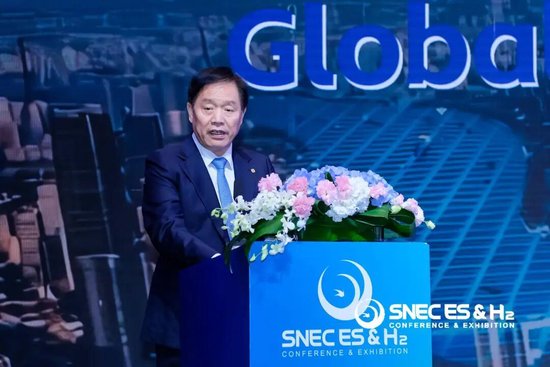
SNEC ES+ 2025国际储能大会:全球新型储能装机年复合增长率将超30%
Zhong Guo Hua Gong Bao· 2025-10-21 05:31
Core Insights - The global new energy storage installation is expected to grow at a compound annual growth rate (CAGR) of 30% to 40% over the next five years, highlighting the increasing importance of energy storage in the new power system [1][2] Group 1: Industry Trends - The storage industry is transitioning from a compliance requirement for renewable energy to an economic asset within the new power system, emphasizing the necessity of storage for stable power grids and flexible energy loads [1] - By 2035, China's installed capacity of wind and solar power is projected to reach six times that of 2020, amounting to 3.6 billion kilowatts, indicating a significant increase in energy storage demand [2] - The "14th Five-Year Plan" period is identified as a critical window for the development of energy storage and hydrogen energy, with the market expected to evolve from pilot projects to essential needs [2] Group 2: Technological Innovations - GCL-PHY's new dry process for producing lithium iron phosphate cathode materials can reduce production costs and energy consumption by 50% compared to traditional wet processes [1] - The company is also developing silicon-carbon anodes and next-generation carbon nanomaterials to meet the demands of advanced battery technologies such as solid-state and black phosphorus batteries [1] - The integration of various technologies, including lead, lithium, hydrogen, and sodium, is essential for addressing complex energy demands in a multi-energy ecosystem [3]
行业最新研判:储能“黄金”发展期已至
Shang Hai Zheng Quan Bao· 2025-10-09 23:52
Core Insights - The SNEC ES+ 11th International Energy Storage and Battery Technology Conference highlighted rapid growth and diverse applications in the energy storage industry, with a projected compound annual growth rate (CAGR) of 30% to 40% for new energy storage installations over the next five years [1][6][8] Industry Trends - The energy storage system is becoming a core infrastructure for computing power, with a significant demand for real-time balance capabilities in the power grid due to the increasing reliance on inference computing power [4][6] - By 2030, it is estimated that 95% of computing power will be inference-based, necessitating substantial energy storage solutions to support large-scale model training [4][6] Market Dynamics - The energy transition in China is entering a critical phase, with wind and solar power installations expected to reach six times the 2020 levels by 2035, indicating a robust demand for energy storage solutions [6][7] - The energy storage and hydrogen sectors are anticipated to experience significant growth, with projections suggesting a nearly tenfold increase in storage capacity by 2030 [7][8] Technological Innovations - The development of new battery materials is crucial for the advancement of energy storage, with companies like GCL focusing on innovative production methods that reduce costs and energy consumption by 50% [5][6] - The integration of various technologies, such as lithium, sodium, and hydrogen, is essential for addressing the complex demands of diverse energy scenarios [8] Investment Outlook - The global energy storage market is projected to exceed 500 GW by 2030, with an estimated total investment of $600 billion, highlighting the sector's potential as a significant investment opportunity [8]
倒计时2周 | 西南地区新材料盛会(参会免费),报告议程发布!
DT新材料· 2025-07-31 16:05
Group 1 - The conference aims to promote the high-quality development of the new materials industry in Chongqing, focusing on empowering key industries such as automotive and electronics [1] - The event will take place from August 14-16, 2025, in Chongqing, under the theme "Intelligent New Materials, Driving Chongqing" [1] - The agenda follows a "1+3+N" model, including one main conference, three thematic forums, and multiple special activities such as industry demand matching and product exhibitions [1] Group 2 - The organizing institutions include Chongqing Graphene Research Institute and Ningbo Detaizhong Research Information Technology Co., Ltd., among others [2] - The conference will feature participation from government leaders, academicians, and representatives from leading enterprises and research institutions in the new materials sector [1][2] Group 3 - The schedule includes a registration period on August 14, an opening ceremony and keynote reports on August 15, and thematic reports on August 16 [3][4][9] - Key topics for the reports include the development trends of humanoid robots and the demand for new materials, as well as advancements in graphene materials [4][5][6] Group 4 - The previous conference attracted over 200 representatives from major industry players, focusing on cutting-edge new materials and applications in new energy and next-generation electronic information technology [13] - The conference will also provide opportunities for project signing and talent recruitment, enhancing collaboration within the industry [13]