石油炼化

Search documents
原油价格推演下的:通胀、债券和权益中观利润传导:
Guo Tai Jun An Qi Huo· 2026-03-24 14:00
1. Report Industry Investment Rating No information provided. 2. Core Viewpoints of the Report - The report analyzes the impact of crude oil price changes on inflation, bonds, and mid - level industry profits. It estimates the potential increase in crude oil prices under different scenarios of the Strait of Hormuz blockade, and details the effects on inflation in the US and China, as well as the performance of US Treasury bonds and Chinese bonds. It also examines how crude oil price changes affect the cost and profit of mid - level industries [3][4]. 3. Summary According to the Table of Contents 3.1 Crude Oil Supply Loss Assessment and Price Limit Deduction - Before the Middle East geopolitical conflict, about 24 million barrels per day of various oil products (mainly crude oil) from major Middle Eastern oil - producing countries were exported through the Strait of Hormuz. After the blockade, the total oil product exports from the Strait of Hormuz dropped to about 13.72 million barrels per day, with an actual supply loss of about 14 million barrels per day (subject to correction by factors such as production increases in other countries, "reserve releases" by IEA member countries, and refinery load reduction). - Using the average Brent price of about $71 per barrel in February before the war as the starting point, if the blockade lasts for 8 - 12 weeks, the Brent oil price central range may be between $86 - 95 per barrel at the lower bound and $85 - 123 per barrel at the upper bound. If the blockade extends to 16 weeks, Brent is likely to stabilize in the $100 - 105 per barrel range and may challenge the 2022 high of $140 per barrel [3][8][9]. 3.2 Impact of Crude Oil Prices on US Inflation, Inflation Expectations, and US Treasury Bonds 3.2.1 Four Weeks into the War: Major Asset Pricing of Risks Remains Relatively Restrained - The current situation has evolved into a more intense and long - lasting conflict. Major asset markets' responses to risks are relatively muted compared to the 2022 situation. The real - time supply gap caused by the Strait of Hormuz blockade is the core factor affecting the market, and the spot market for energy and chemical industries is experiencing a supply shortage [13][15]. 3.2.2 Crude Oil - Inflation Transmission: Using a Macro Model to Analyze the Impact of Oil Prices on Inflation - If crude oil prices rise by $10, $20, $30, or $50, the year - on - year CPI increase in the first quarter will be 0.15%, 0.3%, over 0.4%, and 0.7% respectively, and in the second to fourth quarters, it will be 0.2%, 0.4%, nearly 0.6%, and 0.95 - 1.0% respectively [20][22]. 3.2.3 The " $100 per Barrel" Watershed Effect: Regression Analysis of Brent Crude Oil Year - on - Year, CPI Year - on - Year, and Inflation Expectations - The regression analysis shows that the year - on - year change in US CPI can be explained by about 17% of the change in crude oil prices. When the oil price exceeds $100, inflation expectations will deviate significantly from the linear regression level. Currently, inflation expectations are underestimated, and there is an upward adjustment space [26][30][31]. 3.2.4 US Treasury Bond Market Strategy: The Impact of Inflation + VaR Risks May Not End - Currently, the pricing of inflation expectations in the US Treasury bond market is insufficient. The Strait of Hormuz issue remains unresolved, and oil prices still have upward risks. The Back structure of the inflation curve will flatten the US Treasury bond yield curve. In a "stagflation" environment, ultra - short - term Treasury bonds show a "cash is king" characteristic [40][41]. 3.3 Impact of Crude Oil Prices on Chinese Inflation and Chinese Treasury Bonds - The correlation between crude oil prices and China's PPI is as high as 0.78, while the correlation with CPI is only 0.21. If oil prices rise by 10%, China's PPI will rise by about 0.66 percentage points. In different scenarios where the average crude oil price rises to $100 - $150 per barrel, the corresponding PPI readings will range from 2.3% to 6.7% [50][53]. - In the scenario of rising crude oil prices and increasing inflation pressure, macro - control should focus on cost relief and structural optimization on the supply side. In the scenario of oil prices rising and then falling, policies will focus on boosting domestic demand. In both stagflation and slow - recovery scenarios, risks in interest - rate bonds need to be vigilant. The report maintains a defensive strategy for interest - rate bonds, recommending flexible strategies such as hedging at high prices, positive arbitrage at appropriate times, and stage - based long - position in inter - period spreads [54][55][60]. 3.4 Impact of Crude Oil Prices on Mid - level Industry Profits 3.4.1 Cost Side: Industries Sensitive to Crude Oil Price Increases - Industries that directly consume crude oil in production are mainly concentrated in petroleum refining and petrochemicals. Industries that indirectly consume crude oil through intermediate products are mainly in basic chemicals, agricultural chemicals, transportation, mining and smelting, textiles, and heat supply [64]. 3.4.2 Profit Side: Upstream Oil and Gas Exploration Benefits, while Mid - and Down - stream Industries Show Differentiated Performance - During the 2022 Russia - Ukraine conflict, industries with significantly expanded gross profit margins in A - shares were mainly in three areas: direct beneficiaries (upstream oil and gas exploration, oil transportation); indirect beneficiaries (coal industry chain); and downstream industries with rigid demand and smooth cost transfer (some fine chemicals). On the contrary, some mid - and down - stream industries with high sensitivity to crude oil prices experienced gross profit margin contraction due to difficult cost transfer [72][73][74].
【中国石化(600028.SH/0386.HK)】炼化景气下滑业绩承压,提升分红比例积极回报股东——2025年报点评(赵乃迪/蔡嘉豪/王礼沫)
光大证券研究· 2026-03-23 23:05
Core Viewpoint - The company reported a decline in revenue and net profit for 2025, with total revenue at 27,836 billion yuan, down 9% year-on-year, and net profit attributable to shareholders at 318 billion yuan, down 37% year-on-year [4]. Group 1: Financial Performance - In Q4 2025, the company achieved total revenue of 6,701 billion yuan, a decrease of 5% year-on-year and quarter-on-quarter, with net profit of 18 billion yuan, down 70% year-on-year and 79% quarter-on-quarter [4]. - The company’s operating cash flow improved significantly, reaching 1,625 billion yuan, an increase of 8.8% year-on-year [5]. - The upstream business was impacted by falling oil prices, resulting in an EBIT of 487 billion yuan, down 18.4% year-on-year [6][8]. Group 2: Business Segment Analysis - The refining segment saw EBIT increase to 94 billion yuan, up 80.1% year-on-year, driven by improved profitability of by-products [6][8]. - The marketing and distribution segment's EBIT fell to 132 billion yuan, down 40.7% year-on-year, due to accelerated domestic energy substitution and declining oil prices [9]. - The chemical segment reported an EBIT loss of 168 billion yuan, an increase in loss of 51 billion yuan year-on-year, primarily due to rapid release of new capacity and narrowing margins [9]. Group 3: Dividend and Shareholder Returns - The company proposed a final cash dividend of 0.112 yuan per share for 2025, with a total cash dividend payout of 135.44 billion yuan, resulting in a dividend payout ratio of 76%, up from 69% in 2024 [10]. - The company also engaged in share buybacks, with a total expenditure of 5.00 billion yuan for A-shares and 11.53 billion HKD for H-shares, indicating a commitment to shareholder returns [10]. Group 4: Future Strategy - The company plans to initiate a new phase of development in 2026, focusing on high-quality growth through innovation, transformation, resource assurance, market expansion, cost leadership, and open cooperation [11]. - The strategic framework includes a foundation based on energy resources, refining and chemical sectors as wings, and sales of refined oil, natural gas, and chemical products as the main chains, with new energy and materials as new growth areas [11].


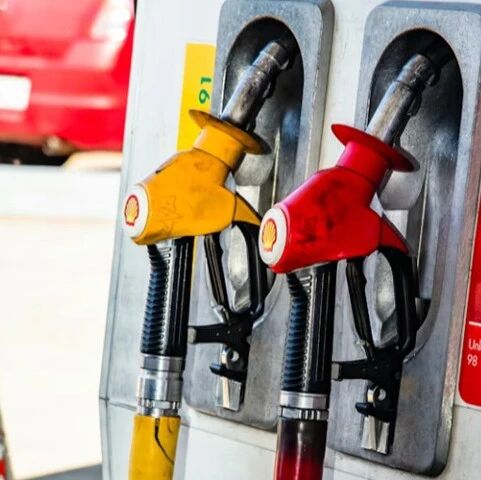
国内汽柴油价或现最大涨幅,升价进入「9元时代」
36氪· 2026-03-23 13:42
Core Viewpoint - The article discusses the upcoming significant adjustment in China's refined oil retail prices, expected to be the largest single adjustment since the market-oriented pricing reform began in 2008, with a projected increase of over 2000 yuan per ton [4][7]. Price Adjustment Details - The next price adjustment for refined oil in China is scheduled for March 23 at 24:00, with expectations of a price increase of approximately 2000 yuan per ton, leading to a maximum retail price of 9 yuan per liter for 92-octane gasoline [4][5]. - As of March 19, the average international crude oil price, which influences China's refined oil pricing, had risen by 45.21%, correlating to the anticipated price increase [4][5]. - The projected final price increase could reach around 2200 yuan per ton, translating to increases of 1.73 yuan, 1.83 yuan, and 1.87 yuan per liter for 92-octane gasoline, 95-octane gasoline, and diesel respectively [5]. Historical Context - Since the market-oriented reform in 2008, there have been five rounds of price adjustments, with four increases and one pause. The last adjustment on March 9 resulted in increases of 1160 yuan and 1120 yuan per ton for gasoline and diesel respectively [7]. - The largest previous single adjustment occurred on June 20, 2008, with increases of 1000 yuan per ton, and the second largest was during the Russia-Ukraine conflict on March 17, 2022, with increases of 750 yuan and 720 yuan per ton [7]. Pricing Mechanism - The pricing mechanism for gasoline and diesel is based on international crude oil prices, with adjustments made every 10 working days, considering domestic processing costs, taxes, and reasonable profit margins [8]. - The pricing policy stipulates that if international crude oil prices fall below $40 per barrel, prices will be calculated based on that threshold, while prices above $130 per barrel may involve fiscal measures to stabilize the economy [8][9]. Market Dynamics - The wholesale prices of refined oil have been rising faster than retail prices, leading to a compression of profits for retail stations. Some traders are hoarding stock due to the rising costs [5][13]. - The theoretical retail profit for gasoline has dropped by 62.3% to 567 yuan per ton, while diesel profits have decreased by 71% to 373 yuan per ton during the current pricing cycle [13]. Impact on Industries - The upcoming price adjustment will significantly increase fuel costs for consumers and logistics companies. For instance, a private car with a monthly mileage of 2000 kilometers will see an increase of approximately 138 yuan in fuel costs, while heavy trucks may incur an additional 3553 yuan [12]. - The rising costs of aviation fuel have prompted several Asian airlines to increase ticket prices or fuel surcharges, with Thai Airways planning a 10%-15% increase and Indian Airlines considering a 15% hike for long-haul flights [14][15].
新加坡是怎么赚钱的
虎嗅APP· 2026-03-23 10:24
Core Viewpoint - Rwanda has transformed from a war-torn nation with a history of genocide to one of the safest and fastest-growing economies in Africa, often compared to Singapore in its governance and development model [3][4]. Group 1: Rwanda's Development - Rwanda's leadership has remained stable since the end of the civil war, with a unique governance style that differs from typical authoritarian regimes in Africa [4]. - The country's development strategy has drawn inspiration from Singapore, particularly in terms of governance and economic management [4][5]. - Rwanda's approach to nation-building emphasizes peace, reconciliation, and stability, positioning it as a modern example for other nations [4]. Group 2: Singapore's Competitive Advantages - Singapore is often viewed as a model for small nations, demonstrating how to thrive despite limited resources [5][6]. - The country has established itself as a global hub for maritime fuel supply, with over 50 million tons of ship fuel sold annually, despite having no oil resources [8][9]. - Key factors contributing to Singapore's success in the maritime fuel sector include efficiency, reliable quality standards, and flexible payment options [9][10][12]. Group 3: Legal and Regulatory Framework - Singapore's legal system is recognized for its credibility, making it a preferred choice for arbitration in international trade agreements [6][11]. - The country has developed a robust framework for processing and purifying water, allowing it to profit from water imports by selling treated water back to neighboring regions [13]. Group 4: Strategic Insights for Businesses - Companies can learn from Singapore's model by leveraging existing resources and creating value through innovative business practices [14]. - The importance of maintaining government credibility and trust is highlighted, especially in times of crisis, as seen in Dubai's response to external challenges [14].

油价上涨的影响:从行业成本到整体物价
East Money Securities· 2026-03-13 06:10
Impact of Rising Oil Prices - Since the outbreak of the Middle East conflict, international oil prices have surged, with both New York and Brent crude futures rising over 35% as of March 10, 2026[9][10] - Oil price increases may transmit through the industrial chain, affecting various sectors such as industry, agriculture, and services, leading to higher PPI and CPI indices[4][9] Industry Cost Impact Analysis - In the input-output table, 16 out of 42 industries are directly affected by rising oil prices, with the highest direct consumption coefficients in the petroleum refining and gas supply sectors[18] - For a 30% increase in oil prices, the cost impact exceeds 5% for gas supply (18%) and petroleum refining (17%)[22] - If oil prices rise by 50%, the cost impact exceeds 5% for gas supply (30%), petroleum refining (28%), and chemical products (6%)[22] Overall Price Level Effects - Under three scenarios of oil price increases (30%, 50%, and 100%), the PPI may rise by approximately 1.9%, 3.2%, and 6.3% respectively, potentially elevating the annual PPI growth rate to ranges of 0.9%-1.4%, 2.2%-2.7%, and 5.3%-5.8%[26] - Similarly, the CPI may increase by about 1.1%, 1.9%, and 3.7% under the same scenarios, raising the annual CPI growth rate to ranges of 1.1%-2.1%, 1.9%-2.9%, and 3.7%-4.7%[28]
油价上涨如何传导-从行业成本到总体物价
2026-03-12 09:08
Summary of Key Points from Conference Call Records Industry Overview - The records focus on the impact of rising oil prices on various industries, particularly the oil refining and gas supply sectors, which are most directly affected by oil price fluctuations [1][2]. Core Insights and Arguments - **Direct Consumption Coefficients**: The oil refining industry has a direct consumption coefficient of 0.54, while the gas supply industry has a coefficient of 0.38, indicating they are the most impacted by rising oil prices [2]. - **Cost Impact on Industries**: A 30% increase in oil prices is expected to raise costs in the gas, refining, chemical, transportation, and metal smelting industries by over 2 percentage points [1][2]. - **PPI Projections**: - A 30% rise in oil prices could lead to a 2.3% increase in the Producer Price Index (PPI). - A 50% increase could raise the PPI by 3.9%. - A 100% increase (to $135 per barrel) could push the PPI increase to over 7% [3][4]. - **2026 PPI Growth Forecast**: - With a 30% oil price increase, the PPI growth rate is projected to recover from a baseline of -0.8% to approximately 1.2%. - A 50% increase could result in a PPI growth of about 2.5%. - A 100% increase could lead to a PPI growth exceeding 5% [4]. Additional Important Insights - **Correlation Analysis**: The correlation between oil prices and PPI is significant, with a coefficient of 0.04 indicating that oil price changes have a measurable impact on PPI [3][5]. - **Model Validation**: Multiple regression models were constructed to validate the impact of oil prices on PPI, showing a high degree of fit (over 80%) and consistent historical predictions [5]. - **Sectoral Impact**: Besides oil refining and gas supply, other sectors such as chemical products, transportation, and metal smelting also exhibit high complete consumption coefficients, indicating substantial indirect impacts from rising oil prices [2]. This summary encapsulates the critical findings and projections regarding the effects of rising oil prices on various industries and overall price levels, highlighting the interconnectedness of oil prices with broader economic indicators like the PPI.
中东多家炼厂受袭,油品供应受到额外扰动
Hua Tai Qi Huo· 2026-03-12 05:51
Group 1: Report Industry Investment Rating - High - sulfur fuel oil: Neutral, pay attention to high market volatility [3] - Low - sulfur fuel oil: Neutral, pay attention to high market volatility [3] - Cross - variety: None [3] - Cross - period: None [3] - Spot - futures: None [3] - Options: None [3] Group 2: Core View of the Report - After Trump's statement on the cease - fire, the market's expectation of the easing of the Middle East geopolitical conflict has increased significantly. The market has fallen sharply from its high due to long - position profit - taking. However, the conflict between Iran and the US - Israel is still ongoing, and the navigation of the Strait of Hormuz has not significantly recovered. The passage of oil tankers remains at a low level as of March 11. Some oil tankers may turn off AIS signals, and Saudi Arabia and other countries transfer some crude oil through pipelines to Red Sea ports for export [2] - The high - sulfur fuel oil exported from the Middle East accounts for a relatively large proportion, so the FU has a relatively prominent exposure and elasticity to geopolitical risks. For low - sulfur fuel oil, although only Kuwait is an important exporter, the significant increase in the crack spread of gasoline and diesel (especially diesel) will significantly boost the valuation of low - sulfur fuel oil. Both FU and LU are highly sensitive to the development of the geopolitical situation, and both longs and shorts need to be cautious [2] - Multiple refineries in the Middle East have been attacked recently. On the 10th, the Ruwais refinery in the UAE was attacked by drones, shutting down half of its capacity (417,000 barrels per day). As of March 11, the refinery maintenance volume in the Middle East was as high as 2.67 million barrels per day. Even if the strait is reopened, the refinery damage will make it difficult for the Middle East refined oil supply to fully recover in the short term, and the crack spread may be additionally supported [2] Group 3: Market Analysis - The main contract of the Shanghai Futures Exchange fuel oil futures closed down 4.87% at 4,318 yuan per ton in the day session; the main contract of the INE low - sulfur fuel oil futures closed down 1.33% at 5,050 yuan per ton [1] Group 4: Figures in the Report - Figure 1: Singapore high - sulfur 380 fuel oil spot price, unit: US dollars per ton [4][5] - Figure 2: Singapore low - sulfur fuel oil spot price, unit: US dollars per ton [4][5] - Figure 3: Singapore high - sulfur fuel oil swap near - month contract, unit: US dollars per ton [4][10] - Figure 4: Singapore low - sulfur fuel oil swap near - month contract, unit: US dollars per ton [4][10] - Figure 5: Singapore high - sulfur fuel oil near - month spread, unit: US dollars per ton [4][9] - Figure 6: Singapore low - sulfur fuel oil near - month spread, unit: US dollars per ton [4][9] - Figure 7: Fuel oil FU futures main contract closing price, unit: yuan per ton [4][14] - Figure 8: Fuel oil FU futures index closing price, unit: yuan per ton [4][14] - Figure 9: Fuel oil FU futures near - month contract closing price, unit: yuan per ton [4][16] - Figure 10: Fuel oil FU near - month contract spread, unit: yuan per ton [4][16] - Figure 11: Fuel oil FU futures main contract trading volume and open interest, unit: lots [4][18] - Figure 12: Fuel oil FU futures total trading volume and open interest, unit: lots [4][18] - Figure 13: Low - sulfur fuel oil LU futures main contract closing price, unit: yuan per ton [4][26] - Figure 14: Low - sulfur fuel oil LU futures index closing price, unit: yuan per ton [4][26] - Figure 15: Low - sulfur fuel oil LU futures near - month contract price, unit: yuan per ton [4][28] - Figure 16: Low - sulfur fuel oil LU futures near - month spread, unit: yuan per ton [4][28] - Figure 17: Low - sulfur fuel oil LU futures main contract trading volume and open interest, unit: lots [4][30] - Figure 18: Low - sulfur fuel oil LU futures total trading volume and open interest, unit: lots [4][30]
石油价格暴涨暴跌,如何影响锂电负极?
高工锂电· 2026-03-11 10:57
Core Viewpoint - The future price and production trends of lithium battery anodes need to closely monitor the actual changes in supply and demand dynamics [3] Group 1: Oil Price Impact - The recent geopolitical conflicts in the Middle East have led to a surge in oil prices, nearing $120 per barrel, reminiscent of the 2022 Russia-Ukraine conflict [4] - Following statements from Trump about ending the Middle East conflict and lifting some oil-related sanctions, WTI crude oil futures dropped by $11.32, a decline of 11.9%, closing at $83.45 per barrel [4] Group 2: Lithium Battery Anode Materials - The main material for lithium battery anodes is artificial graphite, with upstream components including petroleum coke and needle coke, which are by-products of oil refining [5] - Artificial graphite accounts for over 90% of the anode material shipments, with projections indicating a shipment volume of 2.67 million tons by 2025, a 49% increase year-on-year [5] - Short-term fluctuations in oil prices directly affect the prices of artificial graphite and anode materials, with battery prices already rising to 0.4 yuan/Wh due to increased lithium carbonate prices [5] Group 3: Long-term Demand and Production - Long-term prices of artificial graphite are more influenced by battery manufacturers' operational recovery and end-user demand [5] - The recovery of battery production post-Chinese New Year is expected to boost procurement demand for anode materials [6] - Upcoming performance upgrades in power and energy storage batteries will increase the demand for artificial graphite, particularly high-end variants [6] Group 4: Price Trends and Market Dynamics - High-end artificial graphite is more reliant on needle coke, which has better properties for graphite crystallization and lower costs [6] - Current mainstream prices for mid-range artificial graphite are around 28,000 yuan per ton, while high-end variants exceed 30,000 yuan per ton [6] - The uncertainty in oil prices may affect the operational pace and future capacity release of smaller anode manufacturers [7] - Despite the recent drop in oil prices, the geopolitical situation remains uncertain, with a bullish outlook on international oil prices due to ongoing demand recovery in the energy storage battery sector [7]

从涨价加剧到滞胀风险-传导的两个阶段-受益的几类资产
2026-03-11 08:11
Summary of Conference Call Notes Industry Overview - The discussion revolves around the impact of rising oil prices on various industries and the potential for stagflation risks in the economy [1][2]. Key Points and Arguments Price Transmission Mechanism - The transmission of rising oil prices to stagflation can be divided into two stages: 1. **Direct Price Transmission**: Oil price increases directly affect downstream industries such as petroleum refining and petrochemicals, leading to cost increases of approximately 16% and 11% respectively for these sectors when oil prices rise by 30% [2][3]. 2. **Economic Downturn Pressure**: Sustained high oil prices can suppress end demand, posing challenges to economic growth and leading to stagflation, where inflationary pressures conflict with the need for economic support [2][3]. Cost Impact on Industries - A 30% increase in oil prices results in significant cost impacts across various sectors: - Directly affected industries like petroleum refining and gas supply see costs rise by 16% and 11% respectively. - Broader industries such as chemicals, metals, and electricity experience cost pressures exceeding 2% due to indirect effects [3][4]. Financial Market Implications - Stagflation expectations can lead to a systemic suppression of risk assets, particularly impacting technology stocks, which have previously benefited from liquidity [3][4]. - The anticipated rise in interest rates to combat inflation may hinder capital expenditures in tech-related sectors, affecting their valuations and growth prospects [3][4]. Sectoral Risk Exposure - Industries with high export dependence, such as home appliances, electronics, and automotive, face greater risks during global demand contractions, with overseas revenue exceeding 20% [4]. - Conversely, sectors reliant on domestic demand, like real estate, public utilities, and food and beverage, show resilience with overseas revenue below 5% [4]. Investment Opportunities and Risk Mitigation Strategies - **Initial Phase**: Investment opportunities focus on sectors benefiting from price increases, including oil, chemicals, and metals, with potential spillover effects into agricultural products [5][6]. - **Subsequent Phase**: As stagflation risks intensify, strategies should shift towards risk aversion, reducing equity exposure and increasing allocations to safe-haven assets like gold and bonds [5][6]. - Defensive sectors such as utilities, food and beverage, and non-bank financials are recommended due to their lower exposure to cost pressures and stronger resilience against demand contractions [6].
春节扰动推升物价——2026年2月通胀数据解读【陈兴团队·华福宏观】
陈兴宏观研究· 2026-03-09 13:23
Core Viewpoint - The overall price level in February shows a significant recovery trend, with both CPI and PPI experiencing notable increases due to concentrated consumer demand during the Spring Festival and structural improvements in the economy [2][5][11]. CPI Analysis - In February, the national CPI increased from 0.2% to 1.3% year-on-year, marking the highest level in nearly three years, while the core CPI rose from 0.8% to 1.8% [5][6]. - Food prices shifted from a decline to an increase of 1.7%, contributing approximately 0.30 percentage points to the CPI increase, driven by heightened demand during the Spring Festival [6][7]. - Service prices surged by 1.6% year-on-year, influenced by concentrated consumer demand during the holiday, contributing about 0.75 percentage points to the CPI [6][7]. PPI Analysis - The PPI decreased by 0.9% year-on-year in February, with the decline narrowing by 0.5 percentage points compared to the previous month, marking the third consecutive month of reduced decline [11]. - The prices of production materials recorded a year-on-year decrease of 0.7%, while living materials saw a decline of 1.6% [11]. - Key industries such as electronic components and high-end equipment manufacturing showed price increases, with notable rises in aviation manufacturing (7.7%) and shipbuilding (0.5%) [11][15]. Price Trends - The PPI increased by 0.4% month-on-month in February, maintaining a five-month upward trend, primarily driven by rising production material prices [13]. - Significant price increases were observed in the energy sector, with oil and gas extraction prices rising by 5.1% and refined petroleum products by 0.7% [4][15]. - The prices of non-food industrial consumer goods expanded by 0.1 percentage points to 0.4% month-on-month, influenced by international geopolitical factors and rising commodity prices [7][15].