村镇银行兼并重组

Search documents
年内226家村镇银行解散退出
券商中国· 2025-12-25 15:31
Core Viewpoint - The pace of mergers and restructuring among village banks is accelerating, with 226 banks exiting the market in 2025, which is 2.72 times the number in 2024 [1][2]. Group 1: Mergers and Restructuring - The number of village banks that have exited the market has increased rapidly, with 83 banks in 2024, 9 in 2023, and 8 in 2022 [2]. - The main models for the mergers and restructuring of village banks this year are "village to branch" and "village to division" [4]. - The "village to branch" model involves the absorption and merger of village banks by their main initiating banks, allowing for a smooth transition of assets, liabilities, and operations [5]. Group 2: Participation of Major Banks - In 2023, major state-owned banks began participating in the "village to branch" model, with the Industrial and Commercial Bank of China acquiring Chongqing Bishan Rural Bank as the first instance [6]. - Other major banks, including Minsheng Bank and Shanghai Pudong Development Bank, have also engaged in the acquisition of village banks [6][7]. - The involvement of larger banks is seen as beneficial for both their development and the risk management of village banks [7]. Group 3: Market Exit and Future Trends - The central economic work conference emphasized the need to continue reducing and improving the quality of small financial institutions, accelerating the exit of village banks [9]. - Industry experts predict that the pace of village bank exits will continue to increase in 2026, focusing on market-oriented restructuring and improving corporate governance [10]. - The case of Sichuan Yilong Huimin Rural Bank, which has maintained its operations for 18 years, highlights the potential for some banks to thrive by focusing on niche markets and local service [10].



接连收购村镇银行并改设分支机构,恒丰银行在下一盘什么棋?
Nan Fang Du Shi Bao· 2025-08-27 03:05
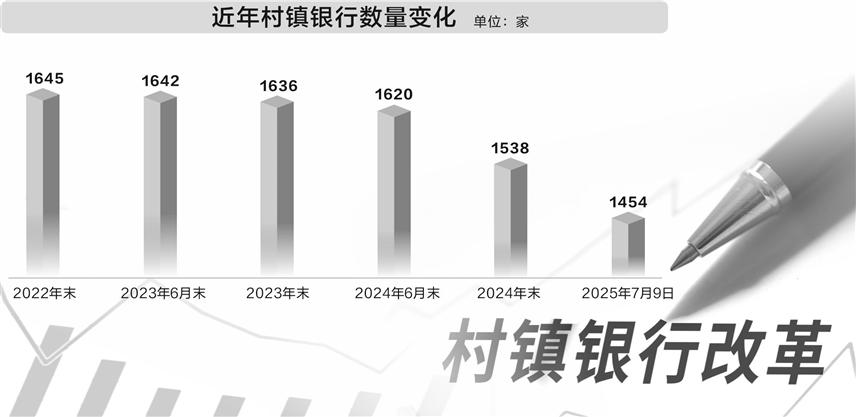
Core Viewpoint - The acquisition of village banks by commercial banks, such as Hengfeng Bank's recent acquisition of Guang'an Hengfeng Village Bank, is part of a broader trend to reform and consolidate small financial institutions in China, aiming to enhance operational efficiency and risk management [2][8]. Group 1: Acquisition Details - On August 26, the Sichuan Financial Regulatory Bureau approved Hengfeng Bank's acquisition of Guang'an Hengfeng Village Bank and the establishment of two branches [2][3]. - Hengfeng Bank previously completed the acquisition of Chongqing Jiangbei Hengfeng Village Bank and is in the process of acquiring Yangzhong Hengfeng Village Bank, which is currently awaiting regulatory approval [5][6]. - Guang'an Hengfeng Village Bank was established in December 2010 with a registered capital of 200 million yuan, and as of the end of 2024, Hengfeng Bank holds a 66% stake after acquiring shares from other investors [3][4]. Group 2: Strategic Implications - The restructuring of village banks is accelerating, with the aim of broadening the operational scope of the main initiating banks while addressing challenges such as poor asset quality and losses from the acquired banks [2][8]. - The Chinese government has emphasized the importance of reforming small financial institutions, with a focus on risk management and structural reorganization, as indicated in recent policy documents [8][9]. - The trend of merging village banks into branches is seen as a way to enhance service capabilities and risk resilience, while also allowing the parent banks to expand their business scope [9][10]. Group 3: Market Context - As of the end of last year, there were 1,538 village banks in China, a decrease of 98 from the previous year, highlighting the ongoing consolidation in the sector [8]. - Recent cases of village bank acquisitions by other banks, such as Jiangsu Bank and Industrial and Commercial Bank of China, further illustrate the trend of consolidation within the industry [9].

中小金融机构“瘦身健体”提速 年内已有84家村镇银行获批解散
Zheng Quan Shi Bao· 2025-07-09 18:37
Core Insights - The reform and risk mitigation of small and medium-sized financial institutions, particularly village and town banks, are accelerating as of mid-2025, with a significant increase in the number of bank dissolutions compared to previous years [2][4] - The primary strategy for risk resolution in rural small and medium-sized financial institutions is through mergers and acquisitions, focusing on "reducing quantity and improving quality" [2][9] Summary by Category Mergers and Acquisitions - As of July 9, 2025, 84 village banks have been officially approved for dissolution, a notable increase compared to 98 in 2024 and 9 in 2023 [4] - Inner Mongolia leads the country with 15 village banks approved for dissolution in the first half of the year, followed by Shandong with 14 and Jiangsu with 5 [3] - The majority of dissolved village banks are being absorbed by local city commercial banks or rural commercial banks, often being restructured as branches [5][6] Regulatory Environment - The National Financial Regulatory Administration has prioritized accelerating the reform and risk mitigation of small and medium-sized financial institutions as a key regulatory task [2] - The first instances of cross-province mergers and acquisitions of village banks have occurred, indicating a potential shift in regulatory approaches [6][7] Involvement of Major Banks - For the first time, state-owned banks have entered the village bank merger and restructuring arena, with the Industrial and Commercial Bank of China acquiring a village bank in Chongqing [8] - Despite this involvement, other major banks are unlikely to replicate this model due to their limited ownership of village banks [8][9] Future Outlook - Experts predict that the restructuring of small and medium-sized banks will continue to accelerate, leading to a further reduction in the number of village banks [9] - Regulatory guidance is expected to be introduced to help village banks refocus on their core missions and mitigate risks while supporting rural revitalization and small enterprises [9]