中小金融机构改革化险

Search documents
“投资者点题 代表委员作答”|中小金融机构改革化险成效几何?·2026全国两会特别策划
证券时报· 2026-03-09 00:21
Core Viewpoint - The article discusses the ongoing reforms and risk mitigation strategies for small and medium-sized financial institutions in China, emphasizing the need for quality improvement alongside the reduction of high-risk entities [1][2]. Group 1: Risk Mitigation and Institutional Reform - The People's Bank of China has reported a 50% reduction in the number of high-risk small and medium-sized financial institutions compared to peak levels, achieved through various methods including online repairs, mergers, and market exits [1]. - By 2025, it is projected that 310 village banks, 160 rural commercial banks, and over 100 rural credit cooperatives will exit the market, reflecting a significant acceleration in the merger and restructuring processes [1]. - The regulatory framework emphasizes the need to clear out high-risk and inefficient institutions while enhancing the overall quality of local small and medium-sized financial institutions [1]. Group 2: Future of Rural Finance - The 2026 government work report outlines more detailed requirements for the gradual resolution of financial risks, focusing on enhancing resources and methods for dealing with high-risk institutions [2]. - Discussions during the Two Sessions highlighted the challenges faced by small financial institutions, with calls for a more differentiated and collaborative rural financial system [2]. - The development of rural finance is expected to focus on intelligence and integration, necessitating the cultivation of professionals who are knowledgeable in finance, agriculture, and technology [2].


信用债市场周度回顾 260208:拆解省政府工作报告,信用债有哪些机会-20260208
GUOTAI HAITONG SECURITIES· 2026-02-08 07:00
Group 1 - The report highlights that 2026 will be a significant year for clearing hidden debts and retiring financing platforms, with a focus on substantial market-oriented transformations for local government financing platforms [7][8]. - Various provincial government work reports emphasize the need for the orderly exit and transformation of financing platforms, with specific provinces like Guizhou and Liaoning outlining strict measures against the establishment of new financing platforms [7][8]. - The reports indicate a growing concern over local fiscal pressures, with provinces like Henan and Yunnan stressing the importance of addressing local financial difficulties and ensuring basic financial security [7][8]. Group 2 - The credit bond market review indicates an increase in net financing, with a total issuance of 3,377.9 billion yuan and a net financing of 2,457.5 billion yuan during the week of February 2 to February 6, 2026, which is an increase from the previous week [9]. - In the secondary market, trading volume decreased to 8,134 billion yuan, down from 8,813 billion yuan the previous week, with most credit bond spreads widening [13][15]. - The report notes that the yield on 3-year AAA medium-term notes decreased by 0.99 basis points to 1.84%, while AA+ and AA medium-term notes also saw similar declines [13][15].
银行股集体爆发!厦门银行暴涨6.38%,多家上市银行透露旺季信贷投放表现优于2025年同期
Jin Rong Jie· 2026-02-05 03:57
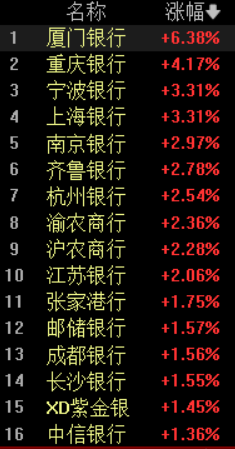
Group 1 - The banking sector is experiencing a surge, with core bank stocks rising by 1.55% as of midday, led by Xiamen Bank up 6.38% and Chongqing Bank up over 4% [1][2] - Several listed banks have reported better-than-expected credit performance during the annual marketing peak, indicating a positive trend in corporate credit [2] - Recent approvals for capital increases among several small and medium-sized banks, such as Qinghai Guinan Rural Commercial Bank and Dongying Bank, are expected to enhance the overall capital structure of the banking industry [2] Group 2 - The People's Bank of China held a meeting to discuss the 2026 credit market, emphasizing the need for quality financial services in key strategic areas and support for expanding domestic demand and innovation [3] - Urban commercial banks are expected to benefit from flexible credit deployment during the local economic recovery, with asset quality likely to improve due to the release of reform dividends [4] - Agricultural commercial banks are enhancing their risk resistance and deepening market penetration, which positions them well to benefit from rural revitalization policies [4] - The demand for cost reduction and efficiency in banks is accelerating digital transformation, leading to increased orders for IT service providers that offer digital operations and intelligent risk control solutions [4]



中央一号文件未再提农信社改革,中小银行减量提质仍受关注
第一财经· 2026-02-04 15:32
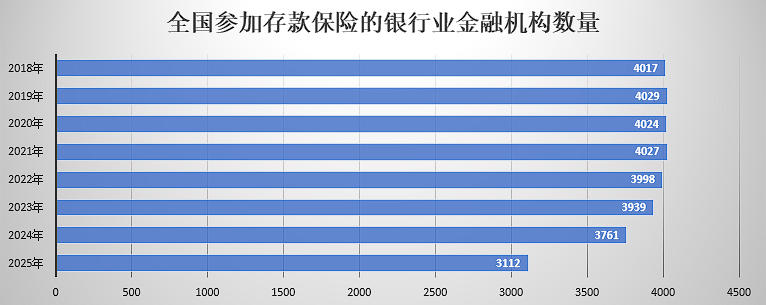
Core Viewpoint - The recent "Opinions" issued by the Central Committee and the State Council outline significant tasks and priorities for the agricultural and rural modernization sector in 2023, marking a shift in focus regarding rural financial institution reforms compared to previous years [2][4]. Financial Sector Reforms - Unlike previous years, the "Opinions" do not specifically mention the reform of provincial credit unions or the restructuring of village and town banks, indicating a potential shift in the approach to rural financial reforms [2][4]. - Experts suggest that the reduction in the number of village and town banks will continue, but the success of reforms hinges on stimulating the internal motivation of small and medium-sized banks [2][5][6]. - Approximately half of the provinces have completed or clarified new reform plans for provincial credit unions, with an acceleration expected post-2025 [2][4][8]. Trends in Rural Financial Institutions - The trend of reducing the number of small banks, particularly village and town banks, is expected to persist, with a focus on enhancing quality rather than merely reducing quantity [7][11]. - As of the end of 2025, the number of banks participating in deposit insurance has decreased to 3,112, down from 3,761 at the end of 2024, marking a significant reduction [9][10]. - In 2025, 462 banks were approved for mergers, dissolutions, or cancellations, with village banks accounting for 291 of these, indicating a sharp increase compared to previous years [10][11]. Future Directions - The emphasis on "reducing quantity" through mergers and restructuring aims to eliminate high-risk and low-efficiency institutions rather than simply shutting them down [11]. - Future reforms will focus on enhancing the quality of financial services while ensuring that financial resources are not overly concentrated, which could weaken service to vulnerable regions and sectors [11].

一年“消失”649家存款保险银行创新高,中小金融机构化险持续
Di Yi Cai Jing· 2026-01-26 10:56
Core Insights - The number of banks participating in deposit insurance in China has significantly decreased, with a total of 3,112 banks as of the end of 2025, down from 3,761 at the end of 2024, marking a reduction of 649 banks, which is 3.6 times the decrease in 2024 [1][2] Group 1: Trends in Deposit Insurance Participation - From 2018 to 2021, the number of banks in the deposit insurance scheme remained stable at over 4,000, but it dropped to 3,998 in 2022 and has continued to decline sharply since then [2] - The total reduction in banks participating in deposit insurance since 2022 amounts to 915 [2] Group 2: Types of Banks Affected - The majority of the 649 banks that exited the deposit insurance scheme in 2025 were rural commercial banks, village banks, and rural credit cooperatives, with a total reduction of 569 banks from these categories, accounting for 88% of the total decrease [3] - The number of rural commercial banks participating in deposit insurance decreased to 1,423, rural credit cooperatives to 316, and village banks to 1,222 by the end of 2025 [3] Group 3: Regulatory Environment and Reforms - The decline in the number of participating banks is driven by regulatory efforts to improve the quality of small financial institutions, with ongoing reforms aimed at risk management and consolidation [3][7] - The central government has emphasized the need for financial regulation and the reform of high-risk small financial institutions since July 2023, with specific tasks outlined for 2026 [3][6] Group 4: Mergers and Acquisitions - The acquisition of Jinzhou Bank by Industrial and Commercial Bank of China has provided a new model for the consolidation of small banks, leveraging the strengths of larger banks to improve management and operational standards [5] - Analysts suggest that the ongoing consolidation of small banks will continue, driven by stronger banks acquiring weaker ones and reforms within the rural credit system [3][7]
固定收益专题研究:城农商行改革化险成效几何?
Guohai Securities· 2026-01-15 12:35
1. Report Industry Investment Rating No information provided regarding the industry investment rating. 2. Core Viewpoints of the Report - The "non - redemption" of secondary and perpetual bonds of small and medium - sized financial institutions is expected not to become a regular event causing systemic financial risks. After the restructuring of urban and rural commercial banks, key indicators may improve, and asset scale and quality may be systematically enhanced, effectively controlling "non - redemption" events [3]. - In 2025, the integration of small and medium - sized financial institutions across the country achieved remarkable results. The number of legal entities of banking financial institutions decreased compared to the end of 2024 and the end of the "13th Five - Year Plan". Urban commercial banks mainly used absorption and merger models to integrate rural banks, while rural commercial banks promoted the establishment of provincial - level rural commercial banks under four models [3][25]. - In the context of reform and risk mitigation in 2026, it is recommended to moderately dig for coupons along the two main lines of changes in the subject level and the strength of regional economies, combined with key indicators. Attention should also be paid to the positive impacts on regional rural commercial banks under the unified legal person model and the opportunities for secondary and perpetual bonds in provinces with a good economic foundation under the joint - bank model [3][4][53]. 3. Summary by Relevant Catalogs 3.1中小金融机构风险为何成为市场焦点 - In October 2025, relevant policies proposed to resolve risks of small and medium - sized financial institutions, making risk resolution a key focus in 2026. Small and medium - sized financial institutions face risks due to multiple factors, and the spread of relevant public opinions such as "delayed interest payment" of secondary and perpetual bonds and "non - redemption" of capital - supplementing bonds has attracted attention [9]. 3.2聚焦商业银行"不赎回"风险 - In 2025, regulatory authorities in Shandong and Tianjin required reporting of non - redemption of secondary capital bonds within 24 hours. Since the first case of non - redemption of secondary capital bonds by commercial banks, most non - redeeming entities have faced various problems. From 2018 to 2025, most non - redeeming entities were urban and rural commercial banks, and non - redemption cases were concentrated in northern and central provinces. Since 2023, non - redemption events have gradually decreased, and it is expected not to cause systemic financial risks [9][12]. - As of the end of 2025, banks that do not exercise the redemption right find it difficult to issue new bonds. Among the entities that have triggered "non - redemption" events, 7 have issued new bonds, including 2 urban commercial banks and 5 rural commercial banks. Since 2024, only Tianjin Bank, Jiujiang Bank, and Yinzhou Rural Commercial Bank, with AA + and above ratings, have issued new secondary and perpetual bonds, showing premiums compared to similar bonds [21]. 3.3城农商行整合成效几何 - In 2025, the number of small and medium - sized financial institutions such as urban and rural commercial banks continued to decrease. Urban commercial banks mainly used absorption and merger models to integrate rural banks, while rural commercial banks promoted the establishment of provincial - level rural commercial banks under four models. As of the end of 2025, 14 rural commercial banks had clear integration progress, mainly in the "unified legal person" and "joint - bank" models [25][27]. - In terms of asset scale, in 2025, the asset - scale growth rates of joint - stock and urban and rural commercial banks accelerated, with urban commercial banks having a significantly higher growth rate. Urban commercial banks' growth was mainly due to credit expansion in the Yangtze River Delta region, while rural commercial banks' asset scale increased slightly. In terms of asset quality, rural commercial banks' non - performing loans decreased significantly in the process of integration, and their provision coverage ratio increased, while urban commercial banks had an increase in non - performing loan balances and a weakening of the provision coverage ratio [30][33]. - In terms of capital adequacy, from 2023 - 2025, the core tier - 1 capital of commercial banks increased significantly. Since 2025, the capital adequacy ratio and core tier - 1 capital have shown a fluctuating downward trend. In 2025, only state - owned large - scale banks and rural commercial banks saw an increase in capital adequacy ratio. Rural commercial banks' capital adequacy ratio was optimized through integration, while urban commercial banks' capital adequacy ratio fluctuated between 12% - 13% [38]. - The important capital - supplementing channels for banks include capital increase and share expansion, shareholder injection, special treasury bonds, TLAC, special bonds for small and medium - sized banks, convertible bonds, secondary and perpetual bonds, and internal sources. Rural commercial banks may rely more on direct forms such as "shareholder injection" and "debt - to - equity swap" in the short term and need to strengthen asset quality and expand financing channels in the long term [43]. 3.4改革化险背景下如何挖掘 - In 2026, state - owned large - scale banks and joint - stock banks are the main entities for the exercise and maturity of secondary and perpetual bonds, and the maturity scale of urban and rural commercial banks' existing bonds is relatively small. It is recommended to moderately dig for coupons along the two main lines of changes in the subject level and the strength of regional economies. Attention should be paid to the positive impacts on regional rural commercial banks under the unified legal person model and the opportunities for secondary and perpetual bonds in provinces with a good economic foundation under the joint - bank model. For provinces in the early stage of integration, opportunities in regions such as Guangdong and Hunan can be considered [53].
国有大行再度出手,开年有60多家村镇银行“消失”
Di Yi Cai Jing· 2026-01-12 14:14
Group 1 - The core viewpoint of the news is that the Bank of Communications has been approved to acquire a rural bank and convert it into a branch, marking the first case of a state-owned bank's "village to branch" transformation in the new year and the tenth case since last year [1][2] - The approval from the Zhejiang Regulatory Bureau allows the Bank of Communications to acquire the Anji Jiaoyin Rural Bank and establish multiple branches, taking over its assets, liabilities, and employees [2][3] - The Bank of Communications currently controls four rural banks, with recent acquisitions including the Dayi Jiaoyin Xingmin Rural Bank and the Qingdao Laoshan Jiaoyin Rural Bank, indicating a trend of consolidation among state-owned banks [3] Group 2 - The reform of small and medium-sized financial institutions is accelerating, with over 450 small banks expected to exit the market by 2025, including more than 280 rural banks, particularly in regions like Inner Mongolia, Shandong, and Hubei [1][4][5] - In the first half of 2025, there has been a significant increase in the number of rural banks approved for mergers, dissolutions, or cancellations, with 65 cases reported in just half a month, nearing ten times the number from the same period in 2024 [4][5] - The restructuring of rural banks is part of a broader strategy to optimize the financial institution system, focusing on quality improvement rather than just reduction, as emphasized by industry experts [5]



国有大行再度出手“村改支”,开年有60多家村镇银行消失
Di Yi Cai Jing· 2026-01-12 12:56
Group 1 - The core viewpoint of the articles is the ongoing restructuring of rural banks into branch banks by state-owned banks, with the recent acquisition by Bank of Communications marking the tenth instance of this initiative since last year [1][2][3] - Bank of Communications has received approval to acquire Anji Jiaoyin Rural Bank and establish multiple branches, indicating a strategic shift towards consolidating rural banking operations [2][3] - The trend of restructuring is part of a broader effort to enhance the quality of small financial institutions, with over 450 small banks expected to exit the market by 2025, predominantly rural banks [1][4] Group 2 - In 2025, 454 small banks were approved for mergers, dissolutions, or business cancellations, with rural banks accounting for over 60% of this figure [5] - The regions with the highest number of rural bank exits include Inner Mongolia, Shandong, and Hubei, highlighting significant regional disparities in the banking landscape [5] - Experts emphasize that while reducing the number of small financial institutions is necessary, improving their quality is the ultimate goal, necessitating effective measures to prevent the emergence of high-risk institutions [5]
又一村镇银行,退出
Nan Fang Du Shi Bao· 2026-01-12 11:57
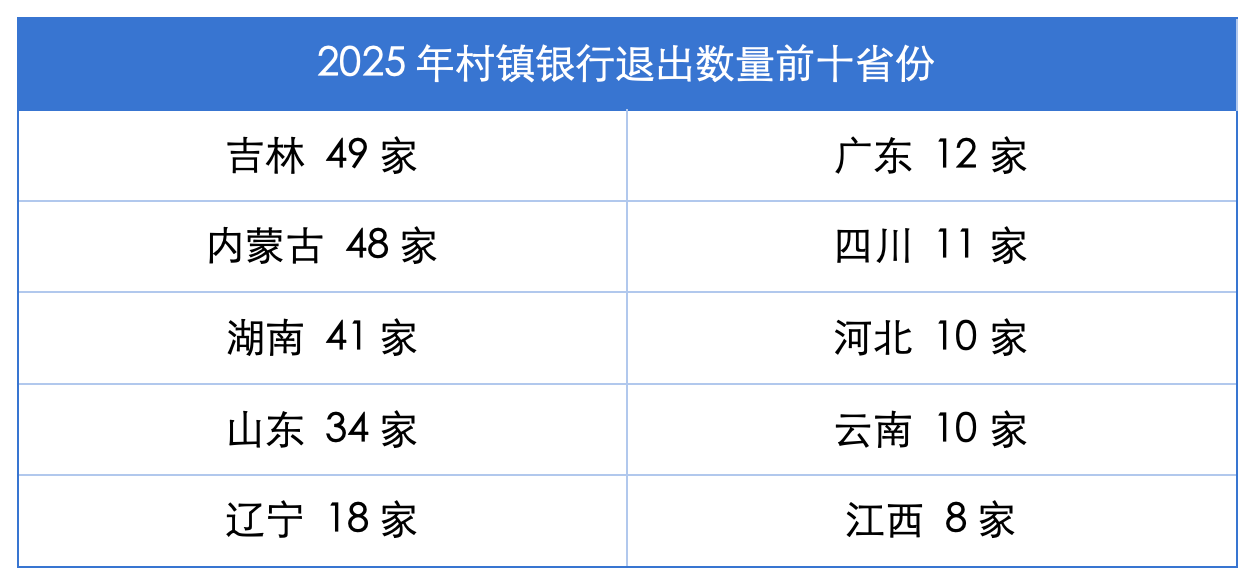
Group 1 - The acquisition of Zhejiang Anji Jiaoyin Village Bank by Bank of Communications is part of a broader trend of village banks exiting the market, with 11 banks having exited in 2026 alone and 310 in 2025 [1][5][6] - Zhejiang Anji Jiaoyin Village Bank reported a revenue of 35.52 million yuan in 2024, a year-on-year decline of 1.55%, and a net loss of 27.26 million yuan, which is an increase of 342.25% compared to the previous year [2] - The total assets of Zhejiang Anji Jiaoyin Village Bank at the end of 2024 were 1.391 billion yuan, with a deposit balance of 1.14 billion yuan and a loan balance of 1.069 billion yuan [2] Group 2 - The exit of village banks is concentrated in regions such as Jilin, Inner Mongolia, and Hunan, which accounted for the highest number of exits in 2025, with 49, 48, and 41 banks respectively [5][7] - The ongoing reform of small and medium-sized financial institutions in China is driving the consolidation and exit of village banks, with a focus on risk management and restructuring [6][8] - The regulatory framework emphasizes the need for accelerating the reform of small financial institutions, with a goal to enhance governance and management through mergers and acquisitions [6][8]
交行获批收购旗下村镇银行!去年我国300多家村镇银行退出
Nan Fang Du Shi Bao· 2026-01-12 03:40
Core Viewpoint - The acquisition of Zhejiang Anji Jiaoyin Village Bank by Bank of Communications highlights the ongoing trend of village banks exiting the market, with a significant number of closures reported in recent years [2][3][5]. Group 1: Acquisition Details - The approval from the Huzhou Regulatory Bureau allows Bank of Communications to acquire Zhejiang Anji Jiaoyin Village Bank and establish new branches [3]. - As of June 2025, Bank of Communications held a 51% stake in Zhejiang Anji Jiaoyin Village Bank [3]. - The bank reported a net loss of 27.26 million yuan in 2024, an increase of 342.25% compared to the previous year [3]. Group 2: Market Exit Trends - In 2026, 11 village banks have exited the market, with notable closures in regions such as Liaoning, Chongqing, and Hunan [4][5]. - In 2025, a total of 310 village banks exited, with Jilin, Inner Mongolia, and Hunan having the highest numbers of closures at 49, 48, and 41 respectively [5][6]. - The trend of village bank exits is attributed to the ongoing reforms in small financial institutions, aimed at risk management and restructuring [6]. Group 3: Regulatory Context - The Financial Regulatory Administration has prioritized the reform and risk management of small financial institutions, indicating a continued acceleration of village bank exits [6]. - The central economic work conference emphasized the need for quality improvement and reduction in the number of small financial institutions, suggesting that the pace of village bank closures will likely increase [6].