杨 - 米尔斯规范场理论

Search documents
103岁杨振宁逝世:要做好物理,是要有品位和风格的
第一财经· 2025-10-18 13:26
Core Viewpoint - The article commemorates the life and contributions of Yang Zhenning, a renowned physicist and Nobel laureate, highlighting his impact on science and education in China, as well as his personal philosophy and dedication to his homeland [3][4][12]. Group 1: Life and Achievements - Yang Zhenning was born on October 1, 1922, in Hefei, Anhui, and showed exceptional mathematical talent from a young age, influenced by his father's academic background [5][6]. - He studied at National Southwestern Associated University during a tumultuous period, where he developed a deep appreciation for the works of prominent physicists like Einstein and Fermi [7]. - Yang Zhenning achieved significant academic milestones in the United States, including the development of the Yang-Mills theory in 1954 and the discovery of parity violation in 1956, which established him as a leading physicist [7][9]. Group 2: Contributions to China - After winning the Nobel Prize, Yang Zhenning returned to China in 1971, becoming a key figure in fostering academic exchanges and rebuilding the scientific community [10][11]. - He played a crucial role in establishing over 60 top physics laboratories in China, significantly enhancing the country's research capabilities and nurturing numerous scientific talents [12]. - Yang Zhenning's philanthropic efforts included founding the "Science Exploration Award" and supporting Chinese scholars to study abroad, demonstrating his commitment to advancing science in China [11][12]. Group 3: Personal Philosophy and Legacy - Yang Zhenning emphasized the importance of character and style in scientific work, believing that a scientist's personal qualities significantly influence their contributions [13][14]. - He maintained a rigorous work ethic well into his later years, dedicating time to teaching and research in fields like high-temperature superconductivity and quantum computing [14][16]. - His reflections on life and science reveal a deep appreciation for the mysteries of the universe and a humble acknowledgment of humanity's place within it [16].

103岁杨振宁逝世:要做好物理,是要有品位和风格的
Di Yi Cai Jing· 2025-10-18 11:13
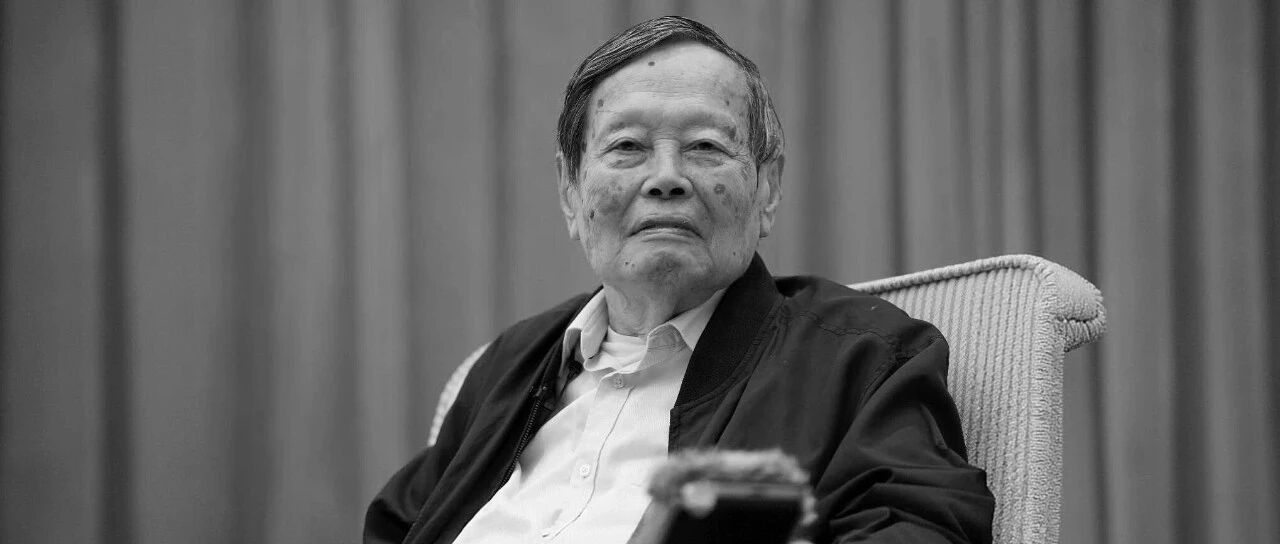
Core Insights - The article highlights the life and contributions of Yang Zhenning, a renowned physicist and Nobel laureate, who passed away at the age of 103, emphasizing his role in boosting the confidence of Chinese people in science and education [1][3][10] Group 1: Personal Background and Achievements - Yang Zhenning was born on October 1, 1922, in Hefei, Anhui, and showed exceptional mathematical talent from a young age, influenced by his father, a mathematics PhD from the University of Chicago [3][4][6] - He graduated with a master's degree from the University of Chicago in 1945 and spent 17 years at the Institute for Advanced Study in Princeton, where he produced significant academic work, including the Yang-Mills theory and the concept of parity violation [6][7][9] - Yang Zhenning returned to China in 1971 after the normalization of Sino-American relations, becoming the first Chinese scientist to visit post-revolution China, and played a crucial role in rebuilding the country's scientific community [7][9] Group 2: Contributions to Science and Education - He established numerous top-tier physics laboratories in China, significantly reducing the gap in physical infrastructure between China and the West, and contributed to the training of many scientific talents [9][10] - Yang Zhenning initiated the "Science Exploration Prize" to foster scientific talent in China and donated his Nobel Prize winnings to support Chinese students studying abroad [7][9] - He maintained a rigorous work ethic even in his later years, dedicating ten hours a day to research in fields like high-temperature superconductivity and quantum computing [10][12] Group 3: Personal Philosophy and Legacy - Yang Zhenning viewed physics as an art form, emphasizing the importance of style and character in scientific work, and believed that a person's taste, ability, and circumstances shape their contributions [10][12] - His marriage to Weng Fan provided him with personal support, allowing him to continue his academic pursuits while also co-authoring works that reflect his thoughts on science and humanity [12][13] - In his final public speech at the age of 100, he expressed a profound understanding of the universe and humanity's place within it, highlighting his lifelong quest for knowledge [13]
追忆杨振宁:曾来粤考察散裂中子源,称赞建设非常有远见
Nan Fang Du Shi Bao· 2025-10-18 05:38
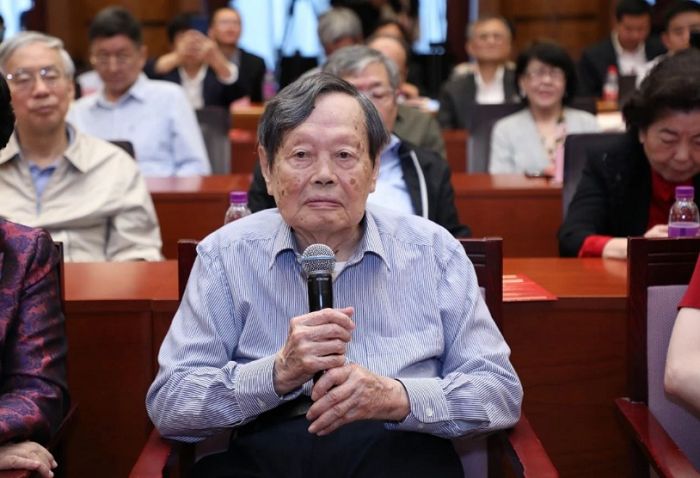
Core Points - Nobel Prize winner and Chinese Academy of Sciences academician Yang Zhenning passed away at the age of 103 on October 18 [1] - Yang Zhenning visited the China Spallation Neutron Source (CSNS) in Dongguan, Guangdong in February 2019, expressing optimism about its future [1][3] - He emphasized the importance of CSNS's strategic development and its connection to high-tech advancements in the region [3] Group 1 - Yang Zhenning's visit to CSNS included a detailed introduction to its principles and applications, where he showed appreciation for the successful bid of CSNS's target component manufacturer for the European spallation neutron source [3] - He expressed concern for the personnel training and collaboration with universities in Hong Kong and Macau, affirming the strategic layout for a Southern Light Source near CSNS [3] - Yang Zhenning was born on September 22, 1922, in Hefei, Anhui, and moved to Tsinghua University at a young age, later studying at Southwest Associated University during the war [3][4] Group 2 - In the 1940s, Yang Zhenning pursued further studies in the United States, where he contributed significantly to physics, including the Yang-Mills theory and the principle of parity violation [4] - His groundbreaking work led to the Nobel Prize in Physics in 1957, making him one of the first Chinese laureates in this field [4]