广义相对论

Search documents
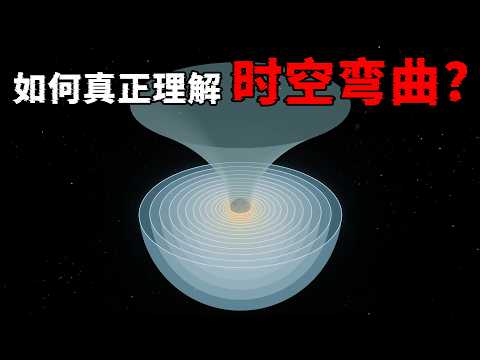
如何真正理解时空的弯曲?彻底撕碎“时空漏斗”骗局!从张量到度规,一步步揭开引力的真相!!
李永乐老师· 2026-03-30 09:30
简介: 你肯定在无数科普视频里见过那个“漏斗”一样的引力井,他们用它来解释大质量天体的“空间凹陷”。 但是,今天我想告诉你一个残酷的真相:几乎所有人对这张图的理解,都是错的。在这期视频里,我将带你完成一次从直觉到真理的跨越。我们将从高中数学出发,一路打怪升级,带你认识广义相对论的核心工具——张量和度规,最终一步一步地亲手推导并模拟出真正的时空嵌入图(弗拉姆抛物面)。 本期视频硬核解答了以下问题: - 什么是广义相对论的核心思想? - 为什么引力不是力,而是时空的几何属性? - 黑洞里面是什么样子?时间真的会变成空间吗? - 普通人到底该如何理解时空弯曲? - 为什么说绝大多数科普视频里的引力漏斗解释是错的? 00:00 引力井 00:35 张量 02:04 度规 09:13 史瓦西度规 10:22 广义相对论场方程 12:25 g_{rr}空间夺舍 13:55 g_{tt}时空翻转 15:41 时空嵌入图 17:30 弗拉姆抛物面 Tag: #时空弯曲, 史瓦西度规, 爱因斯坦场方程, 张量, 度规, 弗拉姆抛物面, 引力井, 黑洞视界, 闵可夫斯基时空, General Relativity, Spacet ...

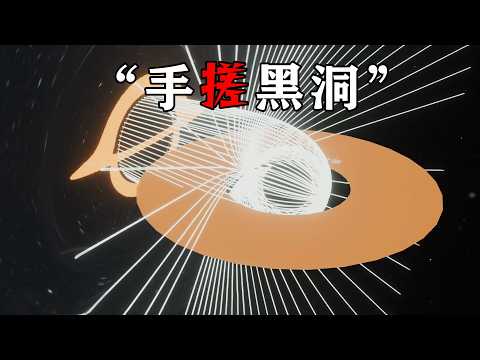
我用物理公式"造"了一个黑洞,结果和NASA拍的一模一样!
李永乐老师· 2026-02-15 09:30
从牛顿经典物体运动出发,深入广义相对论的光线弯曲原理,再通过光线追踪技术,在Blender中实现了完整的黑洞模拟——引力透镜、爱因斯坦环、光子球阴影、多普勒效应、引力红移,一个不落。最终渲染出的黑洞图像与M87*真实照片(Event Horizon Telescope拍摄)高度吻合,甚至还原了吸积盘的不对称亮度分布。这不是巧合,这是广义相对论的胜利。 章节时间轴: 00:00 开场 — 为什么要手搓黑洞 00:27 等效原理 — 光线为什么会弯曲 04:47 测地线和度规 — 时空的测量尺 07:45 史瓦西度规 — 黑洞的数学描述 12:21 光线偏折 — 广义相对论的核心公式 17:26 光线追踪 — 从理论到渲染 19:46 黑洞模拟 — Blender实现全流程 21:03 爱因斯坦环 — 引力透镜的震撼效果 23:35 黑洞吸积盘 — 最具美感的黑洞 26:58 多普勒效应 — 吸积盘的不对称亮度 27:39 引力红移 — 黑洞阴影的成因 28:05 对比M87 — 模拟vs真实照片 29:15 结尾 — 我们看到的不是黑洞本身 使用的工具与技术: • Blender(几何节点) • 广义相对论(爱 ...
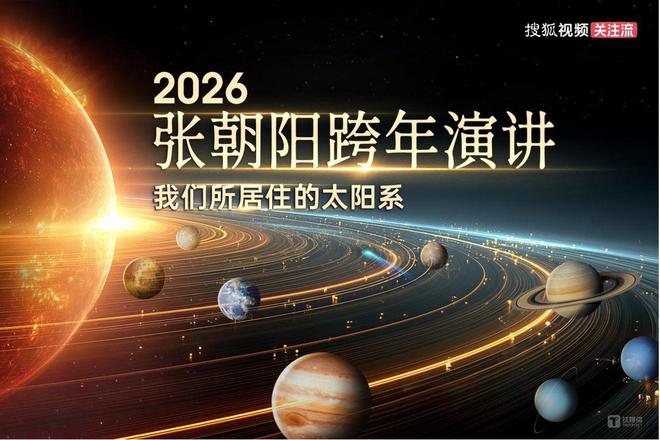
张朝阳2026跨年演讲:解码太阳系奥秘,用数理公式演算宇宙谜题
Jing Ji Wang· 2026-01-04 08:12
Core Viewpoint - The keynote speech by Zhang Chaoyang, founder and CEO of Sohu, focuses on the exploration of the solar system and its implications for human civilization, emphasizing the importance of understanding the laws governing the solar system as a key to understanding humanity's past and future [3][4]. Group 1: Solar System Exploration - The solar system operates under specific laws, and understanding these laws is crucial for humanity [4]. - Zhang Chaoyang describes the solar system as a "home" that is both distant and close, highlighting the need for exploration and understanding [4]. - The speech is characterized as a "archaeology" of the solar system, using Newton's laws as foundational principles to explore celestial mechanics [4][5]. Group 2: Human Advancement in Space - The development of AI and aerospace technology is propelling humanity towards a "multi-planet civilization" [3]. - Zhang outlines three key stages for human exploration beyond Earth: the escape phase dominated by Earth's gravity, the Hohmann transfer phase dominated by the Sun's gravity, and the capture phase dominated by Mars' gravity [6]. - The concept of Lagrange points is introduced as stable locations for deploying scientific instruments, such as the Webb Telescope [6]. Group 3: Educational Impact and Media Strategy - Zhang emphasizes the value of learning physics, which aids in understanding both macro phenomena like global warming and everyday experiences [9]. - The physics course has conducted 270 live sessions over four years, accumulating over 26,000 minutes of online content, contributing significantly to the knowledge base [9]. - The integration of traditional teaching with new media is seen as a meaningful approach to disseminating knowledge in the current digital age [9].
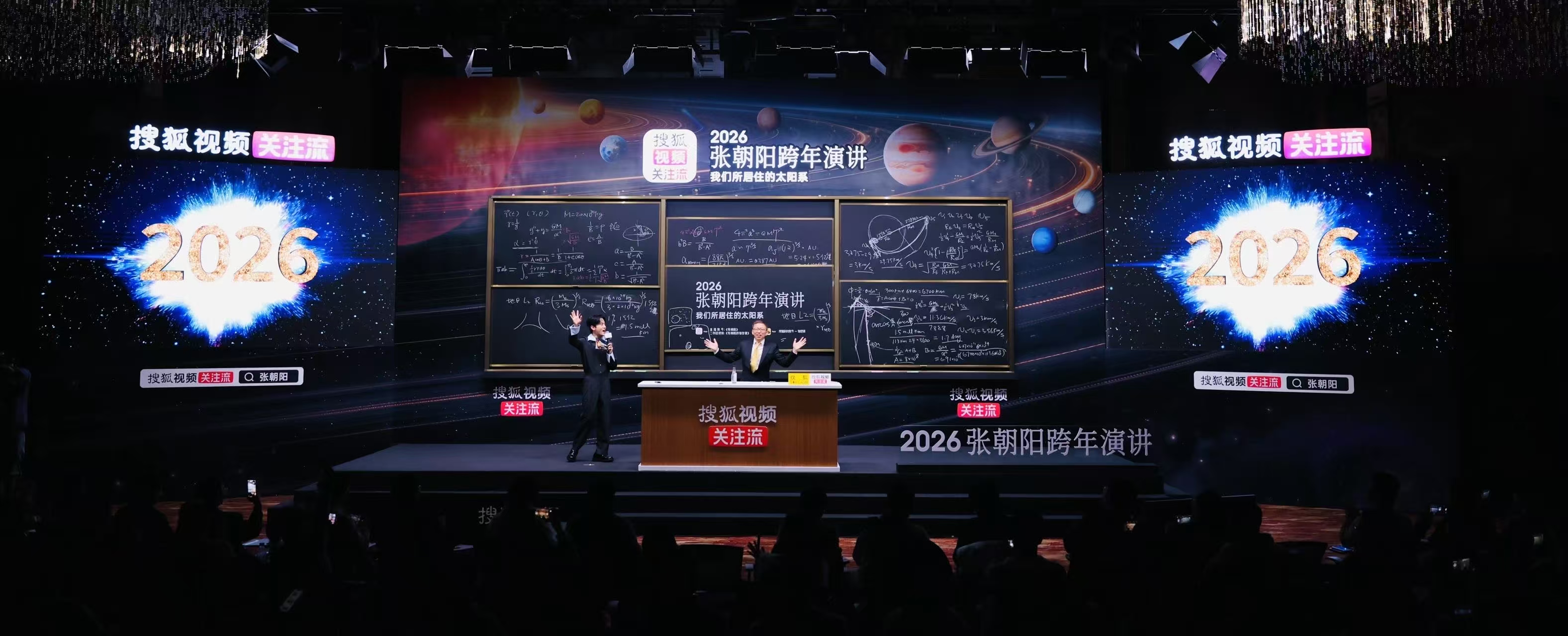
倒计时一天!张朝阳再启跨年演讲,用数理公式演算“我们所居住的太阳系”
Tai Mei Ti A P P· 2025-12-30 10:44
Group 1 - The core theme of the upcoming New Year's Eve speech by Zhang Chaoyang, founder and CEO of Sohu, will be "The Solar System We Live In," focusing on the fundamental parameters of the solar system and the beauty of mathematics and physics [1][4] - The event will be live-streamed on Sohu Video's account "Zhang Chaoyang," inviting the audience to reflect on the universe as they welcome the new year [1][4] - The speech aims to explore the laws and wonders of planetary motion within the solar system, revisiting the journey from classical physics to modern astrophysics, and reassessing humanity's position and mission in the vast universe [3][4] Group 2 - Over the past four years, Zhang Chaoyang has conducted more than 270 live classes and over 30 offline classes, accumulating over 26,000 minutes of online teaching, making complex physical theories accessible to the public [3] - Last year's New Year's Eve speech focused on quantum mechanics and its applications in modern technology and natural phenomena, while the 2024 speech delved into the essence of time and the theory of general relativity [4]
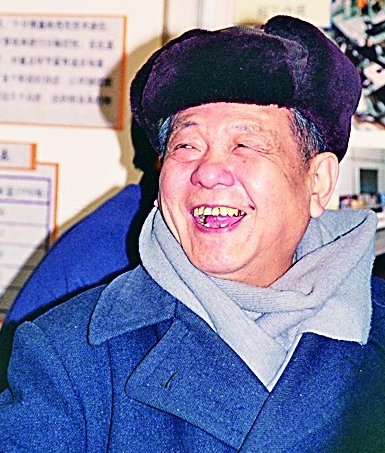
【人民需要这样的科学家㉕】他把毕生献给祖国
Xin Lang Cai Jing· 2025-12-19 19:25
Core Viewpoint - The article highlights the life and contributions of Peng Huanwu, a prominent theoretical physicist and a key figure in China's nuclear program, emphasizing his dedication to science and his humble character [3][4][5]. Group 1: Academic Contributions - Peng Huanwu studied under renowned physicist Max Born and returned to China in 1947, despite having a promising career abroad, to contribute to his homeland's scientific development [4]. - He played a crucial role in the theoretical research and design of China's atomic and hydrogen bombs, becoming a foundational figure in nuclear physics and neutron physics [5][6]. - His innovative approach, such as using rough estimates to simplify complex equations during the atomic bomb development, significantly advanced the understanding of nuclear reactions [6]. Group 2: Personal Character and Legacy - Peng Huanwu was known for his humility and dedication, often attributing his achievements to collective efforts rather than personal glory [7][8]. - He maintained a frugal lifestyle, even scavenging for materials to support his research during the early years of the People's Republic of China [7]. - His mentorship influenced many prominent physicists in China, fostering a new generation of scientists who contributed to national defense and economic development [8].
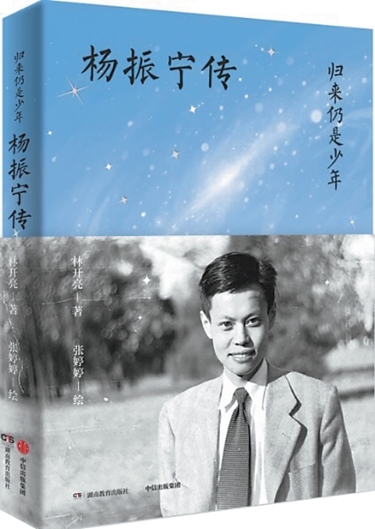
“总有一天,中国也会出现自己的爱因斯坦”(序与跋)
Ren Min Ri Bao· 2025-12-18 22:30
Core Insights - The work of physicists Yang Zhenning and Li Zhengdao on parity violation is considered a significant milestone in physics, comparable to the contributions of historical figures like Tartaglia in mathematics, as it showcases the capability of Chinese scientists in achieving world-class scientific results [2] - Yang Zhenning's collaborations with Mills and Wu Da Jun in gauge field theory are highlighted as pivotal contributions that will ensure his legacy in the history of science [2] - Yang Zhenning's passion for mathematics and its beauty is emphasized, portraying him as a physicist with a poetic soul, which attracts admiration even from those outside the field of physics [3] - The influence of Yang Zhenning as a role model is noted, as he has helped change the perception of Chinese scientists regarding their capabilities in science [4] - Yang Zhenning's reflections on the evolution of education in China and the potential emergence of a Chinese equivalent to Einstein are mentioned, indicating a transformative period in Chinese science and education [4]
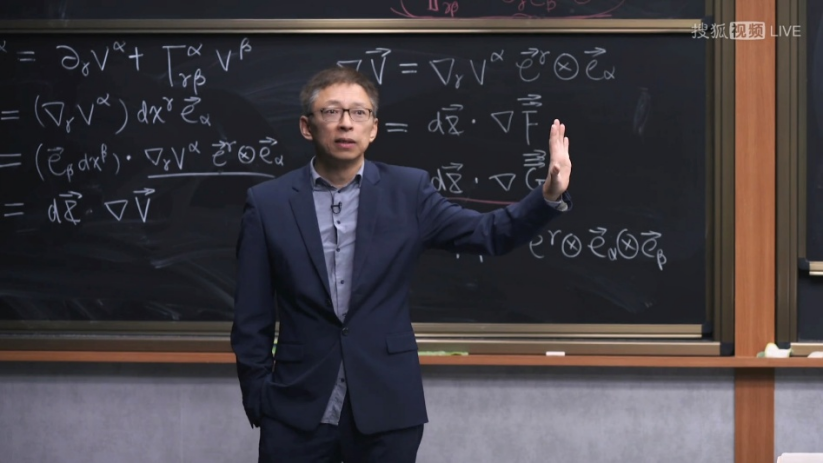
AI时代还需要手推公式吗?张朝阳最新回应
Xin Lang Ke Ji· 2025-11-04 01:54
Core Viewpoint - The founder and CEO of Sohu, Zhang Chaoyang, emphasizes the importance of personal understanding and derivation of formulas in the age of AI, suggesting that while AI can assist in repetitive calculations, true comprehension requires individual effort and thought [1][3]. Group 1 - Zhang Chaoyang advocates for the necessity of personal research and understanding of physics, stating that relying solely on AI for answers diminishes critical thinking [3]. - The approach of hands-on calculation in physics education is highlighted as essential for grasping the core principles and logic of the subject, rather than indulging in superficial understanding [3]. - Zhang notes that physics serves as a rich source of mathematical inspiration, citing historical examples such as Newton's invention of calculus and Einstein's use of differential geometry in formulating the theory of relativity [3]. Group 2 - The discussion includes the assertion that mastering certain mathematical concepts is beneficial for understanding physical systems, which often involve differentiation and integration [3].

张朝阳谈物理课开讲四周年:人生任何阶段都可以学习
Jing Ji Wang· 2025-11-03 08:57
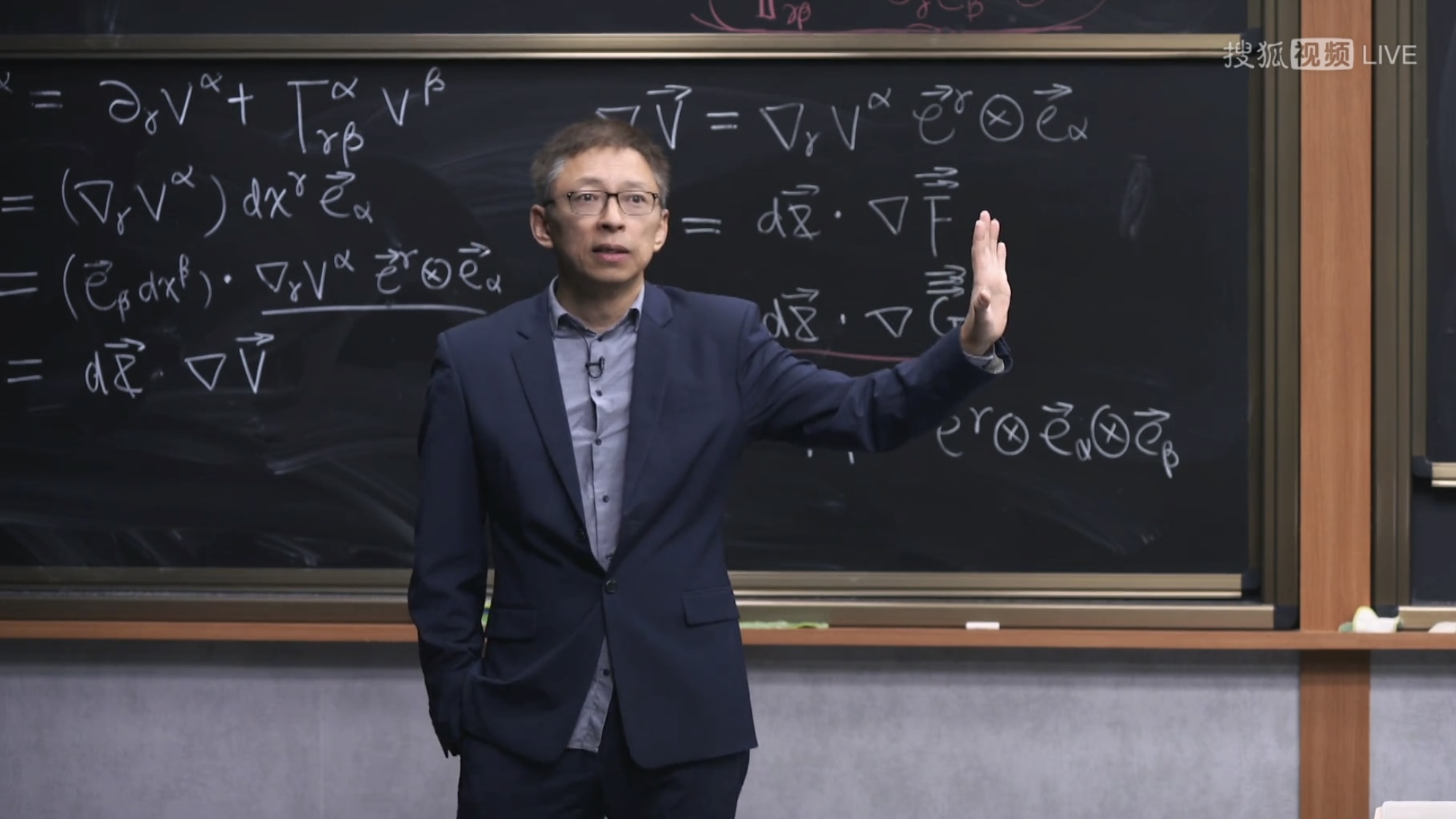
Core Insights - The live broadcast "Zhang Chaoyang's Physics Class" celebrated its fourth anniversary, focusing on the theme of expressing differential geometry through vector calculus [1][3] - Zhang Chaoyang, the founder and CEO of Sohu, initiated the physics class out of personal interest and curiosity, leading to significant improvements in his theoretical physics knowledge [1][5] Group 1: Educational Approach - The course utilizes vector calculus as a starting point to make the abstract concepts of differential geometry more accessible to beginners [3][5] - Zhang emphasizes the importance of hands-on calculation in understanding physics, arguing that true comprehension comes from personal engagement with the material [5][6] Group 2: Course Impact and Reach - Since its inception, "Zhang Chaoyang's Physics Class" has aired 265 episodes, accumulating over 26,322.82 minutes of online content, covering topics from Einstein's famous equation E=mc² to cutting-edge theories in quantum field theory and string theory [5][6] - The program has expanded its influence beyond live broadcasts by publishing a series of popular science books and engaging with students at prestigious universities like Tsinghua [6][7] Group 3: Personal Development and Lifelong Learning - Zhang Chaoyang shares his personal journey of learning and teaching, suggesting that individuals can learn at any stage of life and should actively engage in the learning process [7]
真实的降维打击是什么?
Hu Xiu· 2025-10-21 01:47
Core Points - The article discusses the concept of dimensional reduction in physics, illustrating how theories evolve from higher dimensions to lower dimensions, ultimately affecting human understanding of the universe [1][2][3] Group 1: Dimensional Reduction Theories - The first layer is M-theory, which operates in 11 dimensions and reduces to string theory through various projections [4] - The second layer is string theory, which exists in 10 dimensions and includes 3D space, 1D time, and 6D Calabi-Yau manifolds, influencing the types of fundamental particles and physical constants in the universe [5][6] - The third layer is General Relativity, which reduces from string theory in low-energy limits and connects to the concept of gravitons [9] Group 2: Further Reductions - General Relativity can further reduce to Special Relativity under conditions of flat spacetime and no gravity [10] - Special Relativity reduces to Newtonian mechanics when objects are moving at speeds much lower than the speed of light [11] - Newtonian mechanics is described in a 3+1 dimensional framework, emphasizing the complexity of truly understanding it [12] Group 3: Quantum Field Theory - Quantum Field Theory, considered a fourth layer, is composed of Quantum Yang-Mills theory, Higgs mechanism, and fermionic field theory [14] - Under certain conditions, Quantum Field Theory can reduce to Quantum Electrodynamics [15] - Quantum Electrodynamics can further reduce to Maxwell's equations in low-energy and non-relativistic limits [16][17] Group 4: Historical Context and Challenges - The article highlights the historical significance of Yang-Mills theory and its revival after being initially dismissed, showcasing the complexity of applying classical theories to quantum contexts [18][19] - It also discusses the contributions of mathematicians like Hilbert and their impact on the development of theories in physics, contrasting them with physicists like Einstein [20][21]
103岁杨振宁逝世:要做好物理,是要有品位和风格的
第一财经· 2025-10-18 13:26
Core Viewpoint - The article commemorates the life and contributions of Yang Zhenning, a renowned physicist and Nobel laureate, highlighting his impact on science and education in China, as well as his personal philosophy and dedication to his homeland [3][4][12]. Group 1: Life and Achievements - Yang Zhenning was born on October 1, 1922, in Hefei, Anhui, and showed exceptional mathematical talent from a young age, influenced by his father's academic background [5][6]. - He studied at National Southwestern Associated University during a tumultuous period, where he developed a deep appreciation for the works of prominent physicists like Einstein and Fermi [7]. - Yang Zhenning achieved significant academic milestones in the United States, including the development of the Yang-Mills theory in 1954 and the discovery of parity violation in 1956, which established him as a leading physicist [7][9]. Group 2: Contributions to China - After winning the Nobel Prize, Yang Zhenning returned to China in 1971, becoming a key figure in fostering academic exchanges and rebuilding the scientific community [10][11]. - He played a crucial role in establishing over 60 top physics laboratories in China, significantly enhancing the country's research capabilities and nurturing numerous scientific talents [12]. - Yang Zhenning's philanthropic efforts included founding the "Science Exploration Award" and supporting Chinese scholars to study abroad, demonstrating his commitment to advancing science in China [11][12]. Group 3: Personal Philosophy and Legacy - Yang Zhenning emphasized the importance of character and style in scientific work, believing that a scientist's personal qualities significantly influence their contributions [13][14]. - He maintained a rigorous work ethic well into his later years, dedicating time to teaching and research in fields like high-temperature superconductivity and quantum computing [14][16]. - His reflections on life and science reveal a deep appreciation for the mysteries of the universe and a humble acknowledgment of humanity's place within it [16].