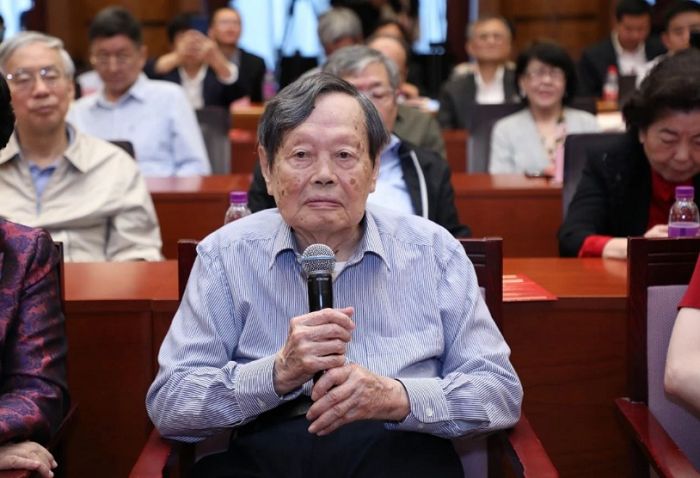
《曙光集》

Search documents
追忆杨振宁:一段跨度50年对“物理学的未来”的思考
2 1 Shi Ji Jing Ji Bao Dao· 2025-10-21 12:48
Core Viewpoint - The article commemorates the life and contributions of renowned physicist Yang Zhenning, who passed away at the age of 103, highlighting his scientific explorations and reflections on the future of physics [1]. Group 1: Yang Zhenning's Life and Work - Yang Zhenning returned to Beijing in December 2003 after spending 58 years in the United States, marking a significant transition in his life [3]. - He continued to publish high-quality papers in leading journals, focusing on statistical physics, a field he had previously set aside due to a lack of experimental validation [3]. - Yang expressed gratitude for being able to work at the forefront of science at an advanced age, a rarity in scientific history [4]. Group 2: Contributions to Education and Innovation - After returning to China, Yang became involved in broader educational, cultural, and political issues, frequently giving public lectures across China and in other Chinese-speaking regions [4]. - He identified four types of innovation, emphasizing the importance of certain types for contemporary China, particularly those akin to the innovations of Bill Gates and Nintendo [4]. Group 3: Publications and Reflections - Yang Zhenning's book "Dawn Collection," published in 2018, reflects on significant changes in China and the world over the past decade, indicating a shift from darkness to dawn [6]. - The collection includes essays that showcase his views on the value of physics and its future, emphasizing the importance of conceptual development in the field [6][7]. - In his writings, Yang discussed the evolution of physics in the 20th century and the challenges faced in the post-World War II era, particularly regarding the extension of observable experiences into non-physical realms [10][11]. Group 4: Philosophical Insights on Physics - Yang Zhenning articulated his belief that the ultimate judgment in physics must be grounded in reality, contrasting the roles of physicists with those of mathematicians and artists [11]. - He expressed skepticism about the future of physics, suggesting that while significant advancements have been made, deeper conceptual layers remain to be explored [13]. - Yang's reflections on the cultural differences in scientific perspectives highlight the influence of traditional Chinese thought on his worldview [16].

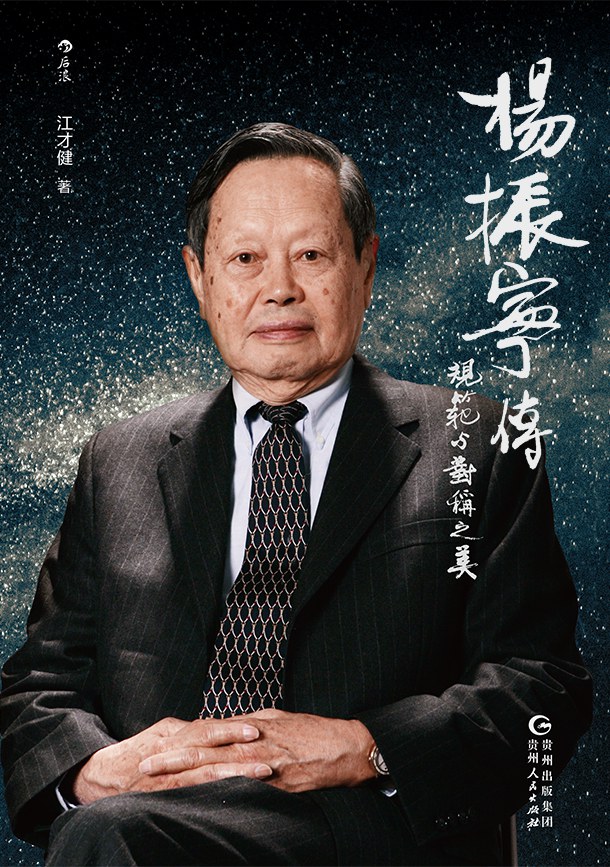
杨振宁的一句话,影响他近20年!“翻烂”《曙光集》,青年学者王志伟讲述:杨先生教会我的那些事
Mei Ri Jing Ji Xin Wen· 2025-10-18 23:44
Core Viewpoint - The influence of Yang Zhenning on the academic journey of Wang Zhiwei is profound, emphasizing the importance of academic quality and personal direction in research and life choices [1][4]. Group 1: Impact of Yang Zhenning's Theories - Wang Zhiwei's research in dark matter is grounded in the "Yang-Mills theory," which he considers a simple yet rich theoretical framework for understanding fundamental interactions in nature [3][8]. - The "Yang-Mills theory" is foundational to modern particle physics and is crucial for the Standard Model, which categorizes known particles and their interactions [8][11]. Group 2: Personal Influence and Academic Journey - Wang Zhiwei was deeply inspired by Yang Zhenning's emphasis on the "quality of academic research," which shaped his approach to selecting research directions [4][5]. - Yang Zhenning's personal experiences, such as his shift from experimental to theoretical physics, serve as a guiding example for young researchers in recognizing their strengths [4][12]. Group 3: Legacy and Cultural Impact - Yang Zhenning's return to China significantly enhanced academic exchanges and inspired younger generations, fostering a culture of mentorship and teaching [13][14]. - His contributions extend beyond physics, highlighting the importance of humanistic education in shaping academic quality and inspiring interdisciplinary research [16][17].
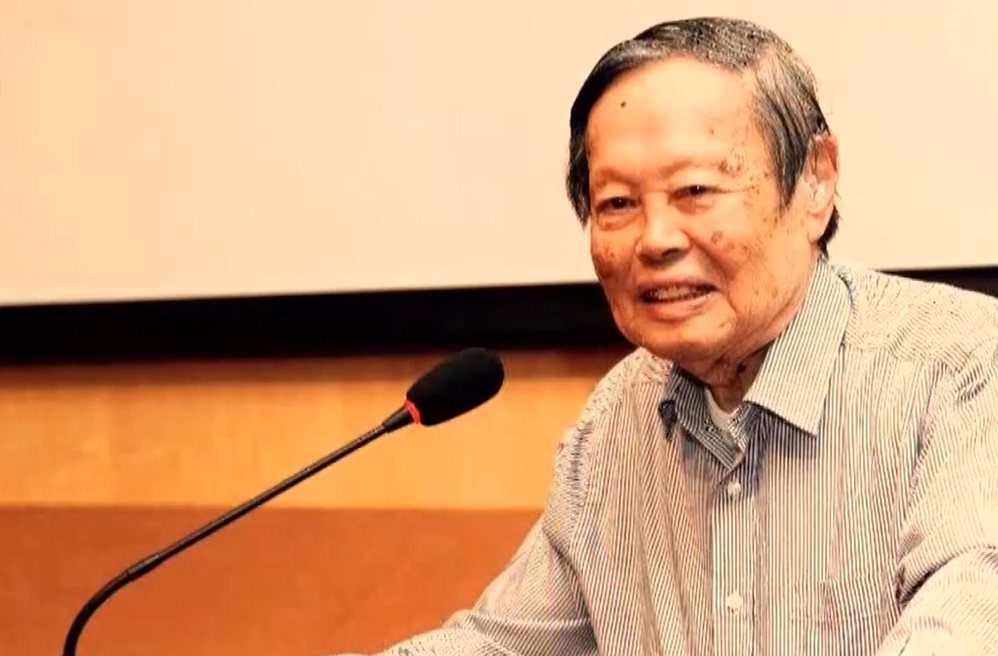
103岁杨振宁逝世:要做好物理,是要有品位和风格的
第一财经· 2025-10-18 13:26
Core Viewpoint - The article commemorates the life and contributions of Yang Zhenning, a renowned physicist and Nobel laureate, highlighting his impact on science and education in China, as well as his personal philosophy and dedication to his homeland [3][4][12]. Group 1: Life and Achievements - Yang Zhenning was born on October 1, 1922, in Hefei, Anhui, and showed exceptional mathematical talent from a young age, influenced by his father's academic background [5][6]. - He studied at National Southwestern Associated University during a tumultuous period, where he developed a deep appreciation for the works of prominent physicists like Einstein and Fermi [7]. - Yang Zhenning achieved significant academic milestones in the United States, including the development of the Yang-Mills theory in 1954 and the discovery of parity violation in 1956, which established him as a leading physicist [7][9]. Group 2: Contributions to China - After winning the Nobel Prize, Yang Zhenning returned to China in 1971, becoming a key figure in fostering academic exchanges and rebuilding the scientific community [10][11]. - He played a crucial role in establishing over 60 top physics laboratories in China, significantly enhancing the country's research capabilities and nurturing numerous scientific talents [12]. - Yang Zhenning's philanthropic efforts included founding the "Science Exploration Award" and supporting Chinese scholars to study abroad, demonstrating his commitment to advancing science in China [11][12]. Group 3: Personal Philosophy and Legacy - Yang Zhenning emphasized the importance of character and style in scientific work, believing that a scientist's personal qualities significantly influence their contributions [13][14]. - He maintained a rigorous work ethic well into his later years, dedicating time to teaching and research in fields like high-temperature superconductivity and quantum computing [14][16]. - His reflections on life and science reveal a deep appreciation for the mysteries of the universe and a humble acknowledgment of humanity's place within it [16].
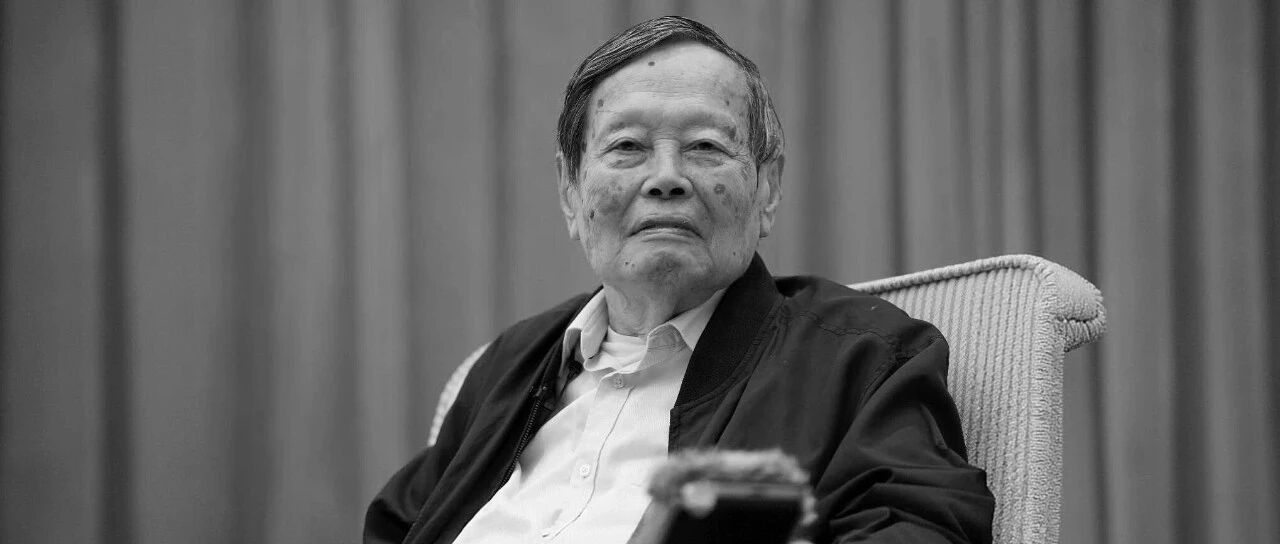
103岁杨振宁逝世:要做好物理,是要有品位和风格的
Di Yi Cai Jing· 2025-10-18 11:13
Core Insights - The article highlights the life and contributions of Yang Zhenning, a renowned physicist and Nobel laureate, who passed away at the age of 103, emphasizing his role in boosting the confidence of Chinese people in science and education [1][3][10] Group 1: Personal Background and Achievements - Yang Zhenning was born on October 1, 1922, in Hefei, Anhui, and showed exceptional mathematical talent from a young age, influenced by his father, a mathematics PhD from the University of Chicago [3][4][6] - He graduated with a master's degree from the University of Chicago in 1945 and spent 17 years at the Institute for Advanced Study in Princeton, where he produced significant academic work, including the Yang-Mills theory and the concept of parity violation [6][7][9] - Yang Zhenning returned to China in 1971 after the normalization of Sino-American relations, becoming the first Chinese scientist to visit post-revolution China, and played a crucial role in rebuilding the country's scientific community [7][9] Group 2: Contributions to Science and Education - He established numerous top-tier physics laboratories in China, significantly reducing the gap in physical infrastructure between China and the West, and contributed to the training of many scientific talents [9][10] - Yang Zhenning initiated the "Science Exploration Prize" to foster scientific talent in China and donated his Nobel Prize winnings to support Chinese students studying abroad [7][9] - He maintained a rigorous work ethic even in his later years, dedicating ten hours a day to research in fields like high-temperature superconductivity and quantum computing [10][12] Group 3: Personal Philosophy and Legacy - Yang Zhenning viewed physics as an art form, emphasizing the importance of style and character in scientific work, and believed that a person's taste, ability, and circumstances shape their contributions [10][12] - His marriage to Weng Fan provided him with personal support, allowing him to continue his academic pursuits while also co-authoring works that reflect his thoughts on science and humanity [12][13] - In his final public speech at the age of 100, he expressed a profound understanding of the universe and humanity's place within it, highlighting his lifelong quest for knowledge [13]