杨 - 米尔斯规范场论

Search documents
在清华园,送别杨振宁
经济观察报· 2025-10-19 12:47
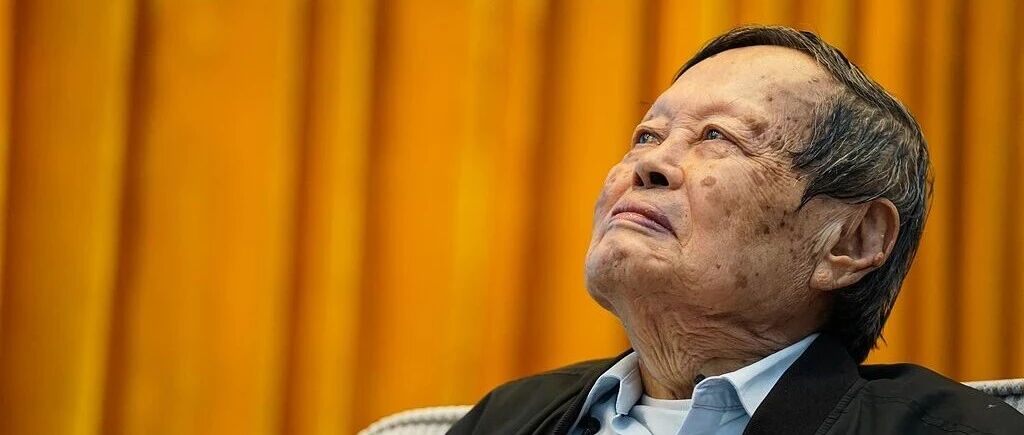
Core Viewpoint - The article discusses the memorial service for the renowned physicist Yang Zhenning, highlighting his contributions to science and the impact he had on students and the academic community [4][5][7]. Group 1: Memorial Service Details - On October 19, a long queue formed outside the Tsinghua University Science Museum as hundreds of people came to pay their respects to Yang Zhenning, who passed away at the age of 103 [4][6]. - A memorial room was set up at the Science Museum from October 18 to 24 to accept condolences from the public [6]. - Yang Zhenning had a deep connection with the Science Museum, as it was not only the location of the Tsinghua University Institute for Advanced Study but also where his father worked [6]. Group 2: Yang Zhenning's Legacy - Yang Zhenning spent nearly 30 years at Tsinghua University, where he made significant contributions to the education and development of physics [5][8]. - He continued to teach and engage in research even at an advanced age, influencing the fields of cold atom physics, condensed matter physics, and cryptography [8]. - Many attendees at the memorial were former students and colleagues, reflecting on his profound impact on their academic journeys [9][10]. Group 3: Public Sentiment and Remembrance - The article captures the emotional atmosphere as people of all ages, including children, came to honor Yang Zhenning, indicating his lasting influence on future generations [11][14]. - A young physics teacher traveled from Tianjin to pay tribute, intending to create a commemorative video for his students [14]. - The memorial service was marked by a sense of collective mourning, with various tributes and flowers being offered in his memory [15][16].

在清华园,送别杨振宁
Jing Ji Guan Cha Bao· 2025-10-19 12:37
Core Points - Renowned physicist and Nobel laureate Yang Zhenning passed away on October 18 at the age of 103, prompting widespread mourning and remembrance from the academic community and the public [3][6][10] - Yang Zhenning spent nearly 30 years at Tsinghua University, where he made significant contributions to physics education and research, particularly in areas such as cold atom physics and condensed matter physics [6][13] - A memorial room was established at Tsinghua University from October 18 to 24, allowing people to pay their respects, with hundreds lining up to honor his legacy [4][12] Contributions to Education and Research - Yang Zhenning was instrumental in the establishment of the Tsinghua University Advanced Research Center in 1997 and served as an honorary director, later becoming a professor [6][8] - He continued to teach and mentor students well into his eighties, significantly impacting the development of physics education in China [6][10] - His contributions to the field include 13 significant achievements in various areas of physics, with the violation of parity conservation and Yang-Mills theory being among his most recognized works [13] Public Remembrance - Many former students and colleagues attended the memorial, reflecting on Yang's influence and contributions to their academic journeys [6][8] - The memorial attracted a diverse crowd, including young students and teachers, indicating his lasting impact on generations of physicists [12][14] - Tsinghua University and its affiliated departments displayed black-and-white tributes on their websites, symbolizing collective mourning for Yang Zhenning [13]
新华时评|向宇宙问路,为祖国燃灯
Xin Hua She· 2025-10-18 13:04
Core Viewpoint - The news highlights the passing of Yang Zhenning, a renowned physicist, at the age of 103, emphasizing his significant contributions to modern physics and his dedication to China's scientific development [1][2]. Group 1: Contributions to Physics - Yang Zhenning, alongside Li Zhengdao, proposed the concept of "non-conservation of parity in weak interactions," earning the Nobel Prize in Physics in 1957 [1]. - He co-developed the Yang-Mills theory, which is considered one of the foundational theories of modern physics, comparable to Maxwell's equations and Einstein's general relativity [1]. - His achievements spanned multiple fields, including particle physics, field theory, statistical physics, and condensed matter physics, profoundly influencing the development of these areas [1]. Group 2: Impact on Education and Scientific Exchange - Yang Zhenning played a crucial role in fostering scientific exchange between China and the West, supporting Chinese scholars to study in the U.S. [2]. - After returning to China, he taught undergraduate courses in "General Physics" at Tsinghua University, dedicating himself to the development of basic sciences and talent cultivation [2]. - His life exemplified the ideals of Chinese scientists, blending traditional culture with innovative scientific spirit, and demonstrating a deep sense of patriotism and commitment to education [2]. Group 3: Legacy and Inspiration - Yang Zhenning's journey from a curious youth to a leading scientist reflects a lifelong quest for knowledge, inspiring future generations of scientists [2]. - His spirit and contributions are expected to continue motivating scientists in their pursuit of progress for science, national prosperity, and human welfare [2][3].
告别杨振宁:我的人生走了一个圈
创业邦· 2025-10-18 10:15
Core Viewpoint - The article reflects on the life and contributions of Yang Zhenning, a prominent physicist, highlighting his academic achievements, friendships, and personal relationships, ultimately portraying him as a figure who sought order in the universe while maintaining a sense of humanity in his personal life [5][20]. Academic Contributions - Yang Zhenning was born in 1922 in Hefei, Anhui, and faced significant challenges during his youth, including fleeing from war [7]. - He studied under renowned physicist Fermi in the United States and co-developed the "parity violation" theory with Li Zhengdao in 1956, which challenged existing beliefs in physics and earned them the Nobel Prize in 1957 [8]. - Yang also contributed to the "Yang-Mills theory," which became a cornerstone of modern particle physics, influencing future Nobel Prize discoveries [8]. - He played a crucial role in advancing China's physics research and was instrumental in establishing international collaborations in high-energy and condensed matter physics [8]. Friendships and Collaborations - Yang's collaboration with Li Zhengdao is noted as a significant partnership in the history of science, leading to their joint Nobel Prize win [10]. - Despite their initial close relationship, differences in ideology and disputes over authorship led to a rift between Yang and Li, marking a notable shift in their friendship [12]. - Throughout his career, Yang interacted with many prominent scientists, including Einstein and Dyson, who recognized his contributions to physics [14]. Personal Life and Relationships - Yang's personal life included a significant relationship with Du Zhi Li, whom he met serendipitously in 1949, leading to their marriage in 1950 [16]. - After Du's passing in 2003, Yang married Weng Fan in 2004, which attracted public attention due to their age difference of 54 years [17]. - Yang's relationship with Weng was characterized by warmth and shared experiences, showcasing a softer side of his personality [18].
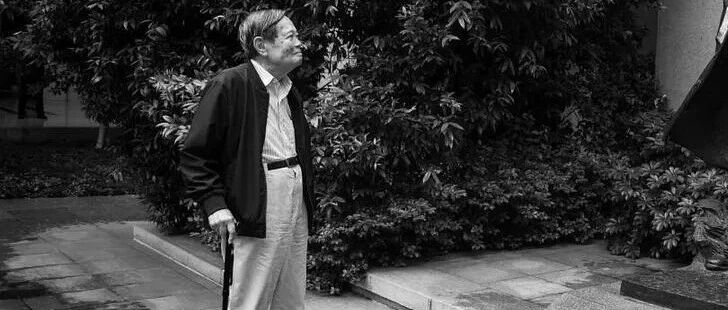
杨振宁逝世:「我最大的贡献是,帮助改变了中国人觉得自己不如人的心理」
36氪· 2025-10-18 09:07
Core Viewpoint - The article commemorates the life and contributions of renowned physicist Yang Zhenning, who passed away at the age of 103, highlighting his groundbreaking work in physics, particularly the parity violation theory and the Yang-Mills theory, which have significantly influenced modern particle physics [5][8][85]. Group 1: Yang Zhenning's Achievements - Yang Zhenning, along with Li Zhengdao, proposed the parity violation theory, earning the Nobel Prize in Physics in 1957, making them the first Chinese scientists to receive this honor [8][85]. - The Yang-Mills theory, co-developed with Mills, serves as a cornerstone of the modern particle physics standard model, profoundly impacting the field's development [8][85]. - Yang Zhenning's significant discoveries include the questioning of parity conservation in weak interactions, which led to a paradigm shift in physics [79][85]. Group 2: Personal Life and Background - Yang Zhenning was born on October 1, 1922, in Hefei, Anhui, and had two birthdays due to a clerical error on his immigration documents [21][22]. - He was known as "Yang Daitou" during his childhood, reflecting both his physical appearance and his role as a caretaker for his younger siblings [25][26]. - His academic journey began at the Southwest Associated University, where he excelled in physics and mathematics, later leading to his studies in the United States [28][30]. Group 3: Collaboration with Li Zhengdao - Yang Zhenning and Li Zhengdao developed a close friendship and collaboration, which began in the United States and led to significant scientific breakthroughs [59][67]. - Their joint work culminated in the Nobel Prize-winning paper questioning parity conservation, which was published in October 1956 [79][84]. - Despite their close collaboration, personal differences led to a rift between the two, highlighting the complexities of their relationship [16][71]. Group 4: Impact on Physics - The discovery of parity violation challenged long-held beliefs in physics, leading to a reevaluation of fundamental principles [84]. - Yang Zhenning's contributions have been recognized as pivotal in changing the perception of Chinese scientists in the global scientific community [85][86]. - The article emphasizes the importance of their work in shaping modern physics and inspiring future generations of scientists [85].
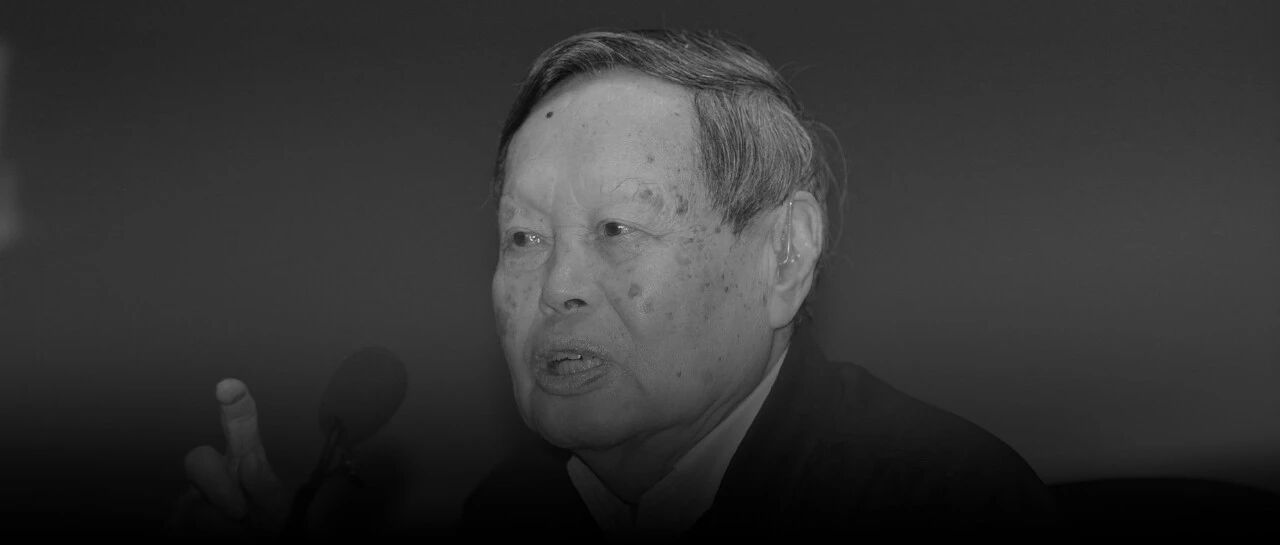
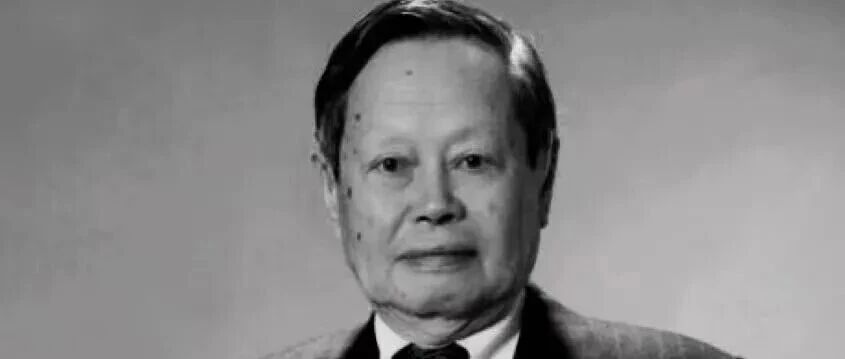
沉痛悼念!杨振宁因病逝世,享年103岁
Zheng Quan Shi Bao Wang· 2025-10-18 05:30
Core Points - Renowned physicist and Nobel laureate Yang Zhenning passed away on October 18, 2025, in Beijing at the age of 103 [1] Group 1: Biography and Education - Yang Zhenning was born in 1922 in Hefei, Anhui, and moved to Tsinghua University in 1929 [3] - He studied at Southwest Associated University in 1938, graduated with a master's degree from Tsinghua University in 1944, and obtained his Ph.D. from the University of Chicago in 1948 [3] - He held various prestigious academic positions, including at Princeton and Stony Brook University, and was a professor at Tsinghua University from 1999 [3] Group 2: Contributions to Physics - Yang Zhenning is considered one of the greatest physicists of the 20th century, contributing significantly to modern physics [4] - He co-developed the Yang-Mills theory, which laid the foundation for the standard model of particle physics, comparable to Maxwell's equations and Einstein's general relativity [4] - He and Li Zhengdao proposed the revolutionary idea of parity violation in weak interactions, earning the Nobel Prize in Physics in 1957 [4] - Yang discovered the Yang-Baxter equation, which opened new directions in statistical physics and quantum groups [4] Group 3: Impact on Education and Science in China - Yang Zhenning was deeply committed to China's educational and scientific development, initiating a wave of visits by Chinese scholars to the U.S. [5] - He established the "Committee for Educational Exchange with China," funding nearly a hundred Chinese scholars to study in the U.S., significantly impacting China's technological advancement [5] - After returning to Tsinghua, he dedicated himself to the development of the Institute for Advanced Study, influencing the reform and development of higher education in China [5]
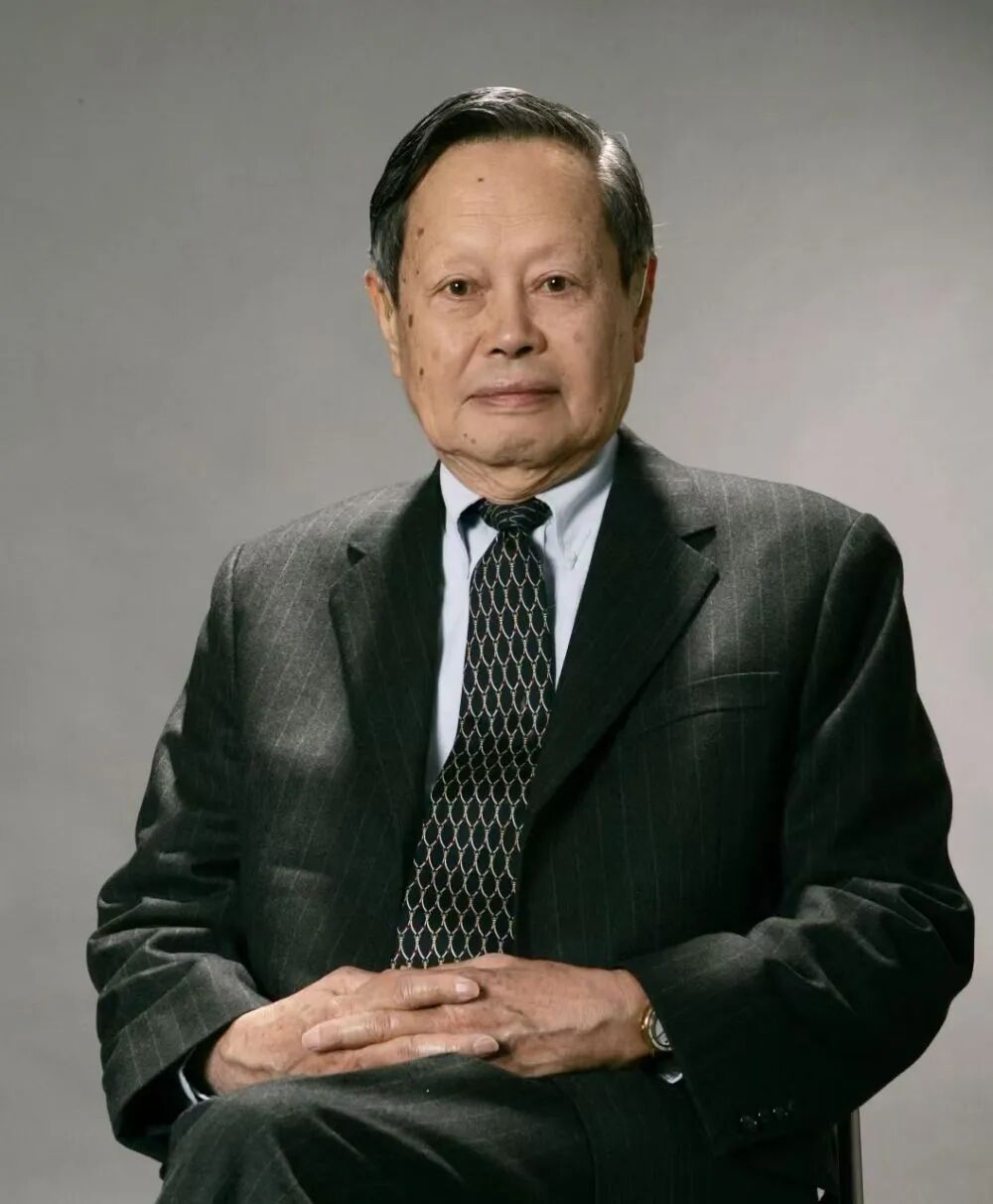
科学家中的科学家,杨振宁影响了什么
经济观察报· 2025-10-18 05:06
Core Viewpoint - The article highlights the significant impact of Yang Zhenning's achievements, particularly his Nobel Prize in Physics in 1957, on Chinese science and society, inspiring generations of scientists and enhancing national confidence in scientific capabilities [17][18]. Group 1: Yang Zhenning's Life and Achievements - Yang Zhenning, a renowned physicist and Nobel laureate, passed away on October 18, 2025, at the age of 103 [4]. - The documentary "Yang Zhenning: A Century of Scientific Journey" premiered in January 2024, showcasing rare historical materials and contributions from top Chinese scientists [5][6]. - Yang Zhenning was born in 1922 in Hefei, Anhui, and received his education at Southwest Associated University and later studied under prominent physicists in the United States [6][10]. - He and Li Zhengdao were awarded the Nobel Prize in Physics in 1957 for their work on parity violation, making them the youngest Nobel laureates at that time [12][17]. Group 2: Influence on Chinese Science - Yang Zhenning's achievements have been described as a turning point for Chinese scientists, instilling a sense of pride and capability in scientific research [17][18]. - His contributions helped change the perception of Chinese scientists on the global stage, encouraging future generations to pursue scientific excellence [18]. - Yang Zhenning emphasized the importance of basic research in China, influencing government policies and funding in the field [21]. Group 3: Personal Reflections and Legacy - Yang Zhenning's personal experiences, including his return to China after years abroad, reflect his deep connection to his homeland and commitment to advancing Chinese science [20][22]. - He was known for his mentorship and support of younger scientists, fostering a collaborative spirit within the scientific community [18][22]. - Yang Zhenning's legacy includes not only his scientific contributions but also his role in inspiring confidence among Chinese scientists and promoting international collaboration [18][22].
沉痛悼念!杨振宁逝世
中国基金报· 2025-10-18 04:29
Core Viewpoint - The article commemorates the life and contributions of Yang Zhenning, a renowned physicist and Nobel laureate, highlighting his significant impact on modern physics and his dedication to education and scientific development in China [4][5]. Group 1: Personal Background - Yang Zhenning was born in 1922 in Hefei, Anhui, and moved to Tsinghua University in 1929. He studied at Southwest Associated University and later earned a master's degree from Tsinghua University [3]. - He pursued further studies in the United States, obtaining a Ph.D. from the University of Chicago in 1948 and subsequently working at Princeton University [3]. Group 2: Scientific Contributions - Yang Zhenning is recognized as one of the greatest physicists of the 20th century, co-developing the Yang-Mills theory, which laid the groundwork for the standard model of particle physics [4]. - He was awarded the Nobel Prize in Physics in 1957 for his revolutionary ideas on parity violation in weak interactions, becoming one of the first Chinese Nobel laureates [4]. - His work on the Yang-Baxter equation opened new directions in statistical physics and quantum groups, influencing multiple fields within physics [4]. Group 3: Contributions to Education and Science in China - Yang Zhenning played a pivotal role in fostering academic exchanges between China and the United States, initiating a wave of visits by Chinese scholars to the U.S. [5]. - He established the "Committee for Educational Exchange with China," funding nearly a hundred Chinese scholars to study in the U.S., significantly contributing to China's scientific development [5]. - Upon returning to Tsinghua University, he dedicated himself to the development of the Institute for Advanced Study, impacting the reform and growth of higher education in China [5].
著名物理学家、诺贝尔物理学奖得主杨振宁逝世
Xin Hua She· 2025-10-18 04:24
Core Points - Renowned physicist Yang Zhenning, a Nobel Prize laureate and academician of the Chinese Academy of Sciences, passed away in Beijing on October 18 at the age of 103 [1] - Yang Zhenning was born in 1922 in Hefei, Anhui, and studied in the United States in the 1940s, where he later taught [1] - He was awarded the Nobel Prize in Physics in 1957 for his work on the Yang-Mills theory, which is considered one of the most significant achievements in 20th-century physics [1] - After returning to China over 20 years ago, Yang made significant contributions at Tsinghua University in talent cultivation and promoting academic exchanges between China and foreign countries [1]
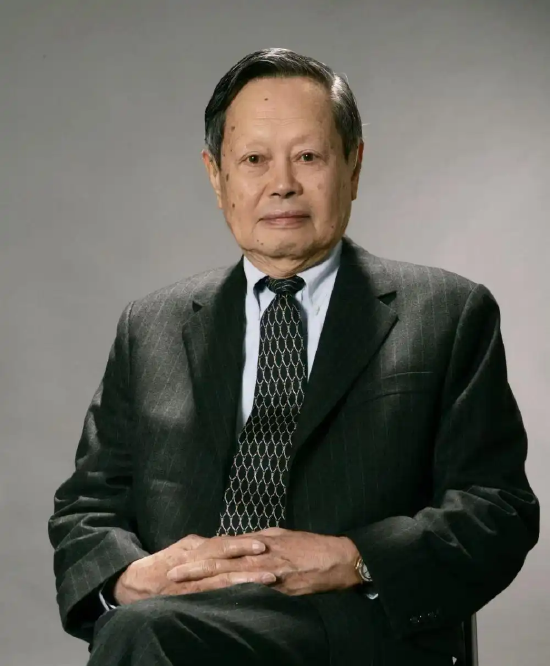
西湖大学及施一公回应“杨振宁逝世传闻”:不要以讹传讹
财联社· 2025-10-17 11:07
Core Viewpoint - Recent rumors regarding the death of renowned physicist and Nobel laureate Yang Zhenning have sparked public concern, but official sources have not confirmed these claims [1][3]. Group 1 - Yang Zhenning, born in 1922 in Hefei, Anhui, is currently 103 years old and is a prominent figure in modern physics, known for the Yang-Mills theory established in 1954 [3]. - The West Lake University, where Yang serves as honorary chairman, has not received any official notification regarding the rumors of his passing [1]. - Shiyi Gong, the founder of West Lake University, advised the public not to believe the online rumors and to avoid spreading misinformation [1].