板块轮动理论

Search documents
A股:银行股,或许还是让人意想不到的“冷门股”!
Sou Hu Cai Jing· 2026-01-04 02:34
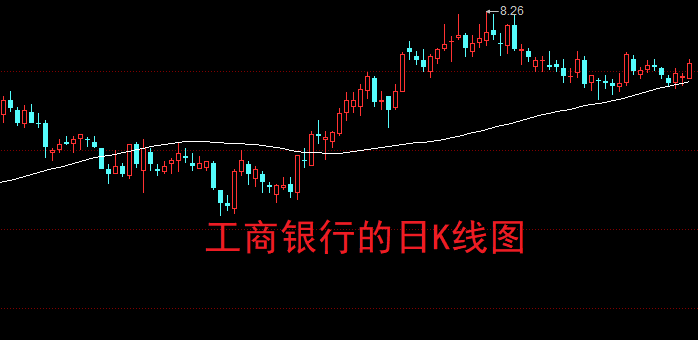
Core Viewpoint - The banking sector in A-shares is poised for a significant value recovery due to several key factors, including the strengthening of the RMB, supportive policies for long-term investments, prolonged market adjustments, low valuation levels, and the potential for overlooked opportunities in the sector [1][3][5][7]. Group 1: Currency and Economic Factors - The recent strengthening of the RMB against the USD is a crucial catalyst, supported by a stable Chinese economic foundation and renewed global confidence in Chinese assets. This appreciation enhances the intrinsic value of bank stocks, as they hold substantial RMB-denominated assets [1]. Group 2: Policy Support - The People's Bank of China has encouraged long-term investments, implementing structural tools to guide institutional funds towards undervalued, high-dividend blue-chip stocks. Banks, with their high dividend yields and stable cash flows, align well with the preferences of these long-term investors [3]. Group 3: Market Adjustments - The banking sector has experienced a prolonged adjustment period since June 2025, leading to a significant reduction in market interest and a decline in stock prices. This phase of neglect often presents opportunities for reversal, as many bank stocks have reached multi-year lows with diminished selling pressure [3]. Group 4: Valuation Metrics - The overall price-to-earnings (PE) ratio for A-share banks is currently below 6 times, with some quality stocks even below 5 times. In contrast, U.S. counterparts like JPMorgan and Wells Fargo have valuations exceeding 10 times, indicating a severe undervaluation of A-share banks. Additionally, the average dividend yield remains above 5%, significantly higher than the yield on 10-year government bonds [5]. Group 5: Market Sentiment and Opportunities - The current low trading volume and lack of attention towards bank stocks suggest that they may be at a cyclical turning point. Historical trends indicate that when a mainstream sector is collectively ignored, it often signals an impending recovery. The banking sector, contributing nearly one-third of net profits among A-share listed companies while only accounting for about 10% of total market capitalization, indicates a potential mismatch in market valuation [7].

西安房价,也顶不住了
城市财经· 2025-03-12 03:49
Core Viewpoint - The article discusses the recent decline in housing prices in Xi'an, highlighting the contrast between previous price increases and the current downward trend, driven by various economic factors and market dynamics [3][4][18]. Group 1: Housing Market Trends - Xi'an's new housing prices fell by 0.4% month-on-month and 1% year-on-year, marking five consecutive months of decline since September of the previous year [3][4]. - The second-hand housing market has also seen a decline, with prices dropping 0.3% month-on-month and 7% year-on-year in January [5]. - The previous surge in new housing prices was attributed to high land prices and the introduction of premium housing products, which have since led to a market correction [13][14]. Group 2: Population Dynamics - Xi'an's population has increased significantly, with a net gain of 448.5 million residents from 2010 to 2020, ranking fourth nationally [9]. - Despite the population growth, the article questions the sustainability of housing prices, citing examples from other cities where population influx did not prevent price declines [12][18]. Group 3: Economic Performance - Xi'an's GDP growth was 4.6% in 2023, lagging behind the national average of 5.2%, and the city ranked fourth from the bottom among 27 cities with a GDP over one trillion [26][27]. - The industrial sector's performance has been weak, with a significant decline in fixed asset investment and industrial output in the first half of 2024 [30][31]. - The article notes that while Xi'an has a strong military and aerospace industrial base, it lacks the broader industrial strength seen in other major cities [36][41]. Group 4: Future Outlook - The article suggests that the adjustment in housing prices in Xi'an may continue, albeit at a potentially slower rate due to relatively lower price bubbles compared to eastern cities [60][61]. - The need for Xi'an to bridge the gap between its military-industrial capabilities and broader economic development is emphasized as a critical challenge for future growth [55].