核心技术自主研发

Search documents
《2025德勤中国高科技高成长50强及明日之星报告》发布
Zheng Quan Ri Bao Wang· 2025-12-17 06:10
Group 1 - The report by Deloitte China highlights that the average cumulative revenue growth rate of the top 50 high-growth companies in China is 490% over three years [1] - In terms of revenue scale, companies with revenues between 50 million and 100 million yuan represent 38% of the top 50, while those with revenues above 100 million yuan account for 44%, indicating a rise in the proportion of small and medium-sized enterprises [1] - The Greater Bay Area accounts for 52% of the top companies, with Shenzhen, Shanghai, Beijing, and Guangzhou leading, showcasing that first-tier cities remain the primary birthplace for tech companies due to their mature industrial base and abundant talent [1] Group 2 - Key drivers for technology and innovation in enterprises include talent, capital, and AI R&D investment, with 23% of the top 50 companies and 66% of the "Tomorrow's Stars" investing over 50% of their revenue in AI R&D [2] - Both the top 50 companies and the "Tomorrow's Stars" face challenges such as a shortage of high-tech talent, insufficient application of AI technology in business scenarios, and rising R&D costs [2] - The Chinese tech industry is expanding into multiple high-potential sectors, leveraging technological innovation and ecological scene implementation to gain a competitive edge [2]

天津一民企突破一项“卡脖子”技术!产品已销往全球
Bei Jing Ri Bao Ke Hu Duan· 2025-10-24 10:32
Core Insights - BMC Ruimaite has established itself as a leading domestic enterprise in the respiratory health sector, focusing on independent research and development to overcome the challenges posed by international competitors [2][3] - The company aims to evolve from providing single devices to offering comprehensive respiratory health solutions, enhancing user experience and accessibility [3] Group 1: Company Development - BMC Ruimaite's production facility in Tianjin is actively manufacturing home ventilators, which are set to be distributed to over 100 countries and regions globally [2] - The company has made significant advancements in core technology, particularly in the development of the fan, which is considered the "heart" of the ventilator, achieving performance levels comparable to top international standards [2] Group 2: Strategic Vision - The company envisions becoming the preferred platform for global respiratory health management, leveraging its accumulated technology, products, and services to meet user needs more effectively [3] - A collaborative project involving BMC Ruimaite, its subsidiary Tianjin Yihe Jiaye, and Beijing Chaoyang Hospital has been awarded the first prize in the "Science and Technology Progress Award" by the Tianjin Science and Technology Bureau, highlighting the importance of integrating medical and engineering expertise [3]


从呼吸机到全场景健康管理 瑞迈特以硬核技术构建呼吸健康生态护城河
Zheng Quan Ri Bao Wang· 2025-10-23 07:49
Core Insights - The article highlights the strategic advancements and achievements of Beijing Ruimait Medical Technology Co., Ltd. in the respiratory health sector, showcasing its position as a leading domestic manufacturer of home ventilators in China and the second globally [1] Group 1: Technological Innovation and Market Expansion - Ruimait has established itself as the only Chinese company among the top five global home ventilator manufacturers, focusing on respiratory issues such as COPD and obstructive sleep apnea since its founding in 2001 [2] - The company has achieved significant technological milestones, including being the first Chinese brand to receive FDA certification for home ventilators in 2012, and has accumulated 932 domestic and international patents by June 30, 2025 [2][3] - Ruimait's home ventilators have sold over 3 million units globally, with more than 10 million masks sold, demonstrating its extensive market reach [2] Group 2: Commitment to R&D and Industry Standards - The company emphasizes its commitment to independent R&D, particularly in core technologies, which has led to the localization of key components and significant improvements in product performance [3] - Ruimait has contributed to the establishment of 38 industry standards, enhancing the quality and competitiveness of Chinese respiratory health products in the global market [4] Group 3: Ecosystem Development and Comprehensive Solutions - Ruimait is expanding its capabilities beyond single devices to comprehensive respiratory health management solutions, aiming to become a preferred platform for global respiratory health management [5] - The introduction of the "smart mobile oxygen supply combination scheme" reflects the company's understanding of user needs and its ability to integrate technology across various products [6] - The establishment of a respiratory health management cloud platform in 2015 has enabled remote monitoring and intervention, transforming traditional respiratory devices into integrated management solutions [6] Group 4: Clinical Integration and User-Centric Approach - The integration of medical and engineering expertise is crucial for developing products that meet local healthcare needs, as emphasized by clinical experts [7] - Ruimait's product evolution from single devices to comprehensive solutions across various settings demonstrates its commitment to enhancing patient quality of life and effective health management [8]
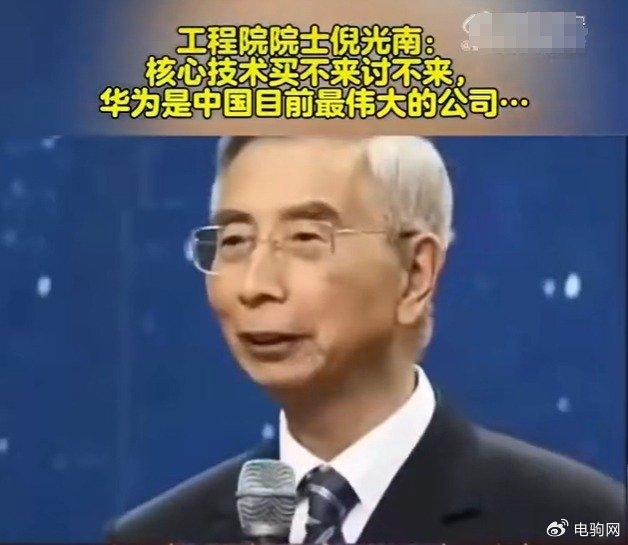
工程院院士倪光南:反对“披马甲”技术,华为是最伟大公司
Xin Lang Cai Jing· 2025-06-19 06:25
Core Viewpoint - Core technologies cannot be bought or obtained through shortcuts, and there is a strong opposition to "disguised" domestic technologies. Huawei is regarded as the greatest company in China at present [1]. Group 1: Opposition to "Disguised" Domestic Technologies - There is a concern about the prevalence of technologies that are foreign but presented as domestic by "disguising" them, which poses significant security risks [3]. - The use of such disguised technologies can lead to dependency, where foreign entities can control or disrupt operations remotely, creating a major risk for users [3]. Group 2: Core Technologies Must Be Developed Locally - Core technologies must be developed from scratch, as they cannot be acquired from abroad. Historical examples illustrate that foreign companies would not sell advanced technology to China until domestic capabilities reached a certain level [4]. - China's advancements in supercomputing, which have maintained a leading position globally for 16 consecutive years, are attributed to self-developed chips, operating systems, and software, ensuring independence from foreign control [4]. Group 3: Huawei as a Model for Success - Huawei is highlighted as a prime example of a successful high-tech enterprise in China, demonstrating resilience and innovation despite challenging circumstances [5]. - The company has effectively consolidated its innovative capabilities over the past 30 years, becoming a respected name internationally [5]. - The current geopolitical climate poses challenges for core technology companies, but Huawei's long-term accumulation of knowledge and resources positions it to withstand these pressures [6].