
环境保护

Search documents
美光千亿工厂,面临延期风险
半导体行业观察· 2026-03-02 01:41
Core Viewpoint - Micron Technology is facing legal challenges from local and national groups regarding its semiconductor manufacturing facility in Clay, New York, primarily focused on environmental concerns and the adequacy of public input in the approval process [2][4][5]. Group 1: Project Overview - Micron is constructing a semiconductor manufacturing facility, which is expected to be the largest in New York's history, with potential public subsidies amounting to $25 billion, including $6.1 billion from the federal CHIPS Act and $5.5 billion from New York State [2]. - The project aims to create 9,000 jobs and is part of a broader initiative to revitalize domestic semiconductor manufacturing, which has been deemed critical for national security [2][3]. Group 2: Environmental Concerns - Local residents and advocacy groups are concerned about the environmental impact of the facility, citing the significant water and energy consumption, as well as the generation of hazardous waste associated with semiconductor manufacturing [3][6]. - The project is expected to draw 48 million gallons of water daily from Lake Ontario, sufficient to supply over 585,000 households, raising concerns about local infrastructure strain [6]. Group 3: Legal Actions and Community Response - Lawsuits have been filed against Micron and state agencies, arguing that the environmental review process was rushed and did not adequately consider public opinion [4][5]. - Advocates are pushing for a legally binding community benefits agreement to ensure that the project provides tangible benefits to the local community, including job creation and environmental protections [8]. Group 4: Company Commitments and Community Engagement - Micron has committed to investing hundreds of millions in education, workforce training, and affordable housing over the next 20 years, and claims that 80% of the construction workforce will be local [4][8]. - The company has also pledged to develop new wetlands to compensate for those that will be destroyed during construction [4]. Group 5: Historical Context and Future Implications - There is skepticism among community members regarding the actual benefits of the project, referencing past industrial projects that failed to deliver on environmental promises [7][8]. - The ongoing legal and community challenges highlight the tension between economic development and environmental stewardship in the semiconductor industry [5][6].



【新春走基层】护林员樊尚林:春节不歇,只为平安
Xin Lang Cai Jing· 2026-02-24 00:50
Core Viewpoint - The article highlights the dedication and efforts of a forest ranger, Fan Shanglin, who has been protecting the forest and ensuring safety from fire hazards for over 30 years, showcasing the positive changes in the forest environment and local community attitudes towards conservation [1][2][3]. Group 1: Forest Conservation Efforts - Fan Shanglin has been a forest ranger since 1994, dedicating his life to patrolling and protecting the forest, witnessing significant changes over the years [2][3]. - The area managed by the Gai Xinping Forest Farm covers 246,100 acres, with a current forest coverage rate of 55%, a stark contrast to the deforestation seen 30 years ago [2]. - The local community's attitude towards forest conservation has improved, with fewer people engaging in illegal logging as living standards have risen [3][6]. Group 2: Challenges and Responsibilities - Fan faces various challenges, including illegal logging, forest fires, and pest infestations, requiring constant vigilance [3][4]. - He played a crucial role in a rescue operation for lost individuals in the mountains, demonstrating his knowledge of the terrain and commitment to community safety [5][6]. - The increase in tourism has added new responsibilities for Fan, as he now also educates visitors about the dangers of forest fires [6][7]. Group 3: Personal Commitment - Despite the demands of his job, Fan remains committed to his role, even during holidays like the Spring Festival, prioritizing forest safety over personal celebrations [7]. - His long-term dedication has contributed to the transformation of barren mountains into lush forests, reflecting a broader change in community values towards environmental stewardship [7].
海岸水质好 珍禽来觅食
Xin Lang Cai Jing· 2026-02-22 22:03
Core Viewpoint - The article highlights the rich biodiversity of migratory waterbirds in the coastal wetlands of Lushunkou District, Dalian, emphasizing the successful conservation efforts that have created a favorable environment for these species [2] Group 1: Biodiversity and Species - The coastal wetlands in Zhangjia Village cover over 500 hectares and are home to a variety of waterbird species, including over 200 endangered Oriental White Storks [2] - The area hosts more than ten species of nationally protected birds, including Black Storks and White-faced Ibis, with bird populations reaching thousands at peak times [2] Group 2: Conservation Efforts - Lushunkou District has initiated a "Protect the Sea and Clean the Beach" campaign, ensuring that over 170 kilometers of coastline remains clean and that the water quality consistently maintains a 100% standard [2] - The high-quality environment resulting from these conservation efforts provides excellent conditions for the wintering of migratory birds [2]

新春走基层丨“北极乡”瞭望塔上的“兄弟哨”
Xin Lang Cai Jing· 2026-02-19 03:32
Core Viewpoint - The article highlights the dedication of two brothers, Cao Qilong and Cao Qiyun, who have been guarding a fire lookout tower in Maoshan Village for 12 years, showcasing their commitment to forest protection and the evolving landscape of the area [3][5][6]. Group 1: Commitment and Responsibilities - The lookout tower serves as a critical observation point for forest fire prevention, with the brothers acting as its "eyes" [3]. - The brothers have developed exceptional observational skills over the years, allowing them to distinguish between different types of smoke and potential fire hazards [5][6]. - They have adapted to the harsh conditions of the area, with improvements in living conditions over the years, such as the installation of underfloor heating [6]. Group 2: Environmental Changes and Community Engagement - The brothers have witnessed significant environmental changes, including increased greenery and improved air quality due to clean energy initiatives [6]. - There is a growing interest in stargazing among visitors to the area, indicating a shift towards eco-tourism and community engagement [6]. - Plans for a new ancient tree park are underway, which will utilize advanced technologies for the preservation of local flora, enhancing the village's appeal [8]. Group 3: Future Aspirations - The brothers express a desire to continue their work as long as their health permits, emphasizing their commitment to improving the local environment [8]. - Their hope for the future includes maintaining their health and further contributing to the community's environmental efforts [8].

纽森痛批特朗普
Xin Jing Bao· 2026-02-14 08:17
Group 1 - California Governor Newsom criticized the Trump administration's environmental policies, claiming they are regressive and harmful to climate protection efforts [1] - The Trump administration announced the repeal of a 2009 EPA report that recognized six greenhouse gases as threats to public health, marking the largest single rollback of environmental regulations in U.S. history [1] - Newsom warned of the increasing frequency of climate-related disasters affecting air quality, wildfires, and flooding, emphasizing the urgency of addressing climate change [1] Group 2 - Newsom is viewed as a leading Democratic candidate for the 2028 presidential election and is actively positioning himself as a prominent opponent to Trump [2] - His recent comments at the Munich Security Conference are part of a broader strategy to convey anti-Trump sentiments to European audiences [2] - Newsom's upcoming discussions are expected to provide further opportunities to criticize Trump's handling of various international issues, including NATO and Venezuela [2]
加州州长慕安会痛批特朗普:让美国倒退回19世纪!
Xin Hua She· 2026-02-14 08:02
Group 1 - The core viewpoint of the articles highlights California Governor Gavin Newsom's criticism of the Trump administration's environmental policies, stating they are regressive and harmful to public health and welfare [1][2] - Newsom described the Trump administration's recent decision to revoke a 2009 EPA report on greenhouse gases as the largest deregulation move in U.S. history, which undermines efforts to regulate emissions and combat climate change [1] - He warned that the consequences of climate change, such as worsening air quality, wildfires, and floods, are already affecting the public [1] Group 2 - Newsom is viewed as a leading Democratic candidate for the 2028 presidential election and is actively positioning himself as a prominent figure against Trump [2] - His recent remarks at the Munich Security Conference are seen as part of a broader strategy to rally opposition against Trump, emphasizing the need for a unified and coherent response from various sectors [2] - Newsom's public actions, including a symbolic display of a red knee pad to criticize certain political and business figures' submissiveness to Trump, have garnered significant attention [2]
高端访谈丨船游江门“小鸟天堂” 瑙鲁总统:希望更多地了解江门
Yang Shi Xin Wen Ke Hu Duan· 2026-02-13 01:15
Group 1 - Nauru President David Adeang visited Jiangmen, Guangdong again this year, sharing insights during a boat tour at the Bird Paradise National Wetland Park [1][4] - The visit highlights the environmental protection efforts in Jiangmen, which have inspired Adeang, emphasizing that protecting the environment is crucial for future generations [6] - Adeang's previous visit to Jiangmen was in July last year, where he sought to connect with his roots and promote cooperation between China and Nauru [8] Group 2 - Adeang noted significant developments in China-Nauru cooperation over the past seven months, including the installation of solar lights in Nauru funded by Jiangmen, which has illuminated the island [10] - The first successful cultivation of lettuce in Nauru, using Chinese technology, was also a highlight, with seedlings sourced from Jiangmen [10] - Adeang expressed a desire to learn more about Jiangmen through repeated visits, reflecting on his family's historical ties to the area [12]

英国邱园兰花节首次选择中国为主题
Yang Shi Xin Wen Ke Hu Duan· 2026-02-12 23:17
Core Points - The 2026 Orchid Festival at the Royal Botanic Gardens, Kew, officially opened on February 11 and will run until March 8, coinciding with the Chinese Lunar New Year. This year's festival is themed around China for the first time in its 30-year history, showcasing China's rich biodiversity, traditional cultural elements, and the long-term cooperation between China and the UK in plant sciences [1][2] - The main exhibition area features a giant "dragon" made from plant materials, alongside representations of pandas, phoenixes, and storks, with orchids complementing lanterns and sculptures [1] - Richard Deverell, the director of Kew Gardens, stated that the choice of China as the theme reflects its status as one of the most biodiverse countries in the world and aims to present two narrative threads: "nature and culture" [1] - Deverell emphasized that orchids are considered the "canary in the coal mine" for biodiversity, as they are highly sensitive to environmental changes, thus highlighting the importance of plant conservation and the value of international scientific collaboration [1] Industry Insights - Chinese Ambassador to the UK, Zheng Zeguang, noted that orchids are beloved in both China and the UK, symbolizing integrity, resilience, and purity in Chinese traditional culture, often referenced in poetry [2] - Under the guiding principle of "lucid waters and lush mountains are invaluable assets," China is accelerating its green and low-carbon transition while enhancing environmental protection [2]
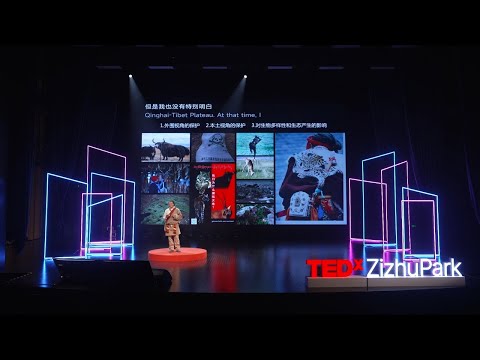
牧歌与净土:三江源游牧生活的现代启示 | 贝·东周 群培 | TEDxZizhu Park
TEDx Talks· 2026-02-05 17:09
来自青海三江源的贝·东周群培,从小在草原与牧歌间长大。黎明的牦牛声、流动的帐篷、父辈的信仰,都让他体会到人与自然之间最古老的契约。离开高原后,他发现现代生活正在远离自然的秩序,于是选择回到故乡,带领青年志愿者在草原上清理垃圾、修复水源,用行动守护那片“净土”。他相信,保护环境不是口号,而是与土地的情感连接,每一次弯腰拾起垃圾,都是对家园的告白。他说:“牧歌不只属于过去,也能唱进今天。唯有尊重自然,人类才能真正安居。” 从事民间环保与生态文明建设基层实践工作二十余年,先后设计并参与执行了青藏高原旗舰物种监测与保护、亚洲水源守护计划、高原零废弃社区建设、牧民手工艺能力提升和乡村可持续发展等多类项目。基于对三江源自然与牧民的热爱,吸收国内外优秀环保机构的先进理念,打造以社区为主责的自然资源管理保护模式,引领三江源百姓进行生态保护的实践与创新,让本土居民成为实施保护最主要的行动者。2019年成为银杏伙伴;2021年获评《瑞丽》杂志年度公益人物;2023年被《南方周末》评选为年度责任先锋。 This talk was given at a TEDx event using the TED conference form ...
以燃放方式集中销毁烟花爆竹莫忘公众的环保诉求!
Zhong Guo Huan Jing Bao· 2026-02-04 11:26
Group 1 - The destruction of fireworks and firecrackers has sparked public debate due to the environmental pollution it causes, highlighting a gap in current social governance [1] - Traditional incineration methods for destroying fireworks are based on safety considerations, as outlined in the 2016 notification from the National Safety Supervision Administration and the Ministry of Public Security [1] - The execution of public policies must consider multiple objectives, as the current approach of "safe destruction" leading to "concentrated pollution" undermines the policy's legitimacy in the eyes of the public [1] Group 2 - The controversy surrounding the destruction of fireworks reflects a significant increase in public environmental awareness and a strengthening of government oversight [2] - The ideal governance model should focus on creating a comprehensive prevention system, ensuring transparency throughout the process, and encouraging societal participation [2] - The decision to either incinerate seized fireworks for convenience or to explore greener disposal methods tests the determination and intelligence of government departments [2]