楼市政策组合拳

Search documents
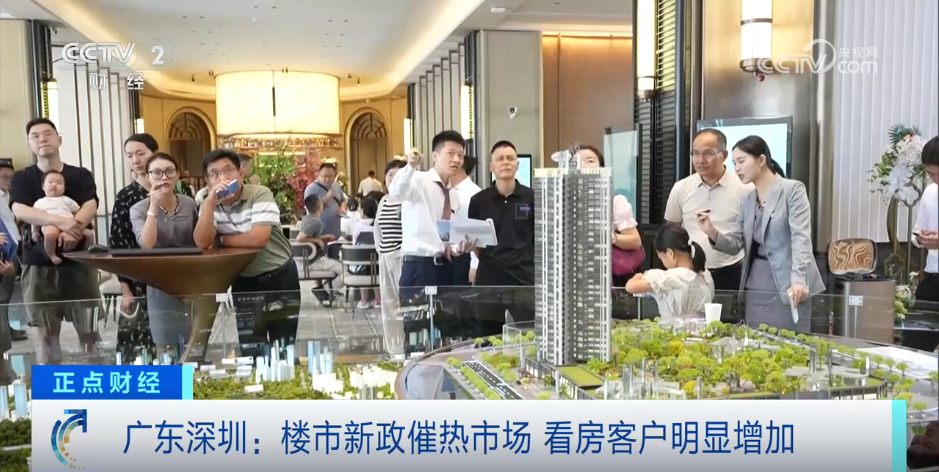
一系列政策“组合拳”持续激发楼市活力 房地产市场热度回升
Yang Shi Wang· 2025-09-15 08:00
Group 1 - Shenzhen has introduced new real estate policies, easing purchase restrictions in non-core areas and allowing banks to set commercial loan rates based on market conditions, leading to a noticeable increase in property viewings [1] - The weekend following the policy announcement saw a significant rise in customer traffic at sales offices, with an increase of 30% to 40% reported by sales managers [3] - The proportion of Hong Kong clients visiting properties has doubled from 5% to 10% since the policy change, alongside a notable increase in clients from other regions [5] Group 2 - Hubei province has implemented various real estate incentives this year, resulting in a 5.8% year-on-year increase in new commercial housing sales area in the first seven months [6] - A property project in Wuhan achieved over 300 million yuan in sales on its opening day, setting a new record for the area [8] - Hubei is focusing on high-quality residential construction, with 13 new high-quality projects in Wuhan achieving an average sales rate of over 70% in the first half of the year [12]

楼市8月四大动作落地,普通购房者如何应对?
Sou Hu Cai Jing· 2025-08-03 01:48
Core Viewpoint - The Chinese real estate market is undergoing a significant transformation in 2025, shifting from strict regulation to active stimulation, driven by long-term strategic planning from the central government [1] Group 1: Supply-Side Structural Reforms - The government is issuing special bonds to acquire existing properties and convert them into affordable housing, with an expected scale exceeding 500 billion yuan, effectively mitigating market risks and improving housing supply structure [1] - New residential projects are mandated to meet higher quality standards, including a minimum energy efficiency rate of 65% and an 80% coverage of smart home systems, enhancing residents' living experience [1] Group 2: Financial Leverage Relaxation - The down payment ratio for first-time homebuyers has been significantly reduced to 15% nationwide, with cities like Xi'an and Nanjing leading the implementation, thus lowering the barriers to homeownership [2] - Mortgage rates are projected to drop to around 2.5% by the end of 2025, potentially reducing monthly payments by approximately 500 yuan and saving over 180,000 yuan in total interest for a 1 million yuan, 30-year loan [2] Group 3: Tax and Fee Reductions - In cities like Liuyang, homebuyers can enjoy a 60% tax rebate on deed tax from August to November, allowing savings of up to 24,000 yuan on a 1 million yuan property [4] - The personal income tax refund policy continues to support taxpayers who sell their homes and repurchase within a year [5] - Transaction costs have been streamlined, with deed tax for second homes in major cities like Beijing, Shanghai, Guangzhou, and Shenzhen reduced to 1% [6] Group 4: Targeted Support for Specific Groups - Families with multiple children are receiving enhanced support, such as a 60,000 yuan subsidy for two-child families and a 120,000 yuan subsidy for three-child families in cities like Wuhan [7] - Young talents under 35 with a bachelor's degree or higher can access up to 1.2 million yuan in housing fund loans without account balance restrictions in certain cities [7] Group 5: Strategies for Different Buyer Groups - First-time buyers are encouraged to take advantage of low down payments and interest rates, focusing on high-value products like shared ownership homes and small units in core areas [8] - Improving families can utilize tax refund policies for "selling old for new" strategies, prioritizing developers' "old-for-new" plans and quality communities equipped for aging [10] - Investors are advised to avoid speculative investments in third and fourth-tier cities and instead focus on quality assets in core urban areas, commercial real estate, and REITs with positive cash flow [10] Conclusion - The scale and intensity of the policy measures in 2025 are unprecedented in the last decade, marking a departure from the "universal price increase era" and a return to the residential nature of real estate [11]