模型投资回报率

Search documents
中国 AI 正处于反超美国的前夜
Sou Hu Cai Jing· 2025-11-18 05:11
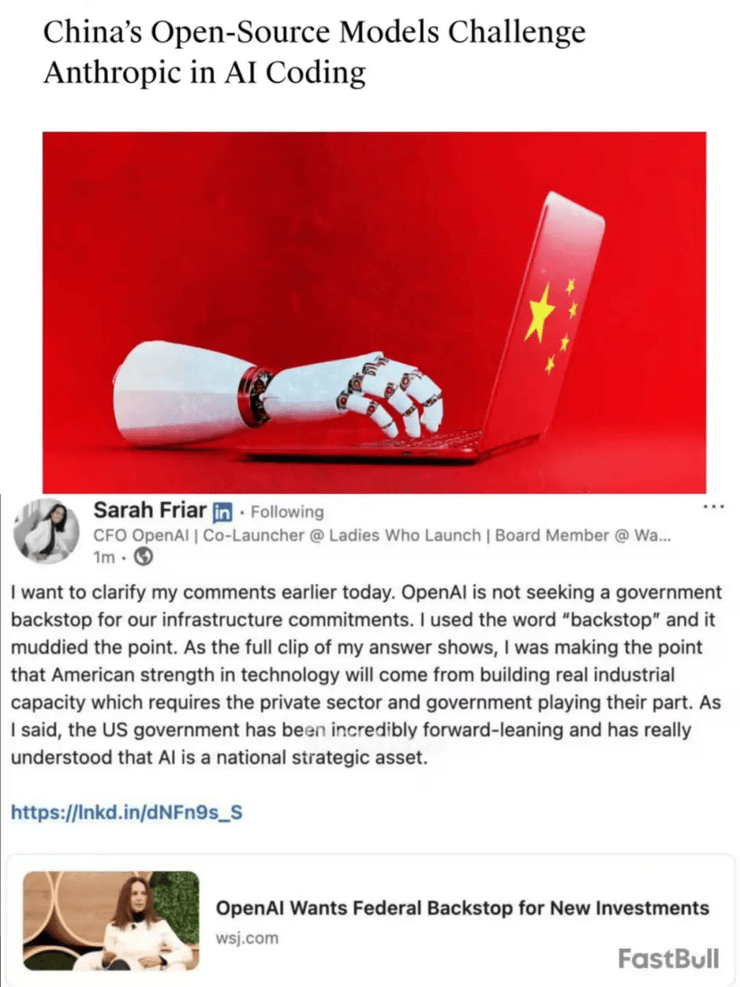
Core Insights - The focus of discussions in the AI sector between China and the US has shifted from the technological gap to recognizing China's rising AI capabilities, with companies like Airbnb adopting Chinese models over OpenAI [1][6] - There is an increasing concern about the bubble risk in the US AI market, highlighted by significant capital expenditures and a stark contrast between R&D costs and commercial revenues [9][11] Group 1: Market Dynamics - The demand side is moving towards cost-effective and efficient Chinese models rather than solely pursuing the highest intelligence [5] - The US AI market is experiencing a downturn, with the Nasdaq index dropping over 3% in a week, indicating a potential bubble burst [6][9] Group 2: Investment and Valuation - OpenAI has signed $1.4 trillion in computing power orders, which is equivalent to 5% of the US GDP, raising concerns about the sustainability of such high capital expenditures [9][11] - OpenAI's R&D expenditure is projected to exceed $15 billion in 2024, while its commercial revenue is expected to be less than $3 billion, indicating a significant gap [9][11] Group 3: Chinese AI Companies - Chinese AI companies are generally undervalued, with potential for 30 to 50 times valuation increases if assessed by OpenAI's valuation logic [9][11] - MiniMax and other Chinese firms are achieving competitive performance at significantly lower costs, with MiniMax's M2 model priced at 8% of comparable international products [12][15] Group 4: Efficiency and ROI - Chinese AI models are catching up with lower capital expenditures, with total capital spending for large Chinese enterprises projected at $124 billion, 82% lower than their US counterparts [11][21] - The model ROI for Chinese AI is reported to be 100 times that of the US, showcasing a remarkable efficiency advantage [21][25] Group 5: Competitive Landscape - MiniMax is highlighted as a leading Chinese AI company with strong commercialization capabilities, potentially rivaling OpenAI [22][25] - MiniMax's annual recurring revenue (ARR) reached $100 million, demonstrating its model's practical value and user acceptance [23][25]

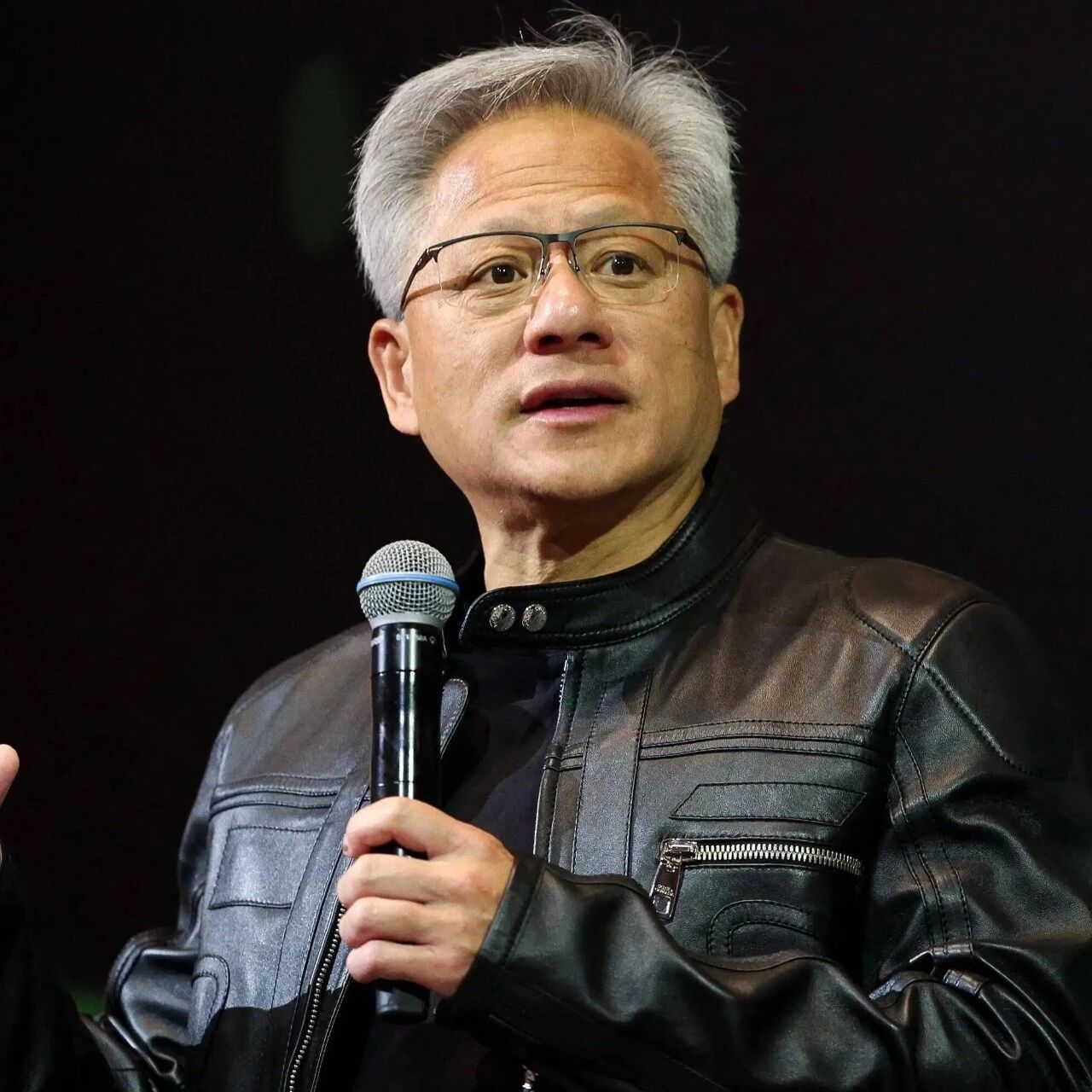
黄仁勋是否说过“中国会赢”,也许已经不那么重要
美股研究社· 2025-11-14 10:39
Core Viewpoint - The article discusses the contrasting paths of AI development in China and the US, highlighting China's potential to challenge the prevailing narrative dominated by Silicon Valley giants like OpenAI and Nvidia, particularly in terms of cost efficiency and innovation [4][6][24]. Group 1: AI Competition Landscape - Huang Renxun's statement about China potentially winning the AI race has sparked significant discussion, emphasizing the need for the US to accelerate its efforts in AI development [4][5]. - The article outlines two distinct paths in AI development: the high-cost, high-expectation model of US companies like Nvidia and OpenAI versus the efficiency-driven approach of Chinese firms such as DeepSeek and MiniMax [6][24]. - Chinese AI companies are seen as capable of "bursting" the AI bubble by focusing on practical applications and cost-effective solutions, suggesting that innovation can thrive without excessive spending [7][24]. Group 2: Market Dynamics and Valuation - Concerns about an "AI bubble" are growing, with significant investments in infrastructure raising questions about the sustainability of high valuations in the sector [10][24]. - A report from Jefferies indicates that between 2023 and 2025, China's major cloud providers will spend $124 billion, which is 82% less than their US counterparts, while maintaining competitive performance in AI models [10][24]. - The article highlights that Chinese AI companies are achieving high returns on investment (ROI), with MiniMax's training costs being significantly lower than those of comparable US models, indicating a potential undervaluation of Chinese firms [24][29]. Group 3: Technological Advancements - Chinese AI firms are rapidly innovating, with models like MiniMax M2 demonstrating superior performance at a fraction of the cost of US counterparts, leading to increased adoption among developers [18][22]. - The emergence of open-source models from Chinese companies is reshaping the competitive landscape, challenging the traditional closed-source model prevalent in Silicon Valley [24][28]. - MiniMax's annual recurring revenue (ARR) has reached $100 million, showcasing the successful transition from model development to product commercialization [29]. Group 4: Future Outlook - The article suggests that the narrative in the AI sector may shift from "scaling limits" to "efficiency limits," with Chinese companies poised to lead in this new paradigm [30][31]. - Long-term confidence in Chinese AI development is emphasized, as companies continue to refine their strategies and technologies to maximize output and minimize costs [31].