M2模型

Search documents
河南县城85后,4年狂揽3000亿!
创业家· 2026-03-17 10:15
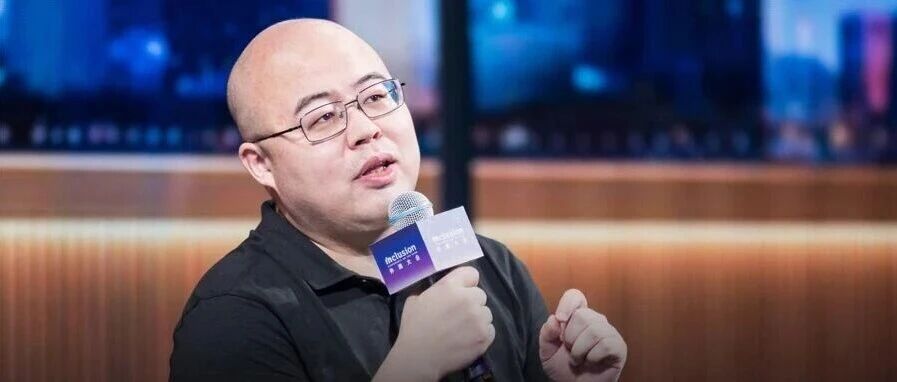
Core Viewpoint - The article discusses the rapid rise of MiniMax, an AI startup founded by Yan Junjie, highlighting its innovative approach and significant market success amidst the AI boom, particularly with the OpenClaw platform [5][6][10]. Group 1: Company Overview - MiniMax, founded by Yan Junjie, achieved a market valuation of HKD 380 billion (approximately RMB 335 billion) as of March 10, 2023, surpassing major internet companies like Baidu and JD [6]. - The company was listed on the Hong Kong Stock Exchange on January 9, 2026, setting a record for the fastest IPO for an AI startup, taking only four years from establishment to listing [5][65]. - MiniMax's revenue for 2024 reached RMB 214 million, marking a 782% year-on-year growth, with over 70% of its revenue coming from international markets [46]. Group 2: Founder Background - Yan Junjie, born in 1989 in Henan, has a strong mathematical background and a passion for AI, which he pursued through rigorous academic training, including a PhD from the Chinese Academy of Sciences [16][19]. - He previously worked at SenseTime, where he rose to a senior position, but left to pursue a vision of creating more general AI applications [22][28]. Group 3: Business Strategy - MiniMax operates on principles of user service, global outreach, and technology-driven development, focusing on creating a comprehensive suite of AI models across various domains, including language, voice, video, and music [31][36]. - The company has adopted a dual strategy of developing foundational AI models while simultaneously working on practical applications, which was initially seen as ambitious but has proven successful [31][36]. Group 4: Market Position and Competition - The AI industry is highly competitive, with major players like ByteDance and Alibaba entering the space, prompting MiniMax to focus on technological breakthroughs rather than competing on resources [44][45]. - Yan Junjie has emphasized the importance of innovation and efficiency, leading MiniMax to adopt a hybrid expert model (MoE) that has positioned the company among the top tier of global AI firms [46][58]. Group 5: Future Outlook - Despite the rapid growth and success, Yan Junjie acknowledges the ongoing challenges and uncertainties in the AI landscape, emphasizing the need for continuous innovation and adaptation [47][60]. - The company aims to maintain its competitive edge by focusing on high-quality technology and efficient operations, with a long-term vision of contributing positively to society through AI [67][68].

“龙虾”刺激之下:开年2个月,MiniMax年化经常性收入(ARR)增长50%,M2模型Token用量增长6倍
硬AI· 2026-03-09 07:47
Core Insights - The article highlights the rapid commercialization of MiniMax, driven by the "OpenClaw" ecosystem, with its Annual Recurring Revenue (ARR) increasing from $100 million to $150 million in just two months, representing a growth of over 50% [2][3][6] - The usage of the M2 model's tokens surged sixfold from December 2025 to February 2026, while the cost per token for inference dropped by more than 50% [4][6] - The upcoming M3 model aims to achieve top-tier global capabilities with higher expected profit margins compared to previous models [2][10] Group 1: Commercialization Acceleration - MiniMax's ARR growth from $100 million in December 2025 to $150 million in February 2026 indicates a strong shift from the technology validation phase to the monetization phase [3][6] - The company has paused updates on its Hailuo video generation product to focus resources on developing the next-generation architecture, which is expected to enhance market competitiveness [6] Group 2: Token Usage and Cost Efficiency - The explosive growth in M2 model token usage reflects strong demand and has led to significant cost optimization on the supply side [6][8] - The report notes that the cost per token for inference could potentially be halved again, with current efficiency improvements stemming from algorithm optimization rather than hardware price reductions [6][8] Group 3: M3 Model Development - The M3 model represents a significant leap in model capabilities, aiming for a position among the global top-tier models, contrasting with the M2 model's focus on cost-effectiveness and speed [10] - Management emphasizes that each model generation is strategically planned for functionality, market size, and profit margin structure, with M3 expected to deliver higher profit margins [10] Group 4: Platform Value and Developer Ecosystem - MiniMax defines its platform value not by controlling internet traffic but by driving breakthroughs in intelligent capabilities, which create new product categories [12][13] - The company focuses on rapid and continuous model iterations to build user stickiness, positioning itself in a competitive race for technological leadership in the developer ecosystem [13]

西方专家也很纳闷:一年时间,全世界已经开始看不懂中国了!
Sou Hu Cai Jing· 2026-02-14 06:51
Core Insights - A Chinese AI model launched in early 2025 has gained global attention for its efficiency in handling complex tasks and cost control, challenging previous Western perceptions of China's AI capabilities [1][5][9] Group 1: Model Performance and Reception - The Chinese model significantly outperforms Western counterparts, achieving nearly a 30% efficiency improvement in tasks such as big data analysis and natural language processing, while training and usage costs are less than one-tenth of Western competitors [5][9] - Global developers are increasingly interested in the model, with discussions on platforms like GitHub and Twitter focusing on technical applications and optimization for various use cases [5][11] Group 2: Shift in Perception - Western experts previously believed that China was merely a follower in AI development, but the introduction of this model has disrupted that narrative, leading to a reassessment of China's position in the global AI landscape [2][7][14] - The model's success has prompted other Chinese companies to launch competitive AI models, further solidifying China's emerging leadership in the sector [11][18] Group 3: Development Strategy - Unlike Western companies that focus on closed-source models for profit, Chinese firms are adopting open-source strategies, promoting technology accessibility for small and medium enterprises [13][20] - China's AI development is supported by substantial R&D investments, favorable policies, and a large digital user base, which collectively drive innovation and application [16][18]

从商汤叛将到AI新贵,闫俊杰的“反套路”公司要上市了
Sou Hu Cai Jing· 2026-01-13 05:57
Group 1 - The core idea of the article revolves around MiniMax, an AI company that has adopted a unique business model, combining virtual relationships with advanced AI technology, which has led to significant valuation and operational efficiency [3][5][15] - MiniMax's founder, Yan Junjie, aims to create an AGI that integrates into daily life, contrasting with traditional AI companies that focus on manpower and custom projects [5][7] - The company operates with a lean team of 385 people, with 80% of its programming code generated by AI, resulting in high efficiency and rapid information flow [9][10][12] Group 2 - MiniMax has raised a total of $500 million since its inception, with a cash reserve of over $1.1 billion, showcasing a "light asset, heavy model" approach in a capital-intensive industry [12][14] - The company's Talkie platform, which features virtual relationships, contributes 71% of its revenue, but faces challenges in market perception due to its "anime" branding [17][20] - MiniMax's B2B revenue has grown by 161%, focusing on standardized API services rather than custom deployments, which has allowed it to serve 130,000 enterprise clients [22][27] Group 3 - Currently, 70% of MiniMax's revenue comes from international markets, embedding Chinese AI capabilities into global infrastructure [27][29] - The company aims to be a "super partner" rather than a "super brain," emphasizing practical integration into everyday life and business [29][31] - Challenges remain, including the sustainability of its revenue model and the balance between technological advancement and commercial viability [31][33]

MiniMax港交所敲钟,全球资本疯抢,年轻人把 AI 公司干成了爆款!
Sou Hu Cai Jing· 2026-01-09 22:44
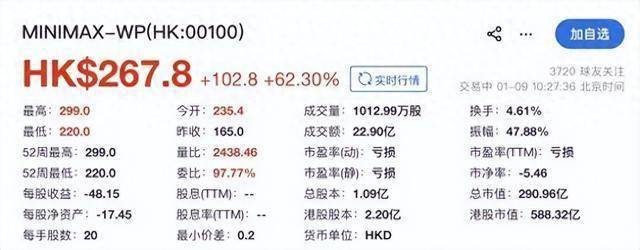
Core Insights - MiniMax officially listed on January 9, 2023, with an opening price of HK$235.4, a 42.67% increase from the upper limit of the issue price of HK$165, reaching a market capitalization of HK$719 billion shortly after [1] - The IPO saw unprecedented demand, with over 460 institutions participating, resulting in a 79 times oversubscription for international placements and 1837 times for the public offering [2][3] Company Performance - MiniMax's stock price surged to HK$267.8, reflecting a 62.30% increase, with a trading volume of 10.12 million shares and a turnover of HK$2.29 billion [2] - The company reported a revenue growth from USD 346 million in 2023 to USD 3,052 million in 2024, and further to USD 5,344 million in the first nine months of 2025, marking a year-on-year increase of 174.7% [9] Competitive Advantages - MiniMax stands out with its "full-modal" capabilities, excelling in text, speech, music, and video AI technologies, which few companies globally can achieve [5] - The company has maintained a low R&D cost of USD 4.5 million over four years, significantly less than competitors like OpenAI, which spent USD 400-550 million [8] - MiniMax's products are designed for global markets from inception, achieving over 2.12 million users across 200 countries, with over 70% of revenue coming from international markets [9] Financial Health - As of now, MiniMax holds over USD 1.1 billion in cash and financial products, providing a strong cash flow position in a sector often concerned with liquidity [11] - The company has a gross margin of nearly 70% for its B2B services, with accounts receivable turnover days at just 38, indicating high operational efficiency [10] Team and Leadership - MiniMax's team is notably young, with an average employee age of 29 and a board average of 32, contributing to its innovative and agile organizational structure [11] - The founder, Yan Junjie, emphasized a user-centric, international, and technology-driven approach from the company's inception, which has attracted significant investment [12]
智谱与MiniMax:中国AI双雄的港股竞速
Tai Mei Ti A P P· 2026-01-09 02:28
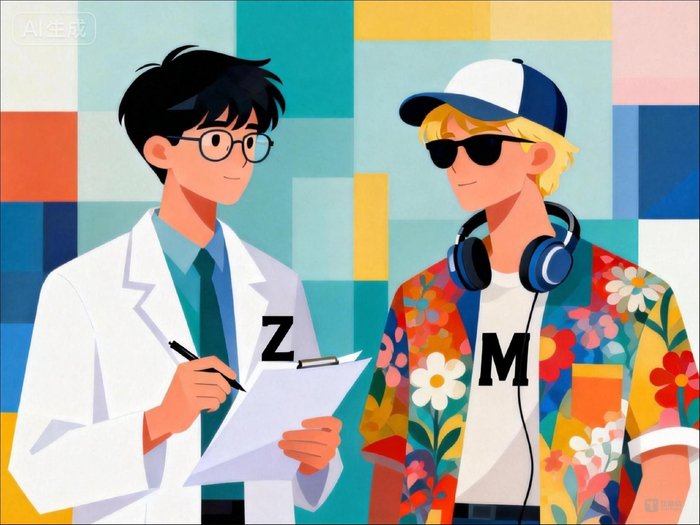
Core Insights - The article discusses the contrasting paths of two AI companies, Zhipu AI and MiniMax, as they both prepare for their IPOs on the Hong Kong Stock Exchange, highlighting their different backgrounds and strategies in the AI industry [2][19]. Company Backgrounds - Zhipu AI was founded in 2019, emerging from the AMiner system developed at Tsinghua University, with significant backing from state-owned enterprises and a focus on B2B and government contracts [3][10]. - MiniMax was established in 2022 by Yan Junjie, who previously worked at SenseTime, and has a strong emphasis on consumer-facing products and international capital [4][8]. Funding and Investment - Zhipu AI has completed 8 rounds of financing, raising a total of 8.3 billion RMB, with a pre-IPO valuation of 24.4 billion RMB, supported by a diverse range of investors including state-owned enterprises and top venture capital firms [10][11]. - MiniMax has raised approximately 1.556 billion USD (about 11.061 billion RMB) over 7 rounds, with a post-money valuation of 4.2404 billion USD (about 30.2 billion RMB) as of its last funding round [11][12]. Business Models and Revenue Streams - Zhipu AI's revenue model is primarily based on localized deployment and cloud services, with 84.8% of its revenue coming from local deployments, focusing on safety, compliance, and control [15][19]. - MiniMax's revenue is driven by consumer applications and subscriptions, with 71% of its income coming from AI-native products, although it faces challenges with low profit margins [16][18]. Technical Approaches - Zhipu AI focuses on the domestic full-stack transformation of dense models, utilizing local supercomputing resources and Huawei's Ascend chips, with a strong emphasis on engineering adaptability [14][15]. - MiniMax employs a mixed expert (MoE) architecture, optimizing for efficiency and cost-effectiveness in consumer applications, which aligns with its internet-centric strategy [16][17]. Market Positioning and Future Challenges - Zhipu AI's approach is characterized by heavy asset investment and compliance, aiming for stable B2B/G contracts, while MiniMax leverages lightweight architecture for rapid consumer growth and global expansion [19]. - Both companies face the challenge of establishing a sustainable business model post-IPO, with Zhipu AI focusing on government contracts and MiniMax navigating geopolitical uncertainties and high customer acquisition costs [19].
MiniMax 上市,“多巴胺”能否供养“AGI 野心”?
3 6 Ke· 2026-01-09 00:19
Core Insights - The article discusses the emergence of MiniMax as a unique player in the AI industry, showcasing a different approach to achieving AGI (Artificial General Intelligence) compared to traditional models like OpenAI [1][4][16] - MiniMax's strategy emphasizes efficiency and monetization capabilities, contrasting with the heavy investment and large teams typical of other AI companies [1][4][16] Company Overview - MiniMax, founded by former SenseTime executive Yan Junjie, has adopted a "light asset, heavy model, high human efficiency" approach, allowing it to maintain a cash reserve of $1.102 billion, sufficient for 53 months of operations [5][16] - The company has spent approximately $500 million since its inception, significantly less than OpenAI's estimated expenditure of $40-55 billion, highlighting its financial efficiency [4][16] Business Model - MiniMax's revenue model is heavily reliant on its C-end business, which contributed over 71% of its revenue as of September 30, 2025, primarily from the Talkie platform [6][11] - The company faces challenges in being perceived as merely a gaming company, which could affect its valuation in the market [8][10] B-end Strategy - MiniMax's B-end business, which generated $1.542 million in revenue and saw a 161% year-on-year increase, is crucial for validating its AGI capabilities and supporting ongoing technological iterations [11][15] - The B-end strategy focuses on providing standardized API services rather than customized solutions, allowing MiniMax to collaborate with over 130,000 enterprise clients globally [13][15] Technological Development - MiniMax integrates AI deeply into its workflows, with approximately 80% of its programming code generated by AI, showcasing a collaborative evolution between AI and human efforts [2][4] - The company aims to position itself as a leader in AGI by embedding its technology into various products, moving beyond the perception of being a mere entertainment platform [10][14] Market Positioning - MiniMax's dual approach of leveraging C-end revenue to support B-end technological advancements is seen as a pragmatic solution to the challenges faced by AI startups [16] - The company is actively working to redefine its identity in the market, distancing itself from gaming associations while emphasizing its technological prowess and AGI ambitions [10][16]
AI上市潮打响!MiniMax不拼C端爆款,靠B端业务杀出差异化
Sou Hu Cai Jing· 2026-01-03 13:47
Core Insights - The article highlights the significant focus on MiniMax's B2B business, which is crucial for the company's strength ahead of its IPO, overshadowing its consumer products [3][5]. Group 1: B2B Business Performance - MiniMax's B2B segment generated $1,542 million in revenue during the first three quarters of the year, accounting for nearly 30% of total revenue, with a year-on-year growth rate of 161% [5]. - The gross margin for the B2B services reached 69.4%, an increase of 7 percentage points from the previous year, showcasing the company's effective cost management strategy [7][21]. - MiniMax's approach avoids heavy asset operations by focusing on standardized API services rather than customized deployments, allowing it to maintain competitive pricing amidst a price war in the AI sector [7][21]. Group 2: Business Model and Expansion Strategy - MiniMax employs a "B+C" dual-drive model, which integrates both B2B and B2C strategies, but the B2B side is the primary revenue driver [5][21]. - The company has established a "three-layer expansion" strategy for its B2B business, starting with a well-developed API ecosystem that allows integration with major platforms like Google, Microsoft, and Alibaba [9][11]. - The efficiency improvements in industries such as film and marketing, where costs have been significantly reduced through MiniMax's technology, demonstrate the practical value of its offerings [13][15]. Group 3: Competitive Advantage and Future Outlook - MiniMax's ability to embed its models into various enterprise products positions it as a leader in the AI commercialization space, potentially serving as a template for other Chinese AI companies [21][25]. - The strategic partnership with Alibaba Cloud aims to enhance computational power and market reach, indicating a focus on scaling operations in the AI sector [23]. - The article suggests that MiniMax's B2B business represents an "invisible champion" in AI commercialization, proving that the company can transform technology into a sustainable business model [23][25].

MiniMax作价461亿港元募资46亿,1月9日敲钟代码00100
量子位· 2025-12-31 05:28
Core Viewpoint - MiniMax, a Chinese AI company, is set to go public with an IPO aiming to raise over $600 million, valuing the company at over HKD 46.1 billion, and is expected to list on January 9, 2026 [2][7]. Group 1: Company Overview - MiniMax is positioned as a global artificial general intelligence (AGI) technology company, with services covering over 200 countries and regions, and 70% of its revenue coming from international operations [12]. - The company has a strong backing from 14 cornerstone investors, including Alibaba and the Abu Dhabi Investment Authority, with total subscriptions amounting to approximately HKD 27.23 billion [7][8]. Group 2: Market Context - December 2025 marks a significant period for IPOs in Hong Kong, with 25 companies having completed listings, making it the busiest month since 2019 [9]. - MiniMax and another company, Zhiyuan, are both entering the market around the same time, creating a competitive atmosphere that splits investor attention [10]. Group 3: Financial Performance - MiniMax's revenue has shown remarkable growth, reaching $3.46 million in 2023 and projected to soar to $30.52 million in 2024, representing a year-on-year increase of 782.2% [35]. - For the first nine months of 2025, revenue surged by 175% to $53.44 million, significantly surpassing the previous year's total [36]. - The company has improved its gross margin from -24.7% in 2023 to 23.3% in the first nine months of 2025, indicating a positive trend in profitability [38]. Group 4: Product Development - MiniMax has released several models, including the M1 and M2 text models, with M2 achieving top rankings in performance metrics [20][21]. - The company has also developed a voice model, Speech 01, and its upgraded version, Speech 02, which supports over 40 languages and has generated over 2.2 million hours of speech [24]. - MiniMax's video model, Hailuo, has been recognized for its capabilities in generating videos and has helped create over 590 million videos globally [28]. Group 5: Investment and Support - MiniMax has raised over $1.5 billion in funding from various strategic investors, including major tech companies and venture capital firms, positioning it as a leading player in the AGI space [50]. - The company has a cash reserve of $1.102 billion as of September 30, 2025, which is sufficient to sustain operations for over 53 months without additional funding [46].
火线解析MiniMax招股书,全球领先大模型成本只有OpenAI 1%,果然拳怕少壮
3 6 Ke· 2025-12-21 23:31
Core Viewpoint - MiniMax, a leading AI model unicorn, has officially passed the Hong Kong Stock Exchange hearing, signaling its IPO ambitions amidst discussions of a bubble in the AI sector, particularly concerning OpenAI and other major players [1][3]. Group 1: Company Overview - MiniMax has raised over $1.5 billion in funding within four years, attracting investments from notable firms such as MiHoYo, Alibaba, Tencent, and others [3][26]. - The company aims to develop a global general artificial intelligence (AGI) and has a presence in over 200 countries, with 70% of its revenue coming from international markets [3][29]. - MiniMax's total expenditure has been approximately $500 million, significantly less than competitors like OpenAI, which has spent between $40 billion to $55 billion [29][30]. Group 2: Technological Advancements - MiniMax is one of the few companies that have focused on multimodal model development since its inception [4]. - The company has released several models, including the M1 and M2 text models, achieving top rankings in performance metrics [8][9]. - MiniMax's speech model, Speech 01, and its subsequent versions have been recognized for their comprehensive capabilities, supporting over 40 languages and generating over 2.2 billion hours of speech [11][12]. - The video model Hailuo has also achieved high rankings in independent tests, demonstrating its advanced capabilities in video generation [13]. Group 3: Business Model and Financial Performance - MiniMax employs a "model-as-product" strategy, focusing on subscription services and cloud API sales, which contribute to a sustainable revenue model [15][18]. - The company reported revenues of $3.46 million in 2023, projected to soar to $30.52 million in 2024, marking a year-on-year increase of 782.2% [17]. - By the first nine months of 2025, MiniMax's revenue reached $53.44 million, reflecting a 175% increase compared to the previous year [17]. - The gross margin improved from -24.7% in 2023 to 23.3% in the first nine months of 2025, indicating enhanced profitability [19][20]. Group 4: Research and Development Efficiency - MiniMax's R&D expenses have increased significantly, with cloud computing costs for training rising from $4.15 million in 2022 to $142.4 million in the first nine months of 2025 [22][23]. - Despite ongoing losses, the adjusted net loss has been decreasing relative to revenue growth, suggesting a successful business model [24]. - The company has a cash reserve of $1.102 billion, sufficient to sustain operations for over 53 months without additional funding [24]. Group 5: Team Composition and Culture - Founded in 2022, MiniMax has a young team with an average age of 29, and 73.8% of its 385 employees are in R&D roles [25][28]. - The leadership team includes experienced individuals from SenseTime, contributing to the company's strong technical foundation and operational efficiency [26][27]. - The organizational structure is highly flat, promoting rapid decision-making and efficiency, with over 80% of the code being generated by AI [28][29].