
模型架构

Search documents
低价博弈失焦,辅助驾驶需回归理性
3 6 Ke· 2026-02-27 10:33
Core Viewpoint - The industry is shifting from a focus on the quantity of smart driving features to prioritizing safety and user experience, especially as advanced driver assistance systems (ADAS) become more accessible to the mainstream market [2][9]. Industry Trends - The slogan "Equal Rights for Smart Driving" has become a prominent theme in 2025, reflecting a broader industry movement towards safety and user experience [2]. - The development of high-level ADAS is transitioning from a scale-driven approach to a more rational focus on safety and user experience [2]. Data Accumulation and Model Architecture - Tesla's CEO Elon Musk estimates that achieving safe, unsupervised autonomous driving requires approximately 100 billion miles of training data, highlighting the importance of real-world data for covering extreme scenarios [3]. - By the end of 2025, Tesla's ADAS has accumulated over 11 billion kilometers of driving data, while Huawei's system reached 5.4 billion kilometers, demonstrating significant data accumulation in the industry [5]. - The industry is experiencing a divergence in data organization strategies, with some companies facing challenges due to fragmented data across multiple models, while others, like Yuanrong Qixing, utilize a unified model to enhance safety and performance [5][6]. Safety and Quality Concerns - The industry is grappling with the balance between quantity and quality, as rapid production cycles can lead to safety blind spots and reduced testing standards [7]. - Yuanrong Qixing emphasizes the importance of focusing on a few key models to ensure quality and safety, rather than pursuing a high number of partnerships [7][8]. Market Competition and Pricing Strategies - The competition in the smart driving sector is expected to center around "cost reduction" and "experience enhancement," with a focus on scaling production to spread R&D costs [12]. - The industry has seen a trend of low-cost strategies that may compromise safety, as evidenced by the significant number of vehicle recalls due to ADAS issues [13]. Future Outlook - The industry must return to a rational and pragmatic approach, balancing scale, cost, and safety to ensure sustainable growth [13]. - The reliance on low-cost strategies without adequate safety measures could undermine consumer trust and the overall development of the smart driving sector [13].

“一切都那么难”,上市后智谱创立发起人披露失误过程与发展目标
Di Yi Cai Jing· 2026-01-08 03:45
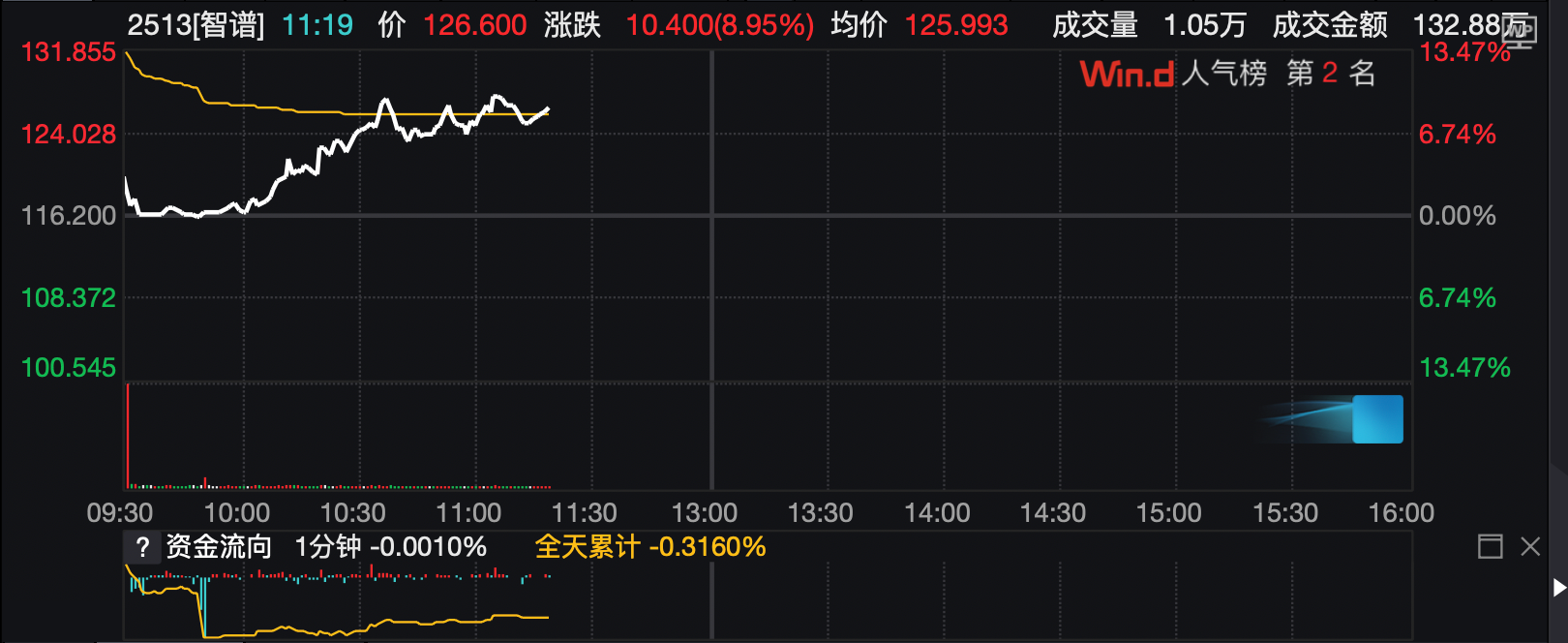
Core Insights - Beijing Zhiyu Huazhang Technology Co., Ltd. (02513.HK) has officially listed in Hong Kong on January 8, 2023, and is set to launch its next-generation model GLM-5 soon [2] Group 1: Company Development - The company launched its self-developed large model algorithm architecture GLM in 2020, attempting to train a base model with 10 billion parameters, which was trialed by several enterprises including Meituan [2] - From 2021 to 2022, the development of large models faced challenges, with skepticism about the feasibility of making machines think like humans, leading the team to decide to train a larger model with 130 billion parameters [3] - In mid-2022, the GLM-130B model was created, and the MaaS platform was launched, resulting in the first batch of real API users [3] Group 2: Market Trends and Challenges - In 2023, the company recognized that AI would disrupt search and browsers, leading to a new AI assistant for everyone, which would fundamentally reshape computing logic [3] - The emergence of DeepSeek served as a wake-up call for the team, highlighting the challenges ahead, including a nationwide price war and the need to find a precise breakthrough [4] - The company identified a focus on coding as a direction, leading to the release of GLM-4.1 and GLM-4.5, with 150,000 developers using the GLM Coding Plan, resulting in an annual recurring revenue (ARR) exceeding 500 million, a 25-fold increase in just 10 months [4] Group 3: Future Focus and Innovations - The company plans to concentrate on the GLM-5 base model, a new model architecture design, and stronger generalization capabilities through reinforcement learning (RL) by 2026 [4] - The next generation of learning paradigms, including online learning and continual learning, will be strategically developed [4] - A new department, X-Lab, has been established to attract young talent for frontier exploration in model architecture and cognitive paradigms, while also expanding external investments to connect the industry [5]
王兴兴回应“限制机器人爆发的核心问题”:数据采集处在模糊阶段
Bei Ke Cai Jing· 2025-09-11 05:33
Core Viewpoint - The founder and CEO of Yushu Technology, Wang Xingxing, emphasized that both data and model architecture are crucial for the development of the robotics industry, countering the notion that the main limitation is insufficient data [1] Data Utilization - The current core issue regarding data is the difficulty in determining the standards for high-quality data, including how to collect it and the necessary scale for collection, which remains ambiguous [1] - There is a call to improve the utilization rate of data as a means to enhance the industry's growth potential [1]
