橄榄型社会

Search documents
霍启刚:今年拟提交8条两会建议,涉及提升居民收入等方面
Bei Jing Ri Bao Ke Hu Duan· 2026-02-26 06:19
Core Viewpoint - The representative from Hong Kong, Huo Qigang, plans to submit eight proposals during the Two Sessions, focusing on integrating Hong Kong International Airport into the national civil aviation system and ensuring food security through the utilization of both domestic and international markets, as well as enhancing residents' income and building an olive-shaped society [1][5]. Group 1: Civil Aviation Proposals - The 2024 guidance from the Civil Aviation Administration of China and the National Development and Reform Commission introduces a "3+7+N" international aviation hub system, which has shown effectiveness in integrating domestic international routes, but some airports and routes are experiencing resource constraints [3][7]. - Huo Qigang suggests incorporating Hong Kong International Airport into a new strategic framework of "1+3+7+N" to leverage Hong Kong's unique position as an international aviation "super connector" [3][7]. - Recommendations include differentiating the functional roles of Hong Kong and the three major hubs (Beijing, Shanghai, Guangzhou) and establishing a national-level collaborative development mechanism for aviation hubs to optimize the allocation of core resources such as air rights and slots [3][7]. Group 2: Food Security and Economic Development - Huo Qigang emphasizes the importance of utilizing both domestic and international markets to ensure national food security, reflecting his concern as an external director of COFCO Group [4][7]. - The proposals also focus on enhancing residents' income, promoting "expanding the middle class and reducing the lower class," and building an olive-shaped society as key areas of interest [4][7]. Group 3: Additional Proposals - Other proposals include accelerating the expansion of long-haul routes from Hong Kong International Airport using the capacity of mainland airlines, establishing Hong Kong as an international aircraft parts processing and trading center, and promoting high-quality sports development to advance the Greater Bay Area into a world-class bay area [4][8]. - The creation of a comprehensive consumption ecosystem for the ice and snow economy and the sustainable development system, as well as promoting the large-scale application of technology to assist the disabled, are also highlighted as part of the proposals aimed at achieving common prosperity and supporting the "14th Five-Year Plan" for social development [4][8].

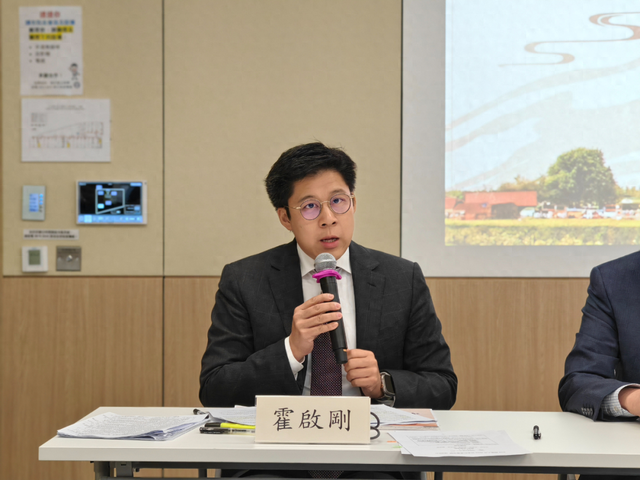
霍启刚公布两会建议
Xin Lang Cai Jing· 2026-02-26 06:19
Core Viewpoint - The article discusses the recent proposals made by Hong Kong representative Ho Koi-kong, focusing on integrating Hong Kong International Airport into the national civil aviation system and enhancing residents' income through eight key suggestions [1][6]. Group 1: Integration of Hong Kong International Airport - The proposal emphasizes the importance of integrating Hong Kong International Airport into the national civil aviation system to support the "14th Five-Year Plan" for high-level openness [3][8]. - The Civil Aviation Administration of China and the National Development and Reform Commission will release guidelines in 2024 to promote international aviation hub construction, which has already shown significant progress in integrating domestic international routes [3][8]. - The suggestion includes establishing a new strategic framework of "1+3+7+N" to leverage Hong Kong's unique advantages as an international aviation "super connector" [3][8]. Group 2: Specific Recommendations - Utilize the capacity of mainland airlines to accelerate the expansion of long-haul routes from Hong Kong International Airport [5][8]. - Develop Hong Kong as an international aircraft parts processing and trading center to support national civil aviation development [5][8]. - Promote high-quality sports development to advance the construction of the Guangdong-Hong Kong-Macao Greater Bay Area into a world-class bay area [5][8]. - Leverage both domestic and international markets to ensure national food security [5][8]. - Build a comprehensive consumption ecosystem and sustainable development system for the ice and snow economy [5][8]. - Focus on "expanding the middle class and raising the lower class" to enhance residents' income and build an olive-shaped society [5][8]. - Promote large-scale applications of technology to assist the disabled, supporting the goal of common prosperity and the "14th Five-Year" development of people's livelihoods [5][8].
大声思考|M型社会来临:全球中产阶层的收缩与挑战
Sou Hu Cai Jing· 2026-01-13 07:46
Core Viewpoint - The concept of the "American middle-class slaughter line" has gained attention but is now cooling down as discussions reveal that many are projecting their own fears onto the situation of others [1][2][3]. Group 1: Economic Context - The term "slaughter line" originates from analyst Michael Green, who concluded that a household income of over $140,000 is necessary for a decent living in the U.S. [4][6]. - The median household income in the U.S. is $80,600, with an average household asset value of $1.06 million, and a median asset value of $190,000 when excluding the wealthiest households [6]. - Major expenses such as housing, education, healthcare, and transportation consume over half of the income for middle-class families [6][7]. Group 2: Social Safety Nets - The U.S. provides various safety nets, including unemployment benefits for up to 26 months, which help mitigate the risks of job loss [8][10]. - The current unemployment rate stands at 4.6%, with only 0.2% of the population classified as homeless, primarily consisting of individuals with severe issues rather than middle-class families [9][10]. Group 3: Global Trends - The middle class is shrinking globally, with the U.S. seeing a rise in low-income individuals from 27% to 30% and high-income individuals from 11% to 19% over the past fifty years, indicating a decline in the middle class [21][24]. - Similar trends are observed in Europe, where the percentage of the middle class in Germany has decreased from 74% to 67% [22]. - Economic shifts due to globalization have led to the migration of manufacturing jobs to lower-cost regions, resulting in job losses for the middle class while new industries require fewer workers [23][24]. Group 4: Welfare Systems - The U.S. welfare system is based on individual responsibility, contrasting with Europe's more comprehensive welfare state that aims to reduce income inequality through high taxation and extensive social services [12][14]. - The challenges faced by both the U.S. and European welfare systems highlight the need for a reevaluation of social safety nets to protect the middle class from economic volatility [24][25].