欧盟反胁迫工具

Search documents
关税并非“核心风险”?大摩Wilso:欧盟“反胁迫”工具将是科技巨头下一场“隐形风暴”
Hua Er Jie Jian Wen· 2026-01-20 12:48
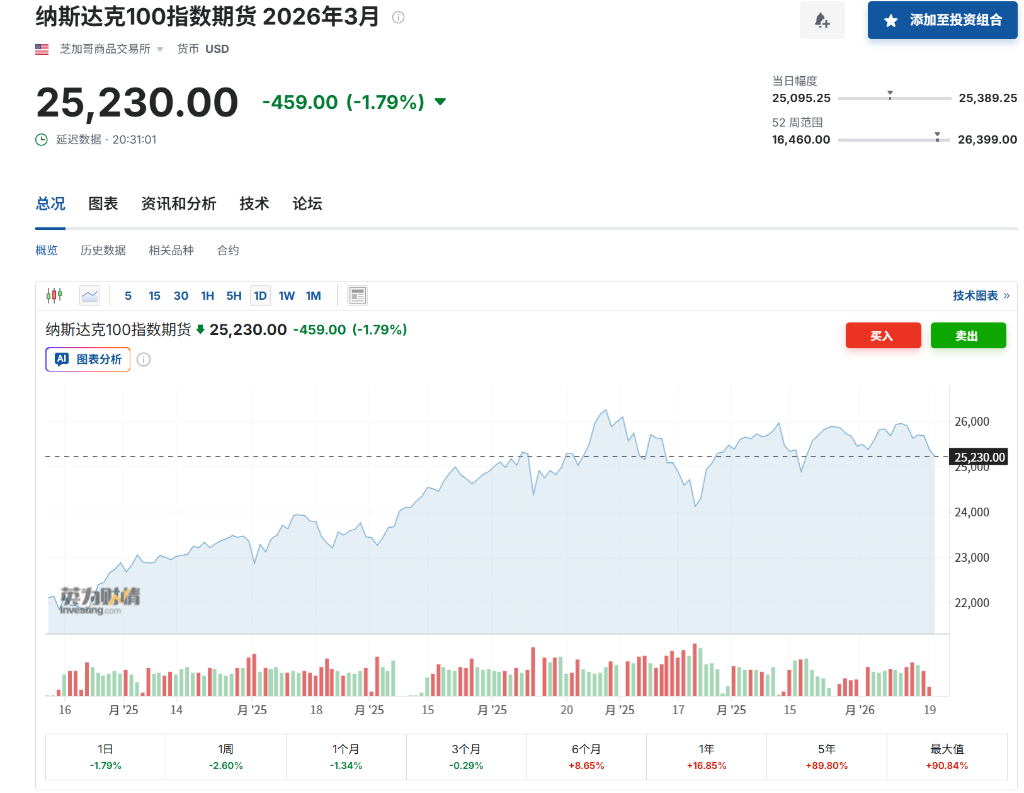
Core Viewpoint - The geopolitical tensions surrounding Greenland are evolving into a potential nightmare for large U.S. tech companies, with the market underestimating the risks of the EU's "anti-coercion" tool targeting the service sector, which could pose significant challenges for tech giants [1][2] Group 1: Geopolitical Risks - Morgan Stanley's chief U.S. equity strategist Mike Wilson warns that the EU's potential activation of its "anti-coercion" tool could escalate tensions beyond tariffs, impacting digital services and creating more severe challenges for U.S. companies [1][2] - The market sentiment has deteriorated rapidly, with Wall Street adopting a "sell first, ask questions later" approach, leading to a decline in U.S. stock index futures, particularly a 1.81% drop in Nasdaq 100 futures [1] Group 2: Impact on Tech Companies - Large tech companies are seen as the primary victims of the ongoing dispute, with concerns that tensions could escalate from tariff increases to more aggressive confrontations, such as limiting market access for these companies [3] - The significant drop in Nasdaq 100 futures reflects investor anxiety regarding the outlook for tech stocks ahead of earnings season [3] Group 3: Investment Shifts - In light of headwinds facing large tech stocks, there is a recommendation for investors to focus on small-cap stocks, which are expected to perform relatively well due to improving fundamentals [4] - Morgan Stanley favors small-cap sectors including discretionary consumer goods, regional and mid-sized banks, short-cycle industrials, and biotechnology, which are less affected by transatlantic trade disputes and EU regulatory tools [4]

美国财长称美欧关系 “从未如此紧密”
Xin Lang Cai Jing· 2026-01-20 08:41
Group 1 - The World Economic Forum is currently taking place in a Swiss Alpine town, attracting over 3,000 participants from 130 countries, including 850 top CEOs and board chairs [1][5] - The forum aims to facilitate dialogue, policy debates, and business discussions, originally established in 1971 to enhance European corporate management [1][5] - U.S. President Donald Trump's third visit to Davos coincides with concerns over his Greenland acquisition proposal and actions regarding Venezuela's oil resources, which have caused regional unrest [1][5] Group 2 - The European Union is considering using its "trade weapon" mechanism, which includes imposing new tariffs, suspending the EU-U.S. trade agreement, and activating its anti-coercion tool against individuals or entities exerting undue pressure on the EU [2][7] - This anti-coercion tool was introduced in 2021 following China's trade restrictions on Lithuania due to its relations with Taiwan, although there is reluctance among EU countries to activate it due to fears of escalating tensions [2][7] - France and Germany, however, have expressed support for the potential use of this tool [2][7] Group 3 - U.S. Treasury Secretary Steven Mnuchin stated that U.S.-European relations remain strong despite tensions surrounding the Greenland issue, urging trade partners to remain calm as the situation is expected to resolve itself [3][8] - Trump announced a 10% tariff on imports from eight European countries starting in February, following their support for Denmark regarding the Greenland acquisition [3][8]
特朗普关税威胁当前 更为谨慎的默茨试图缓和马克龙强硬立场
Xin Lang Cai Jing· 2026-01-19 14:55
Core Viewpoint - Germany's Chancellor Friedrich Merz expresses a more cautious approach compared to France regarding the use of the EU's strongest trade countermeasures against U.S. President Trump's latest tariff threats, while still indicating support for such measures if necessary [1][2][4]. Group 1: Germany's Position - Merz emphasizes that Germany is in close communication with EU partner countries and allies like the UK and Norway to prevent escalation that could harm transatlantic relations and economic activity [1][2]. - The Chancellor notes that France is planning to request the activation of the EU's so-called coercive tool, but Germany's greater reliance on exports necessitates a more cautious stance [1][3]. Group 2: Response to U.S. Tariff Threats - Merz acknowledges that the impact of U.S. tariffs on France differs from that on Germany, which explains Macron's desire for a stronger response [3]. - German Finance Minister Lars Klingbeil warns that Trump's threats to impose tariffs on NATO allies opposing his Greenland acquisition plan have crossed a red line [3]. Group 3: Potential Actions - Klingbeil urges European allies to activate the coercive mechanism in response to Trump's tariff threats [4]. - Merz states that Germany does not wish to engage in a trade dispute with the U.S., but is prepared to respond to what it deems unreasonable tariffs, asserting that tariffs are detrimental to all parties involved [4].
反制美关税威胁呼声不断高涨 法国总统马克龙寻求动用欧盟反胁迫工具
Ge Long Hui· 2026-01-19 02:12
Group 1 - French President Macron is requesting the activation of the EU's Anti-Coercion Instrument (ACI) in response to US President Trump's threats of tariffs related to Greenland, indicating a rising call for countermeasures from European nations [1] - Macron described the tariff threats as "unacceptable," and a source indicated that Trump's plans have raised doubts about the validity of the trade agreement reached between the EU and the US last year, which is partially implemented but still requires approval from the European Parliament [1] - The German Social Democratic Party is urging the European Commission to take swift action and implement "concrete countermeasures" against the US [1] Group 2 - The German government is considering all response options to Trump's tariff threats but has not yet decided on any specific measures [2] - The ACI has never been truly utilized and was designed to serve as a deterrent against coercive actions by third countries that use trade measures to pressure the EU or its member states [2] - Potential measures under the ACI could include tariffs, new taxes on tech companies, targeted restrictions on investments in the EU, limitations on access to specific sectors of the EU market, or restrictions on companies bidding for public contracts in Europe [2]
欧洲八国发表联合声明表示将“团结协调”应对美国关税威胁 加拿大考虑向格陵兰岛派兵
Yang Guang Wang· 2026-01-19 01:50
Group 1 - The core viewpoint of the article is that eight European countries have united to respond to the U.S. threat of increased tariffs, which they believe undermines transatlantic relations and could lead to a dangerous cycle of retaliation [1] - Danish Prime Minister Frederiksen emphasized that Europe will not be "blackmailed" and expressed a desire for cooperation rather than conflict, indicating broad support for this stance [1] - UK officials stated that the future of Greenland should be determined by the people of Greenland and Denmark, asserting that there will be no compromise on this position [1] Group 2 - French President Macron announced that he would request the activation of the EU's anti-coercion tool if necessary, marking France's first official response to the U.S. tariff threat [1] - Canadian officials revealed plans to send a small military force to Greenland to conduct exercises with other NATO allies in response to the U.S. threat regarding the acquisition of Greenland, pending approval from Prime Minister Trudeau [1]
牛弹琴:欧洲拟推出最强硬三招
Xin Lang Cai Jing· 2026-01-19 00:39
Group 1 - The core viewpoint is that Europe, feeling pressured by the United States, is planning to implement three strong retaliatory measures against the U.S. [1] Group 2 - The first measure proposed by French President Macron is to activate the EU's "anti-coercion tool," which has never been used before. This could limit U.S. goods entering the EU market and restrict U.S. banks from procurement in the EU, potentially targeting major U.S. tech companies [1] - The second measure involves suspending the approval of the trade agreement reached between the U.S. and EU last July, which was generally favorable to the U.S. The agreement included commitments from the EU to eliminate tariffs on U.S. industrial goods while the U.S. still imposes a 15% tariff on various EU products such as cars, pharmaceuticals, semiconductors, and timber [1] - The third measure includes the creation of a retaliation list totaling approximately €93 billion. If the U.S. raises tariffs, the EU is prepared to implement this list [1]
马克龙称若美加征关税 将推动欧盟启动反胁迫工具
Xin Hua She· 2026-01-18 23:17
Core Viewpoint - French President Macron stated that if U.S. President Trump proceeds with plans to impose tariffs, he will maintain constant communication and coordination with European leaders and will request the EU to activate its coercive measures [1] Group 1: Response to U.S. Tariff Threat - Macron emphasized the importance of communication among European leaders in response to potential U.S. tariffs [1] - The EU's coercive measures could include freezing market access for relevant parties and blocking certain investment activities [1] Group 2: EU Decision-Making Process - The activation of the coercive measures requires approval through a "qualified majority" vote among EU member states [1]
为夺格陵兰岛美对欧洲八国加关税
Xin Lang Cai Jing· 2026-01-18 17:25
Core Viewpoint - The European Parliament is unlikely to approve the trade agreement reached between the EU and the US last July due to threats from the US regarding Greenland, with calls for the use of counter-coercion tools in response to US tariffs [1][2] Group 1: Trade Agreement and Tariffs - The US plans to impose a 10% tariff on goods from Denmark, Norway, Sweden, France, Germany, the UK, the Netherlands, and Finland starting February 1, with an increase to 25% on June 1 until an agreement on the "complete and total purchase of Greenland" is reached [1] - The previously agreed EU-US trade deal required the EU to eliminate tariffs on US industrial goods and provide preferential market access for US seafood and agricultural products in exchange for a 15% tariff on most EU goods entering the US [1] - The European Parliament will not advance the approval process for the trade agreement, creating uncertainty in the EU-US trade relations [1] Group 2: Reactions from European Politicians - The President of the Renew Europe group stated that the US government's actions are "unacceptable" and suggested that the EU should consider activating its counter-coercion tools designed to address economic coercion [2] - Members of the Social Democratic Party called for the immediate activation of counter-coercion measures, criticizing the US for using tariffs and economic threats to enforce illegal territorial claims [2] - The situation reflects the anticipated scenarios when drafting counter-coercion legislation, prompting calls for the EU Commission to initiate relevant procedures and investigations [2]
爱尔兰总理:若美关税威胁成真 欧盟将采取报复措施
Jin Rong Jie· 2026-01-18 17:19
Core Viewpoint - The Irish Prime Minister Martin stated that if U.S. President Trump proceeds with plans to impose tariffs on European countries, the EU will undoubtedly retaliate, leading to a severe global situation [1] Group 1 - Martin emphasized the rapid development of the situation regarding potential tariffs [1] - He indicated that if these tariff measures are implemented, Europe will take retaliatory actions [1] - Martin called for dialogue to prevent such scenarios from occurring [1] Group 2 - He mentioned that it is still too early to consider using the EU's counter-coercion tools, but they may be put on the table in the future [1]
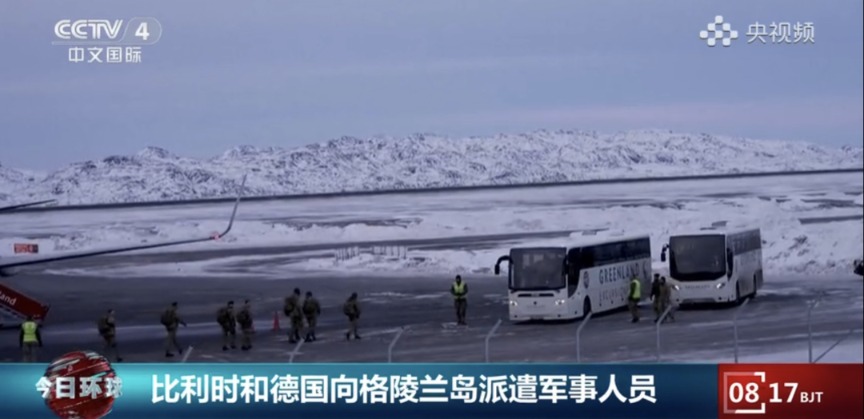
上岛才几天 德军今天撤离格陵兰!德国副总理:不能被美国“吓倒”
Mei Ri Jing Ji Xin Wen· 2026-01-18 16:25
Group 1 - Germany has deployed a reconnaissance team of 13 military personnel to Greenland, with the possibility of future larger deployments [1][3] - Other European countries have also sent military personnel to Greenland, including France (approximately 15), Sweden (3), Norway (2), Finland (2), and others [3] - The Danish Joint Arctic Command currently has about 150 military and civilian personnel stationed in Greenland, with around 200 U.S. troops also present [3] Group 2 - The White House stated that the deployment of European troops to Greenland will not affect Trump's stance on the territory, which is currently under Danish control [4] - Trump announced a 10% tariff on goods exported to the U.S. from Denmark, Norway, Sweden, France, Germany, the UK, the Netherlands, and Finland starting February 1, 2026, increasing to 25% by June 1, 2026, until an agreement to "fully purchase Greenland" is reached [6] - The eight European countries issued a joint statement condemning the tariff threat as damaging to transatlantic relations and pledged to respond collectively to protect their sovereignty [6][7] Group 3 - Germany's Vice Chancellor and Finance Minister stated that Germany will not be intimidated by U.S. policies regarding Greenland [7] - French President Macron indicated that France may request the activation of the EU's anti-coercion tool in response to U.S. tariff threats, which is seen as a strong trade countermeasure [7] - The EU's anti-coercion tool aims to address third countries attempting to influence EU decision-making through trade measures, emphasizing the need for unity among European nations [7]