
欧美贸易战

Search documents
欧盟或以930亿欧元关税反制特朗普“夺岛”威胁
Xin Hua Wang· 2026-01-19 00:35
Core Viewpoint - The EU is considering imposing tariffs on $930 billion worth of US goods or restricting US companies' access to the EU market in response to US tariffs on eight European countries related to Greenland [1] Group 1: EU's Response to US Tariffs - The tariff list was drafted last year but was postponed to avoid a full-blown trade war, with the postponement set to expire on February 6 [1] - EU representatives are discussing whether to reactivate this tariff list and consider using coercive measures [1] - The aim of these measures is to provide leverage for European leaders during upcoming negotiations with President Trump at the World Economic Forum in Davos [1] Group 2: Timing and Strategy - European officials plan to wait until February 1 to see if the US will indeed impose tariffs before deciding on their countermeasures [1] - The EU hopes to create bipartisan pressure within the US to encourage Trump to retract his tariff decision by showcasing the threat of retaliation [1] Group 3: Diplomatic Tone and Statements - An unnamed European diplomat criticized Trump's tactics as "purely mafia-style" while the EU aims to maintain a calm public stance to give Trump an "off-ramp" [1] - Another European official stated that the current situation no longer allows for compromise, emphasizing that the US has opened a "Pandora's box" [1] Group 4: Specifics of US Tariffs - Trump announced on social media that starting February 1, the US will impose a 10% tariff on goods from Denmark, Norway, Sweden, France, Germany, the UK, the Netherlands, and Finland, with the rate increasing to 25% from June 1 [1] - The tariffs will remain until an agreement is reached regarding the "complete and total purchase of Greenland" [1]
为夺格陵兰岛美对欧洲八国加关税
Xin Lang Cai Jing· 2026-01-18 17:25
Core Viewpoint - The European Parliament is unlikely to approve the trade agreement reached between the EU and the US last July due to threats from the US regarding Greenland, with calls for the use of counter-coercion tools in response to US tariffs [1][2] Group 1: Trade Agreement and Tariffs - The US plans to impose a 10% tariff on goods from Denmark, Norway, Sweden, France, Germany, the UK, the Netherlands, and Finland starting February 1, with an increase to 25% on June 1 until an agreement on the "complete and total purchase of Greenland" is reached [1] - The previously agreed EU-US trade deal required the EU to eliminate tariffs on US industrial goods and provide preferential market access for US seafood and agricultural products in exchange for a 15% tariff on most EU goods entering the US [1] - The European Parliament will not advance the approval process for the trade agreement, creating uncertainty in the EU-US trade relations [1] Group 2: Reactions from European Politicians - The President of the Renew Europe group stated that the US government's actions are "unacceptable" and suggested that the EU should consider activating its counter-coercion tools designed to address economic coercion [2] - Members of the Social Democratic Party called for the immediate activation of counter-coercion measures, criticizing the US for using tariffs and economic threats to enforce illegal territorial claims [2] - The situation reflects the anticipated scenarios when drafting counter-coercion legislation, prompting calls for the EU Commission to initiate relevant procedures and investigations [2]
欧美贸易战休兵?欧盟宣布:暂停报复性关税6个月
Jin Shi Shu Ju· 2025-08-04 14:57
Group 1 - The EU will suspend its two sets of countermeasures against US tariffs for six months following an agreement with President Trump [2] - The agreement leaves many unresolved issues, including the tariff rates on spirits and the lack of exemptions for cars and auto parts in Trump's recent executive order [2][3] - EU officials expect more executive orders to be announced soon, with a focus on finalizing a joint statement based on the consensus reached on July 27 [2] Group 2 - The EU will face a 15% tariff on most of its export goods to the US, which will also apply to cars, differing from the current 25% rate [3] - The US executive order confirms that this universal tariff will serve as the ceiling for the EU, while other trade partners will see an increase based on their existing most-favored-nation tariffs [3] - Limited goods, including some non-patented drugs and aerospace products, are expected to receive lower than 15% tariff rates [4] Group 3 - The EU is negotiating an agreement to allow a certain quantity of steel and aluminum to be exported to the US at rates lower than the current 50% [4] - Any indication that the US fails to comply with its agreed political commitments could prompt EU member states to call for a response [4] - The EU has countermeasures ready to be swiftly reinstated against approximately €100 billion (about $116 billion) worth of US goods if necessary [4]
欧洲网友怒骂“冯德莱恩最大的功劳就是帮美国把中欧关系搞砸了”
Sou Hu Cai Jing· 2025-07-27 11:16
Group 1 - The core point of the news is the announcement by Trump that starting August 1, EU goods exported to the US will face a 30% tariff, significantly higher than previous speculations of 15%-20% [1] - Following the announcement, European stock markets lost over 50 billion euros, with the German DAX index dropping 2.3% in a single day [1] - EU Commission President Ursula von der Leyen announced a delay in the EU's countermeasures originally set for July 14, aiming to buy time for negotiations [1] Group 2 - The new tariff rate will severely impact EU exports valued at 379 billion euros, with Germany, as the largest economy in the EU, being particularly vulnerable [6] - Internal divisions within the EU are evident, with German Chancellor Merz warning of significant damage to the German export sector, while French President Macron calls for a strong defense of European interests [6][5] - The EU Trade Ministers' meeting on July 14 revealed these divisions, with differing opinions on how to respond to the US tariffs, highlighting a split between larger and smaller member states [6] Group 3 - Amidst the trade tensions, von der Leyen and European Council President Costa are visiting China, indicating a complex geopolitical landscape for the EU [6] - The EU's reliance on US energy, following sanctions against Russia, has raised concerns about economic independence and the potential loss of access to the Chinese market [9][16] - The EU's global GDP share has been declining, with European companies' representation in the MSCI World Index dropping from 33% in 2001 to an estimated 14% in 2024, indicating a weakening competitive position [17]

美国拟对欧盟加征30%关税,爱尔兰担心重创经济并引发失业潮
Sou Hu Cai Jing· 2025-07-15 17:57
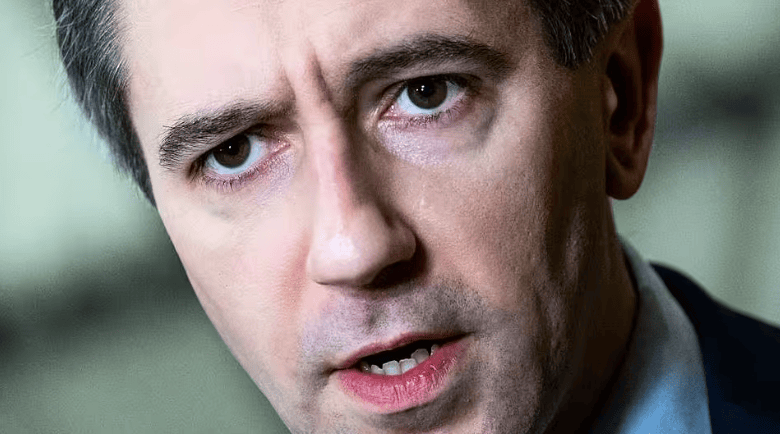
Core Points - The Irish Deputy Prime Minister Simon Harris warned that a potential 30% tariff imposed by the U.S. could lead to a significant employment crisis in Ireland [1][3] - The EU is actively working to avoid a full-scale trade war with the U.S., with a deadline for negotiations set by President Trump for August 1 [1][3] Group 1 - Harris emphasized that if new tariffs are implemented, Ireland would face economic shocks and a catastrophic wave of unemployment [3] - The proposed retaliatory tariff list by the EU, amounting to €72 billion, could result in a "lose-lose" situation for both sides [3] - Harris expressed optimism about reaching a breakthrough in negotiations within the coming days, indicating that discussions were nearing consensus [3] Group 2 - The Deputy Prime Minister highlighted the importance of the pharmaceutical industry in Ireland, particularly in light of the U.S. Section 232 investigation targeting this sector [3] - Harris called for EU unity in addressing potential challenges, emphasizing the strength of the 460 million-person single market [3] - The Irish government plans to assess sensitive items in the EU's expanded retaliatory tariff list that may impact national interests [3]
大越期货贵金属早报-20250527
Da Yue Qi Huo· 2025-05-27 02:15
Report Summary 1. Report Industry Investment Rating No relevant information provided. 2. Core Viewpoints - Gold: With the easing of the EU - US trade war and the decline of the US dollar, the gold price is expected to rise. The premium of Shanghai gold remains at around 5 yuan/gram. Due to potential tariff issues and fluctuations in the US tax - cut bill, the gold price remains bullish [4]. - Silver: As the EU - US trade war eases and the US dollar falls, the silver price will oscillate upwards. The premium of Shanghai silver converges to around 520 yuan/kg. With optimistic trade negotiations, the silver price will fluctuate [5]. 3. Summary by Directory 3.1 Previous Day's Review - Gold: The EU - US trade war eased, the US stock market was closed, most European stock markets rose, the US dollar index fell 0.15% to 98.98, the offshore RMB depreciated slightly, and COMEX gold futures fell 0.7% to $3342.2 per ounce [4]. - Silver: The EU - US trade war eased, the US stock market was closed, most European stock markets rose, the US dollar index fell 0.15% to 98.98, the offshore RMB depreciated slightly, and COMEX silver futures rose 0.11% to $33.645 per ounce [5]. 3.2 Daily Tips - **Gold** - Basis: The gold futures price is 777.3, the spot price is 774.33, and the basis is - 2.97, indicating that the spot is at a discount to the futures, a neutral signal [4]. - Inventory: The gold futures warehouse receipts are 17,247 kg, unchanged, a bearish signal [4]. - Disk: The 20 - day moving average is downward, and the K - line is above the 20 - day moving average, a neutral signal [4]. - Main Position: The main net position is long, and the long position of the main force is decreasing, a bullish signal [4]. - **Silver** - Basis: The silver futures price is 8280, the spot price is 8243, and the basis is - 37, indicating that the spot is at a discount to the futures, a neutral signal [6]. - Inventory: The Shanghai silver futures warehouse receipts are 957,380 kg, a daily decrease of 3261 kg, a neutral signal [6]. - Disk: The 20 - day moving average is upward, and the K - line is above the 20 - day moving average, a bullish signal [6]. - Main Position: The main net position is long, and the long position of the main force is decreasing, a bullish signal [6]. 3.3 Today's Focus - Economic data: The preliminary value of US durable goods orders in April, the US housing price index in March [4]. - Speeches: Speeches by the Governor of the Bank of Japan and Federal Reserve members [4]. 3.4 Fundamental Data - **Gold** - Bullish factors: Global turmoil leading to high - risk aversion, rising stagflation expectations in the US and renewed expectations of interest - rate cuts, tense situations in Russia - Ukraine and the Middle East leading to resurgent inflation, and tariff concerns [14]. - Bearish factors: Cessation of interest - rate cuts and improved economic expectations, less - than - expected European fiscal expansion with the US taking the lead again, deterioration of risk appetite, and the end of the Russia - Ukraine conflict [14]. - Logic: After Trump took office, the world entered a period of extreme turmoil. The inflation expectation shifted to a recession expectation, and the gold price was difficult to fall. The verification between the expected and actual policies of the new US government continued, and the gold price sentiment was high, remaining prone to rise and difficult to fall [10]. - **Silver** - Bullish factors: Similar to gold, and the tariff on non - ferrous metals supports the silver price [14]. - Bearish factors: Similar to gold [14]. - Logic: The silver price mainly follows the gold price. Tariff concerns have a stronger impact on the silver price, and there is a risk of an enlarged increase [13]. 3.5 Position Data - **Gold** - Shanghai Gold Top 20 Positions: On May 26, 2025, the long - position volume was 202,103, an increase of 1.22% from May 25; the short - position volume was 81,225, a decrease of 1.55%; and the net position was 120,878, an increase of 3.17% [27]. - SPDR Gold ETF: The ETF position is oscillating and decreasing [31]. - Warehouse Receipts: The Shanghai gold warehouse receipts show a certain trend, and the COMEX gold warehouse receipts are slightly decreasing but still at a high level [35][36]. - **Silver** - Shanghai Silver Top 20 Positions: On May 26, 2025, the long - position volume was 469,661, an increase of 1.13% from May 23; the short - position volume was 321,277, an increase of 2.00%; and the net position was 148,384, a decrease of 0.69% [29]. - Silver ETF: The ETF position continues to increase, higher than the same period last year [34]. - Warehouse Receipts: The Shanghai silver warehouse receipts are slightly increasing, higher than the same period last year, and the COMEX silver warehouse receipts are decreasing [38].
特朗普50%关税暂缓非结束!美欧贸易战暗藏“二次引爆”风险
智通财经网· 2025-05-26 23:37
Core Viewpoint - Analysts warn that despite the delay of 50% tariffs on EU goods by President Trump, investors should brace for continued market volatility as trade war risks remain unresolved [1] Trade Negotiation Dynamics - The six-week window until July 9 is deemed insufficient to resolve all details, but it may be enough to establish a framework for a trade agreement [2] - If the U.S. demonstrates political will, a potential outcome could be a unified 10% tariff on EU imports, with minimal retaliation from the EU [2] - However, if tariffs escalate to 20%-30%, the EU would have no choice but to implement significant countermeasures [2] - The EU is viewed as a strong negotiating partner, with a substantial market size that is crucial to the U.S. economy [2] Uncertainty in Negotiations - Despite the extension of the tariff deadline, significant uncertainty persists, which could harm both businesses and consumers [2] - The main obstacle is the unclear demands from President Trump, despite the EU's multiple proposals [2] - The EU is attempting a balanced approach, unlike the UK and China, which have taken more extreme positions [2] Market Reactions - The delay in tariffs has led to a tentative rebound in risk appetite, but risks remain high [3] - The trade negotiations are likened to a high-risk tango, with July 9 being a critical juncture [3] - The technology and industrial sectors are particularly vulnerable to sharp fluctuations [4] - Investors are closely monitoring communications and negotiation developments, questioning whether the tariff delay is a genuine olive branch or a tactic for a larger confrontation [4]