
欧盟解体

Search documents
2天过去,中方征税准时启动,欧盟27国或土崩瓦解,一个时代告终
Sou Hu Cai Jing· 2025-12-27 07:08
Core Viewpoint - China's imposition of countervailing duties on EU dairy products has raised significant pressure on the EU, prompting France to call for an emergency meeting among EU member states to address the situation [1][3]. Group 1: China's Position - China's timely implementation of the tax indicates its confidence in handling any challenges from the EU [3]. - The EU's previous unfriendly measures towards China, influenced by U.S. interests, have led to a deterioration in Sino-European relations [3][5]. - Despite China's willingness to engage in dialogue, the EU's dismissive attitude has resulted in a lack of substantial improvement in their relationship [5]. Group 2: EU's Challenges - The EU is currently facing internal and external pressures, with its biggest issue being its own policies rather than external conflicts like the Russia-Ukraine war or U.S. tariffs [5][6]. - The EU's cold and arrogant approach towards China has exacerbated its challenges, leading to concerns about its future stability [6][7]. - Hungarian Prime Minister Orban has expressed that the EU is on the brink of disintegration if it continues its current economic policies [7].

欧盟不敢动手,倘若乌克兰战败,整个欧洲都要解构重建!
Sou Hu Cai Jing· 2025-12-23 20:04
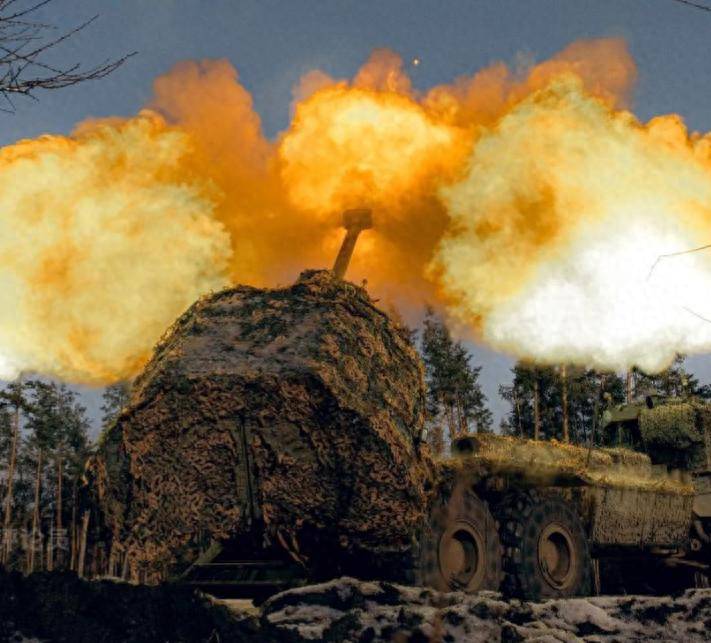
Core Viewpoint - The ongoing Russia-Ukraine war poses a significant strategic threat to the European Union, potentially leading to its disintegration if Europe does not take decisive action [1][19]. Group 1: Strategic Implications - Ukraine is viewed as a critical test of the European system's credibility, with its failure likely resulting in the collapse of the EU's collective will [3][19]. - The war is fundamentally different from previous conflicts in the Middle East, as Ukraine represents a symbolic boundary for the EU, and its loss could lead to a fragmented Europe [3][19]. - The internal divisions within Europe regarding military involvement in Ukraine are growing, with increasing public fatigue and opposition to the war [5][6]. Group 2: Global Dynamics - The situation is being closely monitored by global powers, particularly Russia and China, with the potential for a broader conflict if Europe engages militarily [8][10]. - The U.S. is also hesitant to escalate the conflict, fearing that a prolonged war could expose its military production weaknesses compared to China's capabilities [10][13]. Group 3: Political Consequences - European politicians face severe domestic repercussions if the war results in failure, including potential political upheaval and accountability for military expenditures and losses [15][19]. - The historical context of European unity is at risk, with the potential for a return to a fragmented state reminiscent of the 19th century if the EU fails to maintain cohesion [19][21]. Group 4: Future Choices - Europe is at a crossroads: either engage in the conflict to preserve the EU or capitulate, leading to internal collapse and loss of governmental stability [22][24]. - The war in Ukraine serves as a critical test for the EU's survival, with the only viable option being to fight for unity, even at the risk of failure [24].
匈牙利总理:拒绝参与欧盟支持乌克兰的行动
Xin Lang Cai Jing· 2025-12-19 14:22
Group 1 - The core viewpoint expressed by Hungarian Prime Minister Orban is that the EU is in a dangerous situation, likening the summit to a wartime meeting and suggesting that the EU is in a state of disintegration [1] - Hungary has refused to utilize frozen Russian assets and has not participated in the joint loan for Ukraine, thereby avoiding a loss of 400 billion HUF (approximately 1 billion EUR) [1] - Orban highlighted that 90% of the discussions at the EU summit focused on defeating Russia, while only 10% were about achieving peace, indicating a significant imbalance in the dialogue [1] Group 2 - The EU leaders approved a resolution to provide 900 billion EUR in aid to Ukraine for the 2026-2027 period during the summit [2] - Slovak Prime Minister Fico criticized the EU's decision to provide 900 billion EUR in loans to Ukraine, calling it a "fatal mistake" and emphasizing that Ukraine needs reconstruction funds rather than weapons [2] - Fico expressed strong opposition to the idea of using frozen Russian assets to purchase weapons for Ukraine, citing significant risks associated with this approach [2]
欧尔班:欧盟若继续推行战争策略 将沦为美国的附庸
Yang Shi Xin Wen· 2025-09-07 17:54
Core Viewpoint - The Hungarian Prime Minister Viktor Orbán argues that if the European Union (EU) continues its war strategy, it will become a vassal of the United States, and the EU is currently in a state of disintegration, which could jeopardize its ability to sustain the next seven-year budget [1] Group 1: War Strategy and Economic Impact - Orbán claims that the EU is attempting to reshape Europe through joint debt by leveraging the Russia-Ukraine conflict and the potential accession of Ukraine to the EU, but this could lead to economic devastation if Ukraine joins [1] - He emphasizes that as long as the Russia-Ukraine conflict persists, the EU will be entirely dependent on the US for defense, rendering it a "lame duck" and hindering its ability to implement independent trade policies [1] Group 2: Structural Reorganization of the EU - Orbán highlights a significant shift in global economic output, noting that in 2008, the EU accounted for 25% of the world's economic output while the US accounted for 23%. Currently, the US holds 27% and the EU only 17%, attributing this to a lack of leadership in Europe [1] - He advocates for a profound restructuring of the EU and outlines a "circle of Europe" model, suggesting that a flexible structure is essential for cooperation among European nations at different levels [1]
意前总理:欧洲重新武装计划将导致欧盟解体
news flash· 2025-04-21 10:19
Core Viewpoint - The former Italian Prime Minister Giuseppe Conte warns that the European rearmament plan could lead to the disintegration of the European Union [1] Group 1 - Giuseppe Conte, leader of the Five Star Movement, expresses concerns regarding the implications of Europe's rearmament strategy [1] - The statement highlights a potential risk to the unity of the EU as member states may diverge in their defense policies [1]