
武器化

Search documents
特朗普因西班牙不配合打击伊朗,威胁要切断与其所有贸易关系,外交部:贸易不应该被工具化、武器化
中国能源报· 2026-03-04 09:33
Group 1 - The article discusses a trade threat issued by U.S. President Trump against Spain due to Spain's refusal to allow the U.S. to use its air force bases for military strikes against Iran [1] - China's Foreign Ministry spokesperson Mao Ning responded by stating that military strikes against Iran by the U.S. and Israel violate international law and that trade should not be weaponized or used as a tool [1]

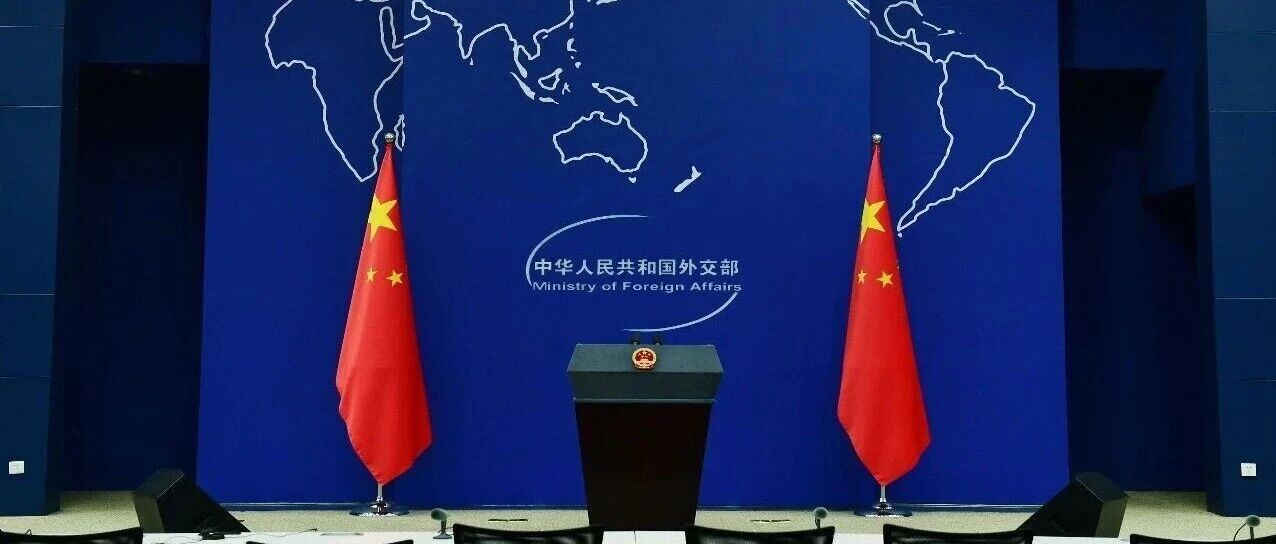
美高官连夜抵京,中方高抬贵手?美能源部宣布:中方同意购买委油
Sou Hu Cai Jing· 2026-02-14 06:29
Group 1 - The U.S. Department of Energy announced that China agreed to purchase Venezuelan oil controlled by the U.S., which was met with a dismissive response from the Chinese Foreign Ministry stating they were "unaware of the situation" [1][3][16] - The U.S. is eager to involve China in this deal despite being the largest oil producer and controlling Venezuela's oil, indicating a significant underlying issue [5][12] - The quality of Venezuelan oil is problematic, as it is primarily high-sulfur heavy crude, which U.S. refineries are not equipped to process without significant investment and time [7][9][11] Group 2 - The U.S. faces a financial burden due to the need for substantial investment to restore Venezuelan oil production infrastructure, which has deteriorated due to sanctions [11][12] - The U.S. is attempting to create a narrative that Venezuelan oil exports are normalizing to attract international capital and pressure China into recognizing U.S. control over Venezuelan oil [14][20] - China's refusal to acknowledge the U.S. claim is rooted in legal principles, asserting that Venezuela's oil resources belong to its government, not the U.S. [18][20] Group 3 - The U.S. strategy appears to be an attempt to politicize and weaponize energy supplies, similar to its actions in Europe regarding Russian energy [22][23] - The U.S. misjudges China's energy strategy, as China has diversified its energy imports and is reducing reliance on traditional fossil fuels [25][27] - Recent high-level U.S. visits to Beijing indicate increased diplomatic engagement, but the U.S. continues to pursue unilateral actions in energy, which China is unlikely to accept [29][31] Group 4 - The U.S. underestimated the complexities of controlling oil fields and the associated costs, leading to a situation where they struggle to find buyers for Venezuelan oil [33]
经济日报:关税不能成为地缘政治工具
Jin Rong Jie· 2026-01-14 23:45
Core Viewpoint - The U.S. has announced that any country engaging in commercial activities with Iran will face a 25% tariff on all business dealings with the U.S., using tariffs as a geopolitical pressure tool and political means [1] Group 1: Economic Impact - The imposition of tariffs is expected to create new risks for the international community, disrupt normal international trade order, and undermine global confidence in economic stability [1] - Historical evidence suggests that weaponizing tariffs does not resolve issues but rather disrupts international governance and creates chaos [1] Group 2: Global Trade and Supply Chain - The U.S. approach may lead to increased global trade costs, distort resource allocation efficiency, and weaken the stability of global industrial and supply chains [1] - This strategy is likely to exacerbate uncertainty in the global economic environment, ultimately harming the interests of all countries, including the U.S. [1] Group 3: Legal and Economic Principles - The U.S. attempts to prioritize domestic law over international rules in reshaping the boundaries of international trade, which is deemed unsustainable from both legal and economic perspectives [1]
商务部回应Tiktok问题:绝不会以牺牲原则立场、企业利益和国际公平正义为代价寻求达成任何协议
Di Yi Cai Jing· 2025-09-18 07:36
Core Viewpoint - The Chinese government emphasizes its consistent stance against the politicization and weaponization of technology and trade issues, particularly regarding TikTok, while advocating for a fair business environment for Chinese companies in the U.S. [1] Summary by Relevant Sections - **Meeting Context**: A meeting between Chinese and U.S. economic and trade teams took place in Madrid from September 14 to 15, focusing on resolving TikTok-related issues and promoting economic cooperation [1]. - **Chinese Government's Position**: The Chinese government opposes the politicization of technology and trade, asserting that it will not compromise principles or corporate interests for any agreement [1]. - **Support for Business Negotiations**: The Chinese government respects the will of enterprises and supports equal business negotiations based on market principles [1]. - **Regulatory Framework**: The Chinese government will legally review matters related to TikTok's technology exports, intellectual property, and usage rights [1]. - **Call for Fair Treatment**: The Chinese government urges the U.S. to provide an open, fair, just, and non-discriminatory business environment for Chinese companies, including TikTok, to ensure stable and sustainable development of Sino-U.S. economic relations [1].
李成钢:中国绝不会以牺牲原则立场、企业利益和国际公平正义为代价 寻求达成任何协议
Xin Hua She· 2025-09-15 15:18
Core Viewpoint - The Chinese Ministry of Commerce, represented by Li Chenggang, firmly opposes the politicization and weaponization of technology and trade issues regarding TikTok, emphasizing that no agreement will be pursued at the expense of principles, corporate interests, or international fairness and justice [1] Group 1 - The Chinese government will resolutely safeguard national interests and the legitimate rights of Chinese enterprises, conducting technology export approvals in accordance with laws and regulations [1] - The Chinese government fully respects the will of enterprises and supports them in conducting equal business negotiations based on market principles [1]
外交部:中方一贯反对将科技和经贸问题政治化、工具化、武器化
Zhong Guo Xin Wen Wang· 2025-09-05 09:04
Core Viewpoint - The Chinese Ministry of Foreign Affairs opposes the politicization, instrumentalization, and weaponization of technology and trade issues, stating that such practices are detrimental to all parties involved [1]. Group 1 - The spokesperson, Guo Jia Kun, responded to a question regarding Anthropic's decision to stop providing AI services to Chinese-controlled companies, indicating a lack of specific knowledge about the situation [1]. - The statement emphasizes China's consistent stance against the politicization of technology and trade matters [1].