民主价值观

Search documents
国际观察丨八年三份报告——美国国家安全战略的变与不变
Xin Hua She· 2025-12-12 23:12
Group 1 - The latest U.S. National Security Strategy report reflects a significant shift in the U.S. foreign policy perspective, moving from a post-World War II worldview to a focus on "core national interests" rather than maintaining the "post-war international order" [1][2] - The report indicates a trend of "tooling" allies, criticizing European partners' domestic and foreign policies, and opposing NATO's continued expansion [2] - The emphasis on military strength remains consistent across all three reports, with a focus on rebuilding military capabilities and modernizing nuclear deterrence systems [3] Group 2 - The approach to global challenges has evolved, with the latest report viewing global issues like climate change as burdens to be avoided, contrasting with previous reports that sought leadership in these areas [2] - The strategic priority regions have shifted, with the latest report elevating issues like drug trafficking and illegal immigration in the Western Hemisphere, indicating a more assertive U.S. stance in Latin America [2] - Economic security remains a key theme, with a focus on re-industrialization and supply chain risk mitigation, highlighting the importance of maintaining dominance in high-tech, manufacturing, and critical minerals sectors [3]
泽连斯基还有多久会被欧盟抛弃?
Hu Xiu· 2025-08-06 02:40
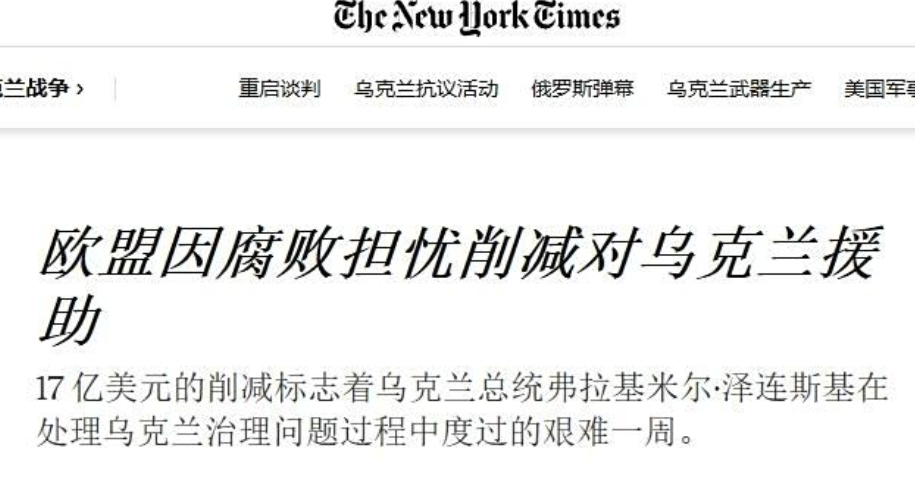
Core Points - The article discusses the recent actions of Ukrainian President Zelensky, who signed a law that undermined the independence of key anti-corruption institutions, the National Anti-Corruption Bureau (NABU) and the Specialized Anti-Corruption Prosecutor's Office (SAPO), under the pretext of addressing "Russian interference" [1][12] - The move sparked significant protests within Ukraine and condemnation from the EU and international partners, leading to a rapid reversal by Zelensky, who proposed new legislation to restore the independence of these institutions within 72 hours [2][5][12] - The article highlights the ongoing issues of corruption in Ukraine, particularly within Zelensky's inner circle, and the challenges he faces in balancing domestic political pressures with international expectations for democratic governance [7][20][29] Group 1: Legislative Actions and Reactions - Zelensky's initial law aimed to place NABU and SAPO under the control of the Prosecutor General, which was met with immediate backlash from the public and international community [2][12] - Following the protests and threats of aid cuts from the EU, Zelensky quickly submitted a new law to restore the independence of these anti-corruption bodies, which was approved by parliament on July 31 [5][12][24] - The new legislation, while restoring some independence, still contains controversial provisions that suggest ongoing governmental influence over these institutions [21][22][23] Group 2: Corruption and Political Dynamics - Corruption has been a persistent issue in Ukraine, with high-profile figures, including members of Zelensky's administration, facing investigations for corrupt practices [7][11][28] - The article notes that Zelensky's government has been under scrutiny for its handling of corruption, particularly as investigations into his close associates have intensified [8][10][27] - The tension between maintaining democratic values and addressing the realities of wartime governance creates a complex political landscape for Zelensky, who must navigate both domestic and international pressures [15][29][30]