
美国国家安全战略

Search documents
罕见!美军召集34国军方最高官员
Xin Lang Cai Jing· 2026-01-26 14:57
Core Viewpoint - The U.S. military is convening a rare meeting of military leaders from 34 countries in the Western Hemisphere on February 11, focusing on enhancing cooperation to combat drug trafficking and criminal organizations [1][4]. Group 1: Meeting Details - The meeting will be the first of its kind, emphasizing the importance of collaboration among defense ministers and senior military representatives to address crime, terrorism, and external forces that threaten regional security and stability [3][6]. - This meeting coincides with the largest military deployment by the U.S. in the Caribbean in decades, highlighting a significant shift in military strategy in the region [3][6]. Group 2: Recent Military Actions - On January 3, the U.S. military conducted a raid in Venezuela, forcibly removing President Maduro and his wife, indicating a direct intervention in regional politics [3][6]. - The U.S. military has launched over 35 airstrikes against what it identifies as "drug boats," resulting in over 120 fatalities in the Caribbean region [3][6]. - On January 23, the U.S. Southern Command announced an attack on a boat identified as linked to a terrorist organization, killing two alleged drug terrorists [3][6]. Group 3: Strategic Focus - The Trump administration's updated National Security Strategy, released in November 2025, emphasizes the need for the U.S. to maintain a primary position in the Western Hemisphere and strengthen military presence in Latin America [3][6].

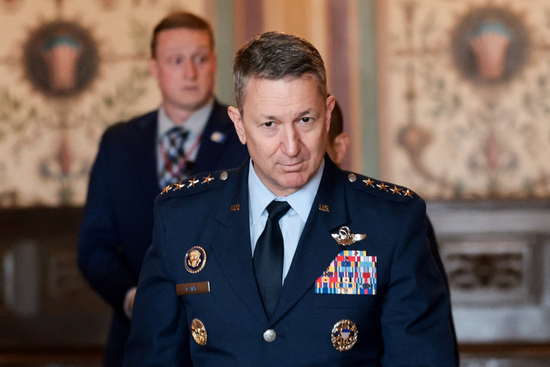
日本处境微妙
Xin Lang Cai Jing· 2025-12-28 14:17
Core Viewpoint - The article discusses Japan's precarious position in the context of the United States' new national security strategy, which emphasizes "America First" and seeks to redefine ally relationships, potentially placing Japan in a more passive role [1] Group 1: U.S. National Security Strategy - The U.S. national security strategy report released on December 4, 2025, focuses on "core national interests" and systematically adjusts global security priorities [1] - The report suggests that the U.S. aims to extract more resources from allies to achieve its foreign policy goals, indicating a shift in the operational model of the U.S.-led alliance system [1] Group 2: Japan's Response - Japanese politician Koizumi Hiromu expressed a desire to meet with Trump as soon as possible, indicating Japan's urgency to influence U.S. decision-making [1] - Japan perceives its strategic position as becoming more passive rather than proactive, leading to a need for greater support from the U.S. amid significant pressures [1]
拉夫罗夫:更新后的美国国家安全战略首次对北约扩张提出质疑
Xin Lang Cai Jing· 2025-12-28 06:03
Core Viewpoint - The Russian Foreign Minister Lavrov indicated that the updated U.S. national security strategy has raised questions about NATO's expansion, marking a significant shift in U.S. policy towards NATO's long-standing commitment to expansion [1] Group 1 - Lavrov noted that the U.S. strategy does not include any demands for a systematic containment and deterrence policy against Russia [1] - This statement suggests that it may be the first time the U.S. has publicly questioned NATO's expansionist agenda [1] - Although the U.S. did not commit to halting NATO's expansion, the questioning of its long-term commitment is noteworthy [1]
美2026财年国防授权法案释放哪些信号?美国军事战略重心在哪里?
Yang Shi Wang· 2025-12-19 06:47
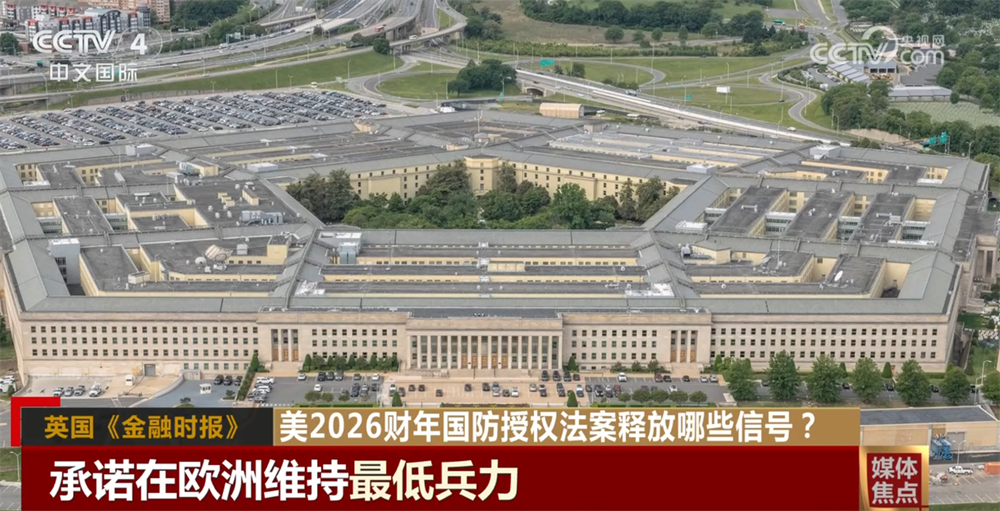
Core Points - The 2026 fiscal year National Defense Authorization Act (NDAA) totals $901 billion and includes provisions that deviate from U.S. foreign policy [1][3] - The NDAA authorizes the Pentagon to utilize over $900 billion, including commitments to maintain minimum troop levels in Europe and continue military aid to Ukraine [3][5] - The act highlights a significant internal friction within the U.S. regarding strategic shifts, contrasting with the new U.S. National Security Strategy that criticizes Europe for hindering peace with Russia [3][5] Group 1 - The NDAA mandates $400 million in military aid to Ukraine annually for the next two years, indicating a divergence from Trump's policies and emphasizing Congress's dominant role in defense policy [5] - The act includes measures to increase active-duty military pay, develop the Iron Dome missile defense system, and enhance military readiness to improve competitiveness against major adversaries [5][7] - The NDAA serves as a guiding document for U.S. defense spending and policy, revealing friction points but ultimately representing a bipartisan compromise [7] Group 2 - The continuous increase in defense authorization reflects the prioritization of security issues within U.S. policy [9] - The U.S. aims to enhance military spending, strengthen control over overseas operations, and increase pressure in multiple regions [9] - The Asia-Pacific region is positioned as a core focus of U.S. foreign policy, recognized as a critical area for economic and geopolitical competition [9]
美国真要战略收缩还是以退为进?(环球热点)
Ren Min Ri Bao· 2025-12-16 21:46
Core Viewpoint - The 2025 version of the U.S. National Security Strategy report emphasizes an "America First" foreign policy, reflecting a shift in U.S. global strategy and prioritizing domestic and regional security over global engagement [1][2][3] Strategic Shift - The report indicates a strategic shift from global engagement to focusing on domestic and regional security, prioritizing resources for homeland security and emphasizing "Western Hemisphere First" [3][6] - The U.S. is moving from an expansionist hegemony to a protective hegemony, concentrating resources in key areas rather than globally [3][7] - Economic security is now prioritized over traditional military security, with a focus on re-industrialization and supply chain "de-risking" [3][4] National Security and Worldview - The report reflects a strong nationalist and populist security perspective, emphasizing U.S. interests and reducing the emphasis on ideological goals like "democracy promotion" [4][5] - The U.S. is adopting a transactional worldview, viewing international relations as a marketplace where power is the currency, and reducing its moral obligations to maintain international order [4][5] Global Implications - The adjustment in U.S. strategy may lead to increased geopolitical tensions in the Western Hemisphere, as the U.S. may exert more pressure on Latin American countries [9][10] - The report's criticism of Europe and demands for increased defense spending from allies may deepen fractures within the U.S. ally system [10][11] - The U.S. stance against multilateralism and free trade could disrupt global economic structures and lead to a reorganization of supply chains [10][11]
国际观察丨八年三份报告——美国国家安全战略的变与不变
Xin Hua She· 2025-12-12 23:12
Group 1 - The latest U.S. National Security Strategy report reflects a significant shift in the U.S. foreign policy perspective, moving from a post-World War II worldview to a focus on "core national interests" rather than maintaining the "post-war international order" [1][2] - The report indicates a trend of "tooling" allies, criticizing European partners' domestic and foreign policies, and opposing NATO's continued expansion [2] - The emphasis on military strength remains consistent across all three reports, with a focus on rebuilding military capabilities and modernizing nuclear deterrence systems [3] Group 2 - The approach to global challenges has evolved, with the latest report viewing global issues like climate change as burdens to be avoided, contrasting with previous reports that sought leadership in these areas [2] - The strategic priority regions have shifted, with the latest report elevating issues like drug trafficking and illegal immigration in the Western Hemisphere, indicating a more assertive U.S. stance in Latin America [2] - Economic security remains a key theme, with a focus on re-industrialization and supply chain risk mitigation, highlighting the importance of maintaining dominance in high-tech, manufacturing, and critical minerals sectors [3]
俄乌“和平计划”充满变数 国际媒体分析各方能否在激烈博弈中找到平衡点
Yang Shi Wang· 2025-12-11 05:34
Group 1 - The article highlights the complex dynamics in the ongoing Russia-Ukraine conflict, emphasizing the contrasting positions of the U.S. and Ukraine's European allies in seeking a balance amid intense negotiations [1] - Ukrainian President Zelensky has expressed readiness to hold elections, contingent on security assurances from the U.S. and European nations, while also submitting a revised "peace plan" to the U.S. aimed at future peace processes and post-war security arrangements [3] - European allies of Ukraine are considering using frozen Russian assets to provide financial support to Kyiv next year, a move that has sparked internal debate within Europe regarding its implications for short-term peace prospects [5] Group 2 - The U.S. aims to promote a peace path that aligns with its interests, facing resistance from Ukraine and challenges from European expectations for favorable changes, as the end of the crisis could force Europe to acknowledge its setbacks against Russia [7] - Increased pressure from the U.S. on Ukraine and its European allies may not yield the desired outcomes, potentially creating opportunities for Russia as the U.S. shows reluctance to continue supporting European security fantasies [9]
知欧莫若美,特朗普为何强推俄乌和平
经济观察报· 2025-12-10 10:39
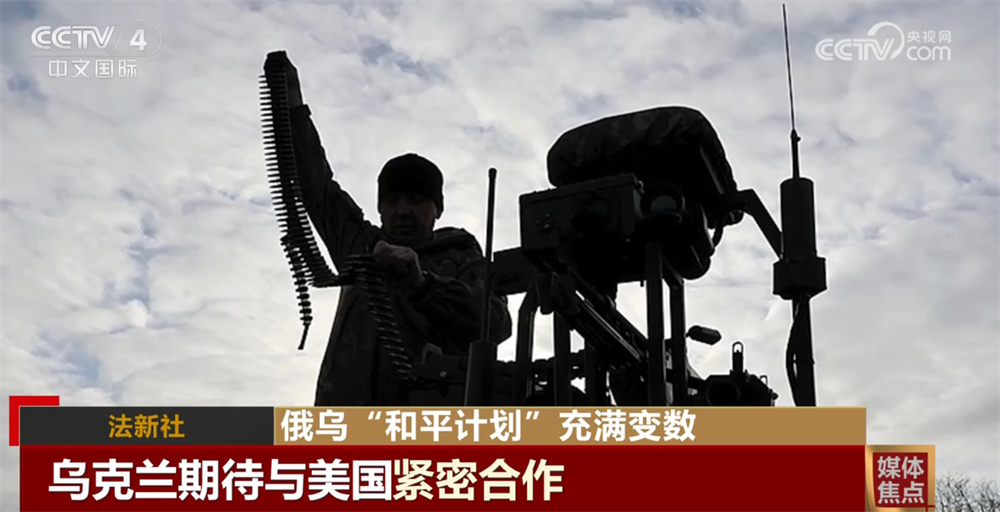
Core Viewpoint - The Trump administration believes that promoting peace between Russia and Ukraine can stabilize the European economy, prevent the escalation of war, and create conditions for Ukraine's post-war reconstruction, aligning with both U.S. and European interests [1][11]. Group 1: U.S. and Ukraine Peace Talks - The peace process between Russia and Ukraine is progressing slowly, with discussions focusing on territorial and security issues during talks held in Florida from December 4 to 6 [2]. - Trump expressed disappointment that Ukrainian President Zelensky had not responded to the U.S. peace plan, indicating a lack of urgency on Zelensky's part due to his focus on seeking support in Europe [3]. Group 2: U.S. National Security Strategy Report - The new U.S. National Security Strategy report serves as a diagnostic tool, analyzing the reasons behind Europe's decline, noting that Europe's share of global GDP has decreased from 25% in 1990 to 14% today [5]. - The report identifies two main reasons for Europe's decline: unstable minority governments that suppress democratic processes and regulatory systems that undermine creativity and industriousness [6]. - Concerns are raised about the future of NATO members potentially becoming majority non-European in the coming decades [6]. Group 3: Misjudgments in the Ukraine Conflict - The report highlights two significant and contradictory misjudgments made by Europe regarding the Ukraine conflict: unrealistic expectations for the war and a lack of confidence in facing Russia, despite European allies having a significant hard power advantage over Russia [6][11]. - The ongoing conflict may lead to closer ties between China and Russia, as evidenced by German companies building processing plants in China using Russian gas they cannot obtain domestically [6]. Group 4: European Response to U.S. Criticism - European leaders, including German Chancellor Merz, have expressed that while some parts of the U.S. National Security Strategy report are understandable, they cannot accept certain criticisms from the U.S. [8]. Group 5: Future of Ukraine and Europe - Zelensky has requested a legally binding security agreement with the U.S., indicating a desire for stronger guarantees amid the ongoing conflict [12]. - The Trump administration views the promotion of peace as essential for stabilizing Europe and ensuring Ukraine's viability as a nation post-conflict [11].
泽连斯基首次松口愿意选举,乌克兰加紧推进和平进程!俄发动猛攻,乌方11月失去的领土面积是10月的两倍
Mei Ri Jing Ji Xin Wen· 2025-12-10 00:36
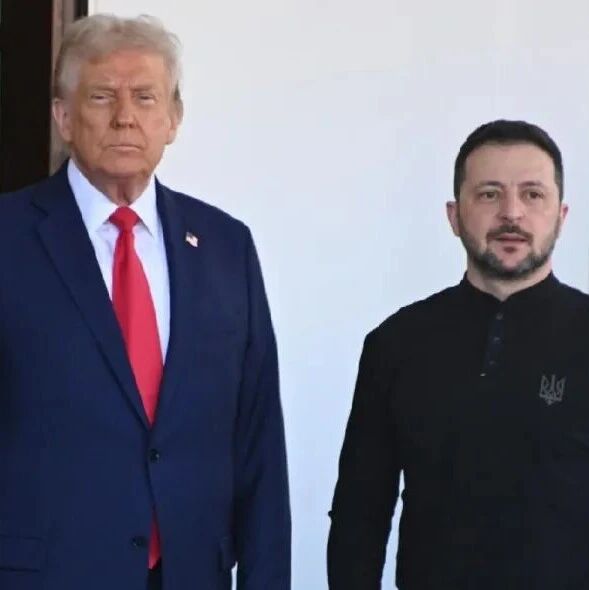
Group 1 - Ukrainian President Zelensky has signaled a willingness to hold elections, marking a significant shift from his previous stance of "only after the conflict ends" [1][3] - The U.S. government is pressuring Ukraine to conduct elections and is reportedly advocating for the withdrawal of Ukrainian forces from the Donbas region [1][2] - Zelensky announced that Ukraine is preparing to submit a revised "peace plan" to the U.S. to facilitate conflict resolution [4][7] Group 2 - Zelensky confirmed that Ukraine is in urgent discussions with the U.S. and Europe regarding three core documents related to framework agreements, security guarantees, and post-war reconstruction [7] - The first document includes 20 clauses and is designed to be adaptable based on actual circumstances, balancing the interests of Ukraine, Europe, and global stakeholders [7] - The second document focuses on security guarantees and is awaiting input from the Ukrainian military, emphasizing the importance of integrating these suggestions with the principles of the "volunteer alliance" [7] Group 3 - Despite progress in the "peace plan" negotiations, tensions are rising over territorial issues, with the U.S. reportedly pushing for some form of Ukrainian military withdrawal from the Donbas region [8][10] - The Russian military is advancing rapidly, with Ukraine losing territory at double the rate compared to the previous month, intensifying the pressure on Ukraine's negotiating position [10] - The evolving battlefield conditions are constraining Ukraine's flexibility in territorial negotiations, as Zelensky has firmly stated that Ukraine will not concede any land [8][10]

挺乌忧美 欧洲俄乌冲突斡旋“走钢丝”
Xin Hua She· 2025-12-09 06:46
Group 1 - The core viewpoint of the article emphasizes the need for strong security guarantees for Ukraine, as discussed in a meeting between UK Prime Minister Starmer, French President Macron, German Chancellor Merz, and Ukrainian President Zelensky [1] - European leaders agree on the necessity to stand with Ukraine and enhance its energy infrastructure defense capabilities, while also aiming for a just and lasting peace [2] - There is a nuanced attitude from European leaders towards the United States, acknowledging its role in peace negotiations while expressing concerns about potential US disengagement from supporting Ukraine [2][5] Group 2 - Zelensky mentioned that the territorial issues remain unresolved in the negotiations, despite some progress in modifying the US-proposed peace plan [3] - The recent discussions between US and Ukrainian delegations focused on territorial and security guarantees, with US President Trump expressing disappointment over Zelensky's lack of engagement with the peace plan [5] - The European Council President Costa highlighted that the new US strategy emphasizes ending confrontation with Russia rather than achieving a just and lasting peace [5]