民营经济创新

Search documents
民企院士“破壁”,让更多创新落地
2 1 Shi Ji Jing Ji Bao Dao· 2025-11-25 22:11
Core Insights - The recent election of scientists from private enterprises as academicians reflects a significant shift in China's innovation ecosystem, highlighting the growing importance of industrial innovation and the private economy within the national scientific framework [1][3][6] Group 1: Industrial Innovation - The core value of industrial innovation lies in transforming scientific achievements into actual productivity, with private enterprises being the most dynamic entities in this process [2] - BYD's research team has focused on battery technology and control systems, resulting in over 62,000 patent applications and more than 37,000 authorized patents, which have significantly contributed to the rapid development of China's electric vehicle industry [2] - The innovation model driven by industrial demand bridges the gap between academic research and market needs, creating a virtuous cycle of "research—application—feedback—re-research" [2] Group 2: Recognition of Private Enterprises - The election of private enterprise scientists as academicians signifies a renewed recognition of the value of industrial innovation, moving beyond traditional academic metrics to include practical contributions such as technology patents and product innovations [3][4] - The increasing presence of private enterprises in high-tech sectors, accounting for over 92% of national high-tech companies, underscores their role as key players in driving industrial upgrades and technological innovation [4] - The flexibility and efficiency of private enterprises in research decision-making and resource allocation enable them to respond quickly to market changes and technological trends [4] Group 3: Innovation Ecosystem - The election results promote a more equitable and inclusive innovation ecosystem, signaling that contributions to technological innovation from all sectors, including private enterprises, will be recognized [5] - The combination of the innovative vitality of the private economy with the academic strengths of universities and research institutions can create powerful synergies, facilitating a shift from point innovations to systemic innovations [5] - The ongoing optimization of the innovation ecosystem will further unleash the innovative potential of private enterprises, expanding the depth and breadth of industrial innovation [6]
高层会议明确改革新信号:高度重视解决拖欠企业账款,鼓励民营企业创新|聚焦2025中国发展高层论坛
Hua Xia Shi Bao· 2025-03-25 10:52
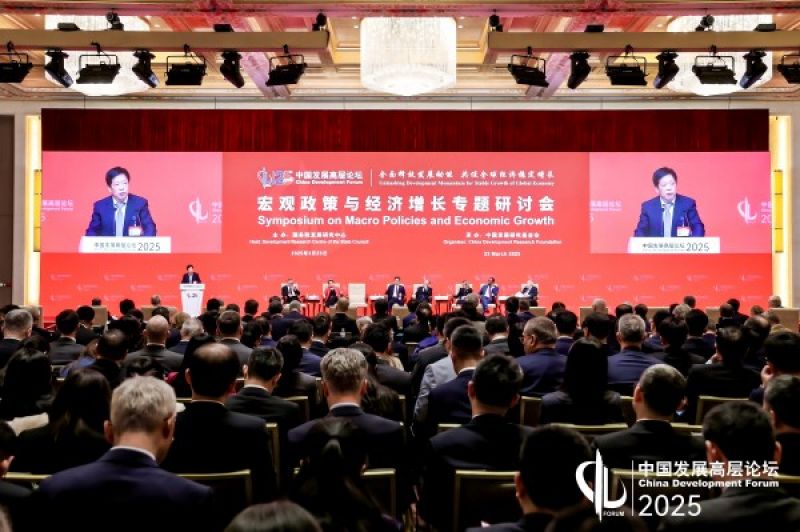
Group 1 - The 2025 China Development Forum emphasized the importance of addressing overdue corporate payments and encouraging innovation in the private sector [3][4] - The forum highlighted the role of the private economy as a core driver of innovation, with significant contributions from private enterprises in both China and the U.S. [4][5] - Key government officials, including the Minister of Finance, expressed commitment to improving policies that support the private economy and help businesses overcome challenges [3][6] Group 2 - International representatives at the forum stressed the need for a strong private sector investment environment, advocating for government investment in education, infrastructure, and innovation [6][7] - The Asian Development Bank President pointed out that focusing on the real estate sector and the private economy is crucial for driving China's economic growth [7] - The forum discussed the shift from "grasping the large and letting go of the small" to "grasping the small and letting go of the large," emphasizing the need for better funding for small and specialized enterprises [8][9] Group 3 - The Ministry of Industry and Information Technology reported significant growth in the number of technology and innovation-oriented SMEs, with over 605,000 such companies cultivated [8] - The forum's discussions included strategies to support the development of unicorns and gazelle companies, aiming to accelerate growth in new fields [8][9]