
产业创新

Search documents
韩文秀:保持经济向新向优向好发展,为动荡不安的世界注入更多稳定性、确定性
券商中国· 2026-03-22 08:18
Core Viewpoint - The "14th Five-Year Plan" emphasizes high-quality development and aims for significant progress towards socialist modernization by 2035, with a focus on enhancing both hard and soft national strengths [2][10]. Group 1: Innovation and Economic Vitality - The plan prioritizes innovation as the primary driving force for development, with strategic tasks including building a modern industrial system and accelerating high-level technological self-reliance [3]. - China aims to maintain a reasonable proportion of manufacturing and deepen supply-side structural reforms to optimize traditional industries and cultivate emerging sectors [3]. Group 2: Digital and Intelligent Economy - The plan promotes comprehensive digital development and the creation of a new intelligent economy, leveraging artificial intelligence across various sectors [4]. - There is an emphasis on increasing the proportion of basic research and accelerating the application of major technological achievements to foster new productive forces [4]. Group 3: Coordinated Development - The plan addresses the unbalanced and insufficient development across urban and rural areas, advocating for tailored policies to leverage regional advantages [5]. - It aims to enhance consumer contribution to economic growth and expand consumption, particularly in services, through urban renewal and infrastructure upgrades [5]. Group 4: Green Development - The plan outlines a commitment to green development, aiming for a peak in carbon emissions by 2030 and a significant increase in the share of non-fossil energy consumption to 25% [6]. - China plans to accelerate the transition to a new energy system and promote the development of low-carbon technologies and industries [6]. Group 5: Open Development - The plan reaffirms China's commitment to opening up its economy, eliminating foreign investment restrictions in manufacturing, and expanding access in service sectors [7]. - China aims to balance trade and actively promote high-quality imports while enhancing its international investment footprint [7]. Group 6: Shared Development - The plan focuses on improving people's livelihoods, with numerous indicators related to welfare, employment, education, and healthcare [8]. - It emphasizes the importance of equitable income distribution and social security to enhance the overall well-being of the population [8]. Group 7: Development and Security - The plan highlights the need to strengthen domestic circulation and ensure the security of food, energy, and critical supply chains amid global uncertainties [9]. - It aims to stabilize the real estate market and manage local government debt risks to prevent systemic financial risks [9].

双星新材(002585) - 002585双星新材投资者关系管理信息20260318
2026-03-18 10:32
Group 1: Industry Overview - The polyester film industry has experienced nearly 1 million tons of capacity release annually for three consecutive years, with a transition from weak balance to rebalancing expected by the end of 2025 [2] - The industry is projected to grow by approximately 1% in production and 10% in demand in 2026, with total capacity reaching 7.9 million tons and actual production at 5.7 million tons (including 930,000 tons for export) [2] - The apparent capacity utilization rate is estimated to be between 63% and 65% [2] - The global polyester film industry is facing challenges from raw material fluctuations and international competition while moving towards high-end, functional, and green development trends [2] Group 2: Company Profile - Jiangsu Double Star Plastic New Materials Co., Ltd. focuses on high polymer new materials, integrating product R&D, production, sales, and import-export trade, recognized as a national high-tech enterprise [2] - The company has established six production bases, offering a diverse range of products across five major fields: optical materials, energy-saving window film materials, new energy materials, variable information materials, and heat shrinkable materials [2] - Products are widely used in various sectors, including display panels, ceramic capacitors, and window films, ultimately serving markets such as AI terminals, smart devices, new energy vehicles, construction, and photovoltaics [2] Group 3: Strategic Development - The company is committed to driving innovation in the industry, focusing on the integration and collaborative development of the "industrial chain" [3] - It aims to implement an innovation-driven strategy, emphasizing both internal development and product quality enhancement [3] - The goal is to achieve product high-end transformation and international market expansion, accelerating the domestic substitution process of key materials [3] Group 4: Product Pricing and Market Strategy - Product price fluctuations are influenced by multiple factors, including raw material costs, supply-demand dynamics, downstream demand structure, policy environment, and international market interactions [4] - Recent price increases in membrane materials vary by product category, with future price adjustments dependent on actual market conditions [4] - The company plans to maintain a flexible pricing strategy, strengthen cost control, and optimize product structure to adapt to a complex and changing market environment [4] Group 5: MLCC Release Film Project - Since 2020, the company has successfully developed and scaled the production of release film substrates for MLCC, marking a significant step in the high-end materials sector [6] - In 2022, the company expanded its business into the release film market, leveraging its strong technical foundation and integrated supply chain advantages [6] - The product line for release films has been enriched, supporting the vertical deepening and horizontal platform expansion of the industry chain [6] - The company has established stable supply relationships with leading domestic enterprises and is actively pursuing international market validation with renowned global clients [6]

500亿京津翼创投引导基金正式出资了 | 科促会母基金分会参会机构一周资讯(3.11-3.17)
母基金研究中心· 2026-03-17 09:19
Core Viewpoint - The establishment of the "China International Science and Technology Promotion Association Mother Fund Branch" aims to enhance the role of mother funds in China's capital market, promoting the flow of social capital towards innovative and entrepreneurial enterprises, thereby fostering the healthy development of the investment industry, particularly the mother fund sector [1]. Group 1: Investment Initiatives - The Beijing-Tianjin-Hebei Venture Capital Guidance Fund has officially invested 50 billion yuan, managed by CICC Capital, to support the development of emerging and future industries [2][3]. - The Fujian Jin Investment successfully issued 1.2 billion yuan in corporate bonds, with a 3-year bond issuance rate of 1.72%, marking a historical low for local state-owned enterprises in Fujian [5][7]. - Shengjing Jiacheng Venture Capital led the A-round financing of Wuyuan Semiconductor, focusing on the development of wafer-level packaging technology [8]. Group 2: Government and Data Initiatives - The Hunan Provincial Data Bureau conducted research on the market-oriented allocation of data elements, aiming to enhance the construction of a digital Hunan [11][12]. - The Shijiazhuang Municipal Financial Office investigated the high-quality development of fund businesses at the State Investment Group's Shike Venture Capital Company, emphasizing the importance of optimizing fund ecology and enhancing capital efficiency [15][18]. Group 3: Industry Discussions and Strategies - Xu Shuzhang, a partner at Shanda Investment, shared insights on post-investment management of government industrial funds at a seminar hosted by the Shanghai State-owned Capital Operation Research Institute [19][21]. - The Cheng Tong Fund held a seminar analyzing international situations, discussing the implications of global changes and the importance of maintaining strategic determination in investment [23][25].

新质生产力赋能科创产业:2026年政府工作报告解读
Lian He Zi Xin· 2026-03-16 11:22
Group 1: Core Strategic Deployment - The 2026 government work report emphasizes the development of new quality productivity as a core strategy to integrate technological and industrial innovation[4] - New quality productivity is positioned as the main line for the development of the sci-tech industry, marking a shift from concept to comprehensive implementation[4] - The report aims to enhance the resilience and credit levels of sci-tech enterprises through improved operational capabilities and compliance[12] Group 2: Financial and Policy Support - A multi-level policy support system is established, focusing on fiscal, financial, and talent dimensions to bolster the development of the sci-tech industry[7] - The report allocates 200 billion yuan for long-term special bonds to support large-scale equipment upgrades in key industries[6] - Tax incentives will be extended and optimized to reduce innovation costs for technology-based SMEs and leading innovative enterprises[7] Group 3: Research and Development Focus - National R&D investment is projected to exceed 3.92 trillion yuan by 2025, with a target intensity of 2.8%[8] - Basic research funding is set at approximately 280 billion yuan, accounting for 7.08% of total R&D investment, still below the 12%-23% level of developed countries[8] - The report aims for an annual growth target of over 7% in R&D funding during the 14th Five-Year Plan period[8] Group 4: Industry Transformation and Upgrading - The report highlights the need for traditional industries to upgrade and emphasizes the importance of digital transformation for SMEs[6] - It encourages the development of emerging pillar industries such as integrated circuits, aerospace, and biomedicine[6] - The transition from "quantity expansion" to "quality leap" in the sci-tech industry is a key focus, addressing issues like weak foundational research and insufficient capital supply[8]
机构研究周报:国际秩序重构与产业创新共振驱动A股上涨
Wind万得· 2026-03-08 22:50
Summary of Key Points Core Viewpoint - Geopolitical conflicts are causing short-term risk premiums, but the A-share market shows resilience, with a mid-term focus returning to fundamentals and policy direction [1][5]. Government Work Report - The economic growth target for this year is set at 4.5%-5%, with a focus on quality growth rather than aggressive stimulus. Other targets include an urban unemployment rate of around 5.5%, over 12 million new urban jobs, and a consumer price increase of about 2% [3]. Equity Market - A-share market resilience is noted despite geopolitical tensions, with a focus on the impact of oil prices and inflation. The long-term drivers for A-share growth include the restructuring of international order and industrial innovation [5][6]. - The technology growth sector is expected to dominate the market, with structural opportunities continuing to emerge despite short-term volatility [6][7]. - By 2026, a convergence of new and old asset markets is anticipated, with technology assets showing significant mid-term potential [7]. Industry Research - The military industry is highlighted as having long-term investment value, with a notable increase in the military index by 27.40% over the past six months [12]. - The escalation of the Middle East situation is expected to benefit the metals and chemicals sectors, with a focus on self-sufficient resource companies [12]. - A significant turning point for oil prices is projected around 2026, influenced by structural declines in U.S. shale oil production and geopolitical tensions [13]. Macro and Fixed Income - Real estate prices in major cities are expected to stabilize, with inventory levels indicating a natural bottoming out [19]. - A credit downshift strategy remains favorable, with a focus on structural opportunities in the current "asset shortage" environment [20]. - The bond market is anticipated to recover, supported by a stable liquidity environment and reduced government bond supply pressure [21]. Asset Allocation - The HALO strategy emphasizes six asset categories, focusing on heavy assets with low elimination risk, such as industrial metals and energy sectors, as potential safe havens [23].


国防预算保持平稳增长
Guoxin Securities Co., Ltd· 2026-03-06 12:01
Investment Rating - The industry investment rating is "Positive," indicating that the industry index is expected to outperform the market index by 5% over the next six months [7]. Core Insights - China's defense budget for 2026 is set at 1,909.561 billion RMB, reflecting a year-on-year growth of 7%, slightly down from 7.2% in 2025 [1]. - The defense spending as a percentage of GDP remains below the global average, with China's defense expenditure at 1.27% of GDP in 2025, compared to over 3% for the U.S. and above 2% for major NATO countries [2]. - The geopolitical landscape is increasingly complex, with ongoing conflicts such as the U.S. and Israel's actions against Iran and the Russia-Ukraine war, emphasizing the importance of national defense [3]. - China's defense technology sector is robust, contributing to technological and industrial innovation, with advancements in areas like electromagnetic catapult aircraft carriers and fifth-generation fighter jets [4]. Summary by Sections Defense Budget Overview - The 2026 defense budget reflects a stable growth trajectory, aligning with economic growth rates, and is part of a broader strategy to enhance national defense capabilities [1][2]. Geopolitical Context - The current global security situation necessitates increased military investment, with China facing multiple strategic challenges in its vicinity [3]. Industry Growth Potential - The steady growth of military spending provides a solid foundation for the defense and military industry, with expectations for continued increases in industry scale and profitability [5]. - The report highlights the importance of focusing on aerospace equipment supply chain companies, particularly in the fields of main engines, aerospace engines, and military electronics [5].
涉及AI、人形机器人!首场“部长通道”信息量很大
券商中国· 2026-03-05 08:53
Group 1 - The core viewpoint of the article emphasizes the importance of technological innovation and its alignment with industrial needs, aiming to create a cohesive strategy for technological and industrial development [2] - The Minister of Science and Technology, Yin Hejun, announced that by 2025, China's total R&D investment will exceed 3.92 trillion yuan, with basic research funding reaching approximately 280 billion yuan, marking a historic high of 7.08% of total R&D investment [1] - The Minister of Industry and Information Technology, Li Lecheng, highlighted the need to attract various resources, including patient capital and risk capital, to support the manufacturing sector and maintain a reasonable investment structure [3] Group 2 - Li Lecheng also stated that by 2026, there will be a focus on nurturing high-quality enterprises and fostering "specialized, refined, distinctive, and innovative" small and medium-sized enterprises, aiming to create more "little giant" companies and champions in the manufacturing sector [4] - The article mentions that during the 14th Five-Year Plan period, the total assets of central enterprises have continuously surpassed significant milestones, reaching 90 trillion yuan, with a profit increase of 56.2% compared to the previous five years [8] - Li Lecheng emphasized the importance of modern governance in building a modern industrial system, advocating for effective monitoring and regulation of production capacity to create a better market environment [6]
聚焦科技创新,武汉“新春第一会”释放哪些“车”信号
Zhong Guo Qi Che Bao Wang· 2026-02-28 01:40
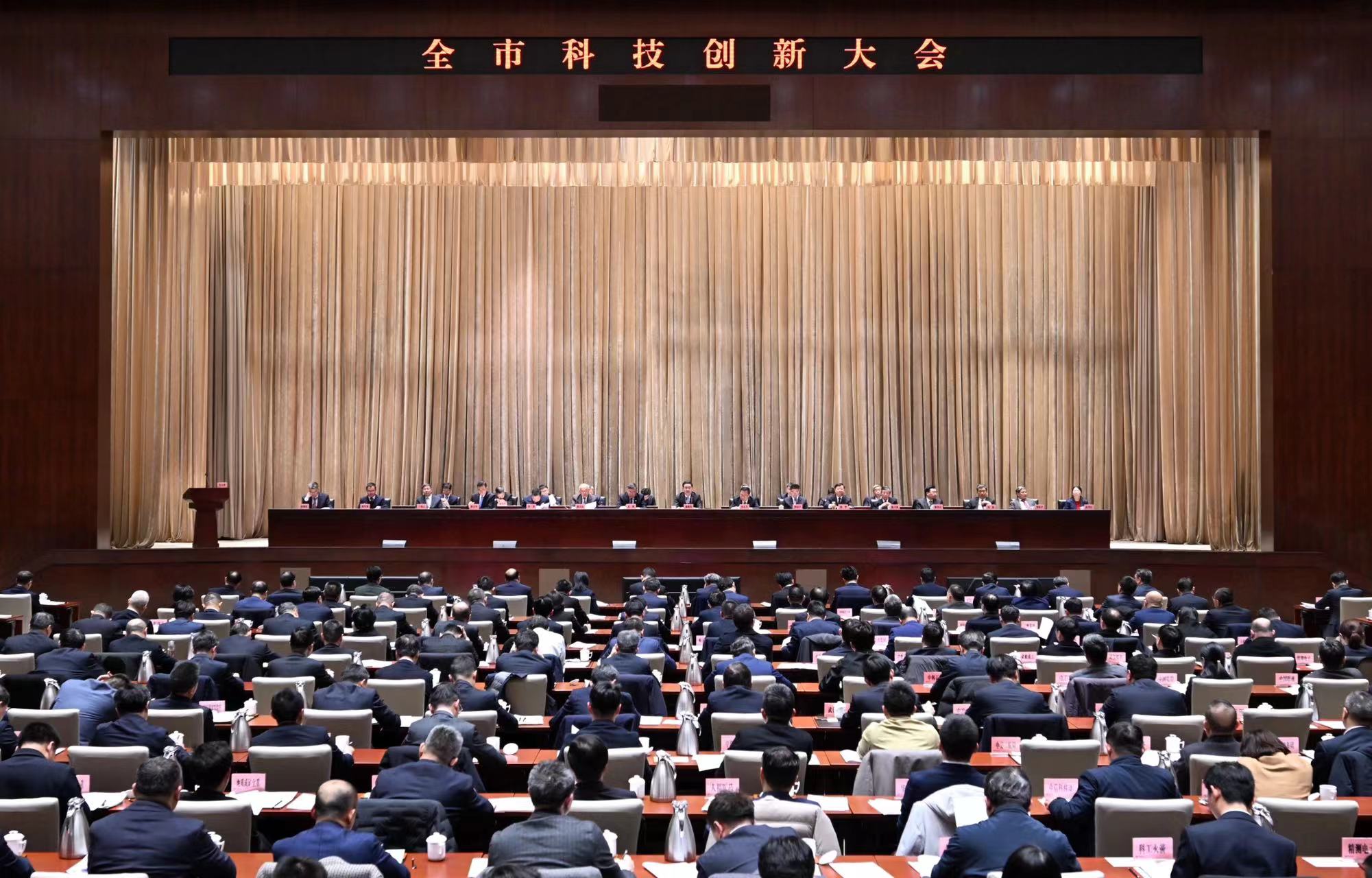
Core Viewpoint - The 2026 Wuhan Science and Technology Innovation Conference highlighted the city's commitment to becoming a nationally influential technology innovation center, focusing on the integration of technological and industrial innovation through the "One City, Three Corridors, Multiple Belts" development strategy [2][8]. Group 1: Innovation Development Strategy - Wuhan has unveiled multiple five-year action plans, including the East Lake Science City and the Vehicle Valley Industrial Innovation Corridor, to promote a comprehensive innovation ecosystem that integrates basic research, technology breakthroughs, and industrial application [2][4]. - The "One City, Three Corridors, Multiple Belts" layout emphasizes a systematic approach to solving innovation challenges and aims to enhance the core competitiveness of Wuhan's high-quality development [4][5]. Group 2: Vehicle Valley Industrial Innovation Corridor - The "Vehicle Valley Industrial Innovation Corridor" is a key component of the "Three Corridors" strategy, aiming to elevate the automotive industry from a focus on vehicles to a more diversified ecosystem [4][5]. - The "Action Plan for the Construction of the Vehicle Valley Industrial Innovation Corridor (2026-2030)" was released, outlining ten major actions to enhance the automotive sector, including the elevation of vehicle capabilities and the promotion of collaborative innovation [5][6]. Group 3: Ten Major Actions - The first action focuses on enhancing vehicle capabilities, with a goal to cultivate six automotive enterprises with over 100 billion yuan in revenue by 2030, producing over 2 million vehicles, including 1.5 million new energy vehicles [5][6]. - The second action aims to rejuvenate joint venture brands, encouraging local R&D and differentiated competition to stabilize market share [5][6]. - The third action promotes collaboration between vehicle manufacturers and parts suppliers to enhance the supply chain resilience and increase the local parts production rate [5][6]. Group 4: Technological and Industrial Integration - The initiative aims to create a comprehensive ecosystem covering chips, software, and AI, positioning Wuhan as a leading city in smart technology [6][8]. - The plan includes the establishment of high-level laboratories and innovation platforms to support the automotive industry and enhance R&D investment intensity to 5% of GDP [6][8]. Group 5: Economic Impact and Future Outlook - By 2025, the Wuhan Economic Development Zone is projected to exceed a GDP of 230 billion yuan, with a significant increase in high-tech enterprises and a focus on innovation-driven growth [9][18]. - The automotive production in Wuhan is expected to reach 945,000 units by 2025, with a notable increase in new energy vehicles, reflecting a shift towards a more diversified automotive industry [17][20].

助力破解企业“内卷”困局
Ren Min Ri Bao· 2026-02-28 01:26
Group 1 - The core issue identified is the "involution" competition, which hinders high-quality economic development due to insufficient innovation capabilities and severe product and service homogenization [1] - Companies are resorting to price-cutting strategies to compete, leading to declining profits and reduced R&D investment [1] - The proposal emphasizes the need for deep integration of technological innovation and industrial innovation to address the "involution" dilemma [1] Group 2 - The National Development and Reform Commission responded to the proposal, committing to address structural contradictions in key industries and promote high-quality industrial development [2] - The response includes plans to eliminate outdated and inefficient production capacity while increasing high-end capacity supply [2] - The proposal's implementation is seen as beneficial for addressing issues and enhancing the engagement of committee members in their responsibilities [2]
省政协举行十三届八十九次党组会议
Liao Ning Ri Bao· 2026-02-28 01:04
Group 1 - The meeting emphasized the importance of understanding and implementing Xi Jinping's recent speeches and articles, particularly regarding the development of future industries and the integration of education, technology, and talent [1][2] - The meeting highlighted the need for collaboration across various committees and sectors to conduct research and propose actionable recommendations to enhance the province's industrial layout and development initiatives [1] - The meeting called for a focus on strengthening the integration of technological and industrial innovation, promoting modern service industries, and advancing urban renewal efforts to support the province's development goals [1][2] Group 2 - The meeting stressed the importance of implementing Xi Jinping's important article on financial development, aiming to create a strong financial sector in the province by addressing key financial issues and promoting high-quality financial growth [2] - The meeting outlined the need to adhere to the provincial work deployment, emphasizing problem-solving and effective collaboration to enhance the business environment and legal framework in the province [2] - The meeting approved the work priorities for the provincial committee for 2026, indicating a structured approach to future initiatives [3]