
水资源集约节约利用

Search documents
长三角生态绿色一体化发展示范区首单取水权跨省市+水信托交易在沪落地
Xin Hua Cai Jing· 2026-01-16 05:46
Core Viewpoint - The first cross-provincial water rights transaction and water trust deal in the Yangtze River Delta Ecological Green Integrated Development Demonstration Zone has been successfully executed, promoting efficient water resource utilization and supporting major projects in the region [1][3]. Group 1: Water Rights Transaction - The first cross-provincial water rights transaction involved the purchase of 60,000 cubic meters of water rights by a subsidiary of China Railway 10th Bureau for the construction of the intercity railway in the demonstration zone [1]. - This transaction is part of a broader initiative to facilitate the orderly flow of water resources across regions and support the construction of eco-friendly high-quality development models [1][4]. Group 2: Water Trust Mechanism - The "Water Trust" mechanism allows enterprises to purchase water rights based on their specific needs, enhancing flexibility in water usage for construction projects and municipal greening [3]. - The Shanghai Environmental Energy Exchange has initiated the "Water Trust" to deepen the reform of water pricing and rights, providing a replicable model for national water rights trading [3][4]. Group 3: Project Details and Impact - The intercity railway project, which includes a total shield tunneling length of 4,242.44 meters, is expected to be completed within 851 calendar days, with water resource planning being a critical factor for construction progress [2]. - The successful execution of the water rights transaction ensures that the construction can proceed without delays, contributing to the integration of regional infrastructure and economic development [2][3]. Group 4: Trading Volume and Achievements - Since the launch of the "Water Trust," the cumulative trading volume has exceeded 1.4 million cubic meters, demonstrating a significant transformation in water conservation benefits into trust dividends [4]. - The Shanghai Environmental Energy Exchange has facilitated over 140,000 cubic meters of water rights transactions in the demonstration area, supporting various construction and greening needs [4].
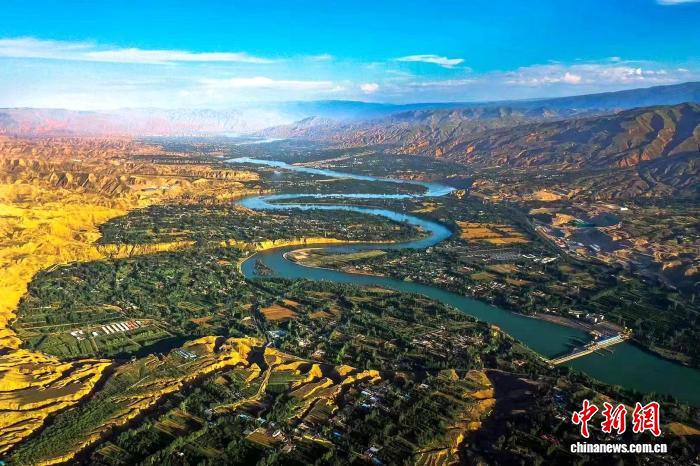
青海:水资源集约节约利用效能持续增强
Zhong Guo Xin Wen Wang· 2026-01-12 12:31
Group 1 - The core viewpoint of the article highlights that Qinghai Province has significantly improved the efficiency of water resource utilization, maintaining a development utilization rate of around 4%, which is much lower than the national average [1][3] - The number of water extraction permits outside river channels has been reduced from 2,336 to 1,961, indicating a stricter regulatory framework [1] - Water consumption per 10,000 yuan of GDP has decreased by 15.7%, and the effective utilization coefficient of irrigation water has reached 0.510 [1] Group 2 - The province has seen a 5% reduction in groundwater extraction, while the use of unconventional water sources has increased by 147% [1] - The proportion of ecological and industrial water usage has risen by 3.4% and 2.4%, respectively, reflecting a more rational water usage structure [1] - Qinghai has invested 2.735 billion yuan over three years for ecological restoration projects, completing 17 tasks related to river recovery [3]

推动水资源集约节约利用筑牢水安全屏障 我市出台全国首部用水统计政府规章
Zhen Jiang Ri Bao· 2025-12-26 17:48
Core Viewpoint - The Jiangsu Provincial Government has released the "Zhenjiang Water Use Statistical Management Measures," which will take effect on March 1, 2026. This is the first government regulation in China specifically targeting water use statistics, aiming to establish a scientific and efficient water use statistical system to support the city's green, low-carbon, and high-quality development [1][2]. Group 1: Framework and Responsibilities - The regulation establishes a collaborative framework led by the government, with water resources as the focal point, and emphasizes the responsibilities of both municipal and county-level governments, ensuring that operational funding is included in the fiscal budget for sustainable implementation [1]. - The regulation clarifies the responsibilities of water administrative departments and details the collaborative tasks of various departments, including natural resources, urban management, and public water supply units, to ensure clear division of labor and efficient cooperation [2]. Group 2: Statistical Scope and Standards - The regulation defines the statistical scope by categorizing water users into self-supplied and public water supply, employing a combination of comprehensive and typical surveys to accurately reflect overall water usage and trends in key industries [2]. - Data collection will rely on national standard measurement facilities, with a layered verification mechanism to ensure data accuracy through cross-referencing with online monitoring and historical data [2]. Group 3: Data Management and Oversight - A comprehensive data management system will be established, ensuring traceability from original records to statistical reports, along with a supervision and inspection system to regularly check data quality [2]. - The regulation mandates joint reviews of annual water usage calculations by relevant departments to ensure data consistency and outlines legal consequences for statistical fraud [2][3].
从“补短板”到“强功能”,日照构建现代水网新格局
Qi Lu Wan Bao· 2025-12-11 08:53
Core Insights - The article discusses the progress and initiatives of Rizhao City in enhancing water resources management and infrastructure during the "14th Five-Year Plan" period, focusing on high-quality development in water conservancy. Group 1: Water Infrastructure Development - The total investment in water conservancy during the "14th Five-Year Plan" period reached 7.3 billion yuan, indicating an acceleration in water infrastructure development [2] - Key projects include the completion of the first phase of the urban water supply emergency backup source project and the construction of the Fuduan River underground reservoir, significantly improving daily water supply capacity [2] - The modern water network is being rapidly established, with a cumulative restoration and addition of various water conservancy facilities reaching 30.31 million cubic meters [2] Group 2: Water Disaster Prevention and Management - The water and drought disaster prevention system has shifted from passive response to proactive early warning and precise scheduling, achieving significant advancements in information technology and planning [2] - The city successfully managed extreme weather events, ensuring no casualties and maintaining the integrity of critical infrastructure [2] Group 3: Water Ecological Governance - The governance of rivers and lakes has evolved from merely cleaning up to building "happy rivers and lakes," with increased digital and social participation [3] - The water and soil conservation rate has improved to 75.35%, with over 300 square kilometers of water and soil erosion area treated during this period [3] - The collection of water and soil conservation compensation fees is projected to reach 49.97 million yuan by 2025, reflecting a 70.56% increase compared to previous years [3] Group 4: Water Resource Management - Water resource management has transitioned from extensive use to refined control, with significant progress in building a water-saving society [4] - The daily water supply capacity for industrial use has reached 350,000 cubic meters, supporting the development of the port industry [4] - The city aims to control total water usage to 674 million cubic meters by 2025, with a 15% reduction in water usage per unit of GDP compared to 2020 [4] Group 5: Enhancing Public Welfare - Rural water supply has seen historic improvements, with 99% of the rural population covered by centralized water supply systems [5] - A total of 3.5 billion yuan has been allocated for post-relocation support for reservoir migrants, improving living conditions and promoting regional industrial development [5] - The water conservancy system is committed to further enhancing its role in supporting high-quality development and ensuring water security for the community [5]
2025中国水利学术大会在南京召开
Zheng Quan Shi Bao Wang· 2025-10-26 10:10
Core Viewpoint - The 2025 China Water Conservancy Academic Conference was held in Nanjing, Jiangsu, focusing on promoting high-quality water conservancy development to ensure national water security [1] Group 1: Conference Overview - The conference centered on the "14th Five-Year Plan" for water conservancy development [1] - It included a main venue and 25 sub-venues, featuring 267 specialized academic reports [1] Group 2: Key Topics Discussed - Discussions covered the construction of a digital twin water conservancy system [1] - Topics included flood and drought disaster prevention, ecological protection and governance of rivers and lakes, and the intensive and economical use of water resources [1] - Future water science and large-scale water models were also key areas of focus [1]
云南省首单跨省水权交易在北京签约
Zhong Guo Xin Wen Wang· 2025-10-24 16:16
Core Viewpoint - Yunnan Province has signed its first inter-provincial water rights trading framework agreement, allowing for an annual trading volume of 4 million cubic meters over a 10-year period, aimed at addressing water scarcity in agricultural development [1] Group 1: Water Rights Trading - The agreement was signed between the Water Affairs Bureau of Yuanmou County, Yunnan, and the Water Resources Bureau of Huili City, Sichuan, at the China Water Rights Exchange headquarters in Beijing [1] - This transaction represents a significant step in the development of water rights trading in China, particularly in regions facing water scarcity [1] Group 2: Agricultural Development - Yuanmou County is a key area for the production of "Southern Vegetables Northern Transport" and "Early Winter Vegetables," which is crucial for agricultural output [1] - The county has implemented comprehensive reforms in agricultural water pricing and modern irrigation systems, achieving an annual surplus of over 6 million cubic meters of water [1] Group 3: Efficient Water Use - The successful signing of this agreement is expected to provide a replicable model for water resource conservation and inter-provincial water rights trading, benefiting both Yunnan and Sichuan [1] - The county has been promoting efficient water-saving technologies such as drip irrigation and micro-spray irrigation, contributing to significant improvements in water resource utilization [1]