现代水网

Search documents
2026年山西水利投资将超220亿 聚焦现代水网与民生保障
Zhong Guo Xin Wen Wang· 2026-01-22 15:38
Group 1 - The core objective for water conservancy investment in Shanxi Province for 2026 is set at over 22 billion yuan, focusing on modern water network construction, major project advancement, and rural water supply security [1] - Investment will concentrate on six key "hard investment" areas, including the acceleration of national "two heavy" projects and provincial key projects such as the ancient Xian Shanxi water resource allocation project and the Luliang Yuko River reservoir [1] - The provincial "three verticals and nine horizontals, eight rivers interconnected" modern water network backbone project will be expedited, with plans to add six counties to achieve effective water network support [1] Group 2 - In rural water supply, there are plans to repair and maintain 1,900 projects benefiting over 2 million people, with the goal of increasing the coverage of rural centralized water supply projects to 62% and achieving a tap water penetration rate of 98.8% [1] - The province will also promote the modernization of large and medium-sized irrigation districts, exploring green and low-carbon irrigation development models, aiming for an effective utilization coefficient of irrigation water to reach 0.586 [1] - In river and lake system protection, Shanxi will advance the governance of 21 small and medium rivers and initiate flood control and disaster reduction capacity enhancement projects, addressing soil erosion over an area of 5.5 million acres [2]
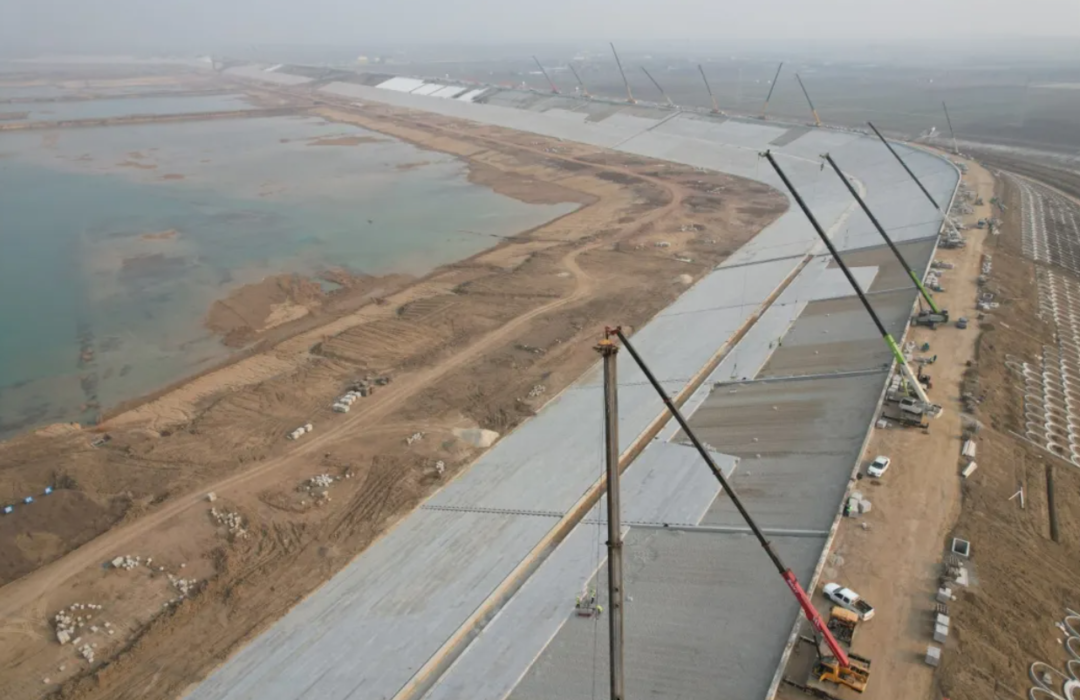
山东东部再添“大水盆”!官路水库完成主体建设
Feng Huang Wang Cai Jing· 2025-12-20 00:03
Core Insights - The Qingdao Guanlu Reservoir, the largest newly built reservoir in Shandong Province, has recently completed its main construction and is set to store water by the second half of 2026 [1][3]. Group 1: Project Overview - The Guanlu Reservoir is located in the northwest of Jiaozhou City, Shandong Province, and is a key project in the construction of a modern water network in the region [3]. - The total investment for the project is 9.145 billion yuan, with a total storage capacity of 211 million cubic meters, equivalent to the combined capacity of Qingdao's Jihongtan and Laoshan reservoirs [3]. - Upon completion, the reservoir will enhance water resource allocation and supply security for Qingdao and the Jiaodong Peninsula, moving away from the reliance on single-channel water supply systems [3]. Group 2: Construction and Quality Assurance - Since the project commenced in 2023, it has aimed for a "century project, millennium quality" construction goal, emphasizing party leadership and innovative collaboration among stakeholders [3][4]. - The construction has implemented a quality closed-loop system through "model guidance + standard guidelines + smart construction," focusing on green construction practices and achieving over ten innovative construction patents [4]. - The project has received multiple awards, including the "Shandong Province Engineering Survey and Design Achievement Competition Award" and "Green Construction Demonstration Project" [4].

从“补短板”到“强功能”,日照构建现代水网新格局
Qi Lu Wan Bao· 2025-12-11 08:53
Core Insights - The article discusses the progress and initiatives of Rizhao City in enhancing water resources management and infrastructure during the "14th Five-Year Plan" period, focusing on high-quality development in water conservancy. Group 1: Water Infrastructure Development - The total investment in water conservancy during the "14th Five-Year Plan" period reached 7.3 billion yuan, indicating an acceleration in water infrastructure development [2] - Key projects include the completion of the first phase of the urban water supply emergency backup source project and the construction of the Fuduan River underground reservoir, significantly improving daily water supply capacity [2] - The modern water network is being rapidly established, with a cumulative restoration and addition of various water conservancy facilities reaching 30.31 million cubic meters [2] Group 2: Water Disaster Prevention and Management - The water and drought disaster prevention system has shifted from passive response to proactive early warning and precise scheduling, achieving significant advancements in information technology and planning [2] - The city successfully managed extreme weather events, ensuring no casualties and maintaining the integrity of critical infrastructure [2] Group 3: Water Ecological Governance - The governance of rivers and lakes has evolved from merely cleaning up to building "happy rivers and lakes," with increased digital and social participation [3] - The water and soil conservation rate has improved to 75.35%, with over 300 square kilometers of water and soil erosion area treated during this period [3] - The collection of water and soil conservation compensation fees is projected to reach 49.97 million yuan by 2025, reflecting a 70.56% increase compared to previous years [3] Group 4: Water Resource Management - Water resource management has transitioned from extensive use to refined control, with significant progress in building a water-saving society [4] - The daily water supply capacity for industrial use has reached 350,000 cubic meters, supporting the development of the port industry [4] - The city aims to control total water usage to 674 million cubic meters by 2025, with a 15% reduction in water usage per unit of GDP compared to 2020 [4] Group 5: Enhancing Public Welfare - Rural water supply has seen historic improvements, with 99% of the rural population covered by centralized water supply systems [5] - A total of 3.5 billion yuan has been allocated for post-relocation support for reservoir migrants, improving living conditions and promoting regional industrial development [5] - The water conservancy system is committed to further enhancing its role in supporting high-quality development and ensuring water security for the community [5]
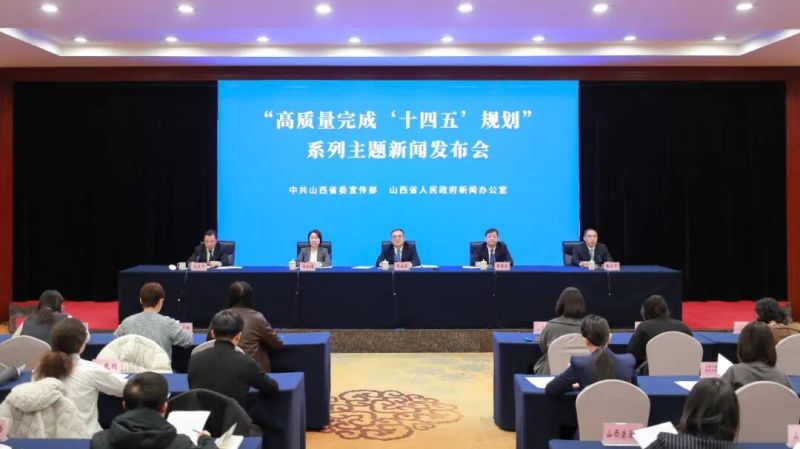
山西水利“十四五”交出亮眼答卷:古贤开工 晋泉复流 水网贯通 生态向好
Zhong Guo Fa Zhan Wang· 2025-12-05 08:09
Core Viewpoint - Shanxi Province is making significant progress in high-quality water conservancy development during the "14th Five-Year Plan" period, focusing on water resource management and infrastructure improvements [1][3]. Investment Growth - Water conservancy construction investment in Shanxi Province reached 98.6 billion yuan, a 73.3% increase compared to the "13th Five-Year Plan" [3]. - Average annual investment is expected to exceed 20 billion yuan in 2023 and 2024, indicating a sustained growth trend in water conservancy investment [3]. Key Achievements - The Huanghe Guxian Water Conservancy Hub project, which has been under discussion for 70 years, has officially commenced construction [3]. - The Jinci Spring, which had been dry for 30 years, has resumed stable flow, restoring its historical beauty [3]. - The main framework of Shanxi's modern water network, consisting of "three verticals and nine horizontals" and eight river connections, is now largely established [3]. Water Resource Management - The "Four Waters and Four Determinations" initiative is being effectively implemented, with a leadership group established to oversee its execution [4]. - By the end of 2024, water consumption per unit of GDP is projected to decrease by 21.5% compared to the end of the "13th Five-Year Plan" [4]. - The annual water supply capacity of the provincial water network has increased to 4.487 billion cubic meters, with coverage reaching 82% and benefiting over 28 million people [4]. Environmental Restoration - The area of soil erosion management has reached 28.8 million acres, with a target of achieving a soil conservation rate of 65.51% by the end of 2024 [4]. - Groundwater levels have risen by an average of 2.51 meters since 2019, with the Jinci Spring flowing continuously for 458 days [4]. Disaster Resilience - The flood control standard rate of the Fen River main embankment has improved from 65% to 95%, enhancing the province's ability to respond to extreme weather events [4]. - The total water storage in reservoirs has reached 2.068 billion cubic meters, the highest in history, ensuring a solid water supply for the upcoming year [4]. Rural Water Supply Improvement - The standardized rural water supply rate has increased to 57.9%, with tap water coverage reaching 98.6%, benefiting 22.2 million rural residents [7]. - Future plans include a comprehensive approach to water resource allocation, focusing on conservation and sustainable use of various water sources [7].
统筹城市防洪体系和内涝治理 加快构建兴利除害的现代水网
Zheng Zhou Ri Bao· 2025-08-12 01:18
Group 1 - The core focus is on enhancing flood control and water management systems in Zhengzhou, emphasizing the need for a comprehensive approach to urban water safety and infrastructure improvement [1][2] - The construction of a modern water network is highlighted, with a proposed layout of "eight horizontal and six vertical" connections to improve water resource allocation and risk management [2] - The importance of integrating urban planning with sponge city concepts is stressed, aiming to address urban flooding issues through infrastructure upgrades and better drainage systems [1][2] Group 2 - The leadership emphasizes the necessity of understanding and implementing the "two establishments" and "two safeguards" to ensure effective water management [2] - There is a call for a systematic approach to disaster prevention and response, focusing on enhancing the emergency management system and flood control capabilities [2] - The commitment to safeguarding public safety and property through improved disaster risk management and water resource governance is reiterated [2]
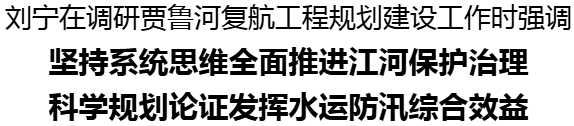
刘宁到开封尉氏县、周口扶沟县调研贾鲁河复航工程规划建设工作
He Nan Ri Bao· 2025-06-29 10:45
Core Viewpoint - The construction of the Jialu River navigation project is crucial for establishing a convenient water transport channel in Central China, which aligns with national strategies for connectivity and market integration [1][2]. Group 1: Project Overview - The Jialu River navigation project is part of a broader initiative to enhance modern transportation infrastructure in Central China, as emphasized by General Secretary Xi Jinping [1]. - The project aims to improve the comprehensive benefits of shipping, irrigation, flood control, and ecological restoration [1]. Group 2: Engineering and Planning - The project will focus on a full lifecycle design approach, optimizing port and channel layout, and ensuring high-quality construction standards [1]. - Emphasis is placed on integrating flood prevention measures and enhancing the ecological environment while promoting economic development [2][3]. Group 3: Water Resource Management - The province is tasked with managing water resources across four major river basins, necessitating a coordinated approach to water safety and ecological protection [3]. - Plans include developing a modern water network with a specific layout to enhance resource allocation and risk management capabilities [3]. Group 4: Flood Prevention and Emergency Preparedness - The project will prioritize flood defense strategies, particularly in light of past flooding events, ensuring comprehensive emergency response measures are in place [2][3]. - Continuous monitoring and risk assessment will be critical to safeguard public safety and property [3].