
河湖生态价值转化

Search documents
每年安排500万资金,贵州多措并举推动河湖生态价值转化
Xin Lang Cai Jing· 2026-02-03 03:18
Group 1 - The core objective of the "Happy Rivers and Lakes" initiative is to achieve a harmonious environment where rivers are safe, lakes are tranquil, water is clear, and the ecosystem is beautiful and livable [1] - The initiative is being driven at a high level, with the provincial river and lake chief issuing three orders to systematically deploy the construction goals, key tasks, implementation arrangements, and support measures [1] - A project database for the "Happy Rivers and Lakes" initiative has been established, along with various management and implementation plans to enhance the ecological and economic benefits of river and lake ecosystems [1] Group 2 - Significant improvements have been observed, with 99.2% of the provincial water quality monitoring sites rated as good, and 100% of major river exit points maintaining excellent water quality [2] - The local rivers and lakes have become more livable, with successful cases like the Nanming River and Sancha River recognized as exemplary by the Ministry of Water Resources, enhancing community recreational spaces [2] - The province aims to continue leveraging the "Happy Rivers and Lakes" initiative to further improve the quality of water and the environment, thereby increasing the sense of well-being and safety among the populace [2]
山东昌邑:积极探索河湖生态价值转化新路径
Xin Lang Cai Jing· 2025-12-28 09:11
Core Viewpoint - The city of Changyi has initiated a competitive negotiation announcement for the transfer of operational rights for ecological products in the Qingfu small watershed, marking an innovative step in realizing the value of ecological products in soil and water conservation [1] Group 1: Ecological Product Value Realization - Changyi is exploring the transformation path of "green mountains and clear waters are as valuable as mountains of gold and silver," focusing on integrated water management and innovative economic development models [1] - The city has established a dual accounting system for ecological assets and the value of ecological products, with the total value of ecological products in the Weihe River basin estimated at 1.156 billion yuan [2] Group 2: Water Resource Management and Agricultural Development - The city has activated the value of water connectivity by linking 16 natural water systems and over a hundred ponds, addressing the water needs of 229 villages in northern Changyi [2] - The agricultural complex in Qingfu has improved saline-alkali land over an area of 102,000 acres, reducing soil salinity from over 10% to below 1‰, resulting in a continuous increase in grain production for eight consecutive years [2] Group 3: Cultural and Tourism Development - Changyi is developing a distinctive ecological industry by promoting cultural tourism, including a special tourism route "Traveling Along the Rivers and Lakes of Changyi" [3] - The city aims to create a synergy between water, agriculture, culture, and tourism through various models, including state-owned enterprise investment and community operations, resulting in the establishment of multiple AAA-rated tourist attractions and agricultural tourism demonstration sites [3] Group 4: Sustainable Management Mechanisms - Changyi is exploring mechanisms for the value transformation of ecological products to support river and lake management, including a property management model for the Weihe River scenic area [3] - The city has implemented a revenue-sharing mechanism where 1‰ of the annual operating income from specific projects is allocated for daily river management [3]
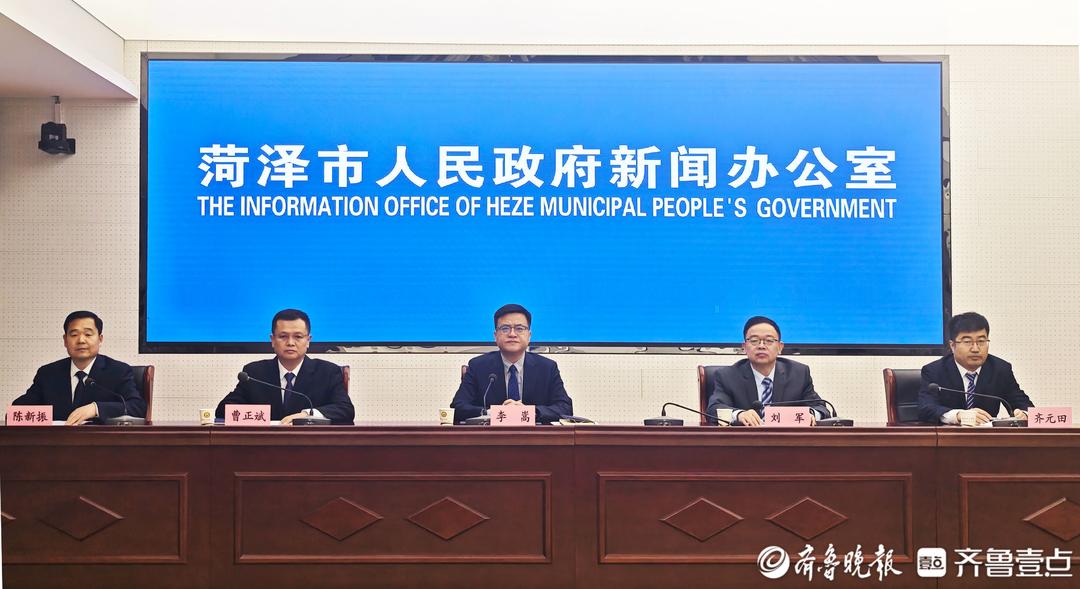
菏泽:推进省级幸福河湖建设 做好河湖生态价值转化
Qi Lu Wan Bao· 2025-12-23 12:32
Core Viewpoint - The Heze Municipal Government is actively promoting the construction of "Happy Rivers and Lakes" as part of its ecological and environmental improvement initiatives, focusing on the efficient transformation of ecological value from rivers and lakes [3][4]. Group 1: Progress and Achievements - The Heze Water Authority has made significant progress in implementing the "Happy Rivers and Lakes" initiative, emphasizing responsibility and effective work execution [3]. - The city is conducting the "Ten Thousand Villages and Thousand Rivers" action to align with provincial standards for the construction of Happy Rivers and Lakes, ensuring timely completion of annual construction tasks [4]. Group 2: Local Adaptation and Community Focus - The approach taken is tailored to local conditions, leveraging the unique natural endowments of rivers and lakes to enhance agricultural, industrial, and tourism activities, thereby ensuring better ecological value transformation [5]. - The focus is on improving the happiness and satisfaction of local communities, with a goal of high-quality upgrades to beautiful and happy rivers and lakes that provide tangible benefits to the populace [5]. Group 3: Ecological Value Transformation Mechanism - The initiative includes exploring mechanisms for the transformation of ecological value, conducting assessments of ecological products from rivers and lakes, and identifying potential for ecological value enhancement [6]. - The plan involves developing a high-quality water economy and promoting successful case studies of ecological value transformation to market more ecological products [6].

从“补短板”到“强功能”,日照构建现代水网新格局
Qi Lu Wan Bao· 2025-12-11 08:53
Core Insights - The article discusses the progress and initiatives of Rizhao City in enhancing water resources management and infrastructure during the "14th Five-Year Plan" period, focusing on high-quality development in water conservancy. Group 1: Water Infrastructure Development - The total investment in water conservancy during the "14th Five-Year Plan" period reached 7.3 billion yuan, indicating an acceleration in water infrastructure development [2] - Key projects include the completion of the first phase of the urban water supply emergency backup source project and the construction of the Fuduan River underground reservoir, significantly improving daily water supply capacity [2] - The modern water network is being rapidly established, with a cumulative restoration and addition of various water conservancy facilities reaching 30.31 million cubic meters [2] Group 2: Water Disaster Prevention and Management - The water and drought disaster prevention system has shifted from passive response to proactive early warning and precise scheduling, achieving significant advancements in information technology and planning [2] - The city successfully managed extreme weather events, ensuring no casualties and maintaining the integrity of critical infrastructure [2] Group 3: Water Ecological Governance - The governance of rivers and lakes has evolved from merely cleaning up to building "happy rivers and lakes," with increased digital and social participation [3] - The water and soil conservation rate has improved to 75.35%, with over 300 square kilometers of water and soil erosion area treated during this period [3] - The collection of water and soil conservation compensation fees is projected to reach 49.97 million yuan by 2025, reflecting a 70.56% increase compared to previous years [3] Group 4: Water Resource Management - Water resource management has transitioned from extensive use to refined control, with significant progress in building a water-saving society [4] - The daily water supply capacity for industrial use has reached 350,000 cubic meters, supporting the development of the port industry [4] - The city aims to control total water usage to 674 million cubic meters by 2025, with a 15% reduction in water usage per unit of GDP compared to 2020 [4] Group 5: Enhancing Public Welfare - Rural water supply has seen historic improvements, with 99% of the rural population covered by centralized water supply systems [5] - A total of 3.5 billion yuan has been allocated for post-relocation support for reservoir migrants, improving living conditions and promoting regional industrial development [5] - The water conservancy system is committed to further enhancing its role in supporting high-quality development and ensuring water security for the community [5]
湖北全面推进幸福河湖建设迈入新阶段 到2030年省级水网工程覆盖度达90%
Chang Jiang Shang Bao· 2025-08-25 08:34
Core Viewpoint - Hubei Province is advancing the construction of "Happy Rivers and Lakes" through a comprehensive approach that emphasizes ecological balance and sustainable development, aiming for significant progress by 2030 [1][4]. Group 1: Implementation of Policies - The Hubei Provincial Government has released the "Implementation Opinions on Promoting the Construction of Happy Rivers and Lakes," outlining 15 specific measures across five areas, with a goal for 90% coverage of provincial water network projects by 2030 [1][5]. - The province has implemented a river and lake chief system since 2017, focusing on various actions to protect water quality and improve ecological conditions [2][3]. Group 2: Water Resource Management - Hubei has a total water area of 2,706 square kilometers and 4,229 rivers longer than 5 kilometers, presenting both opportunities and challenges for water management [2]. - The province aims for a 95.8% rate of good water quality at national control sections by 2024, an increase of 5.4 percentage points from the end of the 13th Five-Year Plan [1][3]. Group 3: Ecological and Environmental Goals - The "Happy Rivers and Lakes" initiative includes enhancing water safety, improving water quality, and restoring ecosystems, with specific targets for ecological flow guarantees and soil conservation rates by 2030 [6][7]. - The initiative also emphasizes the importance of cultural heritage and the value of water resources, aiming to enhance the ecological carrying capacity of the region [4][6]. Group 4: Economic and Financial Strategies - The implementation of assetization of water resources is proposed, including water rights trading and ecological product value realization, to promote sustainable financing for river and lake projects [7]. - The government encourages the development of "River and Lake + Green Low-Carbon Industries" to leverage high-quality water resources for economic benefits, fostering a cycle of ecological and industrial development [7].