
金融信托

Search documents
信用风险年度回顾与展望
Si Lu Hai Yang· 2026-02-25 01:56
1. Report Industry Investment Rating No relevant content provided. 2. Core Views of the Report - Non - standard risk events have significantly eased in 2025, hitting a new low since 2019, mainly due to the implementation of debt - resolution policies, increased attention and initiative of urban investment platforms in non - standard product payments, and bank replacement of non - standard debts [2][6][26][65]. - However, the risk mitigation is structurally differentiated. Some regions and industries still face risks, and the resolution and clearance of non - standard credit risks remain a long - term task. The potential for non - standard risks to spread to priority debts such as bonds still needs attention [3][26][65]. - The debt security of the real estate industry depends on sales revenue. Without improvement in sales, risks are difficult to eliminate unless there is strong support from the actual controller. Tail risks in industries such as industrial holding, diversified finance, and construction also need to be vigilant [3][26][66]. 3. Summary by Directory 3.1 Non - standard Default Overall Situation - From 2018 - 2025, there were 7,219 non - standard risk events in total. The number of "default events" reached a peak of 978 in 2023, then decreased significantly in 2024 and 2025, with 165 events in 2025, a decrease of 544 from the previous year [6]. - For different financing methods, the number of trust plan risk events increased from 319 in 2019 to 570 in 2023, then decreased to 210 in 2025. The number of directional financing risk events increased significantly in 2023 - 2024 and decreased to 23 in 2025. The number of non - standard events in financing methods such as financial leasing, private funds, collective wealth management, and fund special accounts decreased year by year [6]. - For bond - issuing entities, the number of non - standard risk events in 2025 was 76, a significant decrease from 218 in 2024. The number of non - standard default events decreased by 86 in 2025 compared with the previous year, and the number of non - standard risk warning events decreased by 56 [8][10]. 3.2 Analysis of Urban Investment Non - standard Risk Events 3.2.1 By Province - Guizhou and Shandong had the most non - standard risk events among urban investment bond - issuing entities since 2018. Guizhou's non - standard default events decreased to 4 in 2025 from a peak of 55 in 2023. Shandong's non - standard default events decreased to 9 in 2025 after a sharp increase in 2023 - 2024. Henan, Yunnan, and Shaanxi also saw a significant decrease in non - standard default events in 2025, and Inner Mongolia had no new non - standard risk events in 2025 [28]. 3.2.2 By Urban Investment Hierarchy - Non - standard defaults of urban investment enterprises mainly occurred at the district - county and prefecture - level city levels. The number of non - standard default events of district - county - level urban investment platforms decreased to 12 in 2025 from 110 in 2023. The number of non - standard default events of prefecture - level city urban investment platforms also decreased in 2025. In 2025, there were no new non - standard default events at the provincial level [34]. 3.2.3 By Prefecture - level City (including Development Zones within Prefecture - level Cities) - The top five prefecture - level cities with the most non - standard default events were Zunyi, Weifang, Xi'an, Kunming, and Qiannan Buyi and Miao Autonomous Prefecture. In 2025, Weifang and Kunming had new non - standard default events, and Honghe Hani and Yi Autonomous Prefecture had its first non - standard default event at the prefecture - level city level [34]. 3.2.4 By District - county - The top five district - county regions with the most non - standard default events were Hanting District of Weifang, Licang District of Qingdao, Boshan District of Zibo, Dushan County of Qiannan Buyi and Miao Autonomous Prefecture, and Huichuan District of Zunyi. In 2025, the non - standard default events in most districts and counties decreased, and 50 districts and counties had no new non - standard risk events [39]. 3.2.5 Bond - issuing Urban Investment Entities with Multiple Non - standard Defaults - In 2025, Shaanxi, Shandong, and Yunnan were still areas with serious non - standard defaults of urban investment. Urban investment entities in Kunming of Yunnan, Licang District of Qingdao, Hanting District of Weifang, Mengzi City of Honghe Hani and Yi Autonomous Prefecture, and Weifang Binhai Economic and Technological Development Zone had 2 or more non - standard default events [44]. 3.2.6 Bond - issuing Urban Investment Entities with First Non - standard Defaults - In 2025, 5 bond - issuing urban investment entities had their first non - standard default, located in Shaanxi, Shandong, Sichuan, Fujian, and Yunnan. Rizhao Donggang District, Mianyang Jiangyou City, Putian Hanjiang District, and Honghe Hani and Yi Autonomous Prefecture were new areas with non - standard defaults [46]. 3.3 Analysis of Characteristics of Non - standard Risk Events in 2025 - In 2025, there were 82 non - standard risk events and 69 repayment events. Trust plans had the most non - standard risk events (44 times), including 30 default events. The industries with non - standard risk events were mainly urban investment and real estate development, accounting for 48% and 30% respectively [49][55]. - For bond - issuing entities, there were 23 non - standard risk events, including 19 default events and 4 extension events; 12 repayment events and 9 partial repayment events. In terms of regions, Shandong had the most non - standard risk events (6 times), followed by Shaanxi and Fujian (4 times each) [49][55]. - For urban investment bond - issuing entities, there were 9 default events and 2 extension events, involving 8 entities. The default events were mainly in Shandong, Shaanxi, and Guizhou. In terms of hierarchy, non - standard risk events occurred at the district - county and national new - area levels [58]. - There were 16 non - standard repayment events of urban investment bond - issuing entities in 2025, including 10 full - repayment events and 6 partial - repayment events. Other industries had 12 non - standard risk events, mainly in the real estate industry [59][63]. 3.4 Summary - Non - standard risk events have improved significantly in 2025, but the risk mitigation is structural. The non - standard debt is still in an inferior position in the repayment order, and the debt continuation in weak regions is still difficult. The potential spread of non - standard risks to priority debts needs attention [65][66]. - In the real estate industry, debt security depends on sales revenue. Tail risks in industries such as industrial holding, diversified finance, and construction also need to be vigilant [66].
昔日广州首富梦碎:张劲领刑无期,雪松控股百亿非法集资帝国崩塌
Guan Cha Zhe Wang· 2026-02-11 10:11
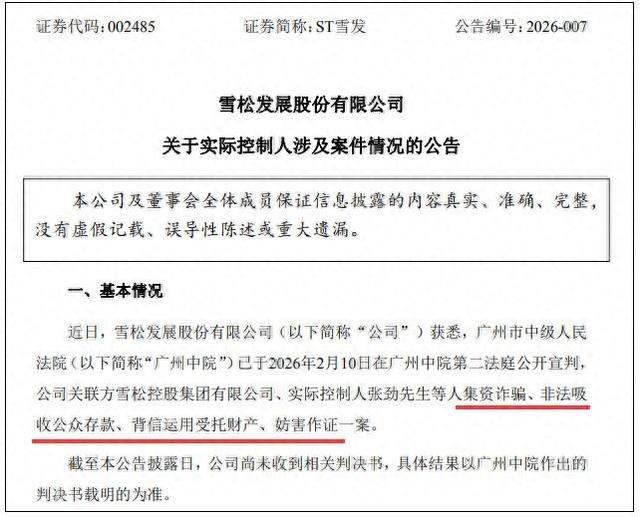
Core Viewpoint - The illegal financial operations of Snowball Holdings Group and its actual controller Zhang Jin have been concluded with a court ruling, marking a significant warning against blind expansion and crossing financial boundaries in private capital [1][10]. Group 1: Legal Proceedings and Outcomes - On February 10, 2026, the Guangzhou Intermediate People's Court publicly sentenced Zhang Jin to life imprisonment and imposed a fine of 1.1 billion yuan on Snowball Holdings for multiple charges including fundraising fraud and illegal public deposit absorption [1][10]. - The case involved nearly 8,000 investors and hundreds of billions in funds, highlighting the severe consequences of financial misconduct [1][10]. - The court found that Snowball Holdings illegally raised funds exceeding hundreds of billions through over 350 unauthorized financial products, violating financial regulations and criminal laws [10]. Group 2: Company Background and Expansion - Zhang Jin, born in 1971, founded Junhua Group in 1997, which later evolved into Snowball Holdings, aiming for ambitious "trillion" targets in sales, assets, and market value [3][4]. - In 2016, Snowball Holdings achieved 157 billion yuan in revenue, becoming the top private enterprise in Guangzhou and consistently ranked in the Fortune Global 500 for four consecutive years [3][4]. Group 3: Financial Misconduct and Crisis - Starting in January 2020, Snowball Holdings began issuing unauthorized financial products under the guise of "supply chain finance," raising approximately 59.6 billion yuan through these schemes [4][5]. - By 2021, the company faced liquidity issues as multiple financial products defaulted, leading to a public apology from Zhang Jin acknowledging the inability to pay interest on these products [5][6]. - The situation escalated into a judicial investigation in May 2023, with authorities taking action against Zhang Jin and other key figures [6][8]. Group 4: Market Reaction and Future Implications - Following the court ruling, the stock of ST Snowball experienced a surge, with three consecutive trading limits reached, closing at 5.05 yuan per share, despite the company forecasting a loss of 174 million to 245 million yuan for 2025 [11][13]. - The collapse of Snowball Holdings serves as a cautionary tale for the market, emphasizing the importance of adhering to legal and regulatory frameworks in capital operations [13].

证监会:首批商业不动产投资信托基金已申报受理
Sou Hu Cai Jing· 2026-01-30 13:56
Core Viewpoint - The China Securities Regulatory Commission (CSRC) has officially launched a pilot program for commercial real estate investment trusts (REITs), with the first batch of projects already submitted for approval and set to be listed soon [1] Group 1: Pilot Program Launch - The CSRC has issued a notice regarding the pilot program for commercial real estate REITs, marking a significant step in the development of this investment vehicle in China [1] - The first batch of commercial real estate REITs has been accepted for listing, with ongoing efforts to revise supporting regulations and systems [1] Group 2: Asset Distribution and Types - The assets involved in the first batch of REITs are widely distributed across major cities such as Beijing, Shanghai, Guangzhou, and Shenzhen, including various types of high-quality commercial real estate like commercial complexes, retail spaces, office buildings, and hotels [1] - The projects adhere to compliance and value prioritization principles, aligning with policy guidance and market investment needs [1] Group 3: Market Overview - Currently, there are 77 REIT products listed in the market, with a total issuance scale of 207 billion yuan, indicating a stable overall operation [1] - China has become the largest REITs market in Asia and the second largest globally, progressing towards a more diversified and larger scale [1]
【财经分析】商产REITs开闸:盘活万亿存量 重塑不动产金融生态
Xin Hua Cai Jing· 2026-01-27 14:09
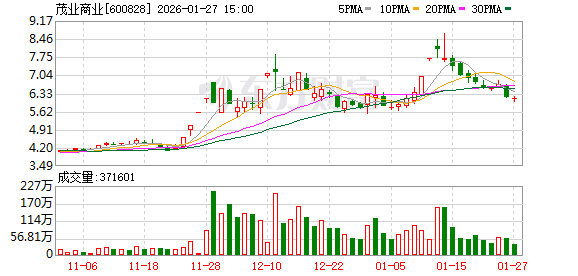
Core Viewpoint - The launch of commercial real estate REITs by Maoye Commercial Co., Ltd. marks a significant step in China's real estate market, transitioning from expansion to optimization and high-quality development [2][3][8] Group 1: Market Response and Policy Implications - The rapid response of the market to the announcement reflects companies' keen grasp of policy benefits, with the new policy aimed at revitalizing existing commercial real estate and broadening financing channels [3][4] - The introduction of commercial real estate REITs is seen as a crucial signal for the normalization of REITs in the commercial real estate sector, promoting a virtuous cycle in the industry [3][4] Group 2: Industry Transformation and Opportunities - The real estate sector is transitioning from high-leverage, fast turnover developers to investment and operation-focused entities, with REITs serving as a major benefit for companies to revitalize assets and alleviate heavy asset investment pressures [4][6] - The formal launch of commercial real estate REITs signifies a new phase for China's REITs market, with expectations of significant growth in market size, potentially surpassing Japan and Singapore during the 14th Five-Year Plan [4][6] Group 3: Regulatory Changes and Market Dynamics - The new regulations for commercial real estate REITs include lowering yield requirements and streamlining the approval process, which will enhance market vitality and address industry pain points [5][8] - The expected market size for public REITs could exceed 500 billion yuan within 1-2 years, with further growth anticipated as private enterprises increase participation [6][8] Group 4: Investment Focus and Future Outlook - The focus for investors is likely to be on high-quality office buildings in major cities, with initial projects expected to be concentrated in first-tier cities like Shanghai, Beijing, and Shenzhen [7][8] - The commercial real estate REITs policy is a significant step towards the marketization of China's real estate financial market, aiming to create a dual-driven model of infrastructure and commercial property [8]
东北首单公募REITs分红业绩优于预期
Xin Hua Cai Jing· 2026-01-22 07:13
Group 1 - The core viewpoint of the news is that the first public REIT in Northeast China, the CITIC Construction Investment Shenyang International Software Park REIT (referred to as Shenyang REIT), has successfully launched its first dividend distribution, exceeding the forecasted levels in its prospectus, demonstrating strong cash flow capabilities of quality underlying assets [1][2] - The Shenyang REIT plans to distribute 60 million yuan, which accounts for approximately 92.13% of the distributable amount of 65.1263 million yuan for 2025, with a notable increase of 14.83% compared to the forecasted value in the prospectus [1] - Industry insiders highlight that the Shenyang REIT's performance is attributed to solid asset operations and prudent project valuations, emphasizing a strategy focused on realistic valuations and the exclusion of uncertainties during the preparation and issuance phases [1] Group 2 - The stable operation of the Shenyang REIT serves as a positive demonstration for revitalizing existing assets in the region, validating the resilience of the value of Shenyang's digital economy industry assets through its robust cash flow distribution [2] - The project illustrates that through standardized public REIT operations, quality assets in Northeast China can effectively connect with capital markets, providing valuable insights for further utilizing financial tools to revitalize infrastructure assets and promote high-quality development of the real economy in Liaoning and the Northeast region [2]

长三角生态绿色一体化发展示范区首单取水权跨省市+水信托交易在沪落地
Xin Hua Cai Jing· 2026-01-16 05:46
Core Viewpoint - The first cross-provincial water rights transaction and water trust deal in the Yangtze River Delta Ecological Green Integrated Development Demonstration Zone has been successfully executed, promoting efficient water resource utilization and supporting major projects in the region [1][3]. Group 1: Water Rights Transaction - The first cross-provincial water rights transaction involved the purchase of 60,000 cubic meters of water rights by a subsidiary of China Railway 10th Bureau for the construction of the intercity railway in the demonstration zone [1]. - This transaction is part of a broader initiative to facilitate the orderly flow of water resources across regions and support the construction of eco-friendly high-quality development models [1][4]. Group 2: Water Trust Mechanism - The "Water Trust" mechanism allows enterprises to purchase water rights based on their specific needs, enhancing flexibility in water usage for construction projects and municipal greening [3]. - The Shanghai Environmental Energy Exchange has initiated the "Water Trust" to deepen the reform of water pricing and rights, providing a replicable model for national water rights trading [3][4]. Group 3: Project Details and Impact - The intercity railway project, which includes a total shield tunneling length of 4,242.44 meters, is expected to be completed within 851 calendar days, with water resource planning being a critical factor for construction progress [2]. - The successful execution of the water rights transaction ensures that the construction can proceed without delays, contributing to the integration of regional infrastructure and economic development [2][3]. Group 4: Trading Volume and Achievements - Since the launch of the "Water Trust," the cumulative trading volume has exceeded 1.4 million cubic meters, demonstrating a significant transformation in water conservation benefits into trust dividends [4]. - The Shanghai Environmental Energy Exchange has facilitated over 140,000 cubic meters of water rights transactions in the demonstration area, supporting various construction and greening needs [4].
我国公募REITs迎“开门红”,“存量盘活”与“高质量发展”并重
Huan Qiu Wang· 2026-01-12 01:08
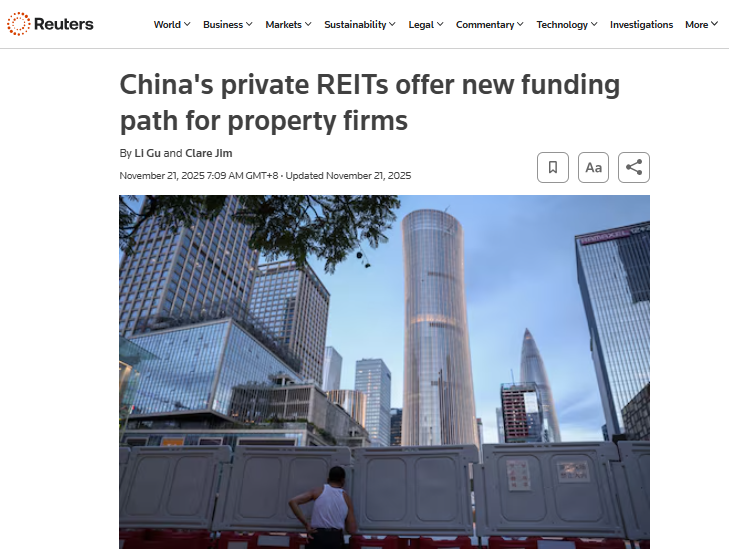
Group 1 - The public REITs market in China experienced a positive start in 2026, with optimism driven by policy benefits and improved market ecology, leading to high-quality development opportunities [1] - In 2025, the REITs market raised a record $12 billion, providing financing avenues for cash-strapped developers, with 40 applications planned to raise approximately 105 billion yuan, compared to only 7 applications totaling 13 billion yuan in 2024 [1] - Developers are attracted to the faster approval process and asset diversification of REITs, which include not only shopping centers but also office buildings and hotels, potentially reshaping business models and valuations in the real estate sector [3] Group 2 - The average yield of Chinese REITs is estimated at 5%, higher than the 3%-4% yield of listed companies, compensating investors for lower liquidity and longer lock-in periods [3] - Insurance companies and Chinese brokerage asset management departments have become major investors in private REITs, drawn by stable income and competitive yields in a low-interest-rate environment [3] - Market participants note that while REITs may not directly restore developers' financial health, they face challenges in acquiring high-quality assets [3]
一根藤上一颗瓜,地头长出金疙瘩
Xin Hua Ri Bao· 2026-01-10 21:19
Core Insights - The article discusses the upgrade of the watermelon industry in Suzhou, particularly focusing on the new brand "Yumeiren Huatianguo," which sold out shortly after its launch last year [1] - The initiative is supported by a charitable trust fund aimed at revitalizing local agriculture and enhancing the quality of watermelon production [2] Group 1: Industry Development - The new watermelon brand "Yumeiren Huatianguo" was developed using AI to create a name that reflects both the geographical indication of the region and its historical significance [1] - The local watermelon industry has a history of over 40 years but faced challenges due to slow technological advancements and traditional farming methods, leading to price drops as low as 0.5 yuan per pound [1] - The introduction of a charitable trust fund has provided financial support for building high-standard greenhouses and irrigation systems, which has improved production quality [2] Group 2: Market Performance - The first batch of over 11,000 watermelons produced last year received positive consumer feedback, with many noting a nostalgic taste [2] - The new watermelons, certified as "green food," have successfully entered the high-end market, with wholesale prices stabilizing between 8 to 10 yuan per pound, resulting in over 200,000 yuan in collective income for the village [2] - The new greenhouse model allows for winter seedling cultivation and staggered market entry, avoiding price wars typical in peak seasons [2] Group 3: Community Engagement - The initiative has attracted interest from local farmers, with 30 households applying to participate in the new farming model, each planning to cultivate 3 to 4 acres [3] - The charitable trust fund also supports community projects, such as street lighting, enhancing overall living conditions in the village [3] - The "Suxin Hongshan Charity Trust" was recognized with the "Most Influential Charity Project" award, highlighting its role in promoting rural revitalization and community welfare [3]
证监会大动作,中国资本市场迎重要创新
Xin Lang Cai Jing· 2025-12-31 14:00
Core Viewpoint - The official launch of the commercial real estate public REITs pilot program by the China Securities Regulatory Commission (CSRC) marks a significant innovation in the Chinese capital market, expanding the REITs market from infrastructure to commercial real estate, and establishing a new phase of parallel development between the two sectors [3][15][23] Group 1: Market Expansion and Development - The pilot program signifies a key expansion of the public REITs market in China, moving towards a multi-layered REITs market ecosystem with greater breadth, depth, and vitality [3][15] - As of December 27, 2025, there are 78 listed REITs products with a total financing of 209.9 billion yuan and a total market value of 219.9 billion yuan, indicating a steady growth in the infrastructure REITs market [3][15] - The CSI REITs total return index has increased by 19% since 2024, highlighting the growing importance of REITs as a major asset class [3][15] Group 2: Strategic Intent and Functionality - The introduction of commercial real estate REITs aligns with the macro strategy of "activating stock and optimizing increment," providing standardized equity financing solutions for a new model of real estate development [4][16] - The transformation of substantial stock assets in quality commercial properties into tradable financial products will open new equity financing channels for holding enterprises and fundamentally shift real estate companies from a "development and sales" model to a "long-term holding and professional operation" model [4][16] - This initiative also offers investors, particularly long-term funds like insurance and pension funds, a new asset allocation choice with stable cash flow characteristics, thereby broadening channels for residents' property income [4][16] Group 3: Regulatory Framework and Implementation - The CSRC has established a classification management system for REITs based on the distinct characteristics of commercial real estate and infrastructure, marking a significant step towards a mature market with comprehensive asset categories [5][17] - The regulatory framework includes a structured system of rules, consisting of one main announcement, three supporting arrangements from the CSRC, and multiple self-regulatory organization rules, ensuring clarity of responsibilities and effective risk control [7][19] - The pilot program will initially focus on high-quality projects in core urban areas and support well-governed companies, including listed companies and state-owned enterprises, to ensure a high standard of implementation [10][21] Group 4: Risk Management and Oversight - A robust regulatory and risk management network will be in place to oversee the REITs pilot, emphasizing strict compliance and quality control during the initial phase of project submissions [9][22] - The principle of "申报即担责" (responsibility upon application) will be enforced, ensuring that all market participants, including intermediaries, adhere to high standards of due diligence and investor protection [22][11] - The regulatory body will maintain a focus on problem and risk orientation, ensuring effective monitoring and timely handling of any violations or risk events to maintain market order [11][22]

深交所修订发布REITs配套自律监管规则
Xin Lang Cai Jing· 2025-12-31 11:44
Core Viewpoint - The Shenzhen Stock Exchange (SZSE) has released new regulations and guidelines for the public offering of real estate investment trusts (REITs), specifically focusing on commercial real estate, to enhance the REITs market and promote high-quality development [1][2]. Group 1: Regulatory Framework - The SZSE has established a "1+7+6" regulatory framework for commercial real estate REITs, which includes one business method, seven business guidelines, and six business instructions to solidify the institutional foundation [2]. - New verification requirements have been introduced for commercial real estate REITs, focusing on operational and financial conditions, asset evaluation, and management arrangements, with differentiated requirements based on business types [2]. - The review mechanism has been improved to clarify procedures, shorten review timelines, and optimize entry requirements related to compliance, fund usage, and fund manager roles [2]. Group 2: Market Development - The SZSE aims to enhance the issuance pricing arrangements by allowing a high-price exclusion mechanism and prioritizing allocations to investors who recognize the long-term investment value of REITs [2]. - The expansion mechanism has been refined to detail the requirements for purchasing real estate projects and to shorten the application timelines for new acquisitions [2]. - Information disclosure during the ongoing period has been strengthened, with detailed requirements for trading-related announcements and temporary disclosures that trigger trading suspensions [2]. Group 3: Future Directions - The SZSE will continue to implement the spirit of the 20th Central Committee's Fourth Plenary Session and the Central Economic Work Conference, focusing on the high-quality development of the REITs market [3]. - There will be an emphasis on building a clear, efficient, standardized, and transparent REITs regulatory system while enhancing the reserve of quality projects [3]. - The goal is to ensure the smooth launch of commercial real estate REITs and to improve regulatory capabilities and service levels to better support the real economy [3].