永久裁员潮

Search documents
“永久裁员”时代来临,这个行业受冲击最严重
Xin Lang Cai Jing· 2025-12-16 19:17
Core Insights - The article highlights a significant wave of layoffs in the U.S., with over 1.1 million job cuts announced by companies as of November 2025, marking a level not seen since 1993, excluding the pandemic year of 2020 [1][3][4] Group 1: Layoff Trends - The technology sector has been the hardest hit, with over 150,000 layoffs in 2025 alone, as companies adjust their workforce and accelerate automation [3][5] - Cumulatively, U.S. employers reported 1.1708 million layoffs in the first eleven months of 2025, a 54% increase compared to the same period in 2024, with November alone seeing 71,300 layoffs, the highest for that month since 2022 [3][4] - The trend has shifted from large-scale layoffs to more frequent small-scale "rolling layoffs," with the proportion of such layoffs rising from less than half in the mid-2010s to over half in 2025 [6][9] Group 2: Economic Context - The economic signals in 2025 are contradictory, with concerns about job security amid an AI bubble and rising political issues regarding affordability for lower-income workers [4][5] - Analysts predict a "rolling recession" followed by a "rolling recovery," but the current recovery appears limited to financial metrics, with continued declines in white-collar job demand [5][12] Group 3: Labor Market Dynamics - Recruitment demand has also weakened, with companies planning to hire only 497,200 workers in the first eleven months of 2025, a 35% drop and the lowest since 2010 [11] - The labor market exhibits a "K-shaped structure," where large companies are restructuring successfully while small businesses face significant challenges due to rising costs and weak demand [11][12] Group 4: Impact of AI - The wave of layoffs is partly attributed to the adoption of artificial intelligence, with over 70,000 positions cut due to automation efforts [12] - The balance of power in the workplace is shifting towards employers, with remote workers facing diminished career advancement opportunities, leading to a culture of insecurity and increased workloads for remaining employees [12]

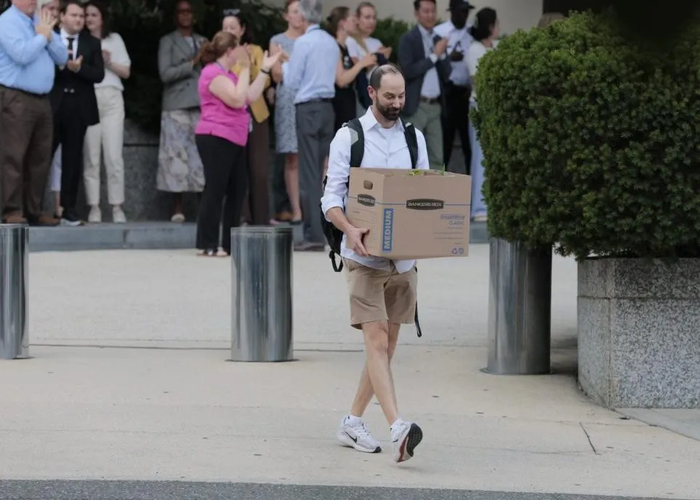
“永久裁员”时代来临,这个行业受冲击最严重
财富FORTUNE· 2025-12-13 13:07
Core Viewpoint - The article discusses the ongoing trend of "rolling layoffs" in the U.S. job market, highlighting the shift from large-scale layoffs to more frequent, smaller layoffs, which has created a pervasive sense of anxiety among white-collar workers [1][5][15]. Group 1: Layoff Trends - As of November 2025, U.S. companies have announced layoffs affecting 1.1 million workers, marking the sixth time this level has been surpassed since 1993 [1][3]. - The technology sector has been the hardest hit, with over 150,000 layoffs in 2025, while other industries like telecommunications, food, retail, and media have also experienced significant layoffs, some with year-on-year increases exceeding 100% [3][5]. - The cumulative layoffs for the first 11 months of 2025 reached 1.1708 million, a 54% increase compared to the same period in 2024, with November alone seeing 71,300 layoffs, the highest for that month since 2022 [3][4]. Group 2: Economic Signals - The current economic landscape presents contradictory signals, with a "rolling recession" followed by a potential "rolling recovery" starting in April 2025, according to Morgan Stanley analysts [5]. - However, analysts from Goldman Sachs and Bank of America argue that the recovery is primarily financial, with stock prices and profits rising while demand for white-collar jobs continues to decline [5][15]. - The phenomenon of "K-shaped economy" is evident, where the wealthiest 10% contribute nearly half of consumer spending, while lower-income individuals face increasing financial strain [5][15]. Group 3: Employment Market Dynamics - The shift to "permanent layoffs" has seen small-scale layoffs (affecting fewer than 50 employees) rise to over half of all layoffs in 2025, compared to less than half in the mid-2010s [6][8]. - This new model allows companies to adjust workforce sizes continuously without the reputational damage associated with large-scale layoffs, but it leads to chronic internal issues such as increased workloads and diminished job security [6][8]. - Job seekers' bargaining power has decreased, with the "job rejection rate" declining for two consecutive years, forcing many to accept less desirable positions [9][12]. Group 4: Structural Challenges - Recruitment demand has also weakened, with companies planning to hire only 497,200 workers in the first 11 months of 2025, a 35% drop from the previous year, marking the lowest level since 2010 [12]. - The labor market exhibits a "K-shaped structure," where large companies are expanding due to cash flow advantages while small businesses are contracting under cost pressures [12][15]. - The impact of artificial intelligence on job cuts is significant, with over 70,000 positions attributed to AI since 2023, prompting a reevaluation of automation risks and transformation paths in various industries [14][15].