
汽车产业标准化

Search documents
竞争力、国际化、技术多元……借助关键词透视新能源汽车出口多点开花劲头足
Yang Shi Wang· 2025-10-30 06:21
Core Viewpoint - The Chinese government is committed to advancing the standardization of the automotive industry, aiming to enhance its openness and competitiveness in the global market [1][5]. Group 1: Standardization Initiatives - The Chinese government has accelerated the development and revision of key automotive standards since 2025, including mandatory national standards for autonomous driving systems and electric vehicle energy consumption [3]. - A comprehensive standard system covering the entire automotive industry chain, including research, production, usage, and recycling, will be established during the 14th Five-Year Plan period [5]. - The government plans to lead technological breakthroughs through standardization, focusing on areas such as automotive artificial intelligence, solid-state batteries, and automotive chips [5]. Group 2: International Collaboration - China aims to actively participate in international standard-setting activities, sharing its experiences in automotive standardization to contribute to global sustainable development [7]. - The establishment of the "China-Africa Automotive Standardization Cooperation Mechanism" will facilitate effective alignment between Chinese and African automotive standards, focusing on electric vehicles and low-carbon technologies [10]. - The China Automotive Standard International Center in Bangkok has been established to enhance international collaboration in automotive standards with Southeast Asia, South Asia, and the Australia-New Zealand region [12]. Group 3: Digital Platforms and Networks - The China Automotive Technology Research Center has launched a global automotive standards digital platform, covering over 90% of industry standard innovation application scenarios [14]. - China has built a multi-level international collaboration network in automotive standards, leading to the publication of 17 international standards and ongoing work on 19 additional standards [16]. Group 4: Export Growth and Market Diversification - In the first three quarters of 2025, China's electric vehicle exports reached 2.32 million units, a 52% increase year-on-year, with September alone seeing 300,000 units exported, up 66% [22]. - The market for Chinese electric vehicles is diversifying, with significant growth in exports to the UAE, Mexico, and the UK, reflecting improved product competitiveness [24][26]. - Europe remains a core market for Chinese electric vehicle exports, with notable demand from Belgium and the UK, while the Middle East is emerging as a rapidly growing region [28].

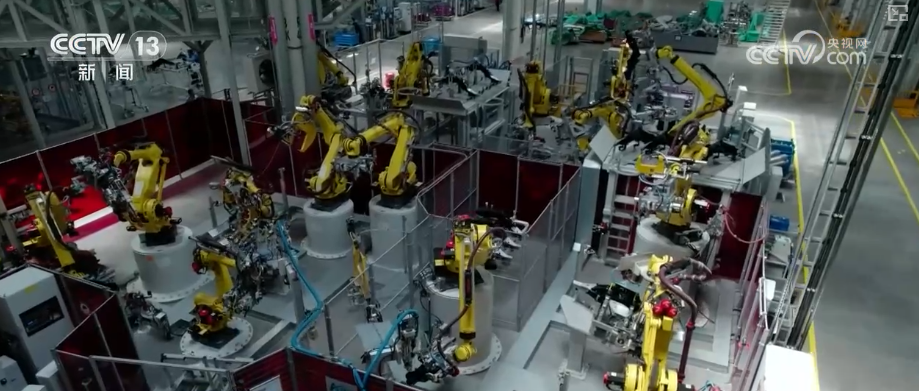
视频丨我国将持续推进汽车产业标准化建设 加快“走出去”步伐
Yang Shi Xin Wen· 2025-10-30 04:23
Core Viewpoint - China is committed to advancing the standardization of its automotive industry, enhancing the openness of automotive standards, and establishing a comprehensive standard system covering the entire automotive value chain during the 14th Five-Year Plan period [1][3]. Group 1: Standardization Initiatives - The Ministry of Industry and Information Technology (MIIT) is accelerating the development of key automotive standards, including mandatory national standards for autonomous driving systems and electric vehicle energy consumption [1]. - China has released the world's first mandatory national standard for electric vehicle energy consumption limits and is working on specialized standards for safety requirements, such as hidden door handles [1][3]. - Future efforts will focus on standardizing cutting-edge technologies like automotive artificial intelligence, solid-state batteries, and automotive chips, as well as establishing carbon footprint standards for new energy vehicles [3]. Group 2: International Collaboration - China is enhancing its participation in international standardization activities, sharing its experiences in automotive standardization to contribute to global sustainable development [5]. - The establishment of the "China-Africa Automotive Standardization Cooperation Mechanism" aims to align Chinese standards with African standards in areas like electric vehicles and low-carbon technologies [5][7]. - The opening of the China Automotive Standardization Center in Bangkok represents a significant regional initiative to foster international collaboration in automotive standards with Southeast Asia and Oceania [7]. Group 3: Digital Platforms and Networks - The China Automotive Technology Research Center has launched a global automotive standards digital platform, covering over 90% of industry standard innovation applications and including more than 6,000 regulatory texts [9]. - China has established a multi-level international collaboration network in automotive standards, leading the publication of 17 international standards and participating in the development of various UN technical regulations [11]. Group 4: Export Growth and Market Diversification - In the first three quarters of this year, China's electric vehicle exports reached 2.32 million units, a 52% increase year-on-year, with September alone seeing 300,000 units exported, up 66% [15][17]. - The market for Chinese electric vehicle exports is diversifying, with significant growth observed in regions such as the Middle East, Mexico, and the UK, driven by improved product competitiveness [19][21]. - Europe remains a key market for Chinese electric vehicles, with Belgium and the UK showing strong demand, while the Middle East, particularly the UAE, has emerged as a rapidly growing region [21].
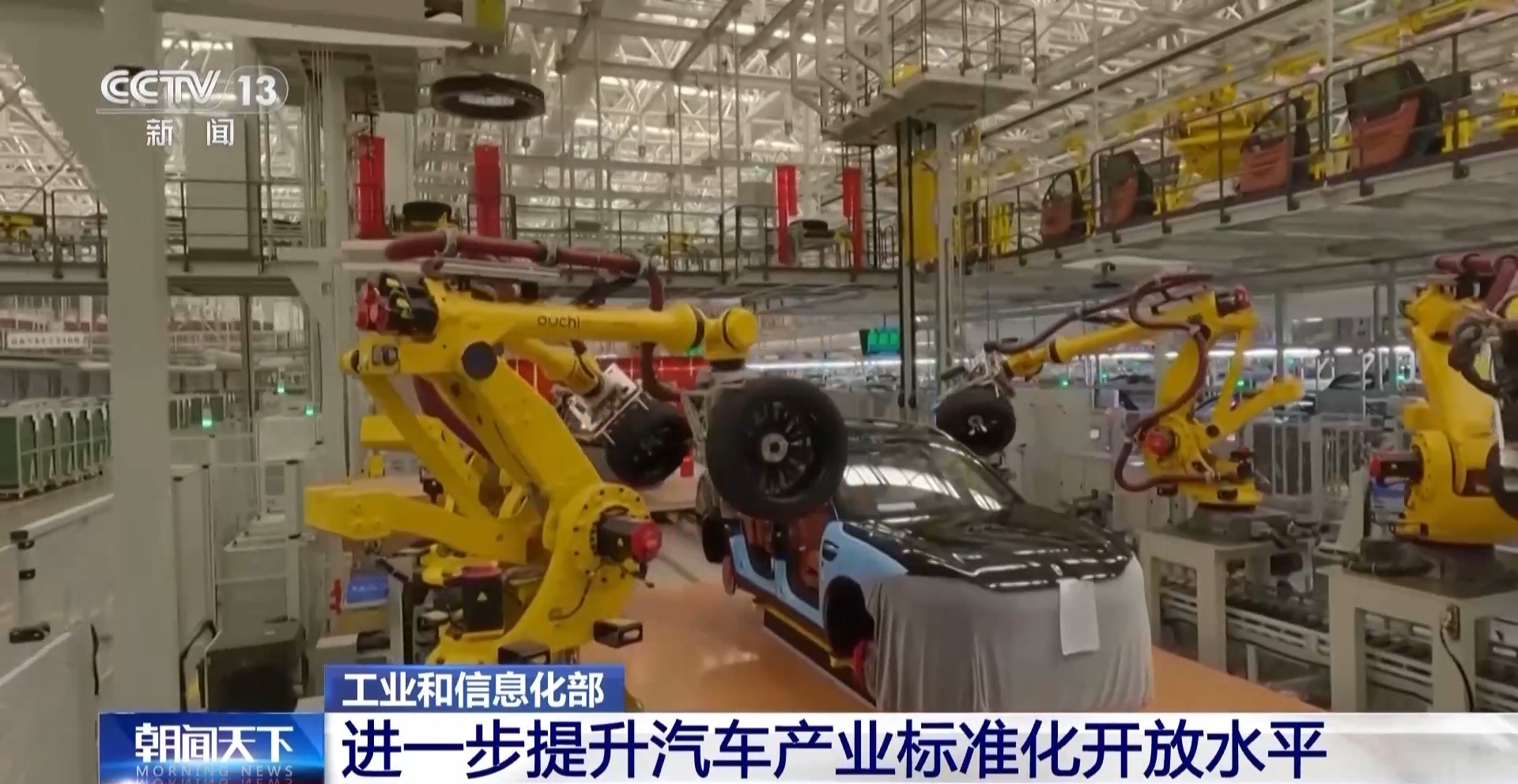
竞争力、国际化、技术多元、……借助关键词透视新能源汽车出口多点开花劲头足
Yang Shi Wang· 2025-10-30 03:32
Core Viewpoint - China is committed to advancing the standardization of its automotive industry, focusing on enhancing the openness and quality of automotive standards to support sustainable development and technological innovation [1][3][10]. Group 1: Standardization Initiatives - The Ministry of Industry and Information Technology (MIIT) plans to establish a comprehensive standard system covering the entire automotive industry chain, including research, production, usage, and recycling during the 14th Five-Year Plan period [3]. - Key areas for standard development include autonomous driving systems, intelligent connected vehicles, and new energy vehicle (NEV) energy consumption limits, with the aim of leading technological breakthroughs [1][3]. - The establishment of the "China-Africa Automotive Standardization Cooperation Mechanism" aims to align Chinese standards with African standards in electric vehicles and low-carbon technologies [6]. Group 2: International Collaboration - China is actively participating in international standard-setting activities, sharing its experiences in automotive standardization to contribute to global sustainable development [5][10]. - The opening of the China Automotive Standardization Center in Bangkok represents a strategic move to enhance collaboration with Southeast Asia, South Asia, and the Oceania region [8]. - The China Automotive Technology Research Center has launched a digital platform for global automotive standards, covering over 90% of industry standard applications and including more than 6,000 regulatory texts [8]. Group 3: Export Growth and Market Diversification - In the first three quarters of 2025, China's NEV exports reached 2.32 million units, marking a 52% year-on-year increase, with September alone seeing 300,000 units exported, a 66% increase [11]. - The European market remains the core region for NEV exports, with significant growth observed in the Middle East, particularly in the UAE, and strong performance in Southeast Asia [13]. - The diversification of export markets is attributed to the increasing competitiveness of Chinese products, with notable growth in exports to the UAE, Mexico, and the UK, exceeding 50% in some cases [13].