
汽车芯片

Search documents
国元证券每日观察-20260320
Guoyuan Securities2· 2026-03-20 05:12
Economic Indicators - The total U.S. national debt has surpassed a historical high of $39 trillion[4] - Qatar's annual LNG export volume has decreased by 17%[4] - China's general public budget expenditure from January to February increased by 3.6% year-on-year[4] U.S. Treasury Yields - The 2-year U.S. Treasury yield rose by 2.16 basis points to 3.792%[4] - The 5-year U.S. Treasury yield increased by 0.72 basis points to 3.878%[4] - The 10-year U.S. Treasury yield fell by 1.57 basis points to 4.249%[4] Stock Market Performance - The Nasdaq index closed at 22,090.69, down by 0.28%[5] - The Dow Jones Industrial Average closed at 46,021.43, down by 0.44%[5] - The S&P 500 index closed at 6,606.49, down by 0.27%[5] Commodity Prices - The price of ICE Brent crude oil was $107.59, up by 0.20%[5] - The spot price of gold in London was $4,650.50, down by 3.39%[5] - The CME Bitcoin futures price was $70,580.00, down by 0.75%[5]


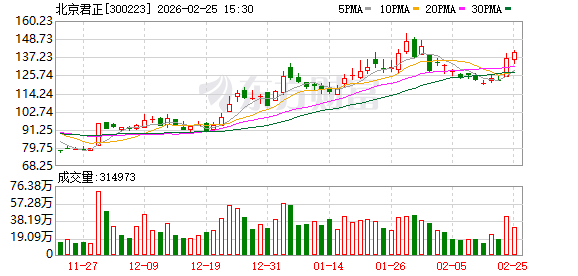
北京君正:某单一汽车品牌不会对公司业绩造成重大影响
Zheng Quan Ri Bao· 2026-02-25 12:42
Group 1 - The core viewpoint of the article is that the company's products are utilized across most automotive brands, indicating a diversified customer base that mitigates risks associated with reliance on a single brand [2] - The overall market demand for storage solutions is currently on the rise, suggesting positive growth prospects for the industry [2]


英集芯涨0.78%,成交额2.52亿元,近3日主力净流入-1.25亿
Xin Lang Cai Jing· 2026-02-25 08:16
Core Viewpoint - The company, Yingjixin Technology Co., Ltd., has shown growth in revenue and profit, particularly in the automotive electronics and consumer electronics sectors, while also being recognized as a "specialized and innovative" small giant enterprise in China [2][3][8]. Group 1: Company Overview - Yingjixin was established on November 20, 2014, and is located in Zhuhai, Guangdong Province. It specializes in the research and sales of power management and fast charging protocol chips [7]. - The company's main business revenue composition includes: 65.15% from power management, 22.02% from mixed-signal SoC, 12.33% from battery management, and 0.49% from other sources [7]. - As of September 30, 2025, the company had 15,600 shareholders, an increase of 13.58% from the previous period, with an average of 19,194 circulating shares per person, a decrease of 11.95% [8]. Group 2: Financial Performance - For the period from January to September 2025, Yingjixin achieved a revenue of 1.169 billion yuan, representing a year-on-year growth of 14.16%, and a net profit attributable to shareholders of 114 million yuan, up 28.54% year-on-year [8]. - The company has distributed a total of 171 million yuan in dividends since its A-share listing, with 155 million yuan distributed over the past three years [8]. Group 3: Market Position and Products - Yingjixin has successfully developed automotive-grade charging chips that meet AEC-Q100 standards, which have been adopted by domestic and international automotive manufacturers and are now in mass production [2]. - The company’s TWS earphone charging case chips provide a highly integrated power solution, supporting deep customization of MCU software, which reduces design complexity and material costs for customers [2]. - Yingjixin is recognized as one of the main suppliers of power management and fast charging protocol chips in the consumer electronics market, leveraging its advantages in mobile power and fast charging adapters [2]. Group 4: Industry Recognition - The company has been included in the Ministry of Industry and Information Technology's list of "specialized and innovative" small giant enterprises, which signifies its strong market position, innovation capabilities, and high market share [3].

利扬芯片股价波动上涨,业绩预告亏损收窄
Jing Ji Guan Cha Wang· 2026-02-14 01:19
Group 1 - The core viewpoint of the news highlights the recent fluctuations in the stock price of Liyang Chip (688135), which has shown an upward trend with significant trading volumes and varying turnover rates [1][2] - On February 12, the stock price increased by 3.66% to 34.24 yuan, with a trading volume of 408 million yuan and a turnover rate of 5.89% [1] - On February 13, the stock price further rose by 2.95% to 35.25 yuan, with trading volume increasing to 455 million yuan and a turnover rate of 6.27% [1] Group 2 - The company announced an annual performance forecast on January 30, 2026, predicting a net loss of 8.5 million to 11.5 million yuan for 2025, which represents a significant narrowing of losses compared to 2024 [2] - The increase in operating revenue is expected to begin from the second quarter, reaching new highs each quarter [2] - The company plans to raise up to 970 million yuan through a private placement of A-shares to fund integrated circuit testing projects and technology research and development, which may impact its long-term business strategy [2] - Recent share reductions by the company's actual controller indicate a need to monitor shareholder movements [2]

银河微电股价波动,车规级产品布局成增长关键
Jing Ji Guan Cha Wang· 2026-02-13 02:46
Group 1 - The core point of the article is that Galaxy Microelectronics is undergoing a transformation towards high-end products, particularly in automotive-grade and third-generation semiconductors, which are seen as key to future growth despite facing challenges such as margin pressure and weakened cash flow [4] Group 2 - On February 8, 2026, Galaxy Microelectronics held its fourth board meeting to review the second vesting period of its 2023 restricted stock incentive plan [1] - On February 12, 2026, the stock price of Galaxy Microelectronics increased by 1.46%, with a trading volume of 55.99 million yuan and a turnover rate of 1.38%, bringing the total market value to 4.042 billion yuan [1] - The stock price showed significant fluctuations over the week from February 7 to February 13, 2026, with a peak increase of 2.14% on February 9 and a slight decline of 0.06% on February 13 [2] - The semiconductor sector saw a slight increase of 0.32% during the same period, outperforming the broader market [2] Group 3 - For the first three quarters of 2025, Galaxy Microelectronics reported revenue of 745 million yuan, a year-on-year increase of 16.72%, and a net profit attributable to shareholders of 46.29 million yuan, up 3.02% year-on-year [3] - The company's gross profit margin was reported at 23.71%, showing a year-on-year decline, while accounts receivable accounted for 483.57% of net profit, indicating a high level of receivables [3] Group 4 - Morningstar's analysis on February 9, 2026, highlighted that the current price-to-earnings ratio (TTM) of Galaxy Microelectronics is approximately 54 times, which is above the industry average, suggesting that the market has already priced in the expectations of the company's transformation [4]

英集芯涨0.99%,成交额2.32亿元,后市是否有机会?
Xin Lang Cai Jing· 2026-02-11 08:01
Core Viewpoint - The company, Yingjixin Technology Co., Ltd., has shown growth in revenue and profit, with a focus on power management and fast charging protocol chips, positioning itself as a key supplier in the consumer electronics market [2][8]. Group 1: Company Overview - Yingjixin was established on November 20, 2014, and went public on April 19, 2022, specializing in the research and sales of power management and fast charging protocol chips [7]. - The company's revenue composition includes 65.15% from power management, 22.02% from mixed-signal SoC, and 12.33% from battery management [7]. - Yingjixin has been recognized as a "specialized and innovative" small giant enterprise, indicating its strong market position and innovation capabilities [3]. Group 2: Financial Performance - For the period from January to September 2025, Yingjixin achieved a revenue of 1.169 billion yuan, representing a year-on-year growth of 14.16%, and a net profit of 114 million yuan, with a growth of 28.54% [8]. - The company has distributed a total of 171 million yuan in dividends since its A-share listing, with 155 million yuan in the last three years [8]. Group 3: Market Position and Products - Yingjixin has successfully developed automotive-grade charging chips that meet AEC-Q100 standards, leading to mass production and adoption by domestic and international automotive manufacturers [2]. - The company’s TWS earphone charging case chips offer high integration power solutions, reducing design complexity and material costs for customers [2]. - Yingjixin is recognized as one of the main suppliers of power management and fast charging protocol chips in the consumer electronics market, leveraging its advantages in mobile power and fast charging adapters [2].
英集芯跌1.08%,成交额4.45亿元,近5日主力净流入-3990.61万
Xin Lang Cai Jing· 2026-02-09 07:39
Core Viewpoint - The company, Yingjixin Technology Co., Ltd., specializes in the research and sales of power management and fast charging protocol chips, with a focus on automotive electronics and consumer electronics markets. Group 1: Company Overview - Yingjixin was established on November 20, 2014, and went public on April 19, 2022, with its headquarters located in Zhuhai, Guangdong Province [7] - The company's main business revenue composition includes: 65.15% from power management, 22.02% from mixed-signal SoC, 12.33% from battery management, and 0.49% from other sources [7] - Yingjixin has been recognized as a "specialized and innovative" small giant enterprise, which signifies its strong market position and innovation capabilities [3] Group 2: Financial Performance - As of September 30, 2025, Yingjixin achieved a revenue of 1.169 billion yuan, representing a year-on-year growth of 14.16%, and a net profit attributable to shareholders of 114 million yuan, with a growth of 28.54% [8] - The company has distributed a total of 171 million yuan in dividends since its A-share listing, with 155 million yuan distributed over the past three years [8] Group 3: Market Position and Products - Yingjixin has successfully developed automotive-grade charging chips that meet AEC-Q100 standards, which have been adopted by domestic and international automotive manufacturers [2] - The company’s TWS earphone charging case chip offers a highly integrated power solution, reducing design complexity and material costs for customers [2] - Yingjixin is recognized as a major supplier of power management and fast charging protocol chips in the consumer electronics market, leveraging its advantages in mobile power and fast charging adapters [2]
国芯科技:公司线控底盘芯片已获得国际Tier1模组厂商的定点开发
Zheng Quan Ri Bao Wang· 2026-02-03 12:42
Core Viewpoint - The company is focusing on the development of its line control chassis chips, which are positioned in the high-end automotive chip segment with significant technical barriers and good profit margins [1] Group 1: Partnerships and Collaborations - The company maintains close cooperation with leading domestic Tier 1 module manufacturers, including Yingchuang Huizhi, Chen Zhi, Tongyu, Henglong, and Konghui [1] - The company has also secured designated development projects with international Tier 1 module manufacturers [1] Group 2: Product and Market Strategy - The line control chassis chip is a key focus area for the company, expected to achieve continuous growth as customer projects progress by 2025 [1] - In the new year, the company plans to deepen collaboration with existing customers and expand into new project designations to support the growth of its line control chassis chip business [1] Group 3: Overall Business Development - The expansion of the line control chassis chip business is expected to provide strong support for the overall development of the company's automotive electronics business [1]

中国汽车强省格局生变
2 1 Shi Ji Jing Ji Bao Dao· 2026-02-02 23:10
Core Insights - In 2025, China's automotive industry is undergoing significant transformation driven by technology and policy, with production reaching 34.78 million vehicles, a year-on-year increase of 10.2% [1] - The shift in statistical methodology by the National Bureau of Statistics from "enterprise legal person location" to "production location" has altered the automotive production landscape, impacting regional rankings [1][3] - The rise of new energy vehicles (NEVs) is a crucial factor in the changing industry dynamics, with traditional automotive hubs like Jilin falling out of the top ten rankings [1][5] Production and Regional Dynamics - In 2025, the top ten provinces for automotive production are Anhui, Guangdong, Chongqing, Shandong, Jiangsu, Zhejiang, Shanghai, Shaanxi, Hunan, and Hubei, with Anhui surpassing Guangdong due to statistical adjustments and rapid development [2][3] - Anhui's automotive production reached 3.69 million units, while Guangdong produced 3.04 million units, reflecting a shift in focus from traditional fuel vehicles to NEVs and high-end manufacturing [2][3] - The production of NEVs in Anhui has exceeded 1.6 million units, showcasing a significant leap in the province's automotive capabilities [3][6] Competitive Landscape - The competition between provinces like Anhui and Guangdong is characterized by complementary strengths rather than direct rivalry, with Anhui focusing on manufacturing scale and Guangdong on R&D and global supply chain integration [4][5] - Guangdong's NEV exports grew by 210% in 2025, with companies like BYD and XPeng leveraging the Greater Bay Area's logistics and marketing networks to expand internationally [4][5] - The automotive industry is transitioning from price and configuration competition to a comprehensive capability competition, emphasizing cost control, technology integration, and global operational capacity [6] Technological Advancements - The intelligentization wave is becoming a critical battleground, with the Ministry of Industry and Information Technology promoting advancements in automotive chips, operating systems, and AI technologies [7] - Sales of passenger vehicles equipped with Level 2 driving assistance features increased by 21.2% in 2025, indicating a growing market for smart vehicles [7] - The focus on upgrading infrastructure and enhancing industrial collaboration is essential for the healthy development of the automotive sector, with an emphasis on avoiding redundant construction and fostering innovation [8]

中国汽车强省格局生变 安徽广东双子星,吉林反而掉队
Xin Lang Cai Jing· 2026-02-02 23:09
Core Insights - In 2025, China's automotive industry is undergoing significant transformation driven by technology and policy, with production reaching 34.78 million vehicles, a year-on-year increase of 10.2% [1] - The shift in statistical methodology by the National Bureau of Statistics from "enterprise legal person location" to "production location" has altered the automotive production landscape, impacting regional rankings [1][3] - The rise of new energy vehicles (NEVs) is a crucial factor in the changing industry dynamics, with traditional automotive hubs like Jilin falling out of the top ten rankings [1][5] Production and Regional Dynamics - In 2025, ten provinces led in automotive production, with Anhui surpassing Guangdong due to statistical adjustments and rapid development in the automotive sector [2][3] - Anhui's automotive production reached 3.69 million units, while Guangdong produced 3.04 million units, reflecting a shift in focus from traditional fuel vehicles to NEVs [2][3] - The production of NEVs in Anhui has consistently exceeded 1.6 million units, showcasing its growth trajectory compared to Guangdong's declining traditional vehicle output [3][5] Competitive Landscape - The competition between provinces like Anhui and Guangdong is characterized by complementary strengths rather than direct rivalry, with Anhui focusing on manufacturing scale and Guangdong on R&D and global supply chain integration [4][5] - Guangdong's NEV exports surged by 210% in 2025, highlighting its advantages in international markets and high-value sectors such as smart driving and battery materials [4][5] Market Trends and Shifts - The market for NEVs in China is expanding rapidly, with sales reaching 16.62 million units and accounting for 47.9% of total vehicle sales, marking a 7 percentage point increase from the previous year [5][6] - Traditional automotive strongholds are experiencing declines, with Jilin's production dropping to 1.46 million units, while provinces like Shandong, Jiangsu, and Zhejiang are surpassing 2 million units [5][6] Future Directions and Innovations - The automotive industry is transitioning towards a focus on comprehensive capabilities, requiring improved cost control, technology integration, and global operational capacity [6][7] - The Ministry of Industry and Information Technology's initiatives aim to enhance key technologies such as automotive chips and AI, with a notable increase in sales of vehicles equipped with advanced driving assistance systems [7][8] - Infrastructure upgrades and collaborative innovation across provinces are essential for fostering a healthy automotive ecosystem and supporting the growth of NEVs [8]