
汽车智电化转型

Search documents
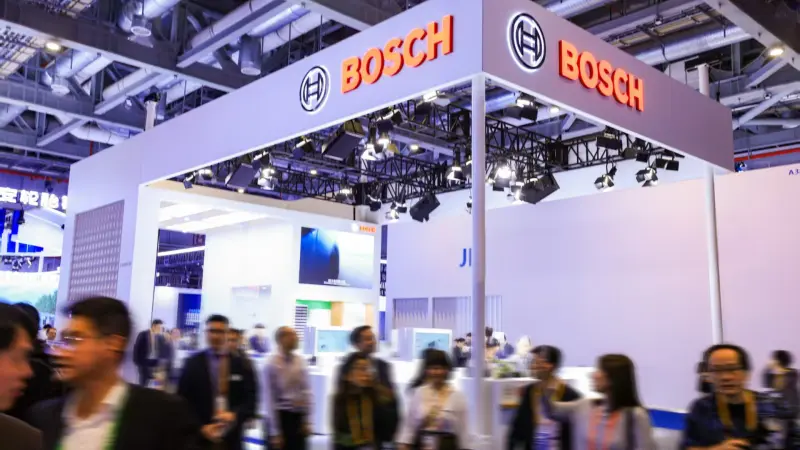
博世全球裁员的风还是刮到了中国
Zhong Guo Jing Ji Wang· 2026-02-09 06:04
Group 1 - Bosch's sales in China are projected to reach 149.8 billion yuan by 2025, representing a year-on-year growth of 4.9% and accounting for over 20% of Bosch's global sales [1][5] - Despite the growth in revenue, Bosch China faces challenges in profitability within emerging sectors such as electric motors and autonomous driving [6] - Bosch is undergoing personnel adjustments in China, particularly in traditional business lines, amidst a global trend of layoffs in the automotive parts industry due to the shift towards electrification and smart technology [3][4] Group 2 - The global automotive parts industry is experiencing a wave of layoffs, with Bosch announcing plans to cut 22,000 jobs by 2030, including 9,000 in Germany in 2024 and an additional 13,000 in 2025 [4] - Bosch's global sales are expected to increase slightly to 91 billion euros (approximately 745 billion yuan), but the EBIT margin is only about 2%, falling short of the 7% target [5] - Chinese domestic automotive parts companies are rapidly rising, increasing their market share and posing significant competition to Bosch, particularly in areas like battery technology and autonomous driving [7][8]

韩美最大车企“联姻”会结出什么果?
Zhong Guo Qi Che Bao Wang· 2025-10-13 01:38
Core Insights - The global automotive industry is undergoing significant transformation driven by electrification and smart technology, leading multinational automakers to invest heavily in R&D and supply chain restructuring while facing challenges from slowing economic growth and increased competition in the electric vehicle (EV) market [2][7] Group 1: Collaboration and Development - Hyundai and General Motors (GM) plan to jointly develop five vehicle models, with the first expected to launch in 2028, covering compact cars, compact SUVs, and commercial trucks [3][5] - The collaboration will involve shared development processes from concept design to mass production, while maintaining brand identity for each model [3][4] - The partnership will extend beyond vehicle platforms to include powertrains and procurement strategies, aiming to reduce costs through joint purchasing [4][6] Group 2: Market Focus and Sales Goals - The collaboration primarily targets the Americas, especially Latin America, with a projected annual sales target of 800,000 units once fully operational, starting with an initial estimate of 100,000 units [5][6] - The focus on the Americas is influenced by high tariffs and the potential for local production to lower costs, as well as the growing market opportunities in Latin America [5][6] Group 3: Competitive Landscape - The partnership is partly a response to increasing competition from Chinese automakers, which have been gaining market share in key regions like Latin America [7][10] - Both companies aim to leverage their strengths to develop more cost-competitive products and enhance their market positions against emerging competitors [7][10] Group 4: Strategic Implications - This collaboration marks Hyundai's first significant partnership with a foreign automaker in vehicle development, while GM has shifted its focus from previous partnerships to align with Hyundai [8][9] - The potential for synergies through joint procurement and technology sharing could enhance competitiveness in emerging markets and the North American electric commercial vehicle sector [10]

