
汽车服务生态

Search documents
8万亿汽车服务“新大陆”浮出水面!
Zhong Guo Jing Ying Bao· 2025-11-17 10:24
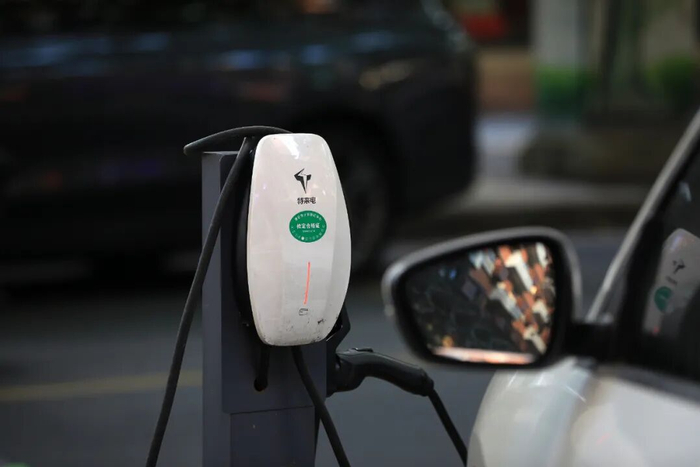
Core Insights - The automotive industry is entering an era of autonomous driving, which will significantly transform daily vehicle usage scenarios, including automated parking, charging, and maintenance services [2] - The automotive service ecosystem is emerging as the third major competitive force in the industry, with a projected market size exceeding 80 trillion yuan by 2028 [2] - The integration of digitalization and new automotive service models is essential as the industry transitions to autonomous driving [2] Parking Solutions - The parking problem is exacerbated by a significant shortfall of over 80 million parking spaces in China, with the number of vehicles far outpacing the availability of new parking spots [2][3] - Autonomous driving technology is expected to create new industry opportunities in smart parking, enhancing user experience by enabling vehicles to autonomously find and park in available spaces [4] - The concept of "automated valet parking" is being proposed, which would optimize parking space utilization and reduce operational costs for parking facilities [4] Charging Infrastructure - Despite having the largest charging infrastructure network globally, user experience in China remains suboptimal, with issues such as uneven distribution and high failure rates of public charging stations [5][6] - Autonomous driving technology can address charging challenges by allowing vehicles to autonomously navigate to charging stations, thus improving efficiency and user convenience [6] - The development of a "vehicle-charging network-cloud" ecosystem is essential for achieving seamless automated charging experiences [6] Automotive Aftermarket Transformation - The automotive aftermarket is poised for significant changes, with a shift towards intelligent, time-saving services that enhance user experience [7] - Automated services, such as car washing, can be facilitated through mobile apps, allowing vehicles to autonomously travel to service locations and return without user intervention [7] - The focus of the automotive industry is shifting from mechanical performance to data and service capabilities, leading to a comprehensive transformation in automotive services [7] Insurance Industry Evolution - The insurance sector will undergo a transformation based on data generated by autonomous driving systems, leading to new risk models that assess algorithm reliability rather than driver behavior [8] - Future automotive insurance will feature layered, customized, and dynamic pricing structures, reflecting the multi-faceted nature of risk in autonomous driving [8] - The responsibility for insurance will shift from solely the driver to include manufacturers and software/hardware suppliers, broadening the scope of coverage [8]


观车 · 论势 || 京东汽车或是流通领域下一条“鲶鱼”
Zhong Guo Qi Che Bao Wang· 2025-10-30 01:21
Core Insights - JD.com, in collaboration with CATL and GAC Group, is not entering the car manufacturing sector but is instead redefining the automotive distribution model through a service-oriented approach [1][4] - The partnership aims to create a triangular collaboration model that integrates user insights, manufacturing capabilities, and energy support, positioning JD.com as a "demand translator" and "service integrator" [2][3] Industry Transformation - The automotive distribution sector is undergoing significant changes, with traditional dealership models facing unprecedented challenges, including a reported 52.6% loss rate among dealers due to price discrepancies and reduced manufacturer incentives [2][3] - JD.com's entry provides a new reference for channel transformation, addressing high customer acquisition costs and fragmented service standards in the automotive market [3] Innovative Business Model - JD.com employs a "three horizontal and three vertical" collaboration model, integrating manufacturing, energy, and sales while streamlining the entire vehicle lifecycle from selection to maintenance [3] - This model shifts the focus from traditional manufacturing profits to high-value user services and channel integration, creating a decentralized automotive service ecosystem [3][4] Challenges Ahead - JD.com must cultivate consumer trust in purchasing vehicles through third-party platforms, as high-value items like cars face skepticism from buyers [4] - The efficiency of cross-company collaboration among GAC, CATL, and JD.com is crucial for aligning manufacturing schedules, energy network development, and traffic operations [4] - Regulatory and standardization issues related to battery specifications and infrastructure must be addressed in collaboration with local governments and industry associations [4] Significance of the Attempt - JD.com's cross-industry initiative is timely, as the penetration rate of new energy vehicles exceeds 50%, indicating a shift in the automotive landscape [4] - This "platform integration" model offers a fresh perspective for the struggling automotive distribution sector, suggesting that e-commerce platforms can play a pivotal role in reshaping industry ecosystems [4] - Regardless of the outcome, JD.com's exploration will provide valuable insights for the digital transformation of the automotive industry, potentially positioning it as a disruptive force similar to its impact in the 3C sector [4]
