
创新人才

Search documents
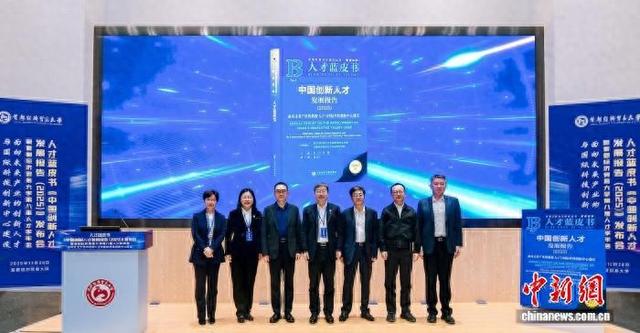
《人才蓝皮书:中国创新人才发展报告(2025)》发布
Xin Lang Cai Jing· 2025-12-28 16:22
Group 1 - The report indicates that the overall operation of China's innovation talent development index is good, with an expected annual growth rate of 15.03% from 2023 to 2025, particularly in the input and efficiency indices [1][2] - The report focuses on "innovation talents for future industries and the construction of international science and technology innovation centers," providing strong support for the construction of a talent powerhouse in China [1][2] - The structure, scale, and development trends of China's innovation talents and groups align with future industry needs, with a continuous increase in strategic scientists represented by academicians and national award winners [2] Group 2 - The report suggests a shift from a single education reform or job-driven logic to a proactive supply logic that includes "strategic guidance, pre-identification, differentiated incubation, and dynamic adaptation" to address the mismatch in talent supply and demand [3] - The eastern region leads the country in innovation talent development index, with the Beijing-Tianjin-Hebei urban agglomeration showing an overall upward trend and the Yangtze River Delta urban agglomeration accelerating its growth [2] - The report highlights the need for a long-cycle, full-chain, and differentiated new talent supply system to effectively meet the demands of future industries [3]
人才蓝皮书在京发布:中国创新人才发展指数总体运行良好
Zhong Guo Xin Wen Wang· 2025-12-28 13:21
Core Insights - The key to nurturing and expanding future industries lies in innovative talent development, as highlighted in the "Talent Blue Book: China Innovation Talent Development Report (2025)" released on December 28 [1][4] Group 1: Innovation Talent Development - The structure, scale, and development trends of China's innovative talent align with the needs of future industries, with a projected annual growth rate of 15.03% for the innovation talent development index from 2023 to 2025 [2][3] - The eastern region leads the country in innovation talent development index, with the Beijing-Tianjin-Hebei urban agglomeration showing a rising trend and the Yangtze River Delta urban agglomeration accelerating its growth [3][2] - The overall development of innovation talent in Beijing is positive, although attention is needed on the structural adjustments during the period of slowing growth [3][2] Group 2: Strategic Scientists and Research Directions - The number of strategic scientists, represented by academicians and winners of the National Highest Science and Technology Award, continues to grow, with a significant focus on future industries such as future health, materials, and manufacturing [2][3] - High-impact scientists and leading innovation groups are expanding, with a notable concentration of award winners in the future materials field located primarily in Beijing and the Yangtze River Delta [3][2] Group 3: Talent Evaluation and Supply System - A forward-looking, strategic, and dynamically adaptive talent evaluation system is urgently needed to better serve industrial upgrades and national strategic implementation, focusing on four core dimensions: innovation capability, quality, effectiveness, and contribution [6][7] - The report emphasizes the need to shift from a single education reform approach to a proactive supply logic that includes strategic guidance, pre-identification, type-based incubation, and dynamic adaptation [7] Group 4: Beijing's Talent Development Initiatives - Beijing has implemented measures to support the establishment of world-class new research and development institutions, with four institutions closely related to artificial intelligence established by June 2025 [9][10] - The Beijing General Artificial Intelligence Research Institute has developed a composite faculty structure and a collaborative training model to cultivate talent in the field of general artificial intelligence [9][10] - The Beijing Academy of Science and Intelligence focuses on integrating AI technology with scientific research, employing a comprehensive training model to develop the next generation of scientists and engineers [10][11]

让更多青创人才站上舞台“C位” 北京建设多层次创新人才梯队
Zhong Guo Qing Nian Bao· 2025-04-01 23:10
Group 1 - The 2024 Zhongguancun U30 winners list features 30 young entrepreneurs excelling in AI, humanoid robots, quantum information, biomedicine, aerospace technology, digital economy, cultural creativity, and rural revitalization [1] - Beijing is committed to supporting young tech talent as a driving force for innovation, providing resources and services to foster their development [1][4] - The "Beijing International Science and Technology Innovation Center Construction Regulations" emphasizes the importance of nurturing and utilizing innovative talent [1] Group 2 - Li Zhenkun, a teacher at Beijing Jiaotong University, introduced the "rheological robot," a soft robot produced using 4D printing technology, which can adapt its shape and is applicable in various fields [2] - The rheological robot is being tested in collaboration with Peking University People's Hospital to inhibit cancer cell metastasis [2] - Zhang Miao, COO of Beijing Zhongke Huiling Robot Technology Co., highlighted the capabilities of their "Lingbao" robots in hazardous environments, aiming to reduce risks in operations [3] Group 3 - The company has completed over 100 million yuan in financing and aims for small-scale production and delivery of up to 100 units this year [4] - Beijing's Science and Technology Commission and Zhongguancun Management Committee have implemented measures to support young tech talent, creating a comprehensive support system [4][5] - The Beijing Youth League is focused on nurturing young talent through various programs and initiatives, including training camps and competitions [5]