
海洋科技自主创新

Search documents
深远海上的“移动实验室”
Ke Ji Ri Bao· 2025-11-25 00:42
Core Insights - The "Future" vessel, China's first deep-sea green intelligent technology experimental ship, has successfully completed its first deep-sea trial after 16 days at sea, marking a significant milestone since its delivery in July [1] - The vessel serves as a "mobile laboratory" for testing new green technologies, supporting deep-sea equipment applications, and aiding scientific ocean investigations [1] - The development of the "Future" vessel involved collaboration among over ten units under China Shipbuilding Group, focusing on breakthroughs in key technologies for power systems and scientific support systems [1] Group 1: Power System Innovations - The "Future" vessel is equipped with four main diesel generators and six thrusters, designed to provide reliable and green power for various operations [2] - To optimize fuel efficiency and reduce emissions, the team implemented multi-phase rectification and variable-speed generation technologies, allowing the vessel to adjust power output based on operational needs [2][3] - The new power system is projected to save 456 tons of fuel annually and reduce carbon emissions by approximately 1,420 tons, equivalent to the emissions of 560 cars in a year [3] Group 2: Deep-Sea Equipment Support - The vessel features a "moon pool" that facilitates the deployment of deep-sea equipment, minimizing the impact of adverse sea conditions [4] - A novel design was developed to allow deep-sea equipment to be securely lowered into the water, enhancing operational efficiency [4][5] - The construction team successfully controlled the precision of the guiding tracks to within 1 millimeter, ensuring smooth operation of the equipment [5] Group 3: Intelligent Testing Systems - The "Future" vessel is equipped with over 8,000 data collection points to monitor equipment status and environmental changes [6] - A distributed intelligent data collection architecture was developed to synchronize data from various sources in real-time, addressing challenges in data collection from diverse systems [7] - The dynamic testing system will continue to support the testing and validation of intelligent devices, contributing to the smart and green transformation of the shipbuilding industry [7]
深远海上的“移动实验室”——国内首艘深远海绿色智能技术试验船研发记
Ke Ji Ri Bao· 2025-11-25 00:08
Core Insights - The "Future" vessel, China's first deep-sea green intelligent technology experimental ship, has successfully completed its first deep-sea trial after 16 days at sea, marking a significant milestone in marine technology development [1] - The vessel serves as a "mobile laboratory" integrating testing, research, and support, aimed at enhancing China's marine technology innovation and industrial application [1][2] Group 1: Vessel Capabilities - The "Future" vessel is equipped with advanced power systems, including four main diesel generators and six thrusters, designed to provide reliable and efficient energy for various operations [2] - The vessel's power system utilizes multi-phase rectification and variable-speed generation technology to optimize energy consumption based on operational needs, significantly reducing fuel consumption and carbon emissions [3] Group 2: Deep-Sea Operations - The vessel features a "moon pool" that facilitates the deployment of deep-sea equipment, allowing for efficient underwater observation and sampling while minimizing the impact of adverse sea conditions [4] - The design of the moon pool and its associated systems underwent extensive testing and optimization to ensure safe and effective deployment of deep-sea vehicles [5] Group 3: Intelligent Testing Systems - The "Future" vessel is equipped with over 8,000 data collection points to monitor equipment status and environmental changes, establishing a comprehensive testing platform for various intelligent devices and systems [6] - A distributed intelligent data collection architecture has been developed to enable real-time synchronization of heterogeneous data, enhancing the efficiency of data acquisition and analysis [7]
深海重器从武汉启航
Chang Jiang Ri Bao· 2025-08-31 00:34
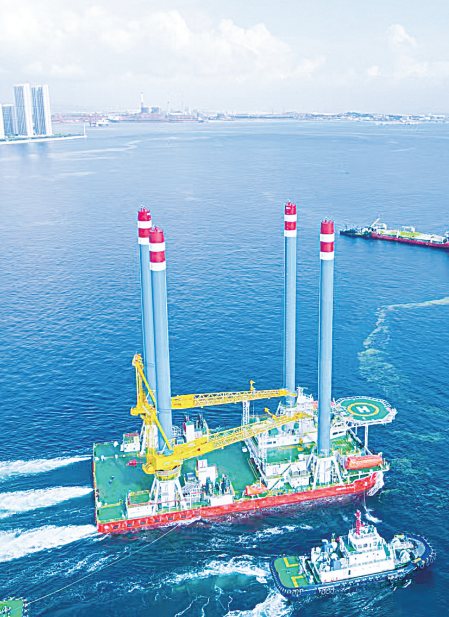
Core Viewpoint - The article highlights the advancements and achievements of Wuhan in the field of marine engineering and deep-sea exploration, showcasing its capabilities in building high-end marine equipment and contributing to China's deep-sea resource exploration efforts [1][2][10]. Group 1: New Equipment and Innovations - Wuhan Shipbuilding has constructed two new generation shallow-draft self-elevating offshore support platforms, capable of performing various tasks in complex sea conditions, marking a significant advancement in China's offshore engineering capabilities [1]. - The "Deep Sea One," a support vessel for the "Jiaolong" manned submersible, has achieved major breakthroughs in core technologies, enhancing China's ability to explore ocean resources and maintain maritime rights [4]. - The "Ocean Fishery No. 1," the world's first large semi-submersible intelligent fishery, represents a significant innovation in deep-sea aquaculture, integrating advanced breeding technology and environmental concepts [5][6]. Group 2: Expansion into Deep-Sea Energy - The new 1800-ton self-elevating wind power installation platform "Ganghangping 5" signifies China's transition from nearshore to deep-sea wind power construction, addressing the growing demand for advanced construction equipment in this sector [7]. - The platform can operate at depths exceeding 70 meters and has a maximum lifting capacity of 1800 tons, which is crucial for future offshore wind projects [7]. Group 3: Technological Advancements in Deep-Sea Operations - Wuhan Shipbuilding is involved in developing key equipment for deep-sea mining, including systems that have been validated in real sea conditions, contributing to the domestic production of high-end marine equipment [8]. - The "Qilin" unmanned submersible, capable of diving to 1000 meters, exemplifies the trend towards smaller, smarter equipment for precise underwater operations [9]. Group 4: Industrial Foundation and Cluster Advantages - Wuhan is the only inland city in China designated as a national new industrialization demonstration base for shipbuilding and marine engineering, with a complete industrial chain and over 100 related enterprises [10]. - The city is focusing on building green and intelligent shipbuilding clusters, leveraging local universities for technological innovation and industry transformation [10].

中国经济圆桌会丨强化重大科技基础设施支撑 不断提升我国海洋科技自主创新能力
Xin Hua Wang· 2025-08-13 03:50
Core Viewpoint - The National Development and Reform Commission (NDRC) is focusing on enhancing China's marine technology capabilities through policy support and investment in major projects related to marine science and technology [1] Group 1: Policy and Planning - The NDRC will align its efforts with the "14th Five-Year Plan" for the construction of a maritime power, clarifying key urgent areas in marine technology [1] - There will be a comprehensive policy support system established to facilitate the development of marine technology [1] Group 2: Investment and Infrastructure - The NDRC plans to coordinate central budget investments and other funding channels to support significant projects in the marine sector [1] - There is an emphasis on strengthening major scientific and technological infrastructure to enhance China's independent innovation capabilities in marine technology [1]
海洋经济:下一个10万亿有多远
Ke Ji Ri Bao· 2025-07-14 23:34
Core Viewpoint - The marine economy in China is entering a transformative era, with significant growth potential and strategic direction emphasized by government initiatives aimed at high-quality development and technological innovation [1][5][7]. Group 1: Economic Growth and Development - China's marine production value is projected to exceed 10 trillion yuan in 2024, marking a significant milestone in the marine economy [1]. - The marine economy is supported by various regions, with Guangdong leading as the first province to surpass 2 trillion yuan in marine production value [4]. - The marine new industries in Guangdong have seen an average annual growth rate of 16.8% over the past five years, driven by substantial investment in innovation [5]. Group 2: Technological Innovation - Technological innovation is identified as a key driver for transforming traditional marine industries and fostering new emerging sectors [2][6]. - The development of intelligent aquaculture technologies is shifting the focus from traditional nearshore fishing to large-scale deep-sea farming [6]. - The shipbuilding industry has experienced a surge in high-end orders, with a 57.1% increase in orders for high-end vessels, indicating a shift towards advanced manufacturing capabilities [3]. Group 3: Policy and Strategic Direction - The Central Financial Committee's recent meeting highlighted the need to enhance marine technology innovation capabilities and develop strategic marine technology enterprises [7]. - The government is focusing on creating a robust innovation ecosystem that includes both large enterprises and specialized small and medium-sized enterprises [7]. - There is a concerted effort across coastal regions to develop unique marine economic strengths and adapt to local conditions for sustainable growth [5][8]. Group 4: Challenges and Opportunities - Despite advancements, there are still significant gaps in marine technology, particularly in deep-sea exploration and high-end marine equipment, which remain reliant on imports [8]. - Regions like Liaoning and Shenzhen are prioritizing marine economic development and increasing R&D investment to address these technological shortfalls [8]. - The overall shift towards a more innovative and sustainable marine economy is seen as a critical opportunity for growth and development in the coming years [5][6].
强化海洋战略科技力量
Jing Ji Ri Bao· 2025-07-09 01:18
Group 1 - The central government emphasizes enhancing independent innovation capabilities in marine technology to strengthen national marine rights and economic security, fostering new marine industry forms and driving economic growth [1] - China's marine technology innovation has shifted from "catching up" to "leading," with significant breakthroughs in deep-sea exploration and complete autonomy in key technologies [1][2] - Guangdong Province has supported the development of six major marine industries since 2018, launching 315 innovative projects and achieving breakthroughs in 280 key technologies, with 25 filling domestic gaps and 20 being internationally leading [1] Group 2 - National strategic plans and policy documents provide clear guidance and strong motivation for independent innovation in marine technology, with the "14th Five-Year Plan" highlighting the need to accelerate the construction of a modern marine industry system [2] - There are existing challenges in enhancing marine technology innovation capabilities, including a lack of effective collaboration among innovation entities and the need to improve the efficiency of technology transfer [2][3] Group 3 - The government should play a key guiding role by increasing financial investment in marine technology R&D and establishing a national marine technology innovation special fund to support research in key areas [3] - A comprehensive platform for marine technology achievement transformation should be constructed to effectively gather core innovation elements and break down information barriers between technology outcomes and market needs [3] Group 4 - There is a need to enhance the quality of international cooperation in marine economics by actively participating in international marine technology projects and strengthening collaboration with marine technology powerhouses [4] - Domestic marine enterprises and research institutions are encouraged to collaborate with foreign counterparts on major marine technology R&D projects, forming a multi-level marine technology integration innovation pattern [4]