消费内生动力

Search documents
提振居民消费:从政策驱动到内生动力的转型之路
Di Yi Cai Jing· 2026-02-08 13:25
Core Viewpoint - The current stage of China's consumer market exhibits a distinct characteristic of structural upgrading alongside weak driving forces, with a focus on enhancing resident consumption and releasing consumption potential as core policy directions for the next five years [1][13]. Group 1: Consumer Market Dynamics - The consumer rate is determined by two core dimensions: the average consumption propensity and the proportion of disposable income to GDP, which are interrelated and essential for targeted policy measures [2]. - There is a clear trend of consumption upgrading in China, with service consumption, quality consumption, and green consumption emerging as new hotspots, while the marginal effects of traditional policy-driven consumption are diminishing [2][4]. Group 2: Consumption Structure and Growth - China's final consumption expenditure accounted for approximately 54.4% of nominal GDP as of 2024, significantly lower than developed economies in East Asia and the West, indicating untapped growth potential [3]. - The proportion of service consumption in China's total consumption remains stable at 46%-47%, which is notably lower than the over 56% seen in developed economies, highlighting a core shortcoming in consumption upgrading [4]. Group 3: Service Consumption Growth - Service consumption has become the core engine of growth in the consumer market, with spending projected to reach nearly 19.1 trillion yuan by the end of 2025, reflecting a growth rate exceeding 60% since 2020 [5]. - The share of service consumption in total resident consumption has shown a steady increase from 40.31% in 2014 to 46.11% in 2025, indicating a shift towards a more balanced consumption structure [5]. Group 4: Policy Impact on Consumption - The government has allocated 300 billion yuan in special funds for the "old-for-new" subsidy policy for home appliances and automobiles, which has shown diminishing returns as the policy nears its conclusion [7][12]. - The "old-for-new" policy has driven sales of related goods exceeding 2.5 trillion yuan, benefiting over 360 million people, but the effectiveness of such policies is declining as consumer behavior adapts [8]. Group 5: Challenges to Consumption Growth - The consumer market faces significant challenges due to income distribution imbalance, high precautionary savings, and pressure on household balance sheets, leading to a reluctance to spend [14][20]. - Household debt levels have risen sharply, with debt-to-GDP ratios stabilizing around 62%, which constrains disposable income and limits consumer spending capacity [20]. Group 6: Strategic Recommendations for Consumption Growth - To stimulate consumption, it is essential to focus on five dimensions: solidifying income foundations, unlocking service consumption potential, repairing household balance sheets, enhancing consumer quality and capacity, and transforming policy support systems [22][23]. - Optimizing initial income distribution and enhancing disposable income are critical to overcoming the core constraints of consumer spending [22].

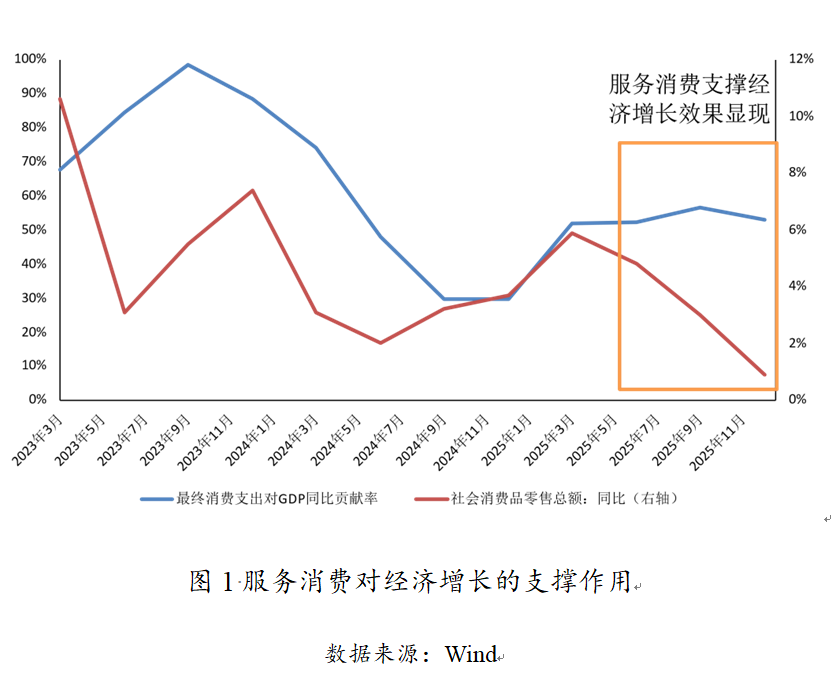
二季度经济运行开局如何?国家统计局权威解读
证券时报· 2025-05-19 04:29
Core Viewpoint - The article highlights that China's economy is showing signs of stable growth, with various economic indicators improving in the first four months of the year, despite external uncertainties. The industrial sector, in particular, has demonstrated robust performance, driven by policy support and innovation [1][5]. Economic Indicators - In April, the industrial added value for large-scale enterprises increased by 6.1% year-on-year, surpassing market expectations by 0.9 percentage points [3][4]. - From January to April, the total value of goods imports and exports grew by 2.4% year-on-year, accelerating by 1.1 percentage points compared to the first quarter [7]. - Retail sales of consumer goods rose by 4.7% year-on-year in the same period, with service retail sales increasing by 5.1% [7][8]. Industrial Performance - In April, 36 out of 41 major industries reported year-on-year growth, indicating a broad-based recovery in industrial production [4]. - High-tech manufacturing saw a significant increase, with added value growing by 10% year-on-year, driven by sectors such as integrated circuit manufacturing and optoelectronic device manufacturing, which grew by 21.3% and 19%, respectively [4]. - Production of new energy vehicles and lithium-ion batteries surged by 38.9% and 61.8%, respectively, showcasing the growth of industrial new momentum [4]. Employment Situation - The urban surveyed unemployment rate in April was 5.1%, a decrease of 0.1 percentage points from the previous month, indicating a stable employment environment [9]. - The average urban surveyed unemployment rate from January to April was 5.2%, consistent with the same period last year [9]. Investment Trends - Fixed asset investment (excluding rural households) reached 147,024 billion yuan, growing by 4.0% year-on-year, with a notable 8.0% increase when excluding real estate development [8]. - The article emphasizes the potential for industrial upgrades and the positive development of emerging industries, such as high-end equipment and artificial intelligence [8].