消费券杠杆效应

Search documents
1500万撬动8000万:烟台春节消费券的超5倍杠杆效应
Qi Lu Wan Bao· 2026-02-27 02:32
Core Insights - The consumption market in Yantai showed significant growth during the 2026 Spring Festival, with 52 monitored enterprises achieving sales of 1.21 billion yuan, a year-on-year increase of 29.6% [1] - The issuance of 15 million yuan in shopping and dining consumption vouchers directly stimulated nearly 80 million yuan in consumption, demonstrating a leverage effect of over 5 times [1] Policy Precision - The new consumption voucher rules shifted from a "grab and use" model to a more user-friendly "active participation" model, allowing consumers to receive vouchers automatically after spending [2] - In 2025, the previous voucher system required consumers to "grab" a 100 yuan voucher for a minimum spend of 500 yuan, while the new system allows consumers to receive a voucher after spending 100 yuan and use it for a minimum spend of 328 yuan, effectively increasing the discount to 23% [2][3] Market Collaboration - The government collaborated with enterprises and banks to create a synergistic effect, enhancing the impact of the consumption vouchers [4] - Major commercial enterprises in Yantai, such as Dayue City and Zhenhua Supermarket, offered additional discounts and promotions that complemented the government vouchers, resulting in a combined effect greater than the sum of individual contributions [4][5] Consumer Experience - The consumption vouchers not only stimulated direct shopping and dining but also activated a broader consumption ecosystem, leading to a shift from merely purchasing goods to enjoying diverse experiences [6] - During the holiday, various categories such as staple foods and beverages saw significant sales increases, with traditional dining options becoming increasingly popular among consumers [6][7] Overall Consumption Landscape - Yantai organized 124 promotional events across various sectors, creating a festive atmosphere that encouraged widespread participation and enjoyment among residents and visitors [7] - The combination of financial incentives and vibrant cultural activities during the Spring Festival enhanced the overall economic vitality and consumer confidence in the city [7]
“没想到比普通景区卖得还便宜”,秩序生产力也是“景点”
Hua Xia Shi Bao· 2026-02-21 01:22
Core Insights - The article highlights the significant increase in tourist traffic at Jiuhua Mountain during the Spring Festival, with 44,000 visitors recorded on the second day of the holiday, indicating a strong recovery in consumer confidence and tourism activity [1][3][10]. Tourist Flow and Experience - Jiuhua Mountain's parking lots reached full capacity early, with visitors arriving from various provinces, showcasing the popularity of the destination [3][4]. - Tourists expressed satisfaction with the orderly flow of people, which enhances their experience and willingness to spend [5]. - The presence of law enforcement and staff providing assistance contributed to maintaining order and enhancing visitor comfort [4][5]. Pricing and Payment Methods - Prices for goods within the scenic area remained stable, with items like bottled water and snacks priced similarly to regular weekends, countering expectations of price hikes during peak season [7][8]. - A dual payment system emerged, where cash remained essential due to daily transaction limits on mobile payment platforms, highlighting the continued relevance of cash in certain scenarios [6][8]. Consumer Behavior and Trends - Tourists showed a growing interest in diverse shopping options, with many opting for unique souvenirs and experiences rather than traditional offerings [10]. - The article notes a shift in consumer behavior towards valuing experiences and social media visibility, influencing spending patterns [10]. Consumption Coupons - The introduction of consumption coupons aimed at stimulating post-holiday spending was discussed, with plans for distribution starting after the Lantern Festival, potentially impacting future tourist traffic [11][12]. - The expected leverage effect of these coupons on local economic activity was emphasized, indicating their importance in sustaining tourism momentum [12].
“没想到比普通景区卖得还便宜”,秩序生产力也是“景点”|新春走基层
Xin Lang Cai Jing· 2026-02-19 13:47
Core Viewpoint - The article highlights the significant increase in tourist traffic at Jiuhua Mountain during the Spring Festival, indicating a strong recovery in consumer confidence and tourism vitality, with 44,000 visitors recorded on the second day of the Lunar New Year, marking an earlier peak compared to previous years [2][4]. Tourist Traffic and Experience - Jiuhua Mountain experienced a record number of visitors, with 44,000 people arriving on the second day of the Lunar New Year, indicating a robust tourism season that started earlier than last year [2][4]. - The orderly flow of tourists was maintained despite the high volume, with effective crowd management and guidance from police and staff, contributing to a positive visitor experience [6][7]. - Tourists displayed a willingness to spend more on experiences and unique items, reflecting a shift in consumer behavior towards valuing memorable experiences [10][11]. Pricing and Payment Methods - Prices for goods within the scenic area remained stable, with items like bottled water priced at 2-3 yuan and snacks at reasonable rates, contrasting with expectations of price hikes during peak season [8][9]. - A dual payment system was observed, where cash remained a vital payment method due to transaction limits on mobile payment platforms, highlighting the importance of cash as a fallback option in high-traffic scenarios [9][10]. Consumption Trends and Future Outlook - The article notes a growing trend among tourists to seek out unique and locally themed products, with an increase in the variety of consumables available at the site [10][11]. - The introduction of consumption vouchers, set to be distributed after the Spring Festival, is anticipated to further stimulate tourism spending and support local businesses during the post-holiday period [11][12]. - The effectiveness of these vouchers in sustaining tourist interest and spending during the off-peak season remains to be seen, with expectations that they will leverage significant economic activity [12].


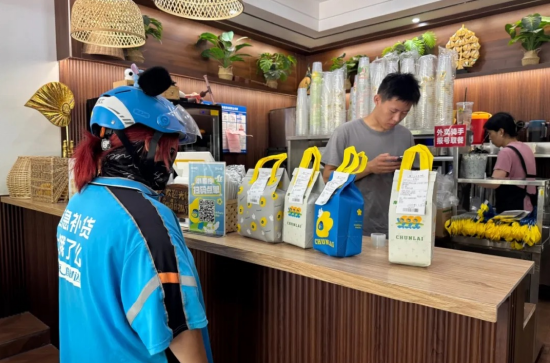
淘宝闪购发布新数据,北大报告称外卖消费券拉动七千亿增量市场
Xin Lang Ke Ji· 2025-08-12 07:29
Core Insights - The article highlights the significant impact of digital platforms, particularly Taobao Flash Sale and Ele.me, on consumer spending and the growth of small and medium-sized businesses in the food and retail sectors [3][4][5]. Group 1: Consumer Spending and Market Growth - On August 7, over 300,000 small restaurants achieved peak sales on Taobao Flash Sale, with Ele.me's delivery personnel increasing to 3.5 times last year's numbers and average income rising to 1.4 times [3]. - A report from Peking University's Guanghua School of Management indicates that every 1 yuan of effective flash sale subsidies generates an additional 6.76 yuan in consumer spending, potentially unlocking nearly 700 billion yuan in consumption growth [4][5]. - The total investment by the three major food delivery platforms in Q2 reached 25 billion yuan, which could lead to a projected 676 billion yuan increase in overall consumption if the same subsidy levels are maintained throughout the year [5]. Group 2: Impact on Small and Medium-sized Businesses - The research shows that flash sale coupons significantly boost revenue for small and medium-sized food businesses, with a 44.5% increase in offline revenue for small merchants [5]. - The influx of traffic from the flash sale platform has allowed small businesses to gain visibility and improve their sales, regardless of their participation in the program [5][6]. Group 3: Online and Offline Integration - The integration of online and offline sales channels has proven beneficial for brands, with companies like Xiaomi seeing a fourfold increase in daily orders on Taobao Flash Sale compared to May [6]. - The synergy between online and offline operations has led to increased customer retention and diversification of spending categories, enhancing overall consumer experience [6][7]. - The competition among various platforms has provided merchants with more choices, allowing them to operate in a more balanced and favorable environment [7]. Group 4: Consumer Behavior and Market Dynamics - The relationship between takeaway and dine-in services is symbiotic, with online orders helping to promote in-store consumption rather than cannibalizing it [7][8]. - The rise of digital platforms has not only expanded the service consumption market but also facilitated regional consumption upgrades, tapping into local consumer potential [8][9].