
消费者金融素养

Search documents
【行业资讯】金融监管总局报告显示:消费者持有这类金融资产最多→
Sou Hu Cai Jing· 2025-12-24 09:03
Core Insights - The 2025 National Consumer Financial Literacy Index is reported at 67.61, indicating a moderate level of financial literacy among consumers in China [1] Consumer Financial Skills - The average score for financial skills is 69.30, suggesting consumers have a good ability to handle basic financial matters but need to learn new skills to adapt to a more digital and complex financial environment [2] - 36.38% of consumers ignore high-yield financial products, while 37.58% check if the company or product is regulated [2] - 59.08% of consumers understand that bank wealth management products are not guaranteed to be principal-protected, yet 29.59% mistakenly believe they are [2] - 57.03% of consumers report having surplus income after expenses, while only 6.83% cannot cover their expenses with their income [2] Consumer Financial Attitudes - The average score for financial attitudes is 70.62, indicating a generally healthy and cautious financial mindset among consumers [3] - A significant majority of consumers exhibit risk-averse behavior, with only 8.64% willing to invest in high-risk, high-return projects [3] - 79.97% of consumers are aware of their credit status, and 56.47% have checked their personal credit report [3] Consumer Financial Behaviors - The average score for financial behaviors is 54.28, showing that while consumers' financial behaviors are generally stable, there is room for improvement in the diversification of financial tools and asset allocation strategies [4] - 85.73% of consumers have used mobile payments, and 65.89% have used cash payments [4] - 54.25% of consumers are debt-free, while 5.34% have heavy debt burdens [4] Consumer Financial Knowledge - The average score for financial knowledge is 76.25, indicating a good grasp of basic financial concepts but weaker understanding of complex topics [6] - 69.39% of consumers recognize the principle that higher returns often come with higher risks [6] - 76.92% of consumers know that a poor credit record can affect loan applications, but only 46.47% understand the duration for which negative records are kept [6] Demographic Analysis of Financial Literacy - Financial literacy scores show a "U" shape by age, peaking at 70.11 for the 30-39 age group and declining to 62.16 for those over 60 [7] - Higher income correlates with better financial literacy, with those earning over 240,000 yuan scoring 73.01 [7] - Urban consumers score higher in financial literacy (69.92) compared to rural consumers (63.23) [7] - Eastern regions have the highest financial literacy scores (68.45), while western regions score the lowest (66.99) [7]
问卷调查报告显示:从年龄维度看,消费者金融素养呈倒“U”型分布
Yang Zi Wan Bao Wang· 2025-12-23 07:45
Core Insights - The report released by the Financial Regulatory Administration's Consumer Protection Center aims to assess the financial literacy of consumers in China, with a focus on enhancing financial education and outreach efforts [1] Group 1: Financial Literacy Index - The national consumer financial literacy index for 2025 is reported at 67.61 [2] - Financial skills average score is 69.30, financial attitudes average score is 70.62, financial behaviors average score is 54.28, and financial knowledge average score is 76.25 [2] Group 2: Age Demographics - Financial literacy shows a "U" shaped distribution, peaking in the 30-39 age group, while the elderly population (60 years and above) represents a weak segment [2] - There is a need for enhanced "age-friendly" financial services to address the challenges faced by the elderly, including the "digital divide" and "cognitive gap" [2] Group 3: Financial Skills and Attitudes - Consumers demonstrate good capabilities in handling basic financial matters but need to learn new skills to adapt to a more digital and complex financial environment [2] - The overall financial attitudes indicate a healthy and prudent financial perspective, with a strong willingness to learn and improve financial skills [2] Group 4: Financial Behavior - Consumers exhibit stable financial behaviors, but there is room for improvement in the diversification of financial tools and asset allocation strategies [3] - The report highlights that consumers are generally cautious in their financial activities, including debt management and asset holdings [3] Group 5: Financial Knowledge - Consumers have a good grasp of basic financial knowledge but show weaknesses in understanding complex concepts that require deep comprehension or involve intricate calculations [3] - Knowledge areas assessed include digital currency, inflation, risk-return, insurance claims, credit ratings, and illegal fundraising [3] Group 6: Consumer Complaint Handling - The most common methods for consumers to handle disputes regarding financial products or services include complaints through financial institution hotlines (73.28%) and in-person complaints at financial institution branches (63.90%) [3] - Other complaint channels include various consumer protection hotlines and direct complaints to relevant authorities [3]
金融监管总局报告显示:消费者持有这类金融资产最多→
Jin Rong Shi Bao· 2025-12-23 04:40
Core Insights - The Consumer Financial Literacy Index for 2025 is reported to be 67.61, indicating a moderate level of financial literacy among consumers in China [1][3]. Consumer Financial Skills - The average score for financial skills is 69.30, suggesting that consumers generally handle basic financial matters well but need to learn new skills to adapt to a more digital and complex financial environment [4]. - A significant portion of consumers, 36.38%, ignore high-yield financial products, while 37.58% check if the company or product is regulated [4]. Consumer Awareness of Financial Products - 59.08% of consumers understand that bank wealth management products are not guaranteed to be principal-protected and may incur losses, yet 29.59% mistakenly believe these products are guaranteed [6]. - 69.22% of consumers report overall profitability from their investments in bank wealth management products [26]. Consumer Financial Behavior - 57.03% of consumers have surplus income after expenses, while only 6.83% report that their income does not cover their expenses [9]. - The average score for financial behavior is 54.28, indicating a need for improvement in the diversification of financial tools and asset allocation strategies [20]. - 85.73% of consumers have used mobile payments, and 59.97% have engaged in saving behaviors, reflecting a healthy debt level among consumers [20]. Consumer Financial Knowledge - The average score for financial knowledge is 76.25, showing that consumers have a good grasp of basic financial concepts but struggle with more complex topics [27]. - 69.39% of consumers recognize the principle that higher returns often come with higher risks, and nearly 40% understand the importance of diversification in investment [30]. Consumer Attitudes Towards Financial Products - 79.97% of consumers are aware of their credit status, with 56.47% having checked their credit reports [19]. - 76.92% understand that a poor credit record can affect loan applications, but only 46.47% know the duration for which negative records are kept [35]. Demographic Insights - Financial literacy scores are highest among the 30-39 age group at 70.11, with scores decreasing in older age brackets [37]. - Higher income groups (annual income above 240,000 yuan) have a financial literacy score of 73.01, while those earning below 24,000 yuan score the lowest at 58.93 [37]. - Urban consumers score higher in financial literacy (69.92) compared to rural consumers (63.23) [37].

《消费者金融素养问卷调查报告》发布
Jin Rong Shi Bao· 2025-12-22 05:00
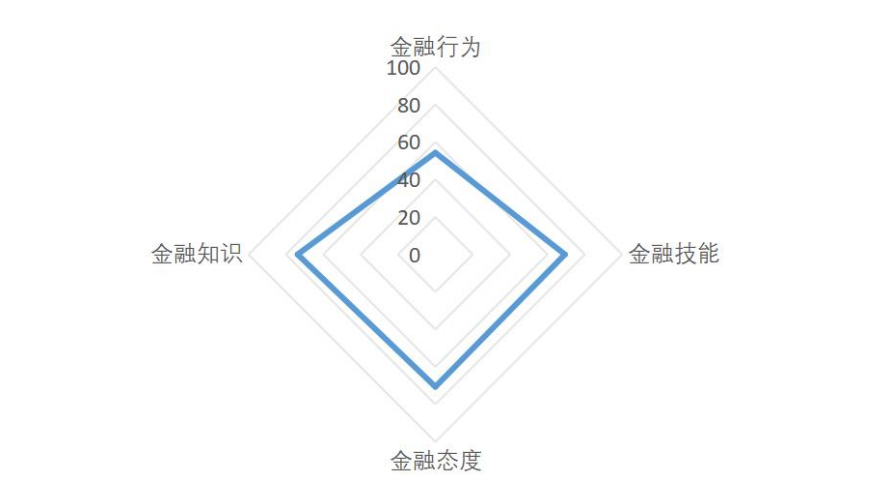
Core Insights - The report indicates that the national consumer financial literacy index for 2025 is 67.61, with average scores in financial skills at 69.30, financial attitudes at 70.62, financial behaviors at 54.28, and financial knowledge at 76.25 [1][2] Group 1: Overall Financial Literacy - Consumers generally possess good capabilities in handling basic financial matters but need to enhance new skills to adapt to the increasingly digital and complex financial environment [1] - The overall financial attitudes of consumers reflect a healthy and prudent financial value system, along with a strong willingness to learn financial knowledge and improve financial skills [1] Group 2: Financial Behavior and Knowledge - Consumers exhibit stable financial behaviors and have a good grasp of basic knowledge, but there is room for improvement in the diversified use of financial tools and asset allocation strategies [1] - Knowledge related to complex calculations or inter-temporal decision-making remains relatively weak among consumers [1] Group 3: Demographic Analysis - Financial literacy distribution shows a U-shaped curve by age, with the highest literacy in the 30-39 age group (70.11) and the lowest in those aged 60 and above (62.16) [2] - Urban consumers score higher in financial literacy (69.92) compared to rural consumers (63.23) [2] - Among regions, the eastern area has the highest financial literacy score (68.45), followed by the central (67.51), northeastern (67.21), and western regions (66.99) [2] Group 4: Purpose of the Report - The report aims to comprehensively understand the financial literacy levels of consumers in China and enhance the targeted effectiveness of financial education and publicity efforts [2]
《消费者金融素养问卷调查报告(2025)》发布
Jin Rong Shi Bao· 2025-12-22 03:51
Core Insights - The report indicates that the national consumer financial literacy index for 2025 is 67.61, with average scores in financial skills at 69.30, financial attitudes at 70.62, financial behaviors at 54.28, and financial knowledge at 76.25 [1][2] Group 1: Overall Financial Literacy - Consumers generally possess good capabilities in handling basic financial matters but need to enhance new skills to adapt to the increasingly digital and complex financial environment [1] - The financial attitudes of consumers reflect a healthy and prudent financial value system, along with a strong willingness to learn financial knowledge and improve financial skills [1] Group 2: Financial Behavior and Knowledge - While consumers demonstrate a solid grasp of basic financial knowledge, there is room for improvement in the diversified use of financial tools and asset allocation strategies, particularly in areas requiring deep understanding and complex calculations [1] Group 3: Demographic Analysis - Financial literacy levels vary across different demographic groups, showing a "U" shaped distribution by age, with the highest literacy in the 30-39 age group (70.11) and the lowest in those aged 60 and above (62.16) [2] - Urban consumers score higher in financial literacy (69.92) compared to rural consumers (63.23) [2] - Regionally, the eastern area has the highest financial literacy score (68.45), followed by the central (67.51), northeastern (67.21), and western regions (66.99) [2] Group 4: Purpose of the Report - The report aims to comprehensively understand the financial literacy levels of consumers in China and enhance the targeted effectiveness of financial education and outreach efforts [2]