清洁能源战略

Search documents
涉氢建筑物及容器泄爆设计方法实施
Zhong Guo Hua Gong Bao· 2025-12-12 07:07
Core Viewpoint - The release and implementation of the group standard "Design Method for Explosion Protection of Hydrogen-Related Buildings and Containers" aims to enhance safety measures in the hydrogen industry, transitioning from experience-based judgments to precise calculations for explosion risk assessment [1][2]. Group 1: Standard Implementation - The standard, developed by various institutions including China Chemical and several universities, outlines design requirements for hydrogen-related buildings and containers, including calculations for explosion overpressure and maintenance requirements for explosion protection devices [1]. - It is applicable to industries involved in hydrogen production, storage, transportation, and usage, addressing potential explosion risks from hydrogen-air mixtures [1]. Group 2: Technical Requirements - The standard addresses deficiencies in existing gas or dust explosion standards regarding the accuracy of hydrogen explosion overpressure predictions, proposing specific technical requirements for calculation models and parameter selection [2]. - It includes a fitting calculation formula for maximum explosion pressure generated by hydrogen-air mixtures in buildings or containers without pressure relief openings, validated by extensive experimental data [2]. Group 3: Industry Impact - The implementation of this standard is expected to provide a solid safety assurance framework for the development of the hydrogen energy industry, supporting the safe and large-scale development of clean energy strategies in China [2].
“绿电”将闪送大湾区 输电量一年顶十年
Nan Fang Du Shi Bao· 2025-09-21 04:19
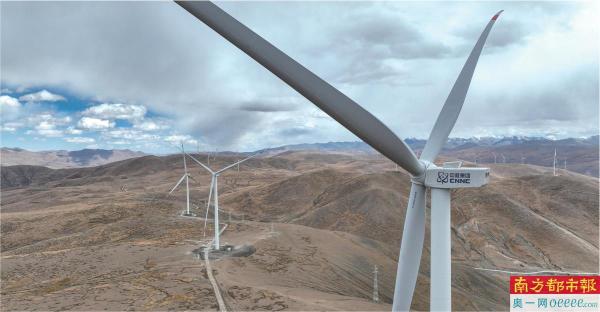
Core Points - The construction of the "Tibet-Guangdong DC Project," the world's largest clean energy direct current transmission project, has officially begun, with a total investment of approximately 53.2 billion yuan and a length of about 2,681 kilometers [4][6] - The project aims to connect the abundant clean energy resources of Tibet, particularly hydropower, to the energy-hungry Guangdong province, enhancing regional cooperation and resource exchange [9][10] - The project is expected to deliver over 43 billion kilowatt-hours of clean electricity annually, significantly contributing to the energy needs of the Guangdong-Hong Kong-Macao Greater Bay Area [8][11] Investment and Economic Impact - The project is part of China's broader energy strategy, aligning with the 14th Five-Year Plan and the goal of developing hydropower resources in the Yarlung Tsangpo River basin [5][7] - The associated "water-wind-solar integrated" power base project is projected to exceed 150 billion yuan in investment, potentially creating over 100,000 jobs during peak construction [10] - The annual electricity output of 43 billion kilowatt-hours is equivalent to about half of the annual generation of the Three Gorges Dam and will replace approximately 12 million tons of standard coal, reducing carbon emissions by about 33 million tons [11][12] Technological and Engineering Significance - The Tibet-Guangdong DC Project is notable for being the first high-voltage direct current project to cross three geographical tiers, showcasing advanced technology and engineering capabilities [8] - The project faces significant technical challenges, including the development of new technologies for high-altitude direct current transmission and integration of large-scale renewable energy into the grid [8][10] - The project will establish four converter stations in Tibet and Guangdong, enhancing the region's energy security and facilitating the efficient flow of production factors across regions [10]

洪通燃气上半年净利润同比增长15.98%
Zheng Quan Ri Bao Wang· 2025-08-30 04:42
Core Insights - Hongtong Gas achieved a revenue of 1.487 billion yuan in the first half of 2025, representing a year-on-year growth of 34.37% [1] - The net profit attributable to shareholders was 72.8873 million yuan, with a year-on-year increase of 15.98% [1] Business Operations - Hongtong Gas specializes in the supply of clean transportation energy, focusing on the production, processing, storage, and sales of LNG and CNG [1] - LNG products are primarily used as fuel for logistics heavy trucks, while CNG is used for household cars, taxis, and urban buses [1] Supply Chain and Strategic Development - The company has strengthened its gas source security by establishing stable partnerships with unconventional gas sources, in addition to conventional procurement from PetroChina [1] - Hongtong Gas is exploring the feasibility of upstream resource layout to enhance supply chain resilience and promote its clean energy strategy [1] Infrastructure Expansion - As of the report date, Hongtong Gas operates 50 gas stations and has plans to build 4 additional stations [2] - The company aims to expand its gas station network through various methods, including self-construction, cooperative construction, and leasing [2] New Energy Initiatives - Hongtong Gas has invested in adding charging facilities at several gas stations in Hami, Bazhou, and Bozhou, expanding into the new energy charging business [2] - The company plans to continue investing in the transformation and upgrading of comprehensive energy service stations, including gas and charging facilities, in line with market demand and trends [2]

1.2 万亿巨投!雅鲁藏布江水电站背后,工程机械的 “蛋糕” 有多大?
工程机械杂志· 2025-07-21 11:55
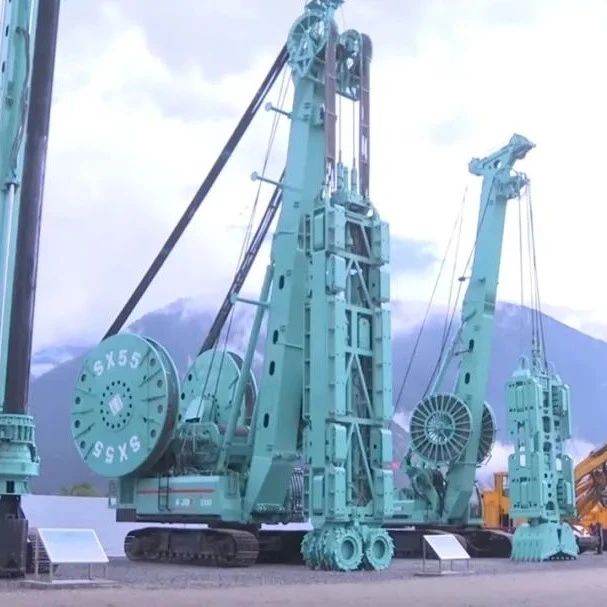
Core Viewpoint - The Yarlung Tsangpo River Hydropower Station project, with a total investment of 1.2 trillion yuan, is not only a massive infrastructure initiative but also holds significant economic, energy, and geopolitical implications for China [1]. Investment and Economic Impact - The project is expected to generate over 20 billion yuan in annual fiscal revenue for Tibet, highlighting its potential economic benefits [1]. - Despite the slowdown in traditional large-scale infrastructure projects, strategic projects like the Yarlung Tsangpo Hydropower Station continue to receive investment due to their long-term significance for energy security and ecological protection [1]. Project Specifications - The total investment for the project is 1.2 trillion yuan, which includes the construction of five large dams and aims for a total installed capacity of 60 to 81 million kilowatts, equivalent to three Three Gorges dams [1]. - If fully operational, the hydropower station could generate 300 billion kilowatt-hours of electricity annually, potentially earning 75 billion yuan from electricity sales alone [1]. Engineering Machinery Demand - It is estimated that at least 15% of the total investment (approximately 180 billion yuan) will be allocated to construction equipment, indicating a significant demand for engineering machinery [5]. - The major players in the engineering machinery sector, including SANY Heavy Industry, XCMG, Zoomlion, and LiuGong, are expected to benefit from this demand, although their combined domestic revenue in 2024 is projected to be less than 120 billion yuan [5][6]. Profitability and Market Dynamics - The profitability of medium and large-tonnage equipment is expected to be higher than that of smaller equipment, with a potential net profit margin of 10% for the machinery used in the Yarlung Tsangpo project, translating to over 18 billion yuan in profits for the engineering machinery sector [6]. - The commencement of the Yarlung Tsangpo project is anticipated to significantly boost the profitability of the engineering machinery industry, which has been facing challenges in recent years [6].